In a world filled with instant messages, emails, and social media notifications, a thoughtful handwritten note can feel especially meaningful. A personalized notecard gives you a simple but memorable way to express appreciation, celebrate an occasion, share encouragement, or send a message that feels more personal. Personalized Notecard Stationery Templates For Unique Messages make it easier to create beautiful cards that reflect your personality, style, and purpose without starting every design from a blank page.
Whether you are writing a thank-you note, sending birthday wishes, congratulating a friend, communicating with clients, or simply staying connected with someone you care about, personalized stationery can make the experience feel more special. A carefully chosen notecard design adds visual character while leaving space for the words that matter most.
Customizable notecard templates are also practical. They provide a professional layout that can be adjusted with your preferred colors, fonts, names, initials, illustrations, or other personal details. Instead of spending hours designing a card, you can focus on creating a thoughtful message and adapting the template to suit the occasion.
Why Personalized Notecard Stationery Makes Messages More Meaningful
A personalized note communicates effort. Even a short handwritten message can feel more memorable when it appears on stationery designed specifically for the sender or occasion. The design becomes part of the communication and can help reinforce the tone of the message.
Personalized Notecard Stationery Templates For Unique Messages allow you to create cards that feel individual while maintaining a polished and consistent appearance. You can choose a minimalist design for professional correspondence, a floral layout for a heartfelt thank-you note, or a playful style for birthdays and celebrations.
- Add a personal touch: Include names, initials, monograms, or meaningful design elements.
- Save time: Start with a ready-made layout instead of creating a card from scratch.
- Use designs for multiple occasions: Adapt one style for thank-you notes, greetings, and everyday correspondence.
- Create memorable communication: A personalized card can feel more thoughtful than a standard message.
- Maintain a consistent style: Matching stationery can support personal or professional branding.

Popular Uses for Personalized Notecards
Personalized stationery is versatile and can be used for many different types of communication. The same basic notecard format can work for formal, casual, personal, and professional messages when the design is customized appropriately.
Thank-You Notes
Thank-you cards remain one of the most popular uses for personalized stationery. They provide an opportunity to show genuine appreciation after receiving a gift, attending an event, receiving support, or working with someone on an important project.
A simple notecard with your name or initials can make a thank-you message feel more intentional. The design does not need to be elaborate; in many cases, clean stationery allows the handwritten words to remain the main focus.
Birthday and Celebration Messages
Birthdays, anniversaries, graduations, engagements, and other celebrations are perfect occasions for personalized notes. A customizable stationery template can include cheerful colors, elegant patterns, seasonal illustrations, or a design that reflects the recipient’s personality.

Personalized notecards can also be useful when you want to write a message that is more thoughtful than a quick digital greeting. The physical card can become a keepsake that the recipient saves and remembers.
Everyday Personal Correspondence
You do not need a major occasion to send a meaningful note. Personalized stationery can be used for simple messages of encouragement, friendship, sympathy, gratitude, or connection.
Keeping a collection of customized notecards available at home makes it easier to send a thoughtful message whenever the moment feels right. A short handwritten note can have a lasting impact when it arrives unexpectedly.
Choosing the Right Personalized Notecard Template
The best template depends on how you plan to use the stationery and the impression you want to create. Before selecting a design, consider the occasions, recipients, and communication style that are most important to you.
Consider the Overall Style
Minimalist notecard designs are often versatile because they can work for both personal and professional messages. Floral, watercolor, and decorative templates may be ideal for personal correspondence, while bold or playful designs can be perfect for informal celebrations.
Think about whether you want your stationery to feel elegant, modern, creative, traditional, casual, or luxurious. Choosing a consistent visual direction will make future customization easier.
Choose a Suitable Color Palette
Color strongly influences the mood of a notecard. Soft neutral tones can create a sophisticated appearance, while bright colors may feel energetic and cheerful. Natural shades can produce a warm and relaxed effect.

Avoid using too many competing colors in a small space. Notecards are often compact, so a limited and balanced color palette can make the design look cleaner and more refined.
Select Readable Typography
Typography should match the style of the stationery while remaining easy to read. Decorative script fonts can add elegance, but they may work best for names, initials, or short headings. For longer text or printed information, a clear and simple font is usually a better choice.
A useful approach is to combine one distinctive font with one readable supporting font. This can create personality without making the card visually overwhelming.
How to Customize Personalized Notecard Stationery Templates
Templates provide the structure, while customization gives the stationery its unique identity. Even small design changes can transform a standard layout into something that feels personal and memorable.
Add Names, Initials, or a Monogram
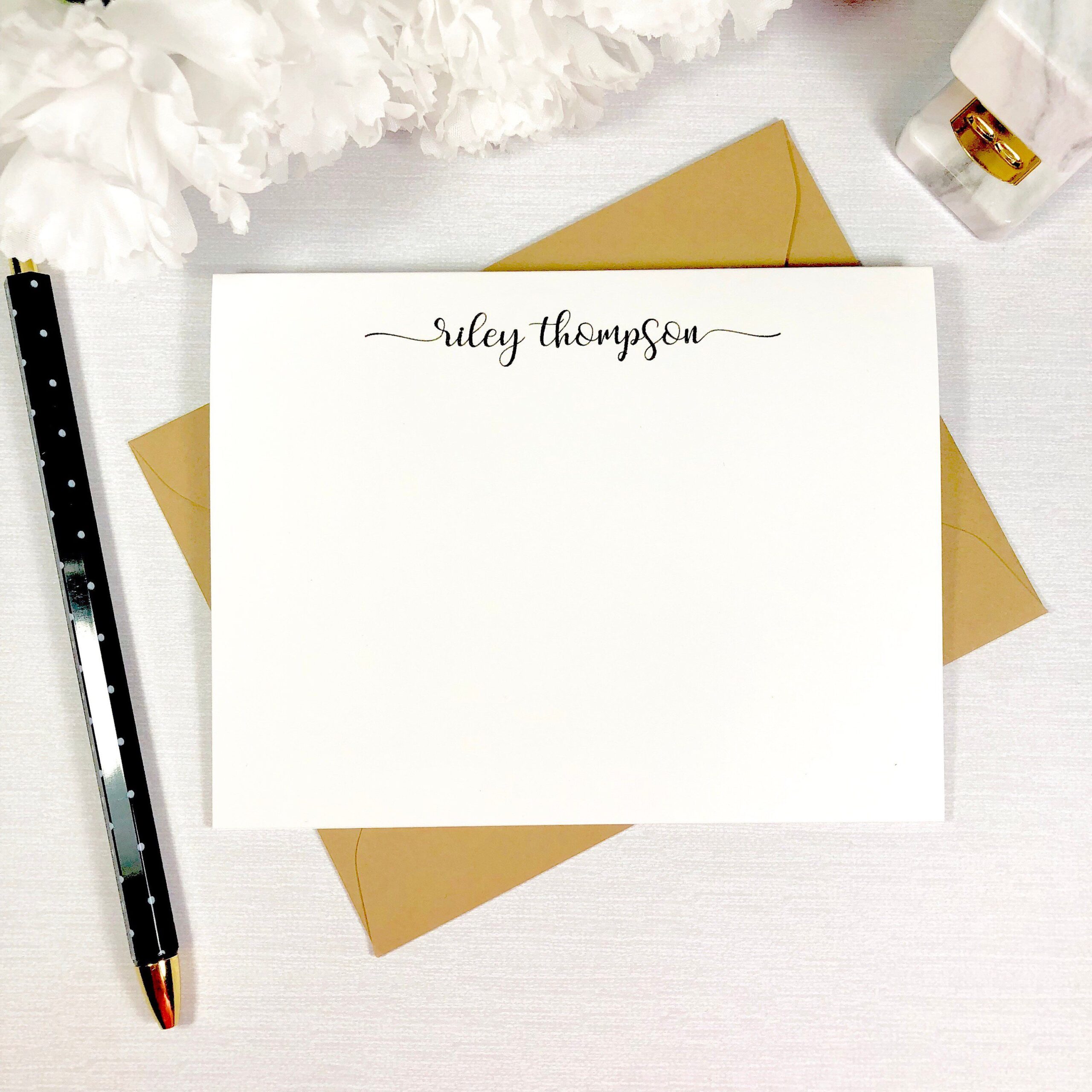
One of the simplest ways to personalize stationery is by adding your name, initials, or monogram. These details can appear at the top of the card, in a corner, or as a subtle decorative element.
For professional use, a name and contact details may be more appropriate. For personal stationery, initials or a decorative monogram can create a more elegant and timeless appearance.
Use Meaningful Visual Elements
Consider incorporating illustrations or symbols that represent your interests and personality. Flowers, animals, books, travel imagery, seasonal details, or abstract artwork can all help create a distinctive design.
- Choose one or two meaningful decorative elements.
- Keep enough empty space for handwritten messages.
- Use consistent colors across related stationery items.
- Avoid excessive graphics that distract from the message.
- Consider using a small illustration instead of a large background image.
Choosing Paper and Printing Options
The quality of the paper can influence how a personalized notecard looks and feels. A beautiful design may lose some of its impact if it is printed on thin or low-quality material, especially when the card is intended for a special occasion.
Matte Paper
Matte paper creates a smooth, understated appearance and is often a good choice for handwritten notes. It generally provides a comfortable writing surface and works well with minimalist, elegant, and professional stationery designs.
Textured Paper
Textured paper can add a more luxurious or handmade feeling. It may be especially suitable for wedding correspondence, formal thank-you notes, and premium personal stationery.
Cardstock
Thicker cardstock provides durability and can make a notecard feel more substantial. It is often a practical choice for cards that will be mailed, stored, or used as keepsakes.
Before printing a large quantity, consider ordering or creating a small sample. This allows you to review the colors, text clarity, paper quality, and overall appearance.
Tips for Writing Unique and Memorable Messages
The stationery creates the first impression, but the message is what gives the card its emotional value. A thoughtful note does not need to be long. In fact, a few sincere sentences can often be more meaningful than a lengthy message.
- Address the recipient personally: Use their name whenever appropriate.
- Be specific: Mention a particular reason for your appreciation or message.
- Write naturally: Use words that sound like your real voice.
- Keep the purpose clear: Avoid adding unnecessary information.
- End warmly: Choose a closing that suits your relationship with the recipient.
For example, a thank-you message becomes more memorable when you mention exactly what the person did and why it mattered. A birthday note can feel more personal when it refers to a shared memory or sincere wish for the year ahead.
Using Personalized Notecards for Professional Communication
Personalized stationery is not limited to personal use. Small businesses, freelancers, consultants, and creative professionals can also use custom notecards to strengthen relationships with clients and customers.
A handwritten thank-you card included with an order or sent after completing a project can create a positive customer experience. Branded notecards may include a logo, business name, color palette, or subtle contact information while still leaving plenty of room for a personal message.
The most effective professional stationery feels polished without becoming overly promotional. The message should remain personal, while the design quietly reinforces your brand identity.
Common Mistakes to Avoid When Designing Notecards
One common mistake is adding too many decorative elements. A notecard has limited space, and the design should leave enough room for the actual message. Excessive borders, large graphics, and too many colors can make the card feel crowded.
Another mistake is choosing fonts that are difficult to read. Decorative typography can look attractive on a screen but may become unclear when printed at a smaller size. Always review the design at its intended physical dimensions.
It is also important to proofread personalized information carefully. Check names, initials, contact details, and any printed text before producing multiple cards. A small mistake can be difficult and expensive to correct after printing.
Conclusion
Personalized Notecard Stationery Templates For Unique Messages offer a simple and creative way to make everyday communication more memorable. Whether you are writing thank-you notes, birthday wishes, professional messages, or spontaneous words of encouragement, personalized stationery can add character and thoughtfulness to every card.
Choose a template that reflects your style, customize it with meaningful details, use readable typography and balanced colors, and select paper that suits the purpose of your stationery. Most importantly, leave enough room for a sincere message. When attractive design and genuine words work together, a personalized notecard can become more than a piece of paper—it can become a memorable expression of connection, appreciation, and individuality.