An employee ID card is more than just a small piece of plastic. It is an essential tool for workplace identification, security, and professional branding. Whether you manage a small business, a large corporation, or a growing organization, providing employees with proper identification helps create a safer and more organized working environment.
A well-designed employee identification card allows staff members to identify themselves quickly. It also helps visitors, customers, and security personnel recognize authorized employees. With the right layout, company colors, and essential information, an ID card can strengthen your organization’s professional image.
If you are looking for an employee ID card template, planning to create a new staff identification system, or simply exploring different design ideas, this guide covers everything you need to know. From essential card details to printing tips, you will discover how to create an attractive and practical employee ID card.
What Is an Employee ID Card?
An employee ID card is an identification document issued by a company or organization to its employees. It typically contains personal information, a photograph, an employee identification number, and company details.
Employees usually wear their identification cards while working or visiting company facilities. Depending on the organization, these cards may also function as access cards, attendance tracking tools, or membership credentials.
Most employee ID cards are made from durable PVC plastic. However, some organizations use printable paper cards, laminated badges, or digital employee identification systems.
Why Is an Employee ID Card Important?
Employee identification provides several practical benefits for businesses. It supports daily operations while helping organizations maintain a professional and secure workplace.
1. Improves Workplace Security
One of the main purposes of an employee ID card is to help identify authorized personnel. Security officers can check identification before allowing individuals to enter restricted areas.
This makes it easier to distinguish employees from visitors, contractors, and other external individuals. When combined with access control systems, identification cards can provide an additional layer of workplace protection.
2. Creates a Professional Company Image
Consistent employee identification gives a business a more organized appearance. When employees wear matching company ID cards, customers and visitors can recognize staff members more easily.
A professional design featuring your company logo, brand colors, and employee photographs can also reinforce brand recognition.
3. Makes Employee Identification Easier
In large workplaces, identifying employees can sometimes be challenging. An ID badge makes this process faster by displaying the employee’s name, photograph, department, and job position.
This is particularly useful in hospitals, schools, offices, factories, hotels, and other organizations with many employees.
4. Supports Attendance and Access Management
Some employee identification cards include barcodes, QR codes, magnetic stripes, or RFID technology. These features allow organizations to connect identification cards with attendance systems and electronic door access.
As a result, businesses can simplify administrative tasks and improve employee access management.
Essential Information to Include on an Employee ID Card
A good employee ID card should display enough information to identify its owner without making the design look crowded. Choosing the right details is important for both readability and security.
Here are the most common elements to include:
- Company logo: Helps identify the organization and strengthens brand recognition.
- Employee photograph: Allows security personnel and coworkers to recognize the cardholder.
- Employee full name: Displays the person’s official name.
- Employee ID number: Provides a unique identification reference.
- Job title: Shows the employee’s role within the organization.
- Department: Identifies the employee’s working department.
- Company name: Clearly identifies the issuing organization.
- Expiration date: Helps organizations manage card validity when applicable.
- Barcode or QR code: Supports digital identification and access systems when properly integrated.
Not every organization needs all these details. Select information based on your workplace requirements and avoid displaying sensitive personal information that is unnecessary for identification.
Employee ID Card Template: Design Ideas and Examples
Using an employee ID card template can save time and make the design process much easier. Instead of creating every element from scratch, you can start with an existing layout and customize it to match your company identity.
Below is an example of a clean, professional employee identification card design.
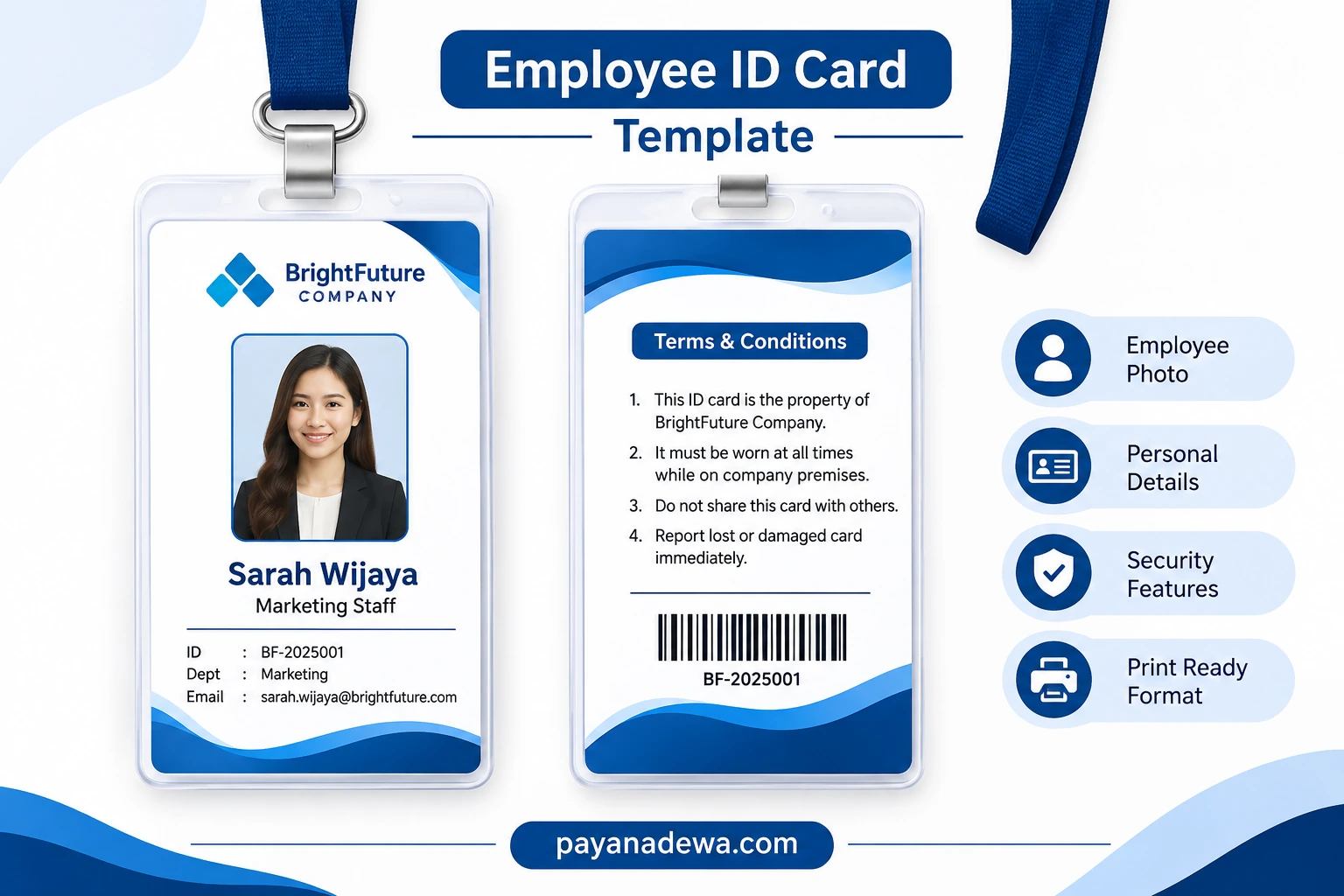
1. Minimalist Employee ID Card
A minimalist design focuses on essential information and a clean layout. It usually features a simple background, a company logo, an employee photograph, and clearly arranged text.
This style works especially well for corporate offices, consulting firms, and professional organizations.
2. Corporate Employee ID Card
Corporate identification cards often use company colors, professional typography, and structured layouts. The front typically displays employee information, while the back may include company contact details or identification instructions.
3. Colorful Employee ID Badge
Organizations with multiple departments can use different colors to make employee identification easier. For example, the sales department may use blue, administration may use green, and technical staff may use orange.
However, ensure that the color system remains consistent and easy to understand.
4. Digital and QR Code Employee ID Card
Modern organizations may incorporate QR codes into their employee badges. When connected to an appropriate identification system, these codes can provide access to authorized employee records or verification services.
Remember to configure access permissions carefully. A QR code should never expose confidential employee information to unauthorized users.
How to Create an Employee ID Card
Creating a professional employee ID card does not have to be complicated. Follow these practical steps to produce a design that looks attractive and serves its purpose.
Step 1: Choose an Employee ID Card Template
Start by selecting a layout that matches your company’s branding. Consider the card orientation, available space, color scheme, and the amount of information you need to display.
A standard horizontal design is suitable for many office environments. Meanwhile, vertical layouts can work well for employee badges and lanyard holders.
Step 2: Add Your Company Branding
Insert your company logo and choose colors that match your existing brand identity. Use readable fonts and maintain consistent spacing between design elements.
Avoid using too many decorative elements because they can make important information difficult to read.
Step 3: Insert Employee Information
Add the employee’s photograph, full name, job title, department, and identification number. Double-check the spelling and accuracy of every detail before proceeding.
Step 4: Add Security Features
Depending on your requirements, include a barcode, QR code, RFID chip, or other access control feature. Make sure these elements are compatible with your organization’s identification system.
Step 5: Review and Print the Design
Before printing, check the card dimensions, image quality, text alignment, and color consistency. Print a sample first to make sure everything looks correct.
Once approved, produce the remaining employee cards and place them in suitable badge holders.
Standard Employee ID Card Size and Printing Tips
Choosing the correct card dimensions is important for a professional result. One widely used plastic card format is CR80, which measures approximately 85.60 mm × 53.98 mm (3.375 × 2.125 inches).
This size is commonly used for identification cards, access cards, and payment cards.
For better printing results, consider the following tips:
- Use high-resolution employee photographs to ensure clear identification.
- Choose durable PVC material for frequently used identification cards.
- Maintain sufficient margins around text and important design elements.
- Use readable font sizes and strong contrast between text and backgrounds.
- Check the printer settings before producing multiple cards.
- Use protective badge holders to reduce scratches and everyday damage.
- Keep a secure record of issued identification numbers.
For professional printing, follow your printer’s specifications for bleed, safe areas, color profiles, and image resolution.
Common Mistakes to Avoid When Designing Employee ID Cards
Even a simple identification card can become ineffective when important design details are overlooked. Avoid these common mistakes when creating your employee badges.
- Too much information: Adding unnecessary details makes the card difficult to read.
- Poor-quality photographs: Blurry or outdated photos reduce identification accuracy.
- Unclear typography: Decorative fonts can make employee names and numbers difficult to recognize.
- Inconsistent branding: Using unrelated colors and logos creates an unprofessional appearance.
- Incorrect dimensions: Improper sizing may cause problems with badge holders and card printers.
- Insufficient data protection: Displaying sensitive information can create unnecessary privacy risks.
Always prioritize clarity, accuracy, durability, and security when preparing an employee identification card.
How to Maintain and Manage Employee ID Cards
Creating identification cards is only the first step. Businesses should also establish a process for managing them throughout the employee lifecycle.
Consider implementing these simple practices:
- Issue an identification card when a new employee joins the organization.
- Maintain an updated record of employee identification numbers.
- Replace cards when employee information changes.
- Deactivate electronic access credentials when employment ends.
- Provide replacement cards for lost or damaged badges.
- Review card access permissions regularly.
- Establish clear procedures for reporting missing identification cards.
A well-organized identification management process helps reduce administrative problems and supports workplace security.
Frequently Asked Questions About Employee ID Cards
What should an employee ID card contain?
An employee ID card typically contains a company logo, employee photograph, full name, employee ID number, job title, and department. Additional features may include an expiration date, barcode, or QR code.
What is the standard employee ID card size?
A common standard is CR80, measuring approximately 85.60 mm × 53.98 mm. This format is widely used for plastic identification and access cards.
Can I create an employee ID card at home?
Yes. You can create a basic employee ID card using graphic design software or an editable template. A suitable printer and printable card material can help you produce physical identification badges.
Which material is best for employee ID cards?
PVC plastic is a popular choice because it is durable, lightweight, and suitable for everyday use. Laminated paper cards may be sufficient for temporary identification purposes.
Can employee ID cards include QR codes?
Yes. QR codes can be included for employee verification, access management, or links to authorized internal systems. Make sure the connected information is protected by appropriate permissions.
Why should companies use employee ID cards?
Companies use employee identification cards to recognize staff members, improve workplace organization, support access management, and maintain a professional business environment.
Conclusion
An employee ID card is a practical workplace tool that supports employee identification, company branding, and organizational security. With a clear layout and the right information, businesses can create identification badges that are both attractive and functional.
Whether you prefer a minimalist design, a corporate-style badge, or a modern QR code identification card, choosing a suitable employee ID card template makes the process easier.
Remember to prioritize readable text, accurate employee information, high-quality photographs, and durable printing materials. By following these guidelines, you can create professional employee identification cards that meet your organization’s everyday needs.
Explore more printable templates and useful design resources at payanadewa.com to make your next project easier.