A doctor note is an official document provided by a qualified healthcare professional to confirm that a patient has received medical attention or requires time away from work, school, or other responsibilities. It is commonly used when someone becomes ill, experiences an injury, attends a medical appointment, or needs additional time to recover.
Whether you are an employee requesting sick leave, a student explaining an absence, or someone looking for information about medical documentation, understanding how a doctor note works can make the process much easier. Knowing what information it contains, when it is required, and how to request one can help you avoid unnecessary delays.
In this guide, we explain everything you need to know about doctor notes, including their purpose, essential information, legitimate ways to obtain one, and practical tips for using medical documentation responsibly.
What Is a Doctor Note?
A doctor note, sometimes called a medical note, doctor’s excuse, or medical certificate, is written documentation issued by a healthcare professional after evaluating a patient’s medical condition or circumstances.
Its primary purpose is to provide confirmation that a person has received medical care or that a health-related situation may affect their ability to attend work, school, or certain activities.
Depending on the situation, a doctor note may confirm:
- The date a patient visited a healthcare facility.
- That a medical evaluation or consultation took place.
- That the patient requires temporary rest or recovery time.
- Recommended dates for medical leave, when clinically appropriate.
- Whether the patient has been medically cleared to return to certain activities.
A doctor note is not necessarily a complete medical record. It generally contains only the information needed for its intended purpose while respecting patient privacy.
Why Do People Need a Doctor Note?
People request doctor notes for different personal, educational, and professional reasons. Employers and educational institutions may require supporting documentation when someone misses scheduled activities because of a medical issue.
1. Medical Leave From Work
Employees sometimes need time away from work because of illness, injury, medical treatment, or recovery. A doctor note may help confirm that a healthcare professional evaluated the employee and recommended an appropriate period of rest.
Workplace requirements vary depending on the employer, employment agreement, and local labor regulations. It is always advisable to check the company’s sick leave policy before requesting documentation.
2. School and University Absences
Students may need a medical note when they miss classes, examinations, laboratory sessions, or other academic activities because of health problems.
A legitimate medical certificate can help explain an absence and support a request for an extension, examination rescheduling, or attendance consideration.
3. Medical Appointments and Treatment
Some people need proof that they attended a healthcare appointment. This can be particularly useful when a medical consultation takes place during regular working hours.
4. Recovery and Return-to-Work Documentation
After certain illnesses or injuries, a healthcare professional may recommend additional recovery time or assess whether someone can safely return to normal duties.
In some circumstances, a return-to-work note may include temporary restrictions or recommendations for modified activities.
What Information Should a Doctor Note Include?
A professional doctor note should contain clear and relevant information that allows the receiving organization to understand its purpose. The exact format depends on the healthcare provider, the patient’s situation, and applicable regulations.
Common information includes:
- Patient information: The patient’s full name and other necessary identifying details.
- Date of consultation: The date the patient received medical attention.
- Healthcare provider information: The provider’s name, professional designation, and relevant contact details.
- Medical recommendation: A statement explaining the recommended rest period or activity restrictions, when appropriate.
- Expected return date: The recommended date for returning to work, school, or regular activities, if determined by the clinician.
- Authentication: The healthcare professional’s authorized signature or approved digital authentication.
- Issue date: The date the documentation was prepared.
Not every doctor note needs to disclose a specific diagnosis. Medical privacy rules and workplace policies may limit what information should be shared.
How to Get a Legitimate Doctor Note
Getting a doctor note should begin with an appropriate medical consultation. A legitimate document must reflect an actual healthcare evaluation or another valid clinical basis established by the issuing professional.
Step 1: Schedule a Medical Appointment
Contact a licensed healthcare provider, clinic, hospital, or authorized telehealth service. Explain your symptoms or medical concerns and ask whether an appointment is necessary.
Step 2: Explain Your Situation
During the consultation, describe your symptoms, when they started, and how they affect your daily activities. If you need documentation for work or school, explain the relevant requirements to your healthcare provider.
Step 3: Follow the Medical Assessment
The healthcare professional will evaluate your situation and determine whether rest, treatment, additional testing, or activity restrictions are appropriate.
Step 4: Request the Documentation
If medically appropriate, ask the provider for a doctor note. You can also explain whether your employer or educational institution requires particular information, such as the consultation date or recommended absence period.
Step 5: Review the Document
Before submitting the note, check that the basic details are accurate, including your name, dates, provider information, and any applicable recommendations.
Doctor Note Template: What to Know Before Using One
A printable doctor note template can help readers understand how medical documentation is organized. It can also serve as a reference when preparing questions for a healthcare appointment or requesting a copy of an existing medical document.
However, a blank template is not an official medical certificate. It must never be presented as a document issued or approved by a healthcare professional unless the provider has actually reviewed and authorized it.
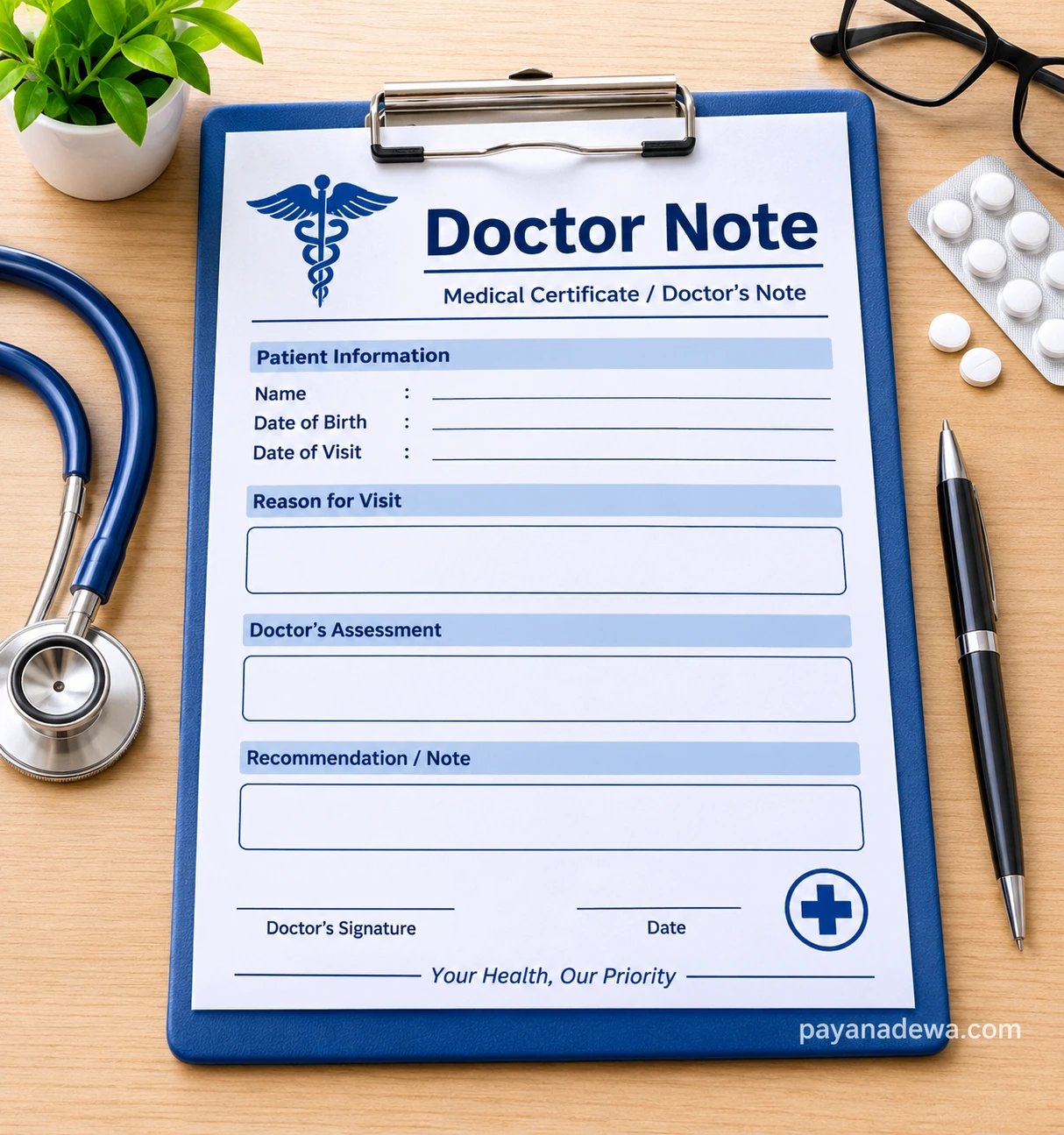
A useful reference layout may contain these sections:
- Patient information.
- Date of medical consultation.
- Reason for the visit.
- Healthcare professional’s assessment.
- Medical recommendations or restrictions.
- Provider authorization and issue date.
Important: Only an authorized healthcare professional can issue or authenticate a genuine doctor’s note. Do not add fabricated diagnoses, signatures, clinic details, or medical credentials to a blank template.
A printable reference image is provided below to illustrate the general structure of a medical note.
Tips for Requesting and Using a Doctor Note
Requesting medical documentation does not have to be complicated. A little preparation can help you communicate clearly with your healthcare provider and avoid unnecessary back-and-forth.
- Understand the requirements: Ask your employer or school what information is required before your appointment.
- Be honest about your symptoms: Provide accurate information so the healthcare professional can make an appropriate assessment.
- Request documentation early: If possible, ask for the note during your consultation rather than waiting until the last minute.
- Protect your privacy: Share only the medical information necessary for the intended purpose.
- Keep a copy: Save a digital or printed copy for your personal records.
- Check the dates: Make sure the consultation and recommended absence dates are correct.
- Use official documents: Submit only authentic documentation issued or authorized by the relevant healthcare provider.
Digital Doctor Notes vs. Printed Doctor Notes
Healthcare documentation is increasingly available in digital formats. Both electronic and printed doctor notes can serve legitimate purposes, provided they are properly issued and accepted by the receiving organization.
Digital Doctor Notes
Electronic medical notes may be delivered through a patient portal, secure email, or an authorized healthcare platform. They can be convenient because patients can access, download, and share documents without visiting a clinic again.
Digital documents should be protected against unauthorized access, and patients should verify that the receiving organization accepts electronic documentation.
Printed Doctor Notes
Printed documents remain useful when an employer, school, or institution requests a physical copy. They can also be easier to organize in personal medical files.
Regardless of the format, the most important factor is authenticity. A printed or digital document must accurately reflect the healthcare professional’s assessment and authorization.
Frequently Asked Questions About Doctor Notes
Can I get a doctor note without visiting a hospital?
Yes. Depending on your location and medical circumstances, you may be able to consult a licensed healthcare professional through an authorized telehealth service or private clinic. The provider must still conduct an appropriate assessment before issuing documentation.
Does a doctor note have to include my diagnosis?
Not always. Many doctor notes provide confirmation of a medical consultation or recommended absence without disclosing a specific diagnosis. The appropriate level of detail depends on medical privacy requirements and the receiving organization’s policies.
Can I use a doctor note for school and work?
Sometimes. However, requirements differ between employers and educational institutions. Always check whether the document meets the specific organization’s rules.
How long is a doctor note valid?
There is no universal validity period. A note may apply to a particular consultation, absence period, medical restriction, or return-to-work recommendation. Its relevance depends on the dates and purpose stated by the healthcare professional.
Can I edit a doctor note template myself?
You can use a blank reference template for personal organization or to understand the structure of medical documentation. However, you must not create or alter a document to falsely represent it as an official medical certificate. Only an authorized healthcare professional can complete and authenticate an actual doctor’s note.
Conclusion
A doctor note is an important form of medical documentation that can help explain health-related absences, support workplace leave requests, and provide confirmation of medical consultations. Understanding its purpose and required information makes it easier to request and use one correctly.
Whether you need documentation for work, school, or personal records, always obtain your doctor note through a legitimate healthcare provider. Review the details carefully, respect medical privacy, and follow the requirements of the organization receiving the document.
A printable doctor note template can be a helpful visual reference, but an authentic medical certificate must always be based on a legitimate healthcare assessment and authorized by a qualified professional.