Whether you are preparing a property deed, reviewing a legal agreement, or looking for a simple deed template, it is important to understand its purpose and requirements. Although the exact rules differ between countries, a properly prepared deed generally provides formal written evidence of an important legal act or intention.
In this guide, you will discover what a deed means, the different types available, the information it should contain, and the steps involved in preparing and signing one. You will also learn how to use a deed template responsibly.
What Is a Deed?
A deed is a formal written legal instrument that records an action, agreement, transfer, or obligation. Depending on the legal system, it may be used to transfer ownership of property, establish certain rights, appoint an authorized representative, or formally document an agreement.
Unlike an ordinary agreement, a deed may have additional legal formalities. These can include specific wording, signatures, witnesses, notarization, registration, or delivery. The requirements depend on the type of deed and the laws governing the transaction.
For example, when someone transfers ownership of a property, a property deed may document the transfer between the previous owner and the new owner. Similarly, a deed of gift can record the voluntary transfer of an asset without payment.
Why Is a Deed Important?
A deed provides a formal record that can help establish the intentions and responsibilities of the parties involved. It can also help reduce misunderstandings and provide evidence if a disagreement occurs.
Common reasons for using a deed include:
- Recording the transfer of property ownership.
- Establishing or confirming legal rights.
- Documenting gifts and voluntary transfers.
- Formalizing certain legal obligations.
- Providing written evidence of an important transaction.
- Supporting property and estate planning arrangements.
Common Types of Deeds
There are several types of deeds, and each serves a different legal purpose. Choosing the correct document is important because the wording, signing process, and legal consequences can vary.
1. Property Deed
A property deed is a legal instrument associated with the ownership or transfer of real estate. It identifies the relevant parties and describes the property involved in a transaction.
Property deeds are particularly important when buying, selling, gifting, or transferring real estate. Depending on the jurisdiction, additional registration or government documentation may be necessary to complete the transfer.
2. Warranty Deed
A warranty deed is commonly used in certain legal systems, particularly in the United States, to transfer real estate with specific assurances from the grantor regarding ownership and title.
These assurances may cover ownership rights, undisclosed claims, or other title-related matters. The exact protection depends on the type of warranty deed and applicable state law.
3. Quitclaim Deed
A quitclaim deed transfers whatever ownership interest the grantor may have in a property without providing the same title guarantees as a warranty deed.
It may be used in certain family transfers, divorce settlements, or situations involving changes in property ownership. However, it does not automatically guarantee that the grantor has valid ownership.
4. Deed of Gift
A deed of gift records the voluntary transfer of property or another asset from one person to another without receiving payment in return.
It can be useful when transferring assets to family members or other beneficiaries. Nevertheless, tax rules, ownership requirements, and registration procedures should be reviewed before completing the transfer.
5. Deed of Trust
A deed of trust is a legal arrangement used in some jurisdictions to secure a loan against real property. It generally involves a borrower, a lender, and a trustee.
The document establishes the security arrangement and explains the rights and responsibilities of the parties. Its legal structure differs from a traditional mortgage and depends on local property law.
6. Deed of Assignment
A deed of assignment formally transfers certain rights, interests, or benefits from one party to another.
It may be used in business transactions, intellectual property arrangements, contractual rights, or other situations where an assignment requires a formal legal instrument.
What Information Should a Deed Include?
A well-prepared deed should clearly explain the transaction and identify everyone involved. Although the required contents vary, several important details are commonly included.
Essential Elements of a Deed
- Document title: Clearly identifies the type and purpose of the deed.
- Date: States when the document is executed or takes effect.
- Party information: Includes the full legal names and relevant addresses of the parties.
- Purpose: Explains why the deed is being created.
- Terms and conditions: Describes the rights, responsibilities, and obligations involved.
- Property or asset description: Identifies the relevant property, ownership interest, or rights being transferred.
- Governing law: Identifies the applicable legal jurisdiction where appropriate.
- Signatures: Provides the required signature sections.
- Witness information: Includes witness details when legally required.
Not every deed needs all these sections. For example, a property transfer document may require specific property identification details, while a deed of gift may need additional information about the asset and the voluntary nature of the transfer.
How to Create a Deed Step by Step
Preparing a deed requires attention to detail. A missing signature, incorrect party information, or unclear description can create problems later. Follow these practical steps to prepare your document.
Step 1: Identify the Purpose
First, determine why you need a deed. Are you transferring property, documenting a gift, assigning legal rights, or recording another transaction?
Identifying the purpose will help you select the correct type of document and understand the legal requirements.
Step 2: Choose the Correct Deed Template
Select a template that matches your intended transaction. A general deed template may provide a useful starting point, but it should not replace a legally approved form when one is required.
Check whether your local jurisdiction provides an official document or prescribed wording.
Step 3: Enter Accurate Information
Complete all relevant sections carefully. Check the spelling of names, addresses, dates, property descriptions, and other important information.
For property-related transactions, verify the legal description and ownership details against the appropriate official records.
Step 4: Review the Terms and Conditions
Read every clause before signing. Make sure the document clearly explains what is being transferred, who is involved, and what responsibilities apply.
If the deed involves valuable assets or complicated legal rights, seek professional legal assistance before proceeding.
Step 5: Sign and Witness the Document
Follow the signing requirements applicable to your deed. Some jurisdictions require witnesses, notarization, specific execution wording, or authorized signatures.
Do not assume that signing an ordinary document automatically makes it a valid deed. The legal formalities must be satisfied.
Step 6: Register or Store the Deed
Some deeds must be registered with an appropriate government office or land registry. Others may simply need to be delivered and retained by the relevant parties.
Keep a secure copy of the completed document and any supporting records. Registration requirements should always be checked before considering a transaction complete.
Deed Template: What Does a Basic Example Look Like?
A deed template provides a structured format for organizing important legal information. It can make document preparation easier by identifying the sections that may need to be completed.
A simple general-purpose deed layout may contain the following sections:
- Title of the deed.
- Date of execution.
- Names and addresses of the parties.
- Purpose and background of the transaction.
- Description of the rights, property, or obligations involved.
- Terms and conditions.
- Governing law, where applicable.
- Signature and witness sections.
Use the following visual reference as a starting point when planning your document.
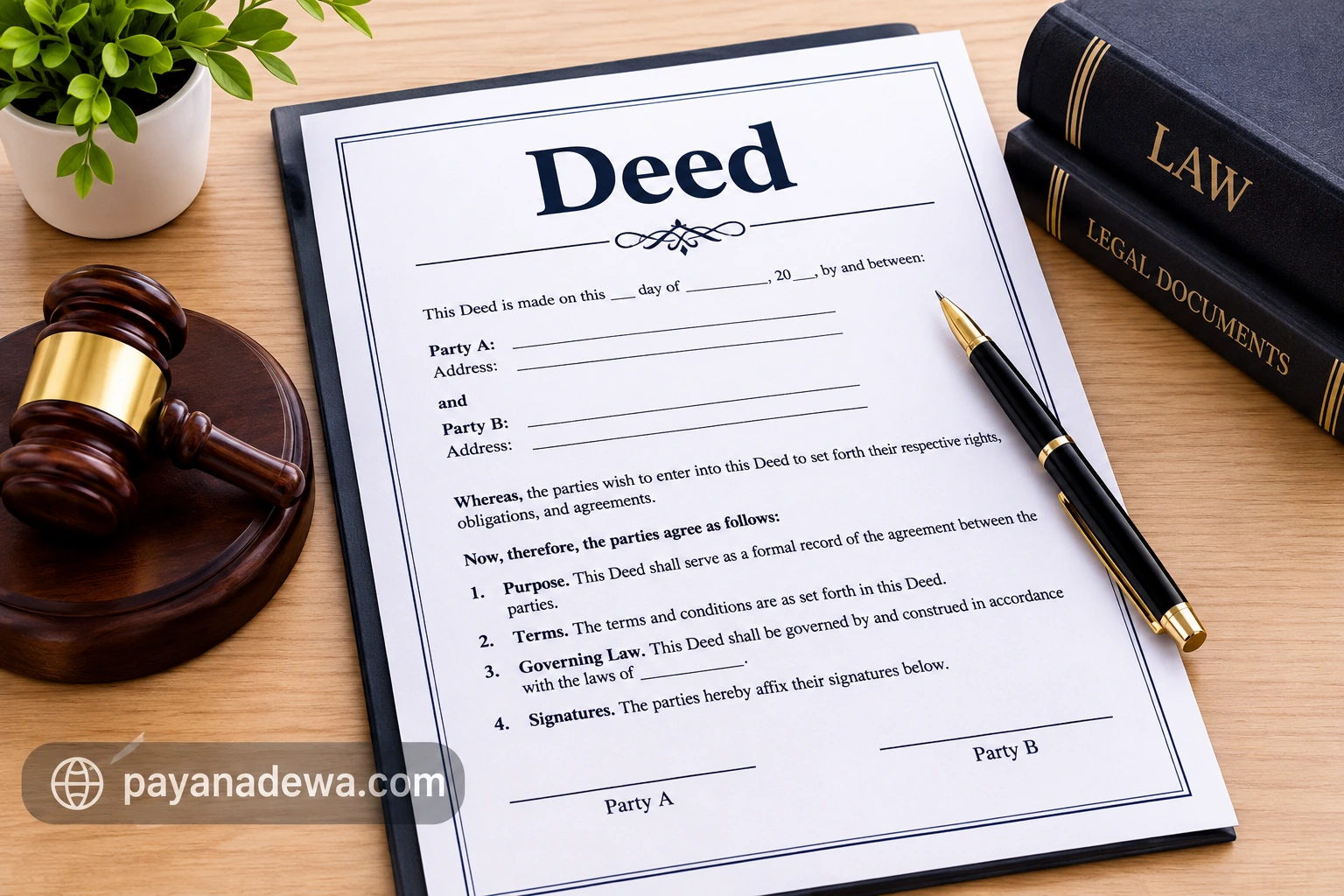
Remember that this general layout is an educational reference, not a universally valid legal form. Always use the correct jurisdiction-specific document for an actual legal transaction.
Important Tips Before Signing a Deed
Signing a deed can have significant legal consequences. Therefore, it is important to review the document carefully before making a commitment.
Consider these practical tips:
- Verify all information: Check names, addresses, dates, and transaction details.
- Understand every clause: Never sign a document containing terms you do not understand.
- Check local laws: Requirements differ between countries, states, and legal systems.
- Confirm ownership: For property transactions, verify the relevant ownership and title information.
- Follow execution rules: Confirm whether witnesses, notarization, or registration are necessary.
- Keep supporting documents: Save relevant identification, transaction records, and official confirmations.
- Seek professional advice: Consult a qualified lawyer or authorized professional when necessary.
What Is the Difference Between a Deed and an Agreement?
A deed and an agreement are both legal documents, but they are not always interchangeable. Their legal effects depend on the applicable legal system.
An ordinary agreement generally records promises or obligations between parties. In some legal systems, an agreement requires consideration, meaning something of value exchanged between the parties, to become an enforceable contract.
A deed, on the other hand, is executed with additional legal formalities. Under certain legal systems, it can create binding obligations even without the same consideration requirement that applies to ordinary contracts.
Here are some general differences:
- Formalities: A deed often requires additional execution requirements.
- Purpose: A deed may transfer property, create rights, or formalize specific obligations.
- Legal effect: A deed may have different enforcement and limitation-period rules.
- Consideration: Some jurisdictions allow a deed to be binding without consideration.
These distinctions are not universal. The legal effect of either document must be assessed under the relevant local law.
Frequently Asked Questions About Deeds
Is a deed a legally binding document?
Yes, a properly executed deed can be legally binding. However, it must satisfy the formal requirements of the applicable jurisdiction and the specific type of transaction.
Can I create my own deed?
In some situations, individuals can prepare their own deed. However, certain transactions require prescribed forms, professional involvement, witnesses, notarization, or official registration. Professional review is recommended for important legal matters.
Does a deed need to be notarized?
Not every deed requires notarization. The requirements depend on the document type and applicable law. Some deeds require witnesses or other formalities instead.
Can a deed be changed after signing?
Changes after execution may require a new deed, a supplemental document, or another legally recognized procedure. Do not simply edit an executed document without checking the applicable legal requirements.
How long should I keep a deed?
Important deeds should generally be retained securely for as long as they may affect your legal rights or ownership interests. Property-related documents are particularly important to preserve permanently or according to local recordkeeping requirements.
Conclusion
A deed is an important legal instrument that can document property transfers, gifts, assignments, and other significant legal arrangements. Understanding its purpose, common types, essential elements, and execution requirements can help you prepare documents more confidently.
Before creating or signing a deed, always verify the applicable legal requirements and ensure that the document accurately reflects the intentions of everyone involved. A suitable deed template can simplify the preparation process, but professional legal guidance remains valuable for important transactions.
By taking the time to prepare and review your document carefully, you can reduce potential errors and create a clearer record of your legal transaction.