Deer are among the most fascinating wild animals in the world. Known for their graceful movements, beautiful antlers, and remarkable ability to adapt to different environments, these mammals can be found in forests, grasslands, mountains, and even suburban areas. Their gentle appearance and unique behavior make them popular subjects for wildlife enthusiasts, photographers, and nature lovers.
However, there is much more to deer than their elegant appearance. They play an important role in maintaining healthy ecosystems, have interesting feeding habits, and display different behaviors depending on their species and environment. Understanding deer can help us appreciate their natural importance and learn how to protect them.
In this complete guide, you will discover everything about deer, including their physical characteristics, natural habitats, diet, reproduction, behavior, and fascinating facts. Whether you are researching wildlife or simply curious about these beautiful animals, this article provides useful information to help you learn more.
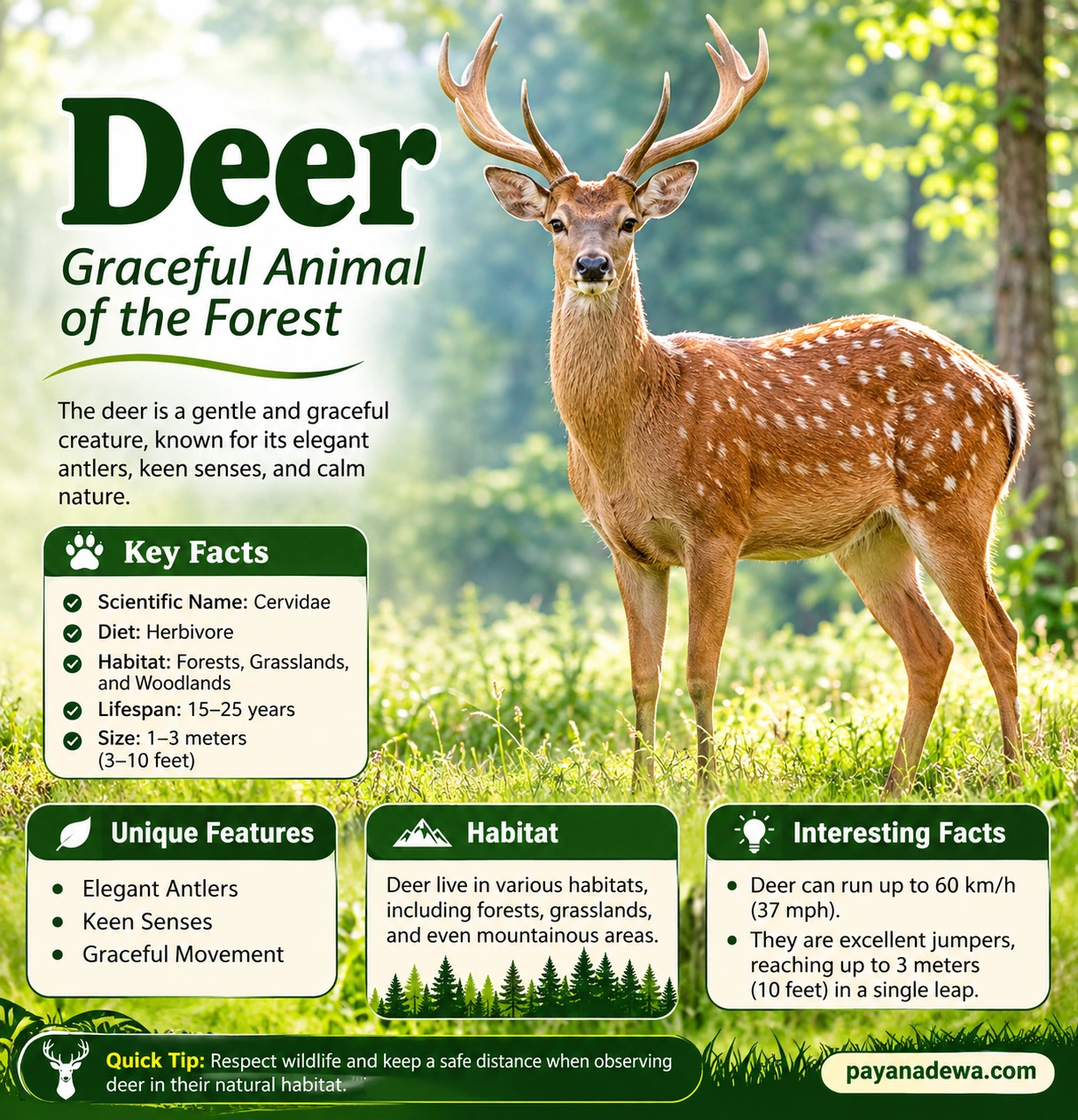
What Is a Deer?
A deer is a hoofed mammal belonging to the family Cervidae. Deer are part of a larger group of animals called ungulates, which are mammals that walk on their toes protected by hooves. They are closely related to other hoofed animals, although their physical characteristics and behaviors make them easy to recognize.
One of the most recognizable features of many deer species is their antlers. These bony structures usually grow on the heads of males and are shed and regrown periodically. However, reindeer, also known as caribou in North America, are an important exception because females can also grow antlers.
Deer vary considerably in size, appearance, and behavior. Some species are relatively small, while others are much larger. Their coats can be brown, reddish, gray, or spotted, depending on the species, age, and season.
Physical Characteristics of Deer
Deer have several physical adaptations that help them survive in the wild. Their bodies are designed for movement, alertness, and finding food in different environments.
1. Antlers
Antlers are one of the most distinctive features of many deer. They are made of bone and generally grow from structures called pedicles on the skull. During their growth period, antlers are covered with a soft layer of skin called velvet, which supplies blood and nutrients.
After the antlers finish growing, the velvet dries and is eventually rubbed away. Most male deer shed their antlers annually, although the timing varies between species and depends on environmental conditions.
2. Hooves and Strong Legs
Deer have split hooves that provide balance and traction on different surfaces. Their long, muscular legs allow them to run quickly, jump over obstacles, and move through forests and open landscapes.
These physical abilities are especially important when deer need to escape predators or navigate difficult terrain.
3. Sensitive Senses
Deer depend on their senses to detect potential danger. Their large ears can move independently, helping them locate sounds from different directions. They also have a strong sense of smell, which helps them recognize predators, find food, and communicate with other deer.
Their eyes are positioned on the sides of their heads, giving them a wide field of vision. This helps them notice movement around them while feeding.
Where Do Deer Live?
Deer live in many parts of the world, including North America, South America, Europe, Asia, and northern Africa. Different species have adapted to different climates and landscapes.
Although forests are commonly associated with deer, these animals are not limited to woodland environments. They can survive in several types of natural habitats.
Forest Habitats
Forests provide deer with food, shelter, and protection from predators. Trees and dense vegetation offer hiding places, while leaves, grasses, shrubs, and young plants provide important food sources.
Grasslands and Meadows
Open grasslands and meadows provide abundant grasses and other vegetation. Deer often visit these areas to feed, especially when fresh plants are available. However, they may remain close to wooded areas where they can find shelter.
Mountains and Cold Regions
Some deer species are well adapted to mountainous environments and colder climates. They can navigate rocky slopes and seasonal snow while searching for vegetation. Reindeer are particularly well known for surviving in Arctic and subarctic environments.
Wetlands and Tropical Regions
Certain deer species prefer wetlands, marshes, and tropical forests. Their adaptations allow them to find food and move through environments that would be challenging for other animals.
What Do Deer Eat?
Deer are herbivores, meaning they primarily eat plant material. Their diet changes depending on the season, habitat, and availability of food.
They are also ruminants. This means they have a specialized digestive system that allows them to bring partially digested food back into their mouths and chew it again. This process helps them extract nutrients from tough plant materials.
Common Foods in a Deer’s Diet
Depending on the species and environment, deer may eat:
- Grass: A common food source in meadows and open grasslands.
- Leaves: Deer browse on leaves from various trees and shrubs.
- Twigs and Shoots: Young branches and plant shoots provide food, particularly during colder months.
- Fruits and Berries: Seasonal fruits provide additional nutrients and energy.
- Acorns and Nuts: Some deer consume fallen nuts when they are available.
- Aquatic Plants: Certain species feed on vegetation found in wetlands and near water.
Deer do not eat exactly the same foods throughout the year. During spring and summer, fresh vegetation is often abundant. In winter, they may rely more heavily on woody plants, bark, and other available food sources.
Different Types of Deer Around the World
The deer family includes many different species, each with unique physical characteristics and adaptations. Here are some well-known examples.
1. White-Tailed Deer
The white-tailed deer is native to North and Central America. It is recognized by the white underside of its tail, which becomes visible when the animal raises it while escaping danger.
These deer commonly inhabit forests, fields, and woodland edges. They are highly adaptable and can also live near human settlements.
2. Red Deer
Red deer are among the largest deer species. They are native to parts of Europe, Asia, and North Africa. Adult males, known as stags, grow impressive branching antlers.
During the breeding season, male red deer produce loud roaring calls as they compete for access to females.
3. Reindeer
Reindeer are famous for their ability to survive in cold Arctic and subarctic regions. In North America, they are commonly called caribou.
Both male and female reindeer can grow antlers. Their broad hooves help them walk across snow and soft ground while searching for food.
4. Fallow Deer
Fallow deer are recognized by their distinctive coat patterns, which may include white spots. They are native to parts of Europe and western Asia and have also been introduced to other regions.
Male fallow deer develop broad, flattened antlers known as palmate antlers.
5. Roe Deer
Roe deer are relatively small deer found across much of Europe and parts of Asia. They prefer woodland edges, farmland, and areas with plenty of vegetation.
Their compact bodies and excellent senses help them move through dense vegetation and avoid potential threats.
Deer Behavior and Social Life
Deer display different social behaviors depending on their species, age, and environmental conditions. Some species are relatively solitary, while others form groups for feeding, protection, or seasonal migration.
Communication
Deer communicate through sounds, body movements, scent markings, and other signals. They may make alarm calls when they detect danger. Males can also use vocalizations during the breeding season.
Scent plays an important role in deer communication. Specialized glands and urine can carry information about an individual’s identity and reproductive condition.
Daily Activity
Many deer are most active around dawn and dusk. These periods are called crepuscular activity periods. Feeding during these times can help deer avoid some predators and reduce exposure to daytime heat.
However, activity patterns differ between species and may change according to human disturbance, weather, and food availability.
Seasonal Movement
Some deer remain in the same general area throughout the year. Others move between seasonal habitats to find food, shelter, or suitable breeding grounds.
Reindeer and certain caribou populations are well known for their long-distance migrations.
Deer Reproduction and Life Cycle
Deer reproduce through seasonal breeding cycles, although the timing differs among species and geographic regions. In many temperate species, mating occurs during autumn.
Mating Season
During the breeding season, male deer may compete with other males for access to females. Depending on the species, this competition can involve displays, vocalizations, scent marking, and physical confrontations.
Pregnancy and Birth
After mating, female deer carry their developing young for a period that varies by species. Many deer give birth to one or two young, although litter size is not the same across all species.
Young deer are commonly called fawns, calves, or other species-specific names. Some newborn fawns have spotted coats that help them blend into surrounding vegetation.
Growing Up
Young deer initially depend on their mothers for milk and protection. As they grow, they gradually begin eating vegetation and learning survival skills.
With time, they become more independent and develop the behaviors needed to find food, recognize danger, and interact with other deer.
Why Are Deer Important to the Ecosystem?
Deer play several important roles in natural ecosystems. Their feeding habits, movement patterns, and interactions with other animals influence the environment around them.
- Plant Growth: Browsing can influence vegetation growth and plant diversity.
- Seed Dispersal: Deer can help spread seeds through their feeding habits and movement.
- Food for Predators: Deer are an important prey species for predators such as wolves, mountain lions, and other large carnivores.
- Nutrient Cycling: Their waste returns nutrients to the soil and supports natural ecological processes.
- Habitat Relationships: Their feeding activity can influence the structure of forests and other habitats.
However, deer populations need to remain balanced with the resources available in their environment. When populations become too large, excessive browsing can damage vegetation and affect other wildlife.
Threats Facing Deer Populations
Although many deer species have healthy populations, others face significant threats. Environmental changes and human activities can affect their survival.
Habitat Loss
Deforestation, agricultural expansion, and urban development can reduce the natural spaces deer need for feeding, breeding, and shelter.
Road Accidents
Vehicle collisions are a serious threat to deer in areas where roads cross their natural habitats. Wildlife crossings and appropriate road safety measures can help reduce these incidents.
Poaching and Illegal Hunting
Unregulated hunting can put pressure on vulnerable deer populations. Effective wildlife protection and responsible management are important for maintaining healthy populations.
Climate Change
Changing temperatures, seasonal weather patterns, and vegetation availability can affect deer habitats and food sources. Some species may need to adjust their distribution or seasonal movements.
How to Observe Deer Safely and Responsibly
Watching deer in their natural environment can be a wonderful wildlife experience. However, responsible observation is important for protecting both people and animals.
- Keep Your Distance: Never approach or chase wild deer. Give them enough space to move naturally.
- Use Binoculars: Binoculars or a camera with a zoom lens allow you to observe deer without disturbing them.
- Never Feed Wild Deer: Human food can be unhealthy and may encourage deer to approach people.
- Respect Young Animals: Never touch or remove a fawn you find alone. Its mother may be nearby.
- Avoid Sudden Movements: Move quietly and avoid loud noises that could frighten wildlife.
- Follow Local Rules: Respect wildlife regulations and protected area guidelines.
Interesting Facts About Deer
Deer have many remarkable characteristics that make them especially interesting animals. Here are some facts worth knowing:
- Deer belong to the biological family Cervidae.
- Antlers are made of bone and are among the fastest-growing tissues in the animal kingdom during their development.
- Most male deer shed and regrow their antlers every year.
- Female reindeer can also grow antlers.
- Deer have a specialized digestive system with four stomach compartments.
- Some deer species migrate over long distances to find seasonal food sources.
- Young fawns of many species are born with spotted coats.
- Deer communicate through sounds, scent markings, and body language.
- Different deer species have adapted to forests, mountains, wetlands, and cold environments.
- Deer are important prey animals in many natural food webs.
Conclusion
Deer are remarkable mammals with unique physical characteristics, fascinating behaviors, and an important role in the natural world. From their impressive antlers and sensitive senses to their specialized digestive systems, these animals have developed many adaptations that help them survive in different environments.
Learning about deer also helps us understand why wildlife conservation matters. Protecting forests, grasslands, and other natural habitats gives deer and countless other species a better chance of survival.
Whether you encounter a white-tailed deer in a forest, observe reindeer in a cold northern landscape, or simply admire their beauty through wildlife photography, taking time to understand these animals can deepen your appreciation for nature.
By respecting wildlife, protecting natural habitats, and observing animals responsibly, we can help ensure that deer continue to thrive in the wild for future generations.