Debt is a common part of modern financial life. People borrow money to purchase homes, pay for education, cover unexpected expenses, buy vehicles, or manage everyday costs. When used responsibly, borrowing can help people achieve important financial goals. However, unmanaged debt can create financial pressure, increase monthly expenses, and make it harder to build long-term financial security.
Understanding how debt works is the first step toward making better financial decisions. Whether you are dealing with credit card balances, personal loans, student loans, or a mortgage, knowing your options can help you take control of your finances. This guide explains the meaning of debt, its different types, common causes, and practical strategies for managing and reducing what you owe.
With the right knowledge and a realistic repayment plan, you can gradually reduce financial stress and work toward a healthier financial future.
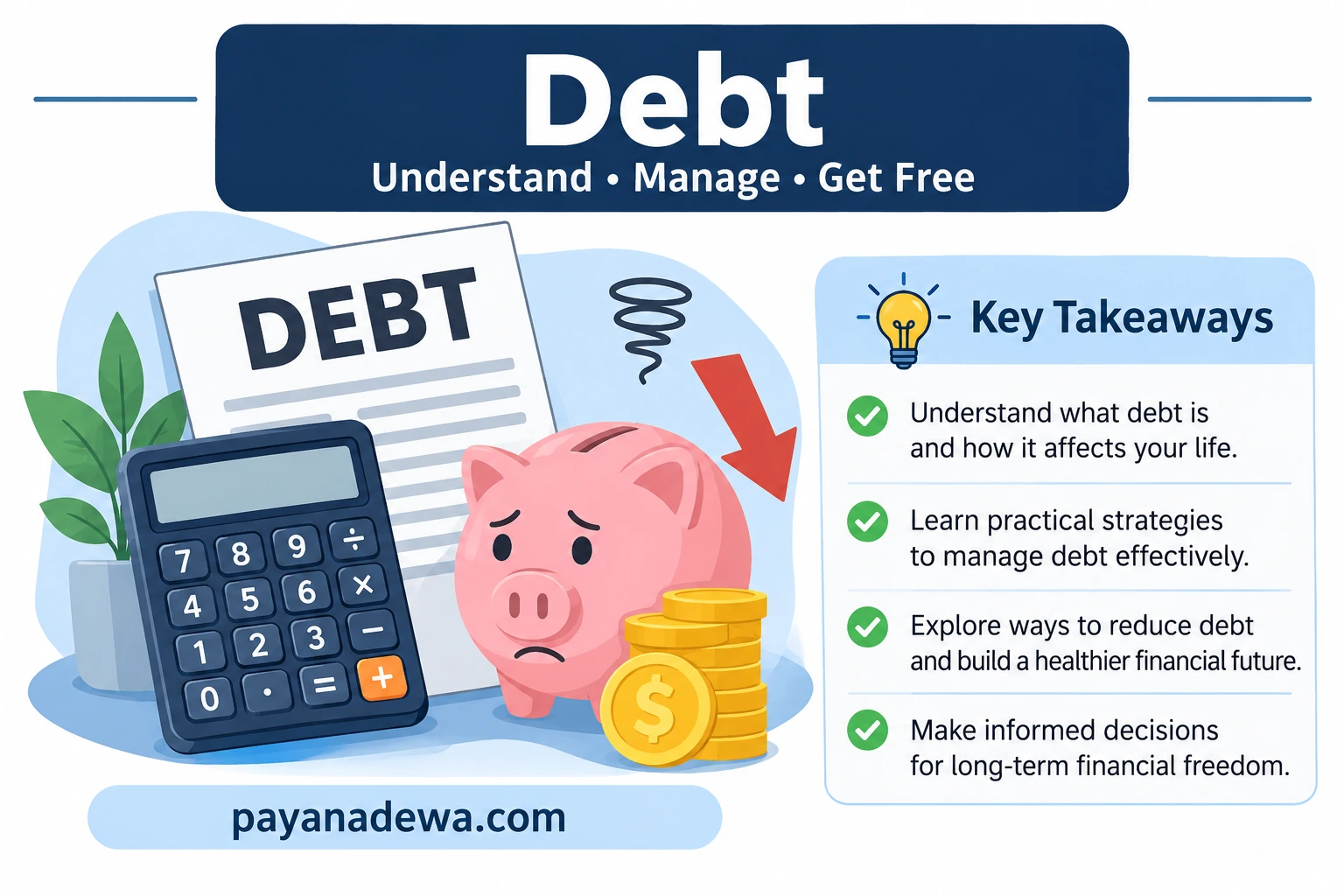
What Is Debt?
Debt is money that an individual, business, or organization borrows from another party and agrees to repay under specific conditions. These conditions usually include a repayment schedule, an interest rate, and sometimes additional fees.
For example, when you use a credit card to purchase something, you are borrowing money from the card issuer. If you do not pay the full balance by the due date, interest may be charged on the remaining amount. Similarly, when you borrow money to purchase a house, you generally repay the lender through monthly mortgage payments over several years.
Debt is not automatically a financial problem. Its impact depends on the amount borrowed, the cost of borrowing, your income, and your ability to make repayments.
Different Types of Debt
Not all debt works in the same way. Understanding the differences can help you determine which financial obligations deserve the most attention.
1. Secured Debt
Secured debt is borrowing backed by an asset that serves as collateral. If the borrower fails to meet the repayment obligations, the lender may have the legal right to take possession of the asset, subject to applicable laws and contract terms.
Common examples include:
- Mortgages secured by residential property.
- Car loans secured by vehicles.
- Some secured personal loans backed by savings or other assets.
Because collateral reduces the lender’s risk, secured loans may offer lower interest rates than comparable unsecured loans. However, the possibility of losing the asset makes missed payments particularly serious.
2. Unsecured Debt
Unsecured debt does not require specific collateral. Instead, lenders generally evaluate the borrower’s credit history, income, and ability to repay.
Common examples include:
- Credit card balances.
- Unsecured personal loans.
- Medical bills.
- Some student loans.
Interest rates on unsecured borrowing can be higher because the lender has no specific asset securing the loan. Late payments may also result in additional charges, collection activity, and negative credit reporting.
3. Revolving Debt
Revolving debt allows borrowers to use credit repeatedly up to an approved limit. Credit cards and certain lines of credit are common examples.
Borrowers can repay part or all of the balance and use the available credit again. However, carrying a balance from month to month can increase borrowing costs because interest continues to accumulate.
4. Installment Debt
Installment debt involves borrowing a specific amount and repaying it through scheduled payments over an agreed period.
Examples include mortgages, vehicle financing, and many personal loans. These loans often have predictable payment schedules, making monthly budgeting easier.
Common Reasons People Accumulate Debt
Debt can develop for many reasons. Some people borrow to invest in their future, while others rely on credit because their income cannot cover unexpected expenses.
Common causes include:
- Unexpected emergencies: Medical expenses, urgent repairs, and sudden unemployment can force people to borrow money.
- Housing expenses: Buying a home or covering housing costs often requires significant financing.
- Education costs: Tuition fees and other educational expenses can lead to student loan balances.
- Credit card spending: Regularly spending more than your income can support may create growing balances.
- Income instability: Reduced working hours or irregular earnings can make essential expenses difficult to manage.
- High living costs: Rising prices for food, transportation, utilities, and housing can increase financial pressure.
Identifying the reason behind your borrowing habits is important. It helps you address the underlying problem rather than focusing only on the outstanding balance.
How Debt Affects Your Financial Health
Debt can influence several areas of your financial life. While manageable borrowing may support important purchases, excessive debt can limit your financial flexibility.
Higher Monthly Expenses
Loan payments reduce the money available for savings, investments, housing, and everyday needs. When several repayments fall due each month, managing your budget becomes more challenging.
Interest and Additional Fees
Interest increases the total amount you repay. If you regularly miss payment deadlines, late fees and penalty charges may make your financial situation worse.
Credit History and Borrowing Opportunities
Your repayment behavior may influence your credit history and credit score, depending on your country’s reporting system. Consistent late payments and high credit utilization can make future borrowing more difficult or expensive.
Financial and Emotional Stress
Unmanageable debt can create anxiety and uncertainty. Concerns about payment deadlines, collection calls, and household expenses may affect your daily life. Creating a clear repayment strategy can help restore a sense of control.
Practical Strategies to Manage Debt
Managing debt starts with understanding your current financial position. You do not need to solve everything immediately. Instead, focus on consistent actions that gradually improve your situation.
1. List All Outstanding Debts
Start by writing down every debt you currently owe. Include the lender, outstanding balance, interest rate, minimum payment, and due date.
This information provides a complete picture of your financial obligations and helps you identify which balances are costing you the most.
2. Create a Realistic Monthly Budget
A budget helps you understand where your money goes. Calculate your monthly income and subtract essential expenses such as housing, food, transportation, utilities, and insurance.
Then determine how much money remains for debt repayment and savings.
Consider these practical budgeting habits:
- Track your spending regularly.
- Separate essential purchases from optional expenses.
- Reduce unnecessary subscriptions and recurring costs.
- Set aside money for emergency expenses.
- Allocate a consistent amount toward debt repayment.
3. Choose a Debt Repayment Method
Two popular strategies can help you organize your repayment efforts.
Debt Snowball Method: Pay the minimum required amount on every debt while directing extra money toward the smallest balance. Once that balance is cleared, move the additional payment toward the next smallest debt.
This approach can provide early progress and motivation.
Debt Avalanche Method: Pay the minimum required amount on every debt while directing extra money toward the balance with the highest interest rate. After clearing it, move to the next highest interest rate.
This method can reduce the total interest paid when you maintain the same repayment budget and other loan terms remain unchanged.
4. Contact Your Lenders
If you are struggling to make payments, contact your lenders before the situation becomes more serious. Some lenders offer hardship programs, revised repayment schedules, temporary payment arrangements, or other assistance.
Ask about available options, eligibility requirements, fees, and the total cost of any proposed arrangement. Make sure you understand the agreement before accepting it.
5. Avoid Accumulating New Debt
Reducing existing debt becomes more difficult when new borrowing continues to increase your balance. Review your spending habits and consider using cash or debit for everyday purchases when appropriate.
Before taking out another loan, evaluate whether the expense is necessary and whether your current income can support the additional payment.
How to Prevent Future Debt Problems
Preventing financial difficulties is often easier than recovering from them. Building healthy money habits can reduce your dependence on borrowing and improve your financial stability.
Build an Emergency Fund
An emergency fund provides money for unexpected expenses without requiring you to rely entirely on credit cards or personal loans.
Start with a small, achievable savings target. Over time, work toward building enough money to cover several months of essential living expenses, based on your circumstances.
Understand Loan Terms Before Borrowing
Always review the interest rate, repayment period, fees, penalties, and total repayment amount before accepting a loan.
Do not focus exclusively on the monthly payment. A longer repayment period may reduce individual payments while increasing the total interest paid.
Spend Within Your Income
Living within your means is one of the most effective ways to avoid unnecessary debt. Create spending limits, prioritize essential expenses, and avoid using borrowed money to maintain a lifestyle that your income cannot comfortably support.
Review Your Finances Regularly
Check your bank statements, loan balances, and monthly spending at least once a month. Regular reviews help you identify problems early and make adjustments before small financial issues become larger ones.
When Should You Consider Professional Debt Help?
Sometimes, personal budgeting and repayment strategies are not enough. If your debt continues to grow, you frequently miss payments, or you cannot afford essential living expenses, professional assistance may be appropriate.
Consider contacting a reputable nonprofit credit counselor, qualified financial adviser, or an authorized debt advice organization in your area.
Before choosing a debt relief service, remember to:
- Check the organization’s credentials and reputation.
- Understand all service fees and contractual obligations.
- Avoid companies that guarantee unrealistic results.
- Be cautious of services demanding large upfront payments.
- Understand the possible effects of debt settlement or consolidation on your credit history and financial position.
Professional advice can help you evaluate options such as debt management plans, consolidation, negotiation, or formal insolvency procedures where appropriate. The best solution depends on your location, income, debt structure, and legal circumstances.
Conclusion: Take Control of Your Debt
Debt is not always a sign of poor financial management. Borrowing can help people purchase essential assets, pursue education, and handle unexpected expenses. However, problems can develop when repayments become difficult to manage or borrowing grows beyond what your income can support.
The key to managing debt is understanding what you owe, creating a realistic budget, choosing an effective repayment strategy, and avoiding unnecessary new borrowing. Building an emergency fund and reviewing your finances regularly can also help prevent future problems.
Remember that financial progress takes time. Start with one manageable step, stay consistent, and adjust your plan as your circumstances change. With patience and informed decisions, you can reduce your debt, improve your financial stability, and move toward greater financial freedom.