Without a properly written agreement, businesses may face misunderstandings, payment disputes, missed deadlines, or disagreements about responsibilities. A well-structured business contract can reduce these risks by documenting important terms and explaining what each party must do.
In this guide, you will learn what a business contract is, which elements it should include, how to create one, and what to consider before signing. You will also discover practical tips for managing business agreements and avoiding common contractual mistakes.
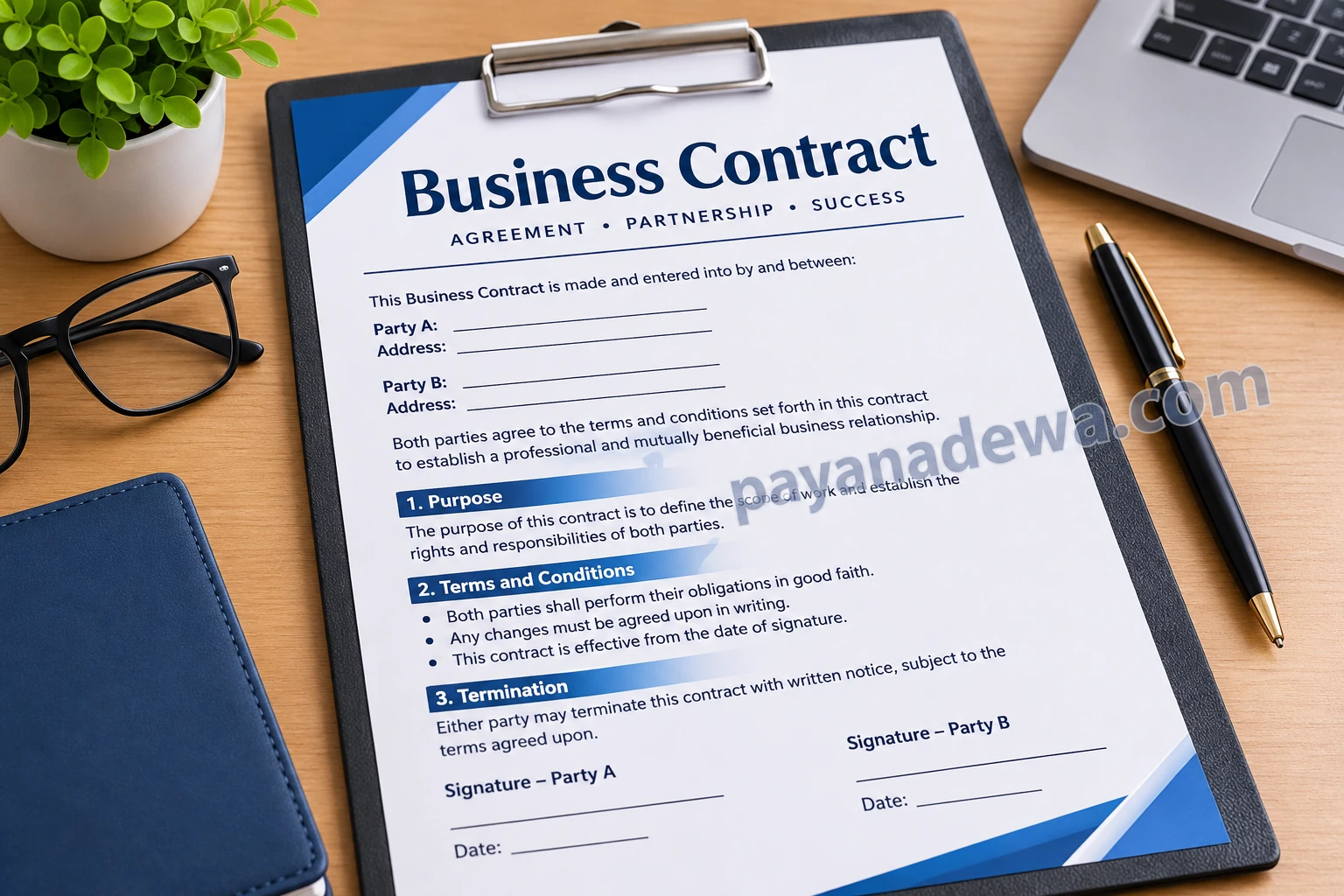
What Is a Business Contract?
A business contract is a legally enforceable agreement between two or more parties that establishes their rights, responsibilities, and obligations in a commercial relationship. It can be created between individuals, companies, organizations, suppliers, contractors, or business partners.
Most business contracts explain what each party agrees to provide, how much money will be paid, when specific obligations must be completed, and what happens if someone fails to meet the agreed terms.
Although verbal agreements may be enforceable in certain circumstances, written contracts are generally easier to understand, document, and prove. Therefore, businesses should consider putting important commercial arrangements in writing.
A business contract may cover many different activities, including:
- Purchasing and selling products or services.
- Hiring employees, freelancers, or independent contractors.
- Establishing business partnerships and joint ventures.
- Renting commercial property or equipment.
- Providing consulting, marketing, or professional services.
- Protecting confidential business information.
Why Is a Business Contract Important?
A clear business agreement provides a foundation for professional relationships. It helps both parties understand what they have agreed to and gives them a reference point if problems arise.
1. Defines Responsibilities and Expectations
Every business relationship involves specific responsibilities. A contract identifies which party must complete each task, provide certain services, deliver products, or make payments. As a result, everyone has a clearer understanding of their obligations.
2. Helps Prevent Business Disputes
Miscommunication can lead to expensive disagreements. A written agreement reduces uncertainty by documenting deadlines, payment conditions, performance standards, and other important details. If a disagreement occurs, the parties can refer to the original terms.
3. Protects Business Interests
A properly drafted contract can include provisions that protect intellectual property, confidential information, payment rights, and other commercial interests. These protections are particularly important when sharing sensitive information or working with external partners.
4. Builds Professional Trust
Using written agreements demonstrates that a business takes its responsibilities seriously. It also creates a transparent working relationship because all parties can review the same conditions before making a commitment.
Essential Elements of a Business Contract
Although contract requirements vary depending on the jurisdiction and type of agreement, most commercial contracts contain several important elements. Understanding these components can help you prepare a more complete document.
1. Identification of All Parties
Begin by identifying every individual or organization involved. Include full legal names, business names where applicable, registered addresses, and relevant identification details. Make sure the person signing has the authority to represent the business.
2. Purpose and Scope of the Agreement
Explain why the contract exists and describe the products, services, or activities covered by the agreement. Be specific about the expected results, project boundaries, and responsibilities of each party.
3. Payment Terms and Conditions
Payment provisions should explain the agreed price, payment method, due dates, deposits, taxes, and any additional expenses. If payments depend on milestones or completed work, describe those conditions clearly.
4. Duration and Important Deadlines
Specify when the agreement begins and whether it has an expiration date. Include delivery schedules, project milestones, renewal conditions, and other relevant deadlines. Clear timelines help prevent unnecessary delays.
5. Rights and Responsibilities
Describe what each party is entitled to receive and what each party must provide. This section should address performance expectations, quality requirements, communication responsibilities, and any applicable limitations.
6. Confidentiality and Intellectual Property
If the business relationship involves sensitive information, consider including confidentiality obligations. You should also explain who owns work products, designs, software, documents, trademarks, or other intellectual property created during the agreement.
7. Termination Conditions
Explain how the agreement can end, including termination notices, permitted reasons for ending the relationship, and any obligations that continue afterward. Consider addressing outstanding payments, unfinished work, and the return of company property.
8. Dispute Resolution and Governing Law
Include provisions explaining how disagreements will be handled. Depending on the circumstances, the parties may consider negotiation, mediation, arbitration, or court proceedings. Identify the governing law and jurisdiction where appropriate.
9. Signatures and Dates
Include signature spaces for all authorized parties and the dates of execution. Electronic signatures may be acceptable under applicable laws. However, the parties should confirm the relevant legal requirements before signing electronically.
Common Types of Business Contracts
Businesses use different agreements depending on their operations, industry, and commercial relationships. Choosing the right document helps ensure that the terms address the actual transaction.
Service Agreement
A service agreement outlines the work that a service provider will perform for a client. It commonly covers deliverables, fees, deadlines, service standards, and responsibilities.
Partnership Agreement
A partnership agreement establishes the relationship between business partners. It may explain ownership percentages, capital contributions, profit distribution, decision-making authority, and procedures for handling disagreements.
Sales Agreement
A sales contract documents the purchase and sale of products or goods. Important terms often include product descriptions, quantities, prices, delivery arrangements, warranties, and payment obligations.
Employment Agreement
An employment agreement defines the relationship between an employer and an employee. It may cover job responsibilities, compensation, working hours, benefits, confidentiality, and termination conditions.
Non-Disclosure Agreement (NDA)
An NDA helps protect confidential information shared during business discussions or commercial activities. It defines what information is confidential, how it may be used, and when disclosure is permitted.
How to Create a Business Contract Step by Step
Creating a professional business agreement does not have to be complicated. Following a structured process can help you identify important terms and reduce the risk of overlooking essential information.
Step 1: Identify the Purpose
Start by determining exactly what the agreement needs to accomplish. Identify the parties, the nature of the transaction, and the results both sides expect.
Step 2: Discuss the Main Terms
Before drafting the document, discuss the important commercial conditions. These may include pricing, payment schedules, responsibilities, deadlines, deliverables, and performance standards.
Step 3: Prepare the Written Agreement
Organize the agreed terms into clear sections. Use straightforward language, consistent terminology, and numbered clauses. Avoid vague statements that could create different interpretations.
Step 4: Review Every Clause
Read the entire document carefully. Check names, addresses, amounts, dates, obligations, and termination provisions. Make sure the contract reflects what both parties actually discussed and agreed upon.
Step 5: Obtain Legal Review When Necessary
For complex, high-value, international, or long-term transactions, ask a qualified legal professional to review the document. Legal advice can help identify risks and ensure that the agreement complies with applicable laws.
Step 6: Sign and Distribute Copies
Once all parties approve the final version, arrange for authorized signatures. Give each party a complete copy and keep the signed agreement in a secure location.
Practical Tips for Writing a Strong Business Contract
A useful agreement should be easy to understand, detailed enough to prevent confusion, and appropriate for the transaction. Consider these practical recommendations:
- Use clear language: Avoid unnecessary legal jargon and explain technical terms when needed.
- Be specific: Define deliverables, quantities, deadlines, prices, and performance expectations.
- Document changes: Record amendments in writing and obtain the required approvals.
- Address unexpected situations: Consider delays, emergencies, force majeure events, and changes in business circumstances.
- Check signing authority: Confirm that every representative has permission to sign on behalf of their organization.
- Keep organized records: Store signed copies, amendments, invoices, and related correspondence together.
- Review agreements regularly: Update contracts when business operations, regulations, or commercial requirements change.
Common Business Contract Mistakes to Avoid
Even a professional-looking agreement can create problems if important information is missing or unclear. Avoid these common mistakes when preparing a commercial contract.
- Using vague terms: Statements such as “payment will be made soon” create uncertainty. Include exact dates or measurable conditions instead.
- Leaving important sections blank: Complete all relevant fields and clearly mark provisions that do not apply.
- Ignoring termination procedures: Explain how either party can end the agreement and what happens afterward.
- Overlooking local laws: Contract requirements differ between countries and jurisdictions. Never assume one template works everywhere.
- Failing to document amendments: Verbal changes can lead to disagreements. Use written amendments whenever required or appropriate.
- Signing without reading: Every party should understand the complete agreement before accepting its terms.
Can You Use a Business Contract Template?
Yes. A business contract template can provide a useful starting point when preparing a new commercial agreement. It saves time by offering a structured format with sections for party information, agreement terms, payment conditions, responsibilities, and signatures.
However, a template should never be treated as a universal legal document. Every business relationship has different requirements, and some clauses may need to be added, removed, or modified.
Before using a downloadable contract template, consider the following:
- Confirm that the template matches the type of business transaction.
- Replace sample information with accurate details.
- Customize the payment terms and responsibilities.
- Check confidentiality, intellectual property, and termination provisions.
- Confirm that the document complies with applicable local laws.
- Obtain professional legal advice when the agreement involves significant risks.
A carefully customized template can make contract preparation more efficient while helping businesses maintain consistent documentation.
Conclusion
A business contract is more than a formal document. It is an important tool for establishing trust, defining responsibilities, protecting commercial interests, and managing professional relationships.
By including clear terms, identifying the parties, explaining payment obligations, setting deadlines, and addressing potential disputes, businesses can create stronger agreements and reduce misunderstandings.
Whether you are working with a supplier, customer, contractor, or business partner, take time to prepare and review your agreement before signing. Start with a suitable business contract template, customize it to your needs, and seek qualified legal advice when necessary. A well-prepared agreement can provide a stronger foundation for long-term business success.
Disclaimer: This article provides general educational information and is not a substitute for professional legal advice. Contract enforceability and legal requirements depend on the applicable jurisdiction and specific circumstances.