An Annual Maintenance Contract (AMC) is an agreement between a service provider and a customer to maintain equipment, machinery, systems, or facilities for a specified period, usually one year. It helps businesses keep their assets in good working condition while reducing unexpected repair costs and operational disruptions.
Whether you manage office equipment, air conditioning systems, IT infrastructure, industrial machinery, or commercial buildings, regular maintenance is essential. However, arranging maintenance services every time something goes wrong can be expensive and time-consuming.
That is where an Annual Maintenance Contract becomes valuable. It establishes clear maintenance responsibilities, service schedules, pricing arrangements, and support conditions. As a result, businesses can plan their maintenance activities more effectively and protect their investments.
In this guide, you will learn what an AMC is, how it works, its benefits, common types, essential contract clauses, and how to choose the right maintenance provider. You will also find practical tips for creating an effective maintenance agreement.
What Is an Annual Maintenance Contract?
An Annual Maintenance Contract is a formal agreement between a customer and a service provider for maintenance and support services over a fixed period, generally twelve months.
Under this agreement, the provider performs scheduled inspections, preventive maintenance, troubleshooting, and repairs according to the agreed terms. The customer pays an agreed fee in exchange for the specified services.
The exact coverage depends on the contract. Some agreements include spare parts and replacement components, while others cover labor and routine servicing only.
For example, a company operating several air conditioning units may sign an AMC with an HVAC service provider. The provider then performs scheduled inspections, cleans filters, checks refrigerant levels, and handles eligible repairs throughout the contract period.
This arrangement creates a predictable maintenance process and helps prevent equipment failures.
How Does an Annual Maintenance Contract Work?
An AMC typically follows a straightforward process. Both parties agree on the equipment, maintenance requirements, service frequency, pricing, and contract conditions before signing the agreement.
1. Initial Assessment
The maintenance provider evaluates the customer’s equipment, systems, or facilities. This assessment helps identify existing problems, maintenance requirements, and potential risks.
2. Defining the Scope of Services
Both parties determine which services the contract will include. These may involve routine inspections, preventive servicing, emergency repairs, technical support, and performance checks.
3. Agreeing on Pricing and Payment
The provider prepares a quotation based on the equipment condition, service frequency, labor requirements, and included materials. The customer reviews the proposal before accepting it.
4. Signing the Agreement
Once both parties approve the terms, they sign the Annual Maintenance Contract. The agreement specifies the effective date, contract duration, payment schedule, and responsibilities of each party.
5. Performing Scheduled Maintenance
The provider follows the agreed maintenance schedule. Technicians inspect the equipment, complete necessary servicing, and document their work.
6. Reviewing and Renewing the Contract
At the end of the contract period, both parties can review service performance and discuss renewal. They may also adjust the scope, pricing, or maintenance frequency based on changing requirements.
Key Benefits of an Annual Maintenance Contract
An AMC offers several advantages for businesses, property owners, and organizations. The following benefits explain why many companies choose long-term maintenance agreements.
1. Predictable Maintenance Costs
Unexpected equipment failures can create significant expenses. An AMC helps businesses plan maintenance spending because the service fee is agreed upon in advance.
Although additional charges may apply for excluded services or replacement parts, a clear agreement makes budgeting easier.
2. Reduced Equipment Downtime
Regular inspections help technicians identify potential problems before they cause major failures. Consequently, businesses can reduce interruptions and maintain smoother operations.
3. Longer Equipment Lifespan
Proper maintenance reduces unnecessary wear and helps equipment operate within recommended conditions. This can extend the useful life of valuable assets and delay expensive replacements.
4. Access to Professional Technicians
A maintenance contract gives customers access to qualified service personnel who understand the equipment and its maintenance requirements.
This professional support can improve repair quality and reduce the risk of incorrect maintenance procedures.
5. Better Operational Efficiency
Well-maintained equipment generally performs more consistently. Regular servicing can also help identify inefficiencies, improve reliability, and support daily business activities.
6. Convenient Maintenance Scheduling
Instead of arranging every service appointment separately, customers can follow a predetermined maintenance schedule. This saves administrative time and makes maintenance management easier.
Common Types of Annual Maintenance Contracts
Not all maintenance agreements provide the same level of coverage. The right option depends on the equipment, operational risks, and available maintenance budget.
Comprehensive Annual Maintenance Contract
A comprehensive AMC provides broader maintenance coverage. Depending on the agreement, it may include routine servicing, labor, repairs, and selected spare parts.
This option is suitable for businesses that prefer wider service coverage and fewer unexpected maintenance expenses. However, customers should carefully review exclusions and replacement conditions.
Non-Comprehensive Annual Maintenance Contract
A non-comprehensive AMC generally covers scheduled maintenance, inspections, and labor for eligible services. Spare parts and replacement components are usually charged separately.
This arrangement can be more affordable for businesses that want professional maintenance without paying for extensive parts coverage.
Preventive Maintenance Contract
A preventive maintenance agreement focuses on regular inspections and servicing to reduce the likelihood of equipment failure.
Typical activities include cleaning, lubrication, calibration, performance testing, and component inspections.
Corrective Maintenance Contract
A corrective maintenance agreement focuses on addressing problems after they occur. The provider diagnoses faults and performs repairs according to the contract conditions.
Some agreements combine preventive and corrective maintenance to provide more balanced coverage.
What Should an Annual Maintenance Contract Include?
A well-written maintenance agreement protects both the customer and the service provider. It should explain exactly what each party expects and how the services will be delivered.
Consider including the following essential sections:
- Contracting parties: Full legal names, business addresses, and contact information for both parties.
- Purpose of the agreement: A clear explanation of why the maintenance services are required.
- Scope of services: A detailed list of inspections, repairs, servicing, and technical support.
- Equipment details: Equipment names, model numbers, serial numbers, and installation locations.
- Contract duration: Start date, expiration date, and renewal conditions.
- Maintenance schedule: Frequency of inspections and planned service visits.
- Response time: Expected response times for service requests and emergency situations.
- Service charges: Contract fees, payment terms, taxes, and additional charges.
- Parts and materials: Details of included and excluded replacement components.
- Responsibilities: Duties and obligations of both parties.
- Exclusions: Situations that are not covered by the agreement.
- Termination conditions: Procedures for cancellation, breach of contract, and early termination.
- Signatures: Authorized representatives and signing dates.
Including these details reduces misunderstandings and makes contract administration easier.
Annual Maintenance Contract Template
Using a ready-made AMC template can save time when preparing a maintenance agreement. A structured document also helps ensure that important contract information is not overlooked.
The following printable template design provides a starting point for preparing a professional maintenance agreement. You can customize the company details, service scope, contract period, and payment conditions according to your requirements.
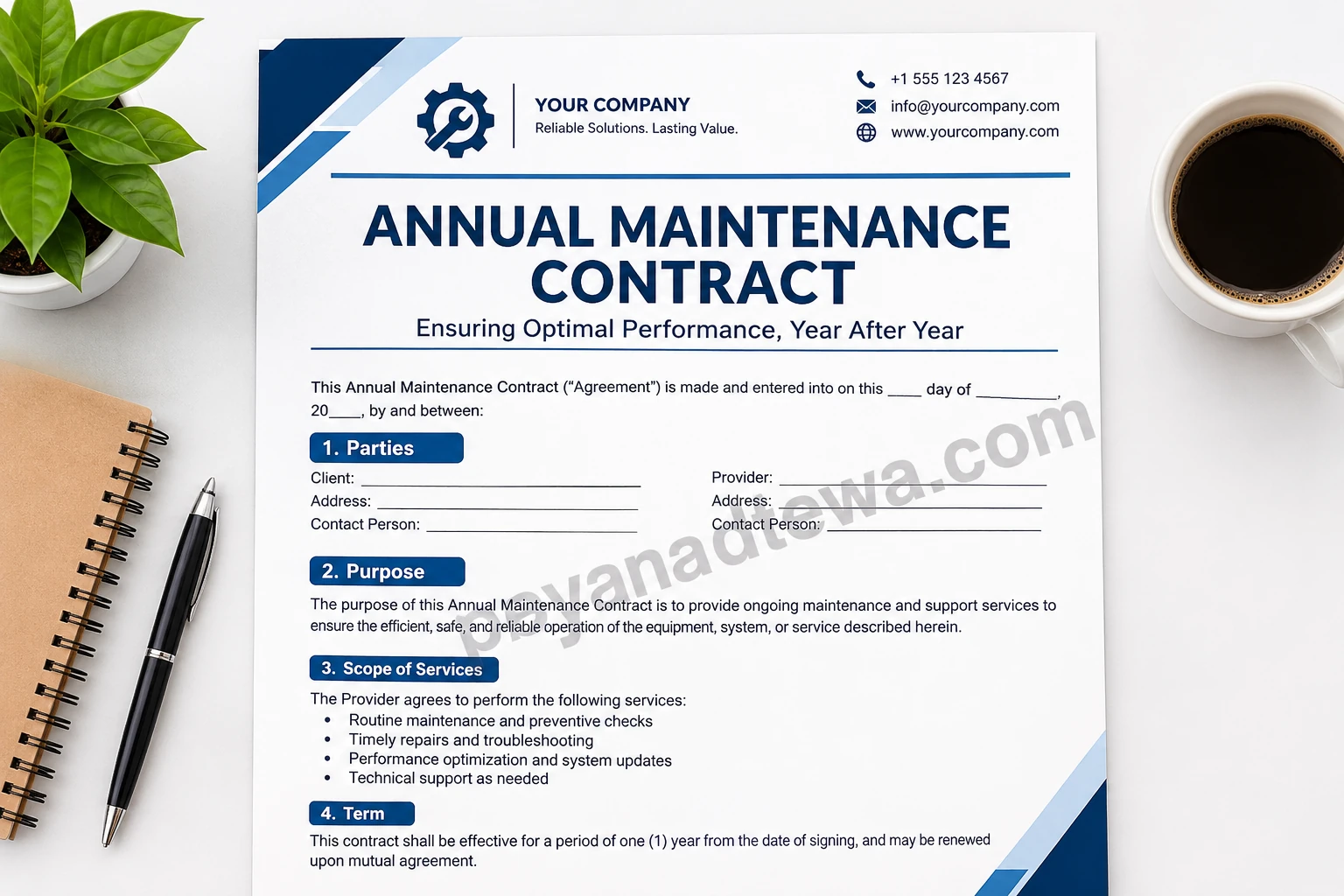
Before using the template, make sure all information is accurate. Add the equipment details, service conditions, payment schedule, and signatures required by both parties.
How to Choose the Right AMC Service Provider
Selecting a reliable maintenance provider is just as important as choosing the right contract. A low service fee does not always guarantee quality maintenance.
Use these practical considerations when evaluating potential providers:
- Experience and qualifications: Check the provider’s industry experience, technician qualifications, and relevant certifications.
- Service reputation: Review customer feedback, testimonials, and references from previous clients.
- Service availability: Confirm whether the provider offers emergency assistance and support outside normal working hours.
- Response time: Ask how quickly technicians can respond to reported problems.
- Transparent pricing: Request a detailed quotation that explains included services and additional costs.
- Maintenance reporting: Choose a provider that supplies service reports and maintenance records.
- Warranty and guarantees: Review any applicable workmanship guarantees and service warranties.
Most importantly, compare the actual service coverage rather than focusing only on the annual contract price.
Common Mistakes to Avoid When Signing an AMC
Even a professionally prepared agreement can create problems if important details are missing. Before signing, review the following common mistakes.
Unclear Service Coverage
A contract that simply states maintenance services will be provided is not sufficiently detailed. Specify the exact services, equipment, and maintenance frequency.
Ignoring Exclusions
Some agreements exclude consumables, accidental damage, major component replacements, or misuse-related failures. Read these exclusions carefully to avoid unexpected charges.
Missing Response Time Commitments
Without defined response times, customers may experience delays when urgent repairs are needed. Include realistic service response targets in the agreement.
Overlooking Renewal Conditions
Check whether the contract renews automatically or requires written approval. Also, review any price adjustments and cancellation notice periods.
Failing to Maintain Service Records
Maintenance reports provide valuable information about equipment condition and completed work. Keep these records to support future maintenance decisions and contract evaluations.
Practical Tips for Managing Your Annual Maintenance Contract
Signing an agreement is only the beginning. Effective management helps you get the full value of your maintenance investment.
- Keep a complete inventory of all equipment covered by the contract.
- Maintain a calendar of upcoming inspection and servicing dates.
- Report unusual equipment behavior as soon as possible.
- Request written service reports after every maintenance visit.
- Track recurring problems and discuss them with the provider.
- Review maintenance performance before the contract expires.
- Compare service costs and equipment reliability when considering renewal.
These simple practices help businesses maintain accountability and improve long-term asset management.
Conclusion
An Annual Maintenance Contract is a practical solution for businesses that want reliable equipment, predictable maintenance expenses, and professional technical support. By establishing clear service responsibilities and maintenance schedules, an AMC helps reduce operational disruptions and protect valuable assets.
However, choosing the right agreement requires careful planning. Review the service scope, contract fees, exclusions, response times, and renewal conditions before signing. You should also select a qualified provider with a proven service record.
Whether you need maintenance for IT systems, office equipment, HVAC units, industrial machinery, or commercial facilities, a well-structured maintenance agreement can make equipment management more efficient and reliable.
Start by reviewing your maintenance requirements and preparing an agreement that meets your operational needs. A clear and comprehensive AMC is a valuable investment in long-term business performance.