Running a successful business requires more than a great idea. You need clear goals, organized operations, effective marketing, financial discipline, and a plan for sustainable growth. Without a reliable system, important tasks can easily be overlooked, leading to wasted time, unnecessary expenses, and missed opportunities.
A business checklist helps you organize essential responsibilities, track progress, and maintain consistency as your company grows. Whether you are launching a startup, managing a small business, or improving an established company, a practical checklist gives you a clear roadmap for what needs to be done and when.
In this guide, you will discover the most important business tasks to review, learn how to create a useful checklist, and find practical ways to turn your daily activities into measurable progress.
Use the printable business checklist template below to organize your priorities, record important details, and keep your business moving in the right direction.
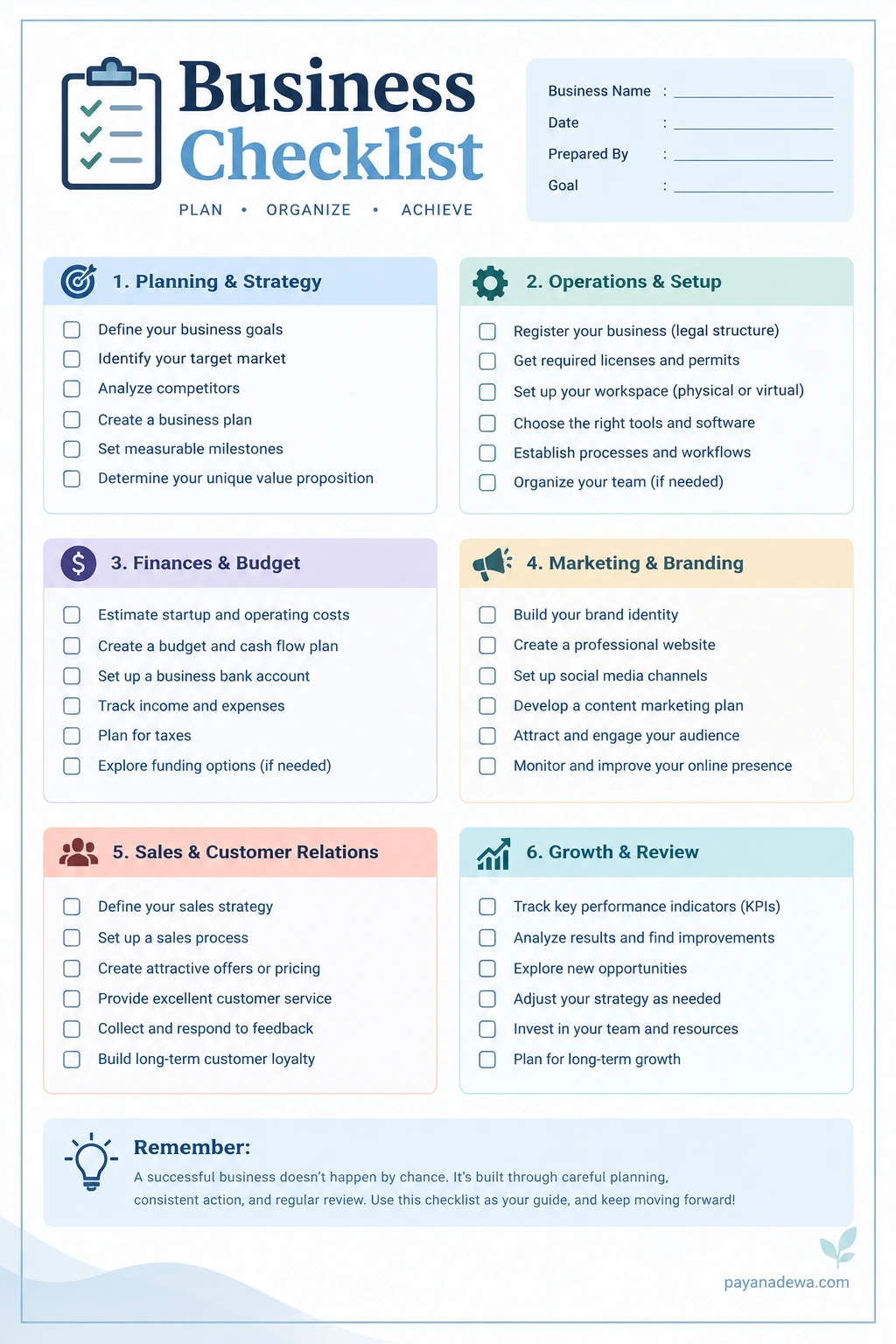
What Is a Business Checklist?
A business checklist is a structured list of tasks, responsibilities, and goals that helps business owners manage their operations more effectively. It can cover everything from business registration and budgeting to customer service, marketing campaigns, and long-term planning.
Instead of relying on memory, you can use a checklist to track completed tasks, identify outstanding work, and maintain a consistent workflow. This approach is especially helpful when you manage multiple responsibilities or work with a team.
A business checklist can be used daily, weekly, monthly, or annually. The best format depends on your goals and the complexity of your business.
Why Every Business Owner Needs a Checklist
Even experienced entrepreneurs can overlook important details when they have too many tasks competing for their attention. A checklist creates a simple system for keeping priorities visible and responsibilities organized.
- Better organization: Keep important tasks in one accessible place.
- Improved productivity: Focus on priorities instead of deciding what to do next.
- Fewer mistakes: Use repeatable steps for routine business activities.
- Clear accountability: Assign responsibilities and monitor completion.
- More informed decisions: Review progress and identify areas that need attention.
- Consistent growth: Build reliable habits that support long-term business goals.
Essential Business Checklist for Getting Started
Starting a business involves several important decisions. Before investing significant time or money, establish a solid foundation by reviewing these essential steps.
1. Define Your Business Goals and Strategy
Begin by identifying what your business will offer, who it will serve, and how it will compete. A clear strategy helps you direct your resources toward activities that support your objectives.
- Define your business mission and long-term vision.
- Identify your target customers and their needs.
- Research competitors and market opportunities.
- Determine your unique value proposition.
- Create a business plan with realistic milestones.
- Establish measurable short-term and long-term goals.
Make your goals specific and measurable. For example, rather than aiming to increase sales, set a target to increase monthly revenue by a defined percentage within a specific period.
2. Complete Legal and Administrative Requirements
Before operating, investigate the legal and administrative requirements that apply to your business location, industry, and structure. Requirements vary by jurisdiction, so confirm the relevant rules with official authorities or qualified professionals.
- Choose an appropriate business structure.
- Register your business when required.
- Obtain applicable licenses and permits.
- Understand tax registration and reporting obligations.
- Review contracts, privacy requirements, and insurance needs.
- Set up a secure system for storing business records.
Completing these tasks early can reduce administrative problems and help you build a more dependable business foundation.
Business Operations Checklist
Efficient operations help you deliver products or services consistently while controlling costs. Establishing clear processes also makes it easier to delegate work and maintain quality as your business expands.
3. Organize Daily Business Operations
Review how work moves through your business, from receiving customer requests to delivering the final product or service. Identify unnecessary steps and create straightforward procedures for recurring activities.
- Choose suitable tools, software, and equipment.
- Document important workflows and standard procedures.
- Organize inventory, supplies, and supplier relationships when applicable.
- Set clear responsibilities for yourself and your team.
- Establish quality control procedures.
- Back up important files and protect sensitive information.
- Review operational problems and resolve recurring issues.
For a small business, a simple shared task list may be sufficient. Larger teams may benefit from project management software, documented approval processes, and regular operational reviews.
4. Improve Time Management and Productivity
Business owners often spend too much time responding to urgent requests and too little time working on strategic priorities. A structured routine can help you protect time for activities that generate meaningful results.
- Identify your three most important priorities each day.
- Group similar tasks to reduce unnecessary interruptions.
- Set deadlines for important projects.
- Delegate suitable tasks instead of managing every detail personally.
- Automate repetitive work when practical.
- Review completed tasks and plan the next working day.
Remember that productivity is not simply about completing more tasks. It is about consistently completing the right tasks.
Financial Business Checklist
Financial management is essential for business stability. A company can generate sales and still experience financial difficulties if expenses, payment timing, and cash flow are not managed carefully.
5. Create a Realistic Budget
Prepare a budget that reflects your expected income, operating expenses, and financial obligations. Separate essential costs from discretionary spending so you can make informed decisions when revenue changes.
- Estimate startup costs and recurring expenses.
- Prepare a monthly operating budget.
- Forecast cash inflows and outflows.
- Monitor outstanding invoices and customer payments.
- Review supplier bills and payment deadlines.
- Set aside funds for applicable taxes.
- Plan for unexpected expenses and emergencies.
Update your budget regularly using actual financial results. Comparing projections with real performance helps you identify overspending and recognize opportunities to improve profitability.
6. Track Revenue, Expenses, and Profitability
Keep accurate financial records and review them consistently. Revenue shows how much money your business earns, while profit reflects what remains after expenses. Cash flow shows how money moves in and out of the business.
Monitor useful financial indicators, including gross profit margin, operating expenses, accounts receivable, and available cash. Consider using accounting software or working with a qualified accountant when your financial responsibilities become more complex.
Maintain separate business and personal finances where appropriate, and make sure financial records are organized for reporting, tax preparation, and decision-making.
Marketing and Branding Checklist
Even a valuable product or service needs an effective way to reach potential customers. A marketing checklist helps you build brand recognition, communicate your value, and attract the right audience.
7. Build a Consistent Brand Identity
Your brand should communicate what your business stands for and why customers should choose it. Consistency across your website, social media profiles, packaging, and customer communications helps create a recognizable identity.
- Choose a clear business name and visual identity.
- Define your brand message and value proposition.
- Create a professional website or online storefront.
- Keep business contact details accurate and consistent.
- Prepare useful content that answers customer questions.
- Review your brand presentation across relevant platforms.
8. Create a Practical Marketing Plan
Choose marketing channels based on where your target customers spend time and how they prefer to discover products or services. You do not need to use every available platform to market effectively.
- Identify your most relevant marketing channels.
- Develop a realistic content calendar.
- Optimize website pages for relevant search terms.
- Publish useful articles, guides, or product information.
- Use social media to build relationships with your audience.
- Test advertising campaigns against a defined budget.
- Measure traffic, leads, conversions, and customer acquisition costs.
Review your results before increasing your marketing investment. Focus on the activities that produce meaningful engagement, qualified leads, and profitable sales rather than relying on impressions or follower counts alone.
Sales and Customer Service Checklist
Long-term business success depends on more than attracting attention. You must also convert interested prospects into customers and give them reasons to return.
9. Strengthen Your Sales Process
A clear sales process helps you manage inquiries, explain your offer, and follow up with potential customers. It also makes performance easier to evaluate and improve.
- Define your ideal customer and their main challenges.
- Explain your products or services clearly.
- Set transparent prices, terms, and expectations.
- Respond to inquiries promptly.
- Track leads and follow-up activities.
- Review conversion rates and reasons for lost sales.
10. Deliver Excellent Customer Experiences
Customer service influences satisfaction, reputation, and repeat purchases. Make it easy for customers to ask questions, report problems, and understand what happens after they buy.
- Provide clear instructions and reliable support.
- Set realistic delivery and response times.
- Ask for feedback at appropriate moments.
- Resolve complaints professionally.
- Protect customer information.
- Use feedback to improve products and services.
Customer retention can be just as important as customer acquisition. Consistently delivering value helps build trust and encourages positive recommendations.
Business Growth and Performance Checklist
Once your business has established reliable operations, review its performance and identify opportunities for improvement. Growth should be based on evidence, available resources, and a clear understanding of customer demand.
11. Monitor Key Performance Indicators
Key performance indicators, commonly called KPIs, help you evaluate whether your business is moving toward its goals. Choose a small number of meaningful metrics instead of tracking everything without a clear purpose.
- Monthly revenue and revenue growth.
- Gross profit and operating profit.
- Cash flow and operating expenses.
- Website traffic and conversion rates.
- Customer acquisition cost.
- Customer retention and satisfaction.
- Project completion and operational efficiency.
Compare performance with previous periods and investigate significant changes. Use the findings to adjust your budget, marketing strategy, staffing, or operational priorities.
12. Plan for Sustainable Growth
Expanding too quickly can put pressure on cash flow, employees, and service quality. Before pursuing a new market or launching another product, assess whether your business has the resources and systems to support the change.
- Evaluate new customer segments and market opportunities.
- Assess demand before expanding your product range.
- Improve processes that limit efficiency.
- Invest in employee training and development when needed.
- Review risks and prepare contingency plans.
- Set realistic growth targets and review them regularly.
How to Use Your Business Checklist Effectively
A checklist works best when it becomes part of your regular management routine. A long list that is never reviewed will not improve your business. The goal is to create a manageable system that supports action and accountability.
Organize Tasks by Frequency
Divide your checklist into daily, weekly, monthly, and quarterly responsibilities. This makes it easier to identify which tasks require immediate attention and which can be scheduled for a later review.
- Daily: Review priorities, respond to urgent customer requests, and monitor critical operations.
- Weekly: Review sales activity, outstanding tasks, customer feedback, and upcoming deadlines.
- Monthly: Evaluate financial results, marketing performance, and progress toward goals.
- Quarterly: Review strategy, business risks, staffing needs, and growth opportunities.
Assign Owners and Deadlines
Give each important task a responsible person and a realistic deadline. Add a status such as Not Started, In Progress, or Completed. For larger projects, break complex tasks into smaller actions that are easier to track.
Keep the Checklist Updated
Remove outdated tasks, add new responsibilities, and adjust priorities when business conditions change. Use a printable business checklist for simple planning or a digital version when you need collaboration, notifications, and progress reporting.
Most importantly, review the checklist consistently. A short weekly review can help you catch delays, resolve obstacles, and prepare for the next set of priorities.
Common Business Checklist Mistakes to Avoid
Although checklists are simple tools, using them poorly can make them less effective. Avoid these common mistakes:
- Creating an overwhelming list: Focus on essential actions instead of documenting every minor activity.
- Ignoring deadlines: Give important tasks realistic completion dates.
- Failing to assign responsibility: Make ownership clear for each task.
- Tracking activity without results: Connect completed work to business goals and measurable outcomes.
- Using the same checklist forever: Update it as your company evolves.
- Neglecting financial reviews: Monitor cash flow and expenses even during periods of strong sales.
A well-designed checklist should simplify decisions, not create unnecessary administration. Start with a manageable list and expand it only when additional structure provides real value.
Conclusion: Build a Stronger Business One Task at a Time
A practical business checklist gives you a repeatable way to organize operations, manage finances, improve marketing, strengthen customer relationships, and plan for growth. It helps transform broad ambitions into clear actions that you can complete, measure, and improve.
Start by reviewing the essential tasks in this guide and selecting the ones most relevant to your current business stage. Assign deadlines, track progress, and schedule regular reviews to keep your priorities aligned with your goals.
Download and use the printable business checklist template to get started. With consistent planning, accurate records, and a willingness to adapt, you can make better decisions and build a more organized, resilient, and sustainable business.
Youur style is really unique comparred tto otber folks I have read stuff from.
I appreciate you for posting when you’ve got the opportunity, Guess I wil jut bookmark this page.
xnxx