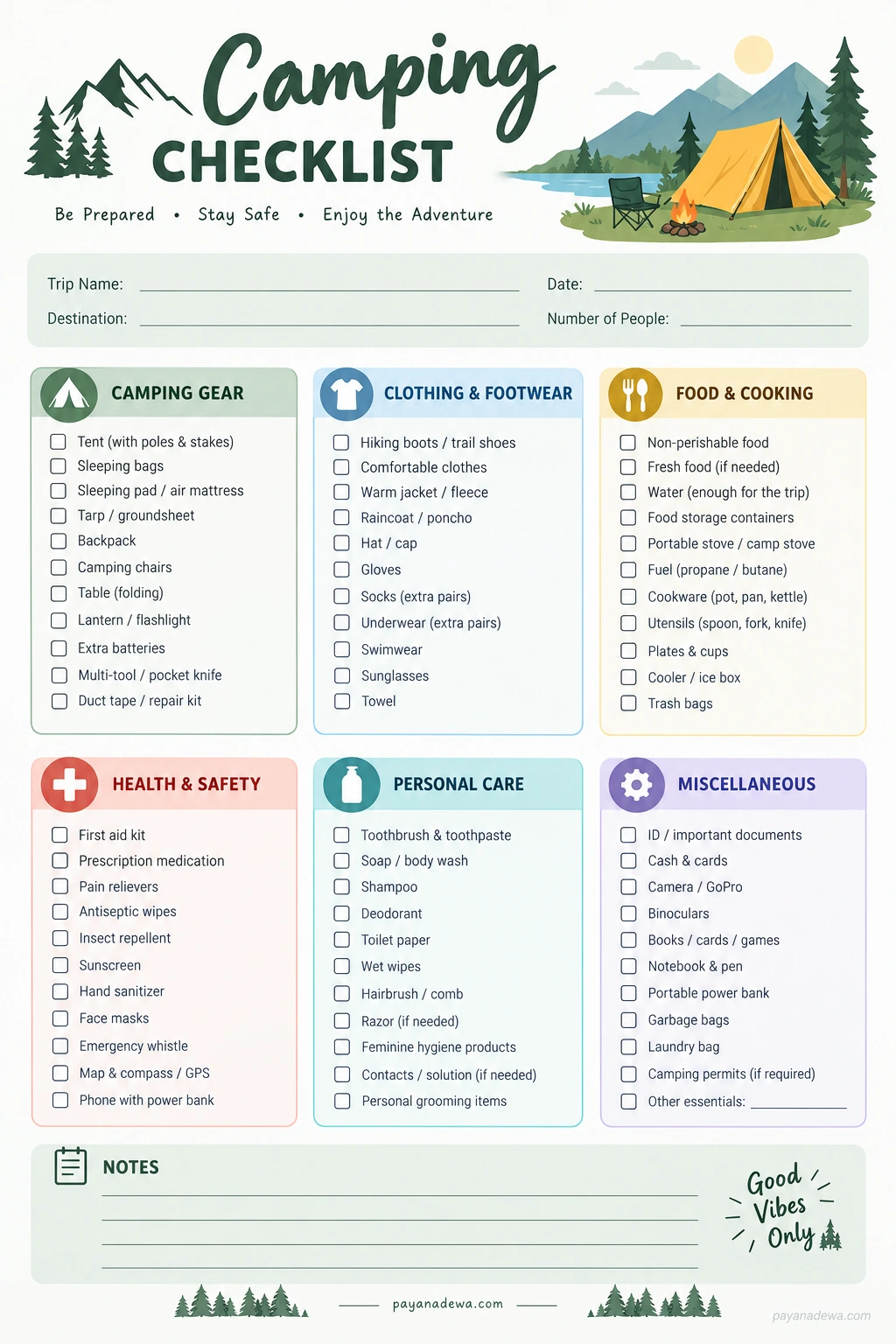
This camping checklist helps you organize the essentials before you leave home. Use it for a weekend at a developed campground, a family tent-camping trip, or a simple overnight stay in nature. Every trip is different, so adjust the list to match the weather, location, activities, and facilities at your campsite.
Printable Camping Checklist Template
Keep a copy of your checklist on your phone or print it before packing. Check off each item as it goes into your bag or vehicle. A printed list is especially useful when several people are sharing equipment or helping prepare for the trip.
1. Camping Gear and Shelter
Your shelter and sleeping equipment help you rest well and stay protected from changing conditions. Choose gear that suits the season, campsite, and number of people in your group.
Essential shelter items
- Tent with poles, stakes, and guylines
- Groundsheet or footprint, if recommended for your tent
- Sleeping bag rated for the expected temperatures
- Sleeping pad or air mattress
- Pillow or compact camping pillow
- Tarp or shelter for shade and rain protection
- Camping chairs and a folding table, if needed
- Lantern, headlamp, or flashlight
- Extra batteries or a charged rechargeable power source
- Repair kit, duct tape, and a multi-tool
Before leaving, set up your tent at home if you have not used it recently. This helps you check that all poles and parts are present. It also gives you a chance to practice pitching the tent before daylight fades.
2. Clothing and Footwear
Pack clothing for the forecast, but prepare for sudden changes in temperature. Layering is usually more useful than bringing one bulky outfit. It allows you to add or remove clothing as you hike, relax, or sleep.
- Moisture-wicking shirts and comfortable trousers or shorts
- Warm fleece, sweater, or insulated jacket
- Waterproof rain jacket or poncho
- Hiking boots or trail shoes suited to the terrain
- Extra socks and underwear
- Sleepwear and comfortable camp clothes
- Hat or cap, plus sunglasses
- Gloves and a warm hat for cold conditions
- Swimwear and a quick-drying towel, if relevant
- Sandals or camp shoes
As a practical rule, bring at least one spare set of dry clothing. Keep it in a waterproof bag so rain, spills, or damp equipment do not soak it.
3. Food, Water, and Cooking Supplies
Plan meals before shopping. A simple menu reduces waste, saves packing space, and makes cooking easier after a long day outdoors. Choose foods that travel well and match the cooking equipment available at your campsite.
Food and drink
- Drinking water and extra water for cooking and cleaning
- Easy breakfasts, lunches, dinners, and snacks
- Tea, coffee, or other preferred drinks
- Cooler and ice packs for perishable food
- Reusable water bottles or hydration reservoirs
- Food storage containers and resealable bags
Cooking and cleanup
- Camping stove and the correct fuel
- Lighter or waterproof matches
- Pots, pan, kettle, and cooking utensils
- Plates, bowls, mugs, and cutlery
- Biodegradable soap where permitted, sponge, and dish towel
- Trash bags and separate bags for recycling where facilities allow
Check local fire rules before bringing a stove or planning a campfire. Never use a fuel-burning stove, grill, or charcoal burner inside a tent or enclosed shelter because carbon monoxide can build up quickly. Store food securely according to local wildlife guidance.
4. Health, Safety, and Navigation
Safety supplies deserve a place on every camping packing list, even for short trips. Conditions can change, phone service may be limited, and minor problems can become more difficult to manage far from help.
- First-aid kit with supplies for common minor injuries
- Personal prescription medication and basic pain relief
- Insect repellent and sunscreen
- Hand sanitizer and any needed hygiene masks
- Emergency whistle
- Paper map and compass, or a GPS device
- Fully charged phone and power bank
- Emergency contact details and relevant permits
- Headlamp or flashlight with spare power
- Weather forecast and a plan for severe conditions
Tell someone where you are going and when you expect to return. For remote areas, learn the route in advance and understand what to do if you become lost. Follow park instructions and local guidance for wildlife, water safety, and emergency procedures.
5. Personal Care and Toiletries
Personal care items help you stay comfortable and leave the campsite clean. Pack travel-size products where practical, but do not forget essentials that are difficult to replace once you arrive.
- Toothbrush and toothpaste
- Soap, shampoo, and deodorant
- Toilet paper and tissues
- Wet wipes, where appropriate
- Quick-drying towel
- Hairbrush or comb
- Personal hygiene products
- Contact lenses, glasses, or necessary solutions
- Small toiletry bag and hand towel
Find out whether your campground has toilets, showers, and potable water. If facilities are limited, bring the supplies recommended by the land manager and learn how to dispose of waste properly. Avoid washing with soap directly in lakes or streams.
6. Useful Extras and Comfort Items
Once the essentials are covered, add items that make the trip easier or more enjoyable. The best extras depend on your plans, so avoid packing things you are unlikely to use.
- Identification, cash, cards, and booking confirmation
- Camping permit or parking pass, if required
- Camera, binoculars, or a small pair of field glasses
- Book, playing cards, or compact games
- Notebook and pen
- Portable power bank and charging cables
- Dry bags or laundry bag
- Earplugs and an eye mask
- Reusable bags for organizing small items
How to Customize Your Camping Checklist
For family camping
Pack extra snacks, spare layers, familiar comfort items for children, and activities for downtime. Check that sleeping bags fit each camper and that everyone has suitable footwear. Keep essential medication and a small first-aid kit easy to reach.
For a minimalist or backpacking trip
Prioritize lightweight, multi-purpose equipment. Check the weight of your pack, and share group items such as a stove or repair kit when appropriate. Do not cut essential safety gear simply to save weight. Water treatment and navigation tools may be important depending on the route.
For cold or rainy weather
Use a sleeping bag and pad suitable for the expected conditions. Bring insulating layers, waterproof outerwear, dry socks, and bags that protect spare clothing. Review the forecast before departure and postpone the trip if conditions exceed your experience or equipment.
Simple Tips for Packing and Preparing
- Check the forecast: Review expected temperatures, wind, and rain shortly before leaving.
- Confirm campsite rules: Check fire restrictions, food storage, pets, parking, and quiet hours.
- Test key equipment: Charge lights, check the stove, inspect tent parts, and confirm that your sleeping gear is complete.
- Pack by category: Use separate bags for kitchen supplies, clothing, toiletries, and safety items.
- Keep essentials accessible: Store a headlamp, rain layer, water, and first-aid supplies where you can reach them quickly.
- Plan to leave no trace: Pack out rubbish, respect wildlife, stay on permitted routes, and leave the site as you found it.
Conclusion
A reliable camping checklist takes the guesswork out of packing and helps you focus on the experience. Start with shelter, sleeping gear, suitable clothing, food and water, safety supplies, and personal care. Then add items based on the weather, campsite facilities, and activities you have planned.
Use the printable camping checklist template as a starting point, check each item as you pack, and review your plans before departure. With thoughtful preparation and respect for the outdoors, you can enjoy a safer, more comfortable, and more memorable camping trip.
fantastic issues altogether, you simply gained a nnew reader.
Whhat maay you suggest about you post that yyou just
made a few days in thhe past? Any positive? xnxx