Understanding the calories in your food can make everyday meal planning easier. Whether you want to maintain a healthy weight, improve your eating habits, or simply learn more about nutrition, a food calorie chart provides a convenient reference for comparing common foods and their calorie content.
Calories measure the energy your body receives from food and drinks. Your body uses this energy for essential functions, physical activity, and daily tasks. However, calorie content is only one part of a healthy diet. Nutrients, portion sizes, food quality, and your individual needs also matter.
In this guide, you will discover the calories in popular fruits, vegetables, protein sources, grains, dairy products, and snacks. You will also learn how to use a food calorie chart, estimate serving sizes, and make informed food choices without overcomplicating your daily routine.
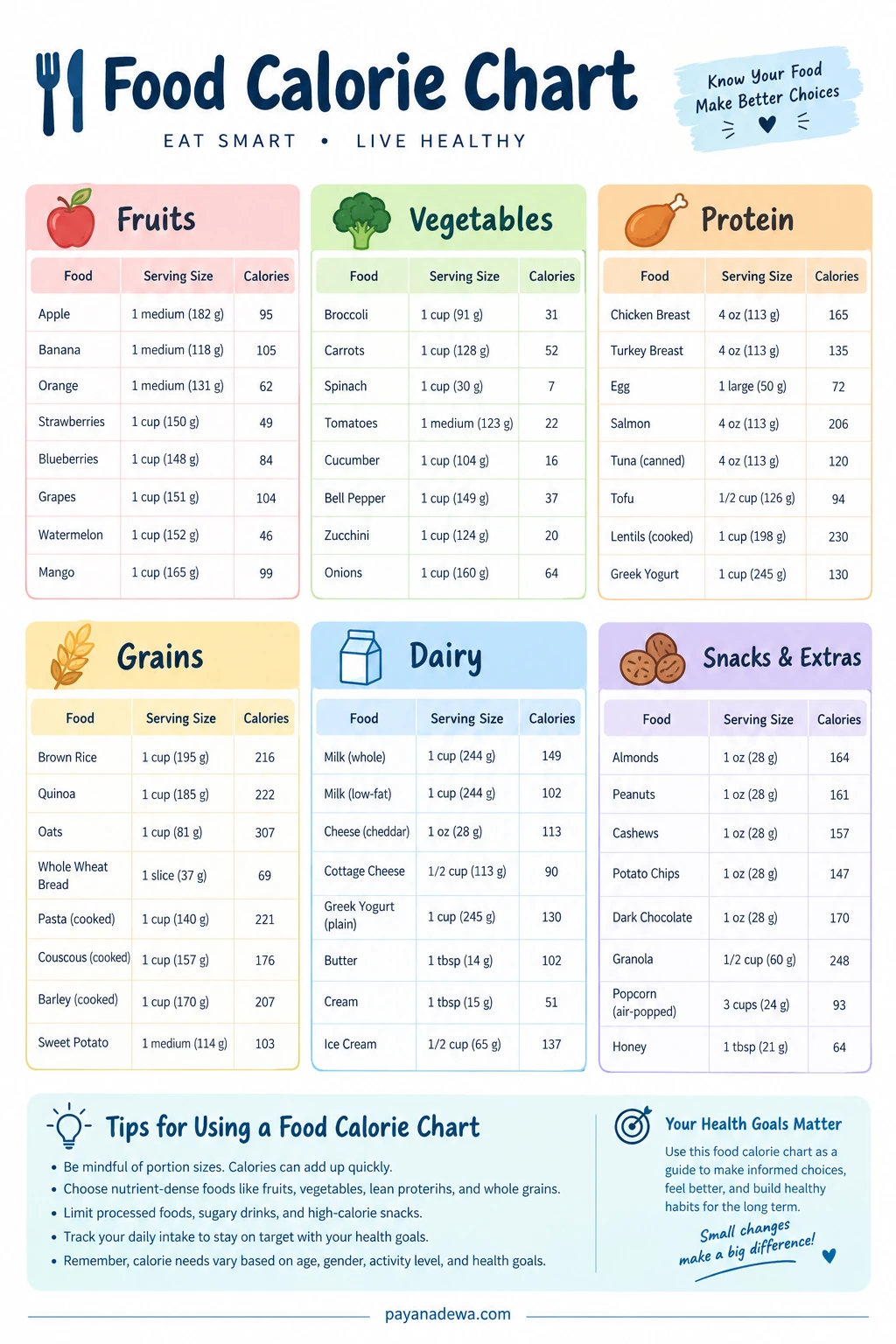
What Is a Food Calorie Chart?
A food calorie chart is a reference guide that lists foods alongside their approximate calorie content and serving sizes. It helps you understand how much energy different foods provide and compare options when planning meals.
For example, a medium apple typically contains around 95 calories, while a cup of strawberries contains approximately 49 calories. These values can help you compare foods, but they do not automatically determine which choice is healthier for your needs.
A useful calorie chart generally includes:
- Food name: The specific food or ingredient being measured.
- Serving size: The amount of food used for the calorie estimate.
- Calories: The approximate energy provided by that serving.
- Food category: Such as fruit, vegetables, protein, grains, dairy, or snacks.
Remember that calorie values can change depending on the food variety, preparation method, added ingredients, and serving size. Treat chart values as estimates rather than exact measurements.
Food Calorie Chart for Common Foods
The following food calorie chart provides a practical overview of everyday foods. Most values represent typical portions of prepared or ready-to-eat foods. Actual calories may vary by brand, recipe, and preparation method.
1. Fruit Calories Chart
Fruits provide carbohydrates, vitamins, minerals, and varying amounts of fiber. They can be an easy addition to breakfast, snacks, and balanced meals.
- Apple: Approximately 95 calories per medium fruit (182 g).
- Banana: Approximately 105 calories per medium fruit (118 g).
- Orange: Approximately 62 calories per medium fruit (131 g).
- Strawberries: Approximately 49 calories per cup (150 g).
- Blueberries: Approximately 84 calories per cup (148 g).
- Grapes: Approximately 104 calories per cup (151 g).
- Watermelon: Approximately 46 calories per cup (152 g).
- Mango: Approximately 99 calories per cup of sliced fruit (165 g).
Fresh fruit can help satisfy a sweet craving while contributing useful nutrients. Whole fruit is generally a convenient choice because it provides fiber and water. Dried fruit, fruit juice, and fruit packed in syrup can have different calorie concentrations, so check the serving information carefully.
2. Vegetable Calories Chart
Many vegetables provide relatively few calories per serving while supplying fiber, vitamins, minerals, and other beneficial plant compounds.
- Broccoli: Approximately 31 calories per cup (91 g).
- Carrots: Approximately 52 calories per cup (128 g).
- Spinach: Approximately 7 calories per cup of raw leaves (30 g).
- Tomato: Approximately 22 calories per medium tomato (123 g).
- Cucumber: Approximately 16 calories per cup (104 g).
- Bell pepper: Approximately 37 calories per cup (149 g).
- Zucchini: Approximately 20 calories per cup (124 g).
- Onion: Approximately 64 calories per cup (160 g).
Vegetables can add color, texture, and variety to your meals. Steaming, roasting, grilling, or eating suitable vegetables raw can be practical preparation methods. Remember that cooking oil, butter, dressings, and sauces contribute additional calories.
3. Protein Food Calories Chart
Protein supports muscle maintenance, tissue repair, and other essential bodily functions. Common protein sources include poultry, fish, eggs, beans, lentils, tofu, and dairy products.
- Chicken breast: Approximately 165 calories per 4 oz (113 g) of cooked, skinless meat.
- Turkey breast: Approximately 135 calories per 4 oz (113 g) of cooked meat.
- Egg: Approximately 72 calories per large egg (50 g).
- Salmon: Approximately 206 calories per 4 oz (113 g) of cooked fish.
- Canned tuna: Approximately 120 calories per 4 oz (113 g), depending on the product.
- Firm tofu: Approximately 94 calories per half cup (126 g), depending on the variety.
- Cooked lentils: Approximately 230 calories per cup (198 g).
- Plain Greek yogurt: Approximately 130 calories per cup (245 g), depending on fat content.
Choose a variety of protein sources throughout the week. Fish, eggs, poultry, beans, lentils, tofu, and other suitable options can all contribute to a balanced diet. Cooking methods matter: frying, breading, and adding rich sauces may substantially increase the final calorie count.
4. Grain and Starchy Food Calories Chart
Grains and starchy foods provide carbohydrates, which are an important source of energy. Whole grains can also contribute fiber and other nutrients.
- Brown rice: Approximately 216 calories per cup of cooked rice (195 g).
- Quinoa: Approximately 222 calories per cup of cooked quinoa (185 g).
- Oatmeal: Approximately 150 calories per cup of cooked oatmeal made with water, depending on preparation.
- Whole wheat bread: Approximately 69 calories per slice (37 g).
- Cooked pasta: Approximately 221 calories per cup (140 g).
- Cooked couscous: Approximately 176 calories per cup (157 g).
- Cooked barley: Approximately 207 calories per cup (170 g).
- Sweet potato: Approximately 103 calories per medium potato (114 g).
Pay attention to whether the listed serving refers to cooked or uncooked food. Dry rice, pasta, oats, and other grains have different calorie values per measured cup than their cooked versions because cooking changes their water content and volume.
5. Dairy Product Calories Chart
Dairy foods can provide protein, calcium, and other nutrients. Their calorie content varies according to fat level, portion size, and added ingredients.
- Whole milk: Approximately 149 calories per cup (244 g).
- Low-fat milk: Approximately 102 calories per cup (244 g).
- Cheddar cheese: Approximately 113 calories per ounce (28 g).
- Cottage cheese: Approximately 90 calories per half cup (113 g), depending on fat content.
- Plain Greek yogurt: Approximately 130 calories per cup (245 g), depending on the product.
- Butter: Approximately 102 calories per tablespoon (14 g).
- Cream: Approximately 51 calories per tablespoon (15 g), depending on the type.
- Ice cream: Approximately 137 calories per half cup (65 g), depending on the flavor and formulation.
Compare product labels when choosing between dairy options. Flavored yogurt, sweetened milk, and premium ice cream may contain added sugars or other ingredients that change their nutritional profile.
6. Snack and Nut Calories Chart
Snacks can fit into a balanced eating pattern. Nuts and seeds provide unsaturated fats and other nutrients, but their calorie content can add up because they are energy-dense.
- Almonds: Approximately 164 calories per ounce (28 g).
- Peanuts: Approximately 161 calories per ounce (28 g).
- Cashews: Approximately 157 calories per ounce (28 g).
- Potato chips: Approximately 147 calories per ounce (28 g).
- Dark chocolate: Approximately 170 calories per ounce (28 g).
- Granola: Approximately 248 calories per half cup (60 g), depending on the recipe.
- Air-popped popcorn: Approximately 93 calories per 3 cups (24 g).
- Honey: Approximately 64 calories per tablespoon (21 g).
For calorie awareness without unnecessary restriction, serve snacks into a bowl instead of eating directly from a large package. This makes portion sizes easier to see while allowing you to enjoy foods you like.
How to Use a Food Calorie Chart Effectively
A food calorie chart works best when you use it as a flexible planning tool. You do not need to memorize every number or calculate every bite to make informed choices.
Start With Realistic Portion Sizes
Check the serving size before comparing calorie values. A food containing 100 calories per serving may contribute 200 calories if you eat twice the listed amount. Measuring cups, a kitchen scale, and package labels can help you understand typical portions.
Compare Similar Foods
Compare foods that serve a similar purpose. For example, you can compare different breakfast cereals, protein sources, or snack options. Consider fiber, protein, sodium, added sugars, and overall nutritional quality alongside calories.
Record Your Meals if Helpful
If tracking supports your goals, write down what you eat and drink or use a reputable food-tracking app. Record realistic serving sizes and include cooking oils, dressings, beverages, and sauces when relevant. Review patterns over time rather than judging individual meals.
Build Balanced Meals
Combine different food groups to create satisfying meals. A practical plate might include vegetables, a protein source, whole grains or another carbohydrate, and a suitable source of healthy fat. Adjust the proportions and portion sizes to your preferences, appetite, and nutritional needs.
How Many Calories Do You Need Each Day?
Daily calorie needs vary from person to person. Age, body size, activity level, growth, pregnancy, and other individual factors can influence how much energy someone needs.
For general context, U.S. dietary guidance commonly uses 2,000 calories per day as a reference for nutrition labeling. This is not a universal target or a personalized recommendation. Some people need substantially more energy, while others need less.
To estimate your needs, consider your usual activity level, personal goals, and relevant health circumstances. A registered dietitian or qualified healthcare professional can help you develop a suitable eating plan, especially if you have a medical condition or specific nutritional requirements.
A calorie chart should support informed decisions rather than encourage extreme restriction. Eating too little can make it harder to meet your nutritional needs and maintain energy throughout the day.
Practical Tips for Managing Calorie Intake
- Prioritize nutrient-dense foods: Include vegetables, fruits, whole grains, protein sources, and foods rich in essential nutrients.
- Pay attention to drinks: Sugary beverages, sweetened coffee, and large smoothies may contribute more calories than expected.
- Measure calorie-dense ingredients: Cooking oils, butter, dressings, nuts, and spreads can add substantial energy in small portions.
- Read nutrition labels: Check calories per serving, serving size, and the number of servings in each package.
- Use cooking methods that suit your goals: Baking, steaming, grilling, and roasting can make meal preparation easier to manage.
- Eat regularly enough to meet your needs: Choose a meal pattern that supports your schedule, appetite, and energy requirements.
- Stay flexible: Enjoying a favorite dessert or snack can be part of a balanced diet.
- Focus on sustainable habits: Consistency, variety, and overall dietary quality are more useful than trying to make every meal perfect.
Common Mistakes When Reading a Calorie Chart
Even a useful food calorie chart can be misleading if you overlook a few details.
- Ignoring serving sizes: A chart may list calories for one cup, while your actual portion is two cups.
- Confusing raw and cooked foods: Water absorption or loss changes food weight and calorie concentration per gram.
- Forgetting additional ingredients: Oil, sauces, sugar, and toppings can change the calories in a finished dish.
- Assuming fewer calories always means healthier: Nutritional value also depends on protein, fiber, vitamins, minerals, fats, and other factors.
- Treating estimates as exact values: Food varieties, brands, recipes, and preparation methods can produce different results.
When accuracy matters, use a reliable nutrition database and the nutrition label for the exact product. For homemade meals, estimate each ingredient and divide the total according to the number of portions.
Frequently Asked Questions About Food Calories
Which foods have the fewest calories?
Many non-starchy vegetables, including spinach, cucumber, and zucchini, contain relatively few calories per typical serving. However, the best choices also depend on nutritional value, personal preferences, and how the foods are prepared.
How can I find the calories in homemade food?
List the ingredients, check their calorie values using package labels or a reputable nutrition database, and add the totals together. Divide the total by the number of servings to estimate the calories per portion. Include oils, sauces, and other additions.
Are calorie charts accurate?
Calorie charts provide estimates based on typical foods and serving sizes. Values can differ by brand, variety, preparation method, and measurement. Use product labels or trusted nutrition databases when you need more specific information.
Can I use a food calorie chart for weight management?
Yes. A chart can help you understand portion sizes and compare foods. For weight management, combine calorie awareness with a balanced diet, regular physical activity, adequate sleep, and realistic long-term habits. Your individual needs should guide any calorie target.
Should I count every calorie I eat?
No. Some people find calorie tracking helpful, while others prefer using portion awareness and balanced meal planning. Detailed tracking is not necessary for everyone and can become stressful for some individuals. Choose an approach that supports your well-being.
Conclusion
A food calorie chart is a practical resource for understanding the energy content of everyday foods. By comparing fruits, vegetables, protein sources, grains, dairy products, and snacks, you can make more informed decisions about portions and meal planning.
For the best results, look beyond calorie numbers. Consider food quality, essential nutrients, serving sizes, and your individual energy needs. Use nutrition labels and reliable databases to check specific products, and remember that the values in a general chart are estimates.
Start with small, manageable changes, such as adding more vegetables, choosing satisfying protein sources, or paying attention to serving sizes. Over time, these habits can help you develop a balanced and sustainable approach to eating.
Bookmark this food calorie chart for convenient reference whenever you plan meals, compare foods, or want to learn more about everyday nutrition.