A healthy lifestyle starts with the food choices you make every day. A well-organized food chart can help you plan balanced meals, understand different food groups, and develop healthier eating habits. Whether you want to improve your daily nutrition, organize family meals, or encourage children to eat a wider variety of foods, a food chart provides a practical way to stay organized.
Instead of wondering what to eat at every meal, you can use a food chart to plan vegetables, fruits, whole grains, protein-rich foods, and healthy fats. It can also help you track your water intake and create a weekly meal plan that fits your schedule, preferences, and budget.
In this guide, you will learn what a food chart is, how to create one, which food groups to include, and how to use a printable food chart to support your everyday nutrition goals. You will also discover simple meal-planning tips that make healthy eating easier for the whole family.
What Is a Food Chart?
A food chart is a visual guide that organizes foods into categories and helps people plan balanced meals. Depending on its purpose, it may display food groups, recommended portions, daily meal schedules, weekly menus, or nutritional goals.
A healthy food chart can be especially useful for people who want a clearer picture of their eating habits. By recording meals and snacks, you can identify whether you regularly eat enough vegetables, choose a variety of protein sources, and include whole grains in your diet.
Food charts come in several formats, including printable worksheets, food group charts, daily diet charts, weekly meal planners, and nutrition trackers. Some are designed for adults, while others use simple labels and colorful illustrations to help children learn about healthy foods.
Why Use a Food Chart?
Using a food chart can make meal planning more consistent and manageable. It helps you organize your grocery shopping, prepare meals in advance, and remember to include a variety of nutritious ingredients.
- Better meal planning: Decide what to eat before the week becomes busy.
- More food variety: Make room for different vegetables, fruits, grains, and protein sources.
- Improved organization: Keep meal ideas, shopping needs, and nutrition goals in one place.
- Healthier habits: Notice patterns in your eating routine and identify opportunities for improvement.
- Family involvement: Encourage household members to participate in choosing and preparing meals.
The Main Food Groups to Include in Your Food Chart
A balanced food chart should feature a variety of foods that provide energy, protein, vitamins, minerals, fiber, and healthy fats. No single food supplies everything your body needs, so eating different foods throughout the day is important.
1. Vegetables
Vegetables provide vitamins, minerals, fiber, and other beneficial plant compounds. Including different colors and varieties can help make meals more nutritious and appealing.
Examples include spinach, broccoli, carrots, tomatoes, cabbage, bell peppers, green beans, and leafy greens. Fresh, frozen, and appropriately prepared canned vegetables can all contribute to a balanced diet.
Practical tip: Add vegetables to omelets, soups, rice dishes, sandwiches, or stir-fries. Choose a variety of colors throughout the week rather than relying on just one or two vegetables.
2. Fruits
Fruits supply vitamins, minerals, water, and fiber. They can make convenient snacks and add natural sweetness to meals without requiring complicated preparation.
Good choices include apples, bananas, oranges, berries, mangoes, papayas, pears, and seasonal fruits. Whole fruit is generally preferable to fruit juice because it retains more of its natural fiber and is often more filling.
Practical tip: Keep washed fruit where it is easy to reach, and add sliced fruit to breakfast, yogurt, or oatmeal.
3. Whole Grains and Other Starchy Foods
Grains and starchy foods provide energy for everyday activities. Whole grains also contain fiber and nutrients that may be reduced when grains are heavily refined.
Examples include oats, brown rice, whole-wheat bread, whole-grain pasta, corn, and quinoa. Potatoes, sweet potatoes, and other starchy vegetables can also contribute to a balanced meal.
In many households, white rice is a familiar staple. You do not need to eliminate it to eat healthily. Instead, pay attention to portion sizes and combine rice with vegetables, protein-rich foods, and other nutritious ingredients. You can also alternate between white rice, brown rice, and other grains if you enjoy them.
4. Protein-Rich Foods
Protein supports muscle maintenance, tissue repair, and many essential functions in the body. Including protein-rich foods in your meals can also help you feel satisfied after eating.
Options include eggs, fish, chicken, lean meat, beans, lentils, tofu, tempeh, nuts, and seeds. Plant-based protein sources can be useful for people who prefer vegetarian meals or want more variety in their diets.
Practical tip: Alternate between animal and plant protein sources throughout the week. For example, you might serve eggs at breakfast, fish at lunch, and tofu or tempeh at dinner.
5. Dairy Products or Suitable Alternatives
Milk, yogurt, and other dairy products can provide protein and calcium. Fortified plant-based alternatives, such as certain soy beverages, may offer similar nutrients, depending on the product.
Choose options that suit your dietary needs and preferences. Check labels for added sugars, calcium, protein, and vitamin D when relevant. People with milk allergies or other dietary restrictions may need alternatives that meet their nutritional requirements.
6. Healthy Fats
Fats are an important part of a balanced diet because they provide energy and help the body absorb certain vitamins. Unsaturated fats are commonly found in foods such as avocados, nuts, seeds, olive oil, and oily fish.
Include these foods in reasonable amounts and vary your sources. Limit excessive intake of foods high in saturated or trans fats, especially when they regularly replace more nutritious options.
How to Create a Balanced Food Chart
Creating a food chart does not require advanced nutrition knowledge or expensive planning tools. A simple table on paper can work just as well as a digital spreadsheet.
Step 1: Choose Your Food Chart Format
Start by deciding what you want your chart to accomplish. A daily food chart is useful for tracking meals, while a weekly food chart provides a broader view of your eating routine.
- Daily food chart: Record breakfast, lunch, dinner, snacks, and drinks.
- Weekly food chart: Plan meals for seven days and organize grocery shopping.
- Food group chart: List vegetables, fruits, grains, protein foods, and other important categories.
- Family food chart: Coordinate household meals and encourage children to explore different foods.
- Healthy eating tracker: Monitor personal goals, such as eating more vegetables or drinking water regularly.
Step 2: Add the Main Food Categories
Create clear columns or sections for the foods you want to track. For a basic weekly food chart, include vegetables, fruits, whole grains or starchy foods, protein, and water. You can add snacks and meal times if you need more detail.
Keep the layout easy to read. Use short labels, sufficient writing space, and simple colors to distinguish the categories. If you plan to print the chart, choose a design that remains legible on ordinary paper.
Step 3: Plan Meals Around Your Routine
Consider your work schedule, school hours, cooking time, food preferences, and grocery budget. Choose meals that fit your actual routine instead of creating an unrealistic plan.
For example, overnight oats or boiled eggs may be convenient for busy mornings. Rice, vegetables, and chicken or tempeh can make a practical lunch. Soup, fish, tofu, and vegetables can provide variety at dinner.
Step 4: Include Variety and Flexible Portions
A food chart should encourage balanced choices rather than impose rigid rules. A useful starting point for many main meals is to fill about half your plate with vegetables and fruits, one-quarter with protein-rich foods, and one-quarter with whole grains or other starchy foods. This is a flexible visual guide, not a universal prescription.
Adjust portions to your age, appetite, activity level, health needs, and cultural food preferences. Children, athletes, pregnant people, and individuals managing certain medical conditions may need different nutritional guidance.
Step 5: Review Your Chart Each Week
At the end of the week, look for patterns. Did you eat a range of vegetables? Did you include protein at your main meals? Were there days when planning ahead could have made eating easier?
Use these observations to make small improvements. You might prepare vegetables in advance, keep convenient protein sources available, or plan an extra homemade meal for a particularly busy day.
Example of a Simple Weekly Food Chart
The following sample provides meal ideas you can adapt to your own preferences. It is not a strict diet plan, and the meals can be changed to accommodate allergies, cultural traditions, budgets, and nutritional requirements.
- Monday: Oatmeal with banana for breakfast, rice with chicken and vegetables for lunch, and vegetable soup with tofu for dinner.
- Tuesday: Eggs with whole-grain toast for breakfast, fish with rice and greens for lunch, and lentil curry with vegetables for dinner.
- Wednesday: Yogurt with fruit and oats for breakfast, tempeh with rice and vegetables for lunch, and chicken with sweet potatoes for dinner.
- Thursday: Peanut butter on whole-grain toast with fruit for breakfast, tofu stir-fry with rice for lunch, and fish with potatoes and vegetables for dinner.
- Friday: Vegetable omelet with toast for breakfast, chicken and vegetable soup for lunch, and beans with rice and salad for dinner.
- Saturday: Oatmeal with fruit for breakfast, a balanced homemade rice bowl for lunch, and grilled fish or tofu with vegetables for dinner.
- Sunday: Eggs and fruit for breakfast, vegetable and bean curry with rice for lunch, and a homemade meal using leftover vegetables and a protein source for dinner.
Choose snacks according to your appetite and needs. Fruit, yogurt, nuts, boiled eggs, or vegetables with hummus are examples of convenient options. Drink water regularly throughout the day, adjusting your intake for weather, activity, and individual needs.
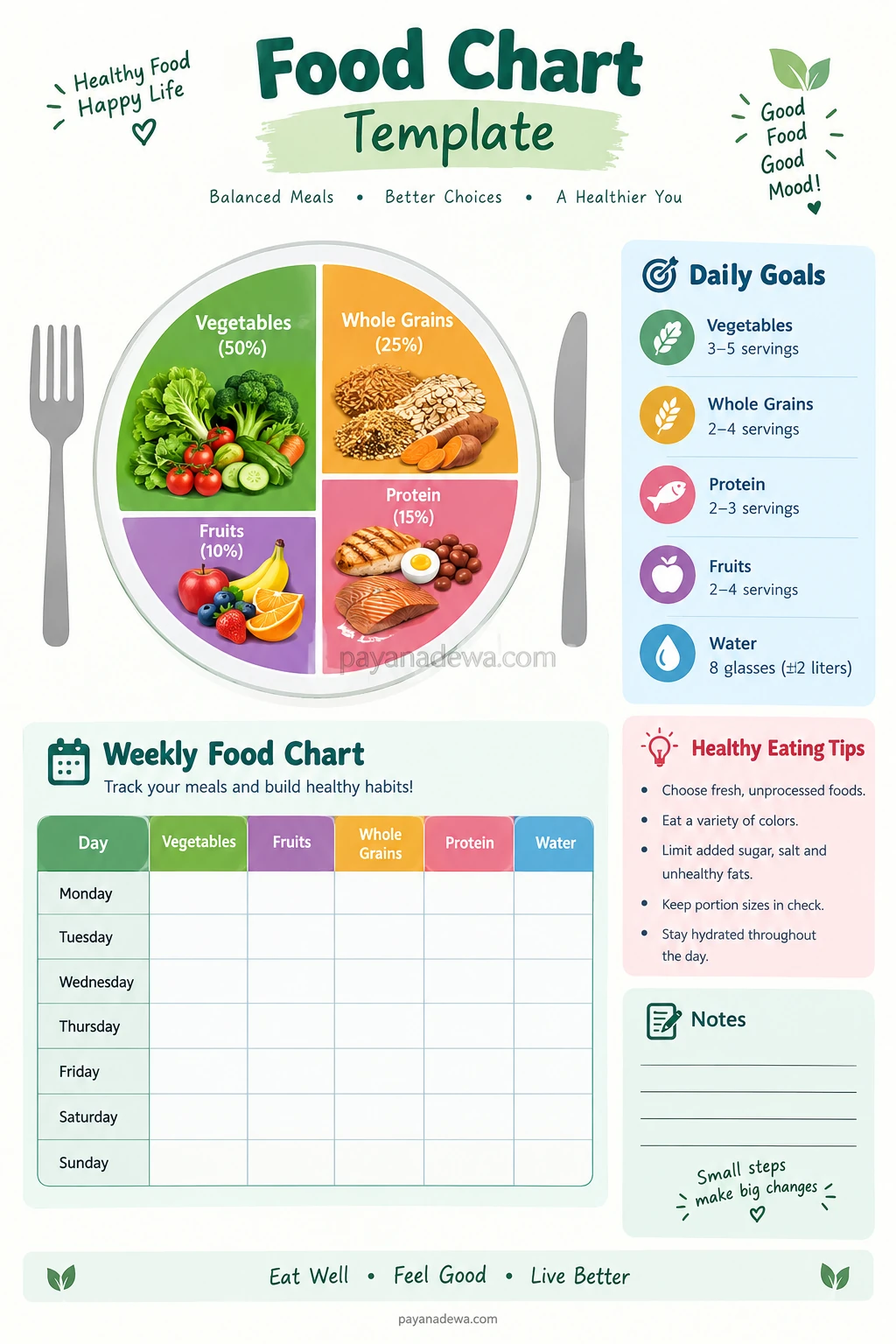
Use this printable Food Chart Template to organize your food groups, track weekly meals, and set simple healthy eating goals. The visual layout provides space for meal tracking, daily food reminders, hydration goals, and personal notes. Print a copy and place it somewhere convenient so you can update it as your routine changes.
Tips for Using a Food Chart Every Day
A food chart is most effective when it becomes a simple part of your daily routine. You do not need to record every detail perfectly. Focus on consistency and practical changes that are easy to maintain.
Prepare Ingredients in Advance
Wash vegetables, portion snacks, cook grains, or prepare protein-rich foods ahead of time when convenient. Store ingredients safely in suitable containers and refrigerate perishable foods promptly. A little preparation can reduce the temptation to rely on less nutritious convenience foods when you are busy.
Make Healthy Choices Affordable
Healthy eating does not require expensive ingredients. Beans, lentils, eggs, seasonal produce, frozen vegetables, oats, and locally available foods can be affordable options. Compare prices, plan around ingredients you already have, and use leftovers safely to reduce food waste.
Adapt the Chart to Your Family
Different family members may have different appetites, preferences, and nutritional needs. Let children help choose colorful fruits and vegetables, and invite them to participate in age-appropriate food preparation. Avoid labeling foods or people as good or bad; instead, emphasize variety, enjoyment, and balanced habits.
Stay Hydrated
Water supports normal body functions and helps maintain hydration. Keep water accessible and drink regularly, especially during hot weather or physical activity. Individual fluid requirements vary, so avoid treating a single fixed number of glasses as suitable for everyone.
Keep Your Goals Realistic
Choose one or two habits to improve at a time. For example, add a serving of vegetables to lunch, prepare breakfast the night before, or plan your meals every Sunday. Once these habits feel manageable, introduce another goal.
Common Food Chart Mistakes to Avoid
Even a well-designed food chart can become difficult to follow if it is too complicated or restrictive. Avoid these common problems:
- Making the plan too strict: Allow flexibility for social meals, changing schedules, and personal preferences.
- Ignoring food variety: Rotate ingredients and include different colors, textures, and protein sources.
- Using unrealistic portions: Adapt meal amounts to individual needs instead of copying a generic chart exactly.
- Forgetting convenience: Include quick meals and simple ingredients for busy days.
- Focusing only on weight: Use the chart to support balanced nutrition, energy, variety, and sustainable habits rather than appearance alone.
- Giving up after one difficult day: Treat the chart as a guide, not a test. Resume your routine at the next meal.
If you have a medical condition, food allergy, history of disordered eating, or specific dietary requirements, seek advice from a qualified healthcare professional or registered dietitian before following a restrictive meal plan.
Frequently Asked Questions About Food Charts
What should a daily food chart include?
A daily food chart can include breakfast, lunch, dinner, snacks, vegetables, fruits, protein-rich foods, grains or other starchy foods, and water. You can also add meal times, grocery reminders, or personal nutrition goals.
Is a printable food chart useful for children?
Yes. A printable food chart can help children recognize food groups, explore different foods, and participate in meal planning. Use simple words, colorful illustrations, and flexible goals suited to their age. Avoid using the chart to pressure children to eat or restrict their food unnecessarily.
How often should I update my food chart?
You can update a daily chart after each meal or review a weekly chart during your meal-planning session. Choose a schedule that feels convenient and sustainable.
Can a food chart help with weight management?
A food chart can support awareness of meal patterns, food variety, and portion habits. However, it does not guarantee weight loss or a particular health outcome. Individual needs vary, and balanced nutrition should remain the priority.
What is the easiest way to start using a food chart?
Begin with a simple printable template. Add a few meal ideas, plan a variety of food groups, and review your choices at the end of the week. Make gradual changes rather than trying to redesign your entire diet at once.
Conclusion
A food chart is a practical tool for organizing meals, understanding food groups, and developing healthier eating habits. By including vegetables, fruits, grains, protein-rich foods, healthy fats, and appropriate hydration, you can create a flexible plan that supports everyday nutrition.
The best food chart is one that fits your lifestyle. Keep your layout simple, choose affordable ingredients, prepare meals when possible, and review your progress regularly. Remember that healthy eating is about consistency and variety, not perfection.
Start with a printable Food Chart Template, write down your meal ideas, and make small improvements each week. With a little planning, balanced meals can become a more natural and enjoyable part of your daily routine.