A welcome card is a simple yet meaningful way to make someone feel appreciated, valued, and included. Whether you are greeting a new employee, welcoming guests to an event, celebrating a new neighbor, or introducing someone to your community, the right card can create a lasting first impression.
With a thoughtfully designed welcome card, you can express warmth and friendliness without needing a long message. From elegant printable designs to colorful handmade creations, there are countless ways to make your greeting special.
In this guide, you will discover different welcome card ideas, learn how to choose the right design, and find practical tips for writing a heartfelt message. You will also learn how to use a printable welcome card template to create a beautiful greeting for almost any occasion.
What Is a Welcome Card?
A welcome card is a greeting card created to make someone feel comfortable and appreciated when they arrive somewhere new or join a group. It can be given to a visitor, a new team member, a student, a neighbor, or a guest attending a special event.
Unlike a general greeting card, a welcome card focuses on creating a sense of belonging. It tells the recipient that their presence matters and that they are invited to become part of a new experience.
Welcome cards can be printed, handwritten, digitally designed, or included in a gift package. Some feature simple typography and elegant borders, while others use cheerful colors, illustrations, flowers, or personalized messages.
The best design depends on the occasion and the person receiving it. A professional welcome card may use clean lines and neutral colors. Meanwhile, a card for a friend might feature playful illustrations and a more casual message.
Popular Types of Welcome Cards
There is no single design that works for every situation. Choosing a card that matches the occasion makes your greeting feel more thoughtful and appropriate.
1. Welcome Home Card
A welcome home card is a lovely way to celebrate someone’s return. It works well for family members, friends, travelers, and people moving into a new home.
Choose a warm design with soft colors, house illustrations, or comforting words. You can also include a personal message that expresses how happy you are to see the recipient again.
For example, write a short greeting such as, “Welcome home! We are so happy to have you back. May this place always bring you comfort, laughter, and beautiful memories.”
2. Welcome to the Team Card
A welcome to the team card helps new employees feel included from their first day. It is a thoughtful addition to an onboarding package, office desk, or introductory meeting.
For a professional appearance, use your company’s brand colors, readable fonts, and a clean layout. Keep the message friendly while maintaining a workplace-appropriate tone.
You might write, “Welcome to the team! We are excited to work with you and look forward to achieving great things together.”
3. Welcome Baby Card
A welcome baby card celebrates the arrival of a newborn. Parents, relatives, and friends can use it to share congratulations and express their happiness.
Popular design elements include pastel colors, tiny stars, clouds, animals, and delicate floral patterns. You can also personalize the card with the baby’s name, birth date, or a special message for the parents.
Keep your wording gentle and sincere. A simple message such as “Welcome, little one! Wishing your family endless love, happiness, and precious memories” works beautifully.
4. Welcome to the Neighborhood Card
Moving to a new neighborhood can feel exciting and overwhelming at the same time. A welcome card helps new neighbors feel comfortable and introduces a friendly connection.
Consider adding useful local information, such as the location of a nearby grocery store, a neighborhood gathering place, or a community event. A handwritten note can make the gesture even more personal.
5. Welcome to Our Community Card
A community welcome card is ideal for clubs, schools, churches, volunteer groups, online communities, and local organizations. It helps new members feel accepted and encourages them to participate.
Choose a design that reflects the group’s personality. Add a short introduction, a friendly greeting, and an invitation to join upcoming activities when appropriate.
Welcome Card Template: A Simple Way to Create a Beautiful Greeting
A welcome card template makes it easier to create an attractive greeting without starting from scratch. Instead of designing every element yourself, you can use an existing layout and customize it to suit your needs.
Printable welcome card templates are especially useful for people who want a polished result with minimal effort. They can save time while providing a consistent design for personal celebrations, business events, and community activities.
For a timeless appearance, consider a template with a white background, a delicate border, elegant typography, and subtle botanical decorations. These elements create a clean design that works for many different occasions.
Here is a printable welcome card design you can use as inspiration for your next greeting.
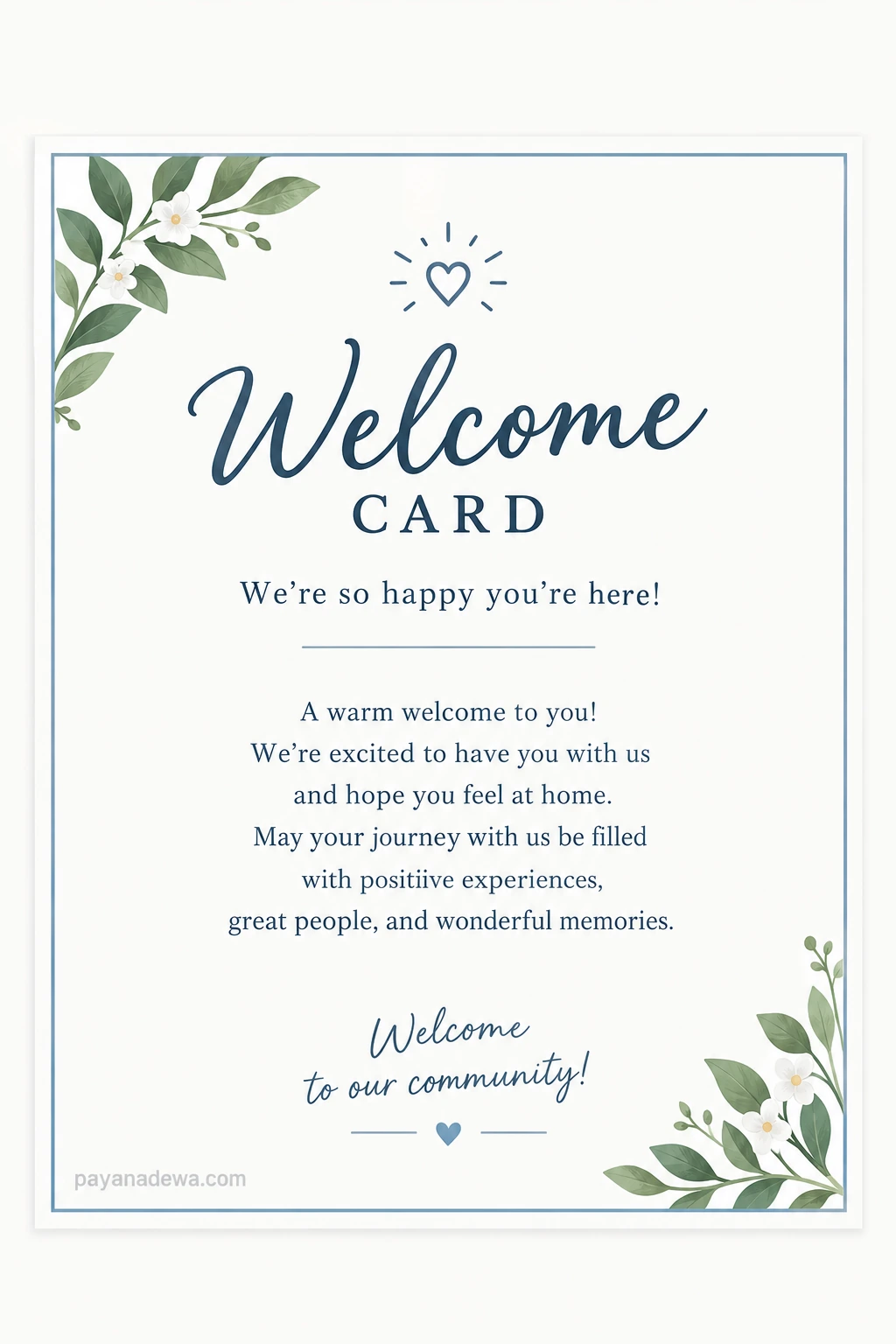
When publishing the image, replace the insertion marker with the actual image element in your HTML. Upload the WEBP file to your website’s media library and use the generated image URL in the src attribute. Keep the descriptive alt text to support accessibility and image search optimization.
How to Make a Welcome Card Step by Step
Creating a welcome card does not require advanced design skills. With a clear message and a few thoughtful choices, you can produce a card that looks professional and feels personal.
Step 1: Choose the Occasion
First, decide why you are making the card. A greeting for a new employee will look different from one designed for a returning family member or a new neighbor.
Knowing the occasion helps you choose the right wording, colors, and decorative elements.
Step 2: Select a Suitable Design
Choose a layout that matches the recipient and setting. Minimalist designs are versatile, while bright colors and playful illustrations work well for informal celebrations.
Make sure the main greeting stands out. Avoid using too many decorative elements, as they can distract readers from your message.
Step 3: Write a Warm Message
Keep the wording friendly, clear, and appropriate for the occasion. Mention the recipient when possible, and explain why you are happy to welcome them.
A personal detail can make even a short greeting feel memorable. For example, you might mention an upcoming team project, a shared celebration, or an invitation to meet the neighbors.
Step 4: Personalize the Card
Add the recipient’s name, your signature, or a small illustration that reflects the occasion. For business cards, consider including your company logo or brand colors.
However, keep the layout balanced. White space helps the text remain readable and gives the finished card a more polished appearance.
Step 5: Print and Review
Before printing several copies, test one card. Check the spelling, alignment, image quality, and text size.
Use suitable paper for the result you want. Cardstock is a good choice for a sturdy greeting, while standard paper may be sufficient for simple handouts or temporary displays.
What to Write in a Welcome Card
Finding the right words can sometimes be more difficult than choosing the design. Fortunately, a welcome message does not need to be long to make someone feel appreciated.
Here are several message ideas for different situations.
Short and Friendly Welcome Messages
- Welcome! We are so happy you are here.
- A warm welcome to you. We hope you feel right at home.
- Welcome aboard! We are excited to have you with us.
- So glad you are here. Wishing you a wonderful beginning!
- Welcome to our community. We look forward to getting to know you.
Professional Welcome Messages
- Welcome to the team! We look forward to working with you.
- We are delighted to have you on board and wish you every success in your new role.
- Welcome to our organization. We are excited to see what we can accomplish together.
Heartfelt Welcome Messages
- May this new chapter bring you happiness, meaningful connections, and wonderful memories.
- Welcome! May you always feel appreciated, supported, and at home here.
- We are happy to share this special beginning with you. Wishing you many beautiful moments ahead.
Choose a message that sounds natural when read aloud. A sincere greeting is often more meaningful than a complicated message filled with formal expressions.
Tips for Designing a Printable Welcome Card
A well-designed welcome card should look attractive while remaining easy to read. The following tips can help you create a printable design that looks good both on screen and on paper.
- Use readable fonts: Choose a clear font for the main message. Decorative script fonts can add elegance to headings, but avoid using them for long paragraphs.
- Choose complementary colors: Combine two or three colors that suit the occasion. Soft blue, green, cream, and white work well for a calm, welcoming appearance.
- Leave enough white space: Give headings, messages, and decorative elements room to breathe. A less crowded layout is easier to read.
- Keep the message concise: A short greeting often has more impact than a long paragraph. Focus on warmth, inclusion, and the purpose of the card.
- Check the print dimensions: Make sure the design fits your intended paper size. Confirm the margins before printing to prevent important text from being cut off.
- Use high-quality images: Select graphics that remain clear at the final print size. Avoid enlarging small, low-resolution images.
- Make it personal: Include a name, signature, logo, or brief note when appropriate. Small personal touches can make a standard template feel unique.
Digital Welcome Cards vs. Printable Welcome Cards
Both digital and printable welcome cards offer useful advantages. The best option depends on how you plan to deliver your greeting.
Digital Welcome Cards
Digital cards are convenient when you need to send a greeting quickly. You can share them through email, messaging apps, or online community platforms.
They are also easy to customize and distribute to multiple recipients. However, a digital card may feel less personal than a physical greeting in situations where a tangible keepsake matters.
Printable Welcome Cards
Printable cards offer a physical greeting that recipients can display, keep, or include in a gift package. They are suitable for welcome baskets, reception desks, employee onboarding kits, and personal celebrations.
Although printing requires paper and ink, you can print only the number of copies you need. You can also write a personal note by hand to make each card feel more meaningful.
If you want a quick solution, start with a printable welcome card template. Then decide whether a digital version or a physical card best suits your occasion.
Common Welcome Card Design Mistakes to Avoid
Even a simple design can become less effective when important details are overlooked. Fortunately, a few quick checks can prevent common problems.
- Too much text: Keep the greeting focused. Long messages can make a small card feel crowded.
- Poor contrast: Ensure that the text stands out clearly against the background. Pale lettering on a light background can be difficult to read.
- Inconsistent fonts: Limit the number of font styles to maintain a cohesive appearance.
- Overdecorating: Use flowers, borders, icons, and illustrations sparingly. Decorative details should support the message rather than compete with it.
- Forgetting personalization: A generic greeting may feel impersonal. Add a name or a relevant detail whenever possible.
- Skipping the print test: Always review a sample before printing multiple copies, especially when the card includes borders or text near the edges.
By avoiding these mistakes, you can create a welcome card that feels thoughtful, looks attractive, and communicates your message clearly.
Conclusion
A welcome card is a simple but powerful way to help someone feel appreciated and included. Whether you are greeting a new employee, celebrating a baby, welcoming a neighbor, or introducing someone to your community, a thoughtful card can make the moment more memorable.
Start by choosing a design that suits the occasion. Then write a warm message, select readable fonts, and add personal details that make the greeting meaningful.
With a printable welcome card template, creating a beautiful greeting becomes easier and more convenient. Explore different layouts, customize your favorite design, and create a card that makes every new beginning feel special.