Understanding cash flow is essential for building a stable financial future, whether you manage a household, run a small business, or oversee a growing company. It helps you understand where your money comes from, where it goes, and how much remains available to meet your financial obligations. With a clear cash flow plan, you can make better decisions, prepare for unexpected expenses, and work toward long-term financial goals.
Many people focus on income or profit without paying enough attention to the timing of their money movements. However, having a good income does not always mean you have enough cash available when bills are due. This is why tracking cash inflows and outflows is so important.
In this guide, you will learn what cash flow means, why it matters, how to calculate it, and how to improve it. You will also discover practical budgeting strategies and learn how a printable cash flow template can help you organize your finances more effectively.
What Is Cash Flow?
Cash flow refers to the movement of money into and out of a person’s finances or a business over a specific period. Money received is called a cash inflow, while money spent is called a cash outflow. The difference between these two amounts determines whether your cash flow is positive or negative.
For individuals, cash inflows may include salaries, freelance payments, rental income, and investment distributions. Cash outflows can include housing costs, groceries, transportation, loan payments, insurance, and entertainment.
For businesses, cash inflows commonly come from customer payments, sales revenue, financing, and asset sales. Outflows include payroll, inventory purchases, rent, taxes, operating expenses, and debt repayments.
Monitoring these movements gives you a clearer picture of your financial position. It also helps you identify spending patterns, anticipate shortages, and decide when you can afford to save, invest, or expand your business.
Why Is Cash Flow Important?
Effective cash flow management helps you maintain financial stability and make informed decisions. It is especially important when income varies from month to month or expenses change throughout the year.
1. Helps You Pay Bills on Time
Regular cash flow tracking helps ensure that enough money is available for essential expenses. You can schedule payments around expected income and reduce the risk of late fees, missed payments, or unnecessary borrowing.
2. Improves Budgeting and Spending Decisions
When you understand your financial inflows and outflows, you can build a realistic budget. You can identify unnecessary expenses, set spending limits, and direct more money toward your priorities.
3. Prepares You for Unexpected Expenses
Unexpected repairs, medical bills, equipment failures, and temporary income reductions can create financial pressure. A cash flow plan helps you identify opportunities to build a reserve for emergencies before these situations occur.
4. Supports Business Growth
Business owners need cash to pay employees, purchase inventory, maintain equipment, and cover operating costs. A business may report a profit while still struggling to pay its bills if customers have not paid their invoices. Tracking cash flow helps owners recognize these risks and plan for sustainable growth.
What Are the Main Types of Cash Flow?
Business cash flow is commonly divided into three categories. Understanding each type helps you evaluate how a company generates and uses money.
Operating Cash Flow
Operating cash flow measures the cash generated or used by a company’s primary business activities. It includes cash received from customers and payments for operating expenses, such as salaries, rent, and suppliers.
Consistently positive operating cash flow can indicate that a business generates enough cash from its regular activities to support day-to-day operations.
Investing Cash Flow
Investing cash flow reflects money spent on or received from long-term assets and investments. Examples include purchasing machinery, acquiring property, selling equipment, or buying and selling certain financial investments.
Negative investing cash flow is not necessarily a warning sign. It may mean a company is investing in equipment or other assets that support future growth.
Financing Cash Flow
Financing cash flow tracks money received from or paid to lenders and investors. Examples include borrowing money, repaying loan principal, issuing shares, and paying dividends.
Reviewing financing activities helps you understand how a business funds its operations and manages its financial obligations.
How to Calculate Cash Flow
Calculating cash flow is straightforward when you know your total cash inflows and outflows for a specific period. You can use a weekly, monthly, quarterly, or annual reporting period, depending on your needs.
Cash Flow Formula:
Net Cash Flow = Total Cash Inflows − Total Cash Outflows
For example, suppose your monthly income is $4,500 and your total monthly expenses are $3,600. Your net cash flow would be:
$4,500 − $3,600 = $900
This means you have $900 remaining after accounting for the cash received and spent during that month. You could allocate some of this amount toward emergency savings, debt repayment, or other financial goals.
If your expenses exceed your income, the result is negative cash flow. You may need to reduce spending, increase income, use available reserves, or adjust the timing of certain payments.
Remember that this simple formula measures cash movement. It is not the same as accounting profit, which can include noncash expenses and revenue that has been earned but not yet received.
How to Track Cash Flow Effectively
Consistent tracking is more useful than creating a financial report once and never reviewing it again. Follow these steps to establish a simple cash flow management routine.
Step 1: Choose a Tracking Period
Start with a monthly cash flow statement if you receive regular income and pay bills monthly. A weekly review may be more suitable for freelancers, seasonal businesses, or anyone whose income changes frequently.
Step 2: Record All Cash Inflows
List every source of money received during your chosen period. Depending on your circumstances, these sources may include:
- Salary, wages, or business revenue.
- Freelance and consulting payments.
- Rental or investment income received in cash.
- Refunds and other money received.
- Loan proceeds or other financing, recorded separately when appropriate.
Step 3: List All Cash Outflows
Record your spending as accurately as possible. Include both regular obligations and occasional expenses so your calculation reflects your actual financial activity.
- Housing, utilities, and insurance.
- Food, transportation, and household supplies.
- Payroll, inventory, rent, and business operating costs.
- Loan principal repayments and interest payments.
- Taxes, subscriptions, and discretionary spending.
Step 4: Calculate Your Net Cash Flow
Add all cash inflows, add all cash outflows, and subtract the second total from the first. Compare the result with previous periods to identify trends and potential financial problems.
Step 5: Review and Adjust
Look for recurring expenses, seasonal changes, and opportunities to improve your financial position. Update your plan whenever your income, spending, or financial priorities change.
How to Use a Cash Flow Template
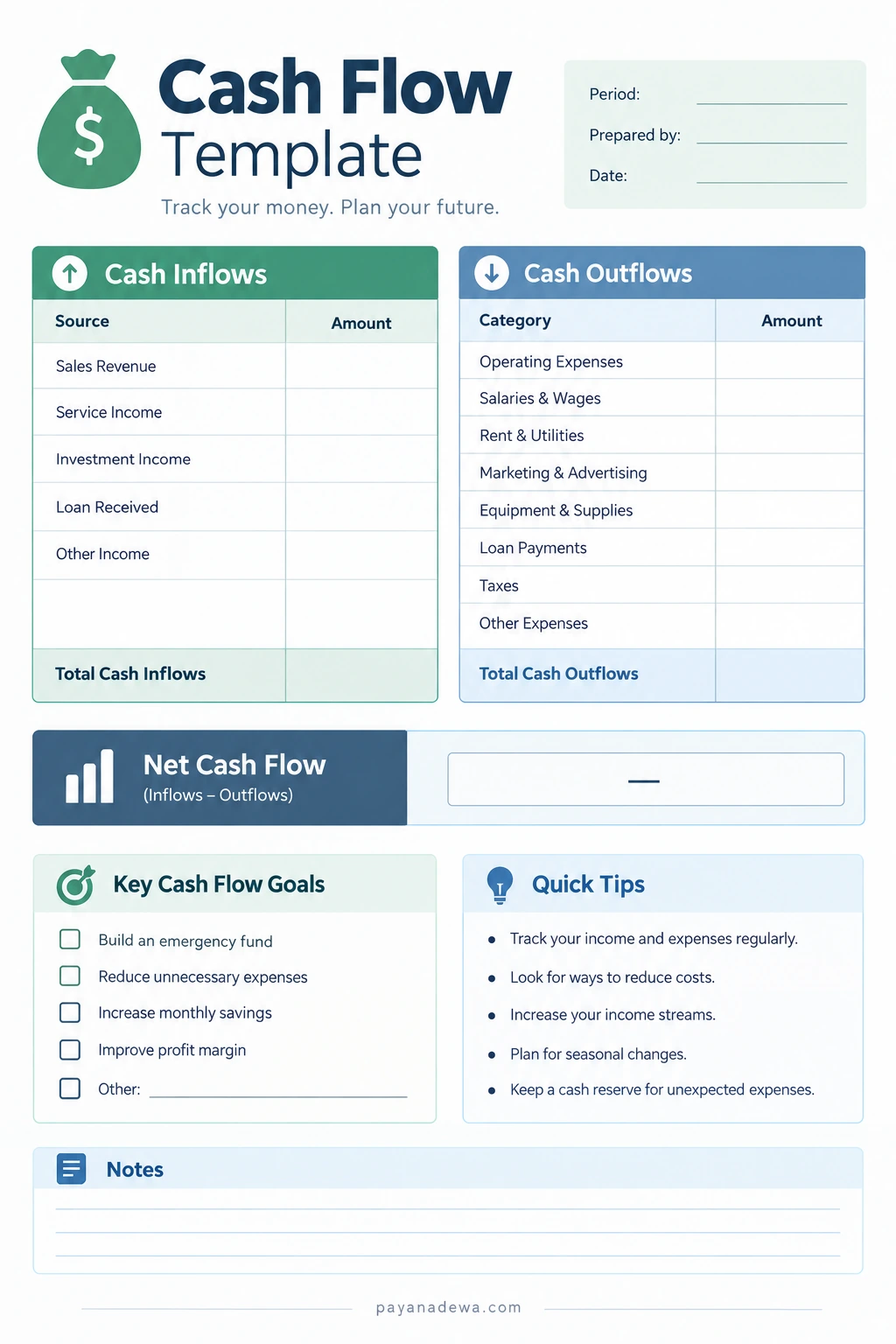
A cash flow template provides a structured place to record income, expenses, and the amount remaining at the end of a reporting period. It is particularly helpful if you prefer a printable worksheet instead of complicated financial software.
To use the template effectively, follow these practical steps:
- Enter the reporting period. Write down the month, week, or other period you want to review.
- Record cash inflows. List each income source and the amount received.
- Record cash outflows. Enter your expenses under the appropriate categories.
- Calculate the totals. Add the inflows and outflows separately, then subtract total outflows from total inflows.
- Set financial goals. Choose priorities such as building an emergency fund, reducing expenses, or increasing savings.
- Review your notes. Document unusual transactions, upcoming payments, or changes you want to make next month.
For personal finances, this worksheet can help you stay within budget and understand your spending habits. For small businesses, it can support routine monitoring of customer payments, operating expenses, and short-term cash requirements.
For more detailed business reporting, consider maintaining separate records for operating, investing, and financing activities. You should also reconcile your records with bank statements and distinguish cash transactions from unpaid invoices.
Practical Ways to Improve Cash Flow
Improving cash flow does not always require earning substantially more money. Small, consistent changes to spending, payment timing, and financial planning can make a meaningful difference.
Reduce Unnecessary Expenses
Review subscriptions, service contracts, and recurring purchases. Cancel services you rarely use and compare prices before renewing important contracts. Businesses can also review supplier agreements and operating costs for potential savings.
Build an Emergency Fund
Set aside a portion of positive cash flow for unexpected expenses. Start with an achievable savings target and increase it gradually as your financial position improves. Keep emergency savings accessible and separate from everyday spending money.
Manage Payment Timing
For individuals, align bill due dates with income whenever possible. For businesses, issue invoices promptly, follow up on overdue payments, and establish clear payment terms. Faster collections can improve available cash without necessarily increasing sales.
Plan for Seasonal Changes
Income and expenses may fluctuate throughout the year. Prepare for holidays, tax deadlines, slow sales periods, annual insurance payments, and other predictable changes. A cash flow forecast can help you identify months when additional reserves may be needed.
Increase Income Strategically
Consider opportunities to increase earnings through additional services, suitable freelance work, better pricing, or improved sales processes. Evaluate the costs involved before pursuing a new income source so that the additional activity supports your overall financial goals.
Common Cash Flow Mistakes to Avoid
Even a simple financial plan can become less effective when important details are overlooked. Avoid these common mistakes:
- Confusing profit with cash flow. Revenue may be recorded before customers pay, and accounting profit can include noncash items.
- Ignoring irregular expenses. Annual fees, repairs, taxes, and seasonal costs should be included in your planning.
- Relying on estimates alone. Use actual transaction records whenever possible and update forecasts as circumstances change.
- Failing to review the numbers. Recording transactions is only useful when you examine the results and take appropriate action.
- Spending all available surplus. Positive cash flow provides an opportunity to strengthen savings, reduce debt, and prepare for future obligations.
Cash Flow Forecasting: Planning for the Future
Cash flow tracking shows what has already happened, while cash flow forecasting estimates what may happen in the future. Both approaches are valuable for managing money effectively.
A basic forecast starts with your current cash balance, adds expected cash receipts, and subtracts anticipated payments over a future period.
Projected Ending Cash Balance = Beginning Cash Balance + Expected Inflows − Expected Outflows
For example, a small business can forecast customer payments, payroll, rent, supplier invoices, and loan repayments for the next three months. This helps the owner identify potential cash shortages before they occur.
Personal financial forecasts can serve a similar purpose. You can estimate future paychecks, rent, utilities, debt payments, and planned purchases to determine whether your savings goals are realistic.
Because forecasts rely on assumptions, update them when payment dates change, expenses increase, or expected income becomes uncertain. Reviewing both an expected scenario and a more cautious scenario can help you prepare for unexpected changes.
Conclusion
Cash flow is a fundamental part of financial management because it shows how money moves through your personal finances or business. By tracking cash inflows, monitoring outflows, and calculating net cash flow regularly, you can make more informed decisions and reduce the risk of unexpected financial pressure.
Start with a simple cash flow template, record your transactions consistently, and review the results at the end of each period. Use what you learn to reduce unnecessary expenses, build emergency savings, plan future payments, and work toward your financial goals.
You do not need a complicated system to get started. A clear worksheet and a consistent review routine can help you build better financial habits and create a stronger foundation for long-term financial stability.