A funeral card is a thoughtful way to honor someone who has passed away and preserve the memories they leave behind. It offers family members, friends, and guests a meaningful keepsake that celebrates a loved one’s life, shares important details, and expresses heartfelt condolences. Whether distributed at a funeral service, memorial gathering, or celebration of life, a well-designed card can provide comfort during a difficult time.
Creating a meaningful funeral card does not have to be complicated. With the right wording, a suitable design, and carefully chosen details, you can create a beautiful tribute that reflects the personality and legacy of the person being remembered. In this guide, you will discover what to include, how to choose an appropriate design, and how to personalize a memorial card for your loved one.
What Is a Funeral Card?
A funeral card is a printed or digital remembrance card created to honor a deceased person. It may include a photograph, the person’s name, birth and death dates, a short biography, a meaningful quotation, or a religious message. Depending on its purpose, it can also provide details about the funeral service or memorial gathering.
Funeral cards are often distributed to attendees during a service. Recipients can keep them as personal mementos, place them in a memory box, or display them alongside photographs of the person they have lost.
Although the terms funeral card, memorial card, and remembrance card are sometimes used interchangeably, their purposes can differ slightly. A funeral card may focus on the service and the person’s essential details, while a memorial card may emphasize lasting memories and a personal tribute.
What to Include in a Funeral Card
The most meaningful funeral cards balance essential information with a personal message. You do not need to include every detail. Instead, choose the elements that best represent the person and the purpose of the card.
1. The Full Name of the Deceased
Include the person’s full name as you want it to appear on the card. You may also add a nickname, preferred name, or affectionate title if it was commonly used by family and friends.
2. Birth and Death Dates
Adding the dates of birth and passing helps preserve an important part of the person’s story. A simple format, such as January 1, 1950 – December 31, 2024, is easy to read and works well with most memorial card layouts.
3. A Meaningful Photograph
A favorite photograph can make a funeral card feel more personal. Choose a clear, respectful image that reflects the person’s character. A recent portrait, a cherished family photograph, or a picture showing a favorite activity can all be appropriate.
4. A Memorial Message or Quote
A short message can express love, gratitude, and remembrance. Consider a favorite saying, a religious verse, a line of poetry, or a few words written by the family.
- Forever loved, forever remembered.
- Your life was a blessing, and your memory is a treasure.
- Though you are gone from our sight, you will never leave our hearts.
- May your soul rest in eternal peace.
5. Funeral or Memorial Service Details
If the card also serves as an announcement, include the date, time, and location of the service. You can add a brief note about visitation arrangements or a celebration of life when appropriate. Check every detail carefully before printing or sharing the card.
Popular Funeral Card Design Ideas
The design of a funeral card can communicate warmth, respect, and remembrance without overwhelming the message. The best choice depends on the person’s preferences, family traditions, and the atmosphere of the service.
Minimalist and Elegant Designs
A minimalist funeral card uses clean lines, generous white space, and restrained typography. Cream, white, soft gray, and muted green are popular choices for a peaceful appearance. A thin border or small botanical illustration can add elegance while keeping the message easy to read.
This style works particularly well for printable funeral card templates because it is simple to customize and suitable for many occasions.
Floral Memorial Cards
Flowers can represent love, hope, peace, and the beauty of a life remembered. White lilies, roses, forget-me-nots, and delicate greenery are common choices for memorial stationery. Use floral elements sparingly so that the photograph and text remain the main focus.
Religious Funeral Cards
For families who wish to express their faith, religious designs may include a cross, an angel, a sacred verse, or a prayer. Choose wording and symbols that respect the beliefs of the deceased and their family.
Photo-Based Memorial Cards
A photo-based layout places the person’s portrait at the center of the design. Pair the image with their name, dates, and a brief tribute. Keep the photograph large enough to recognize clearly, and avoid placing decorative elements over important facial details.
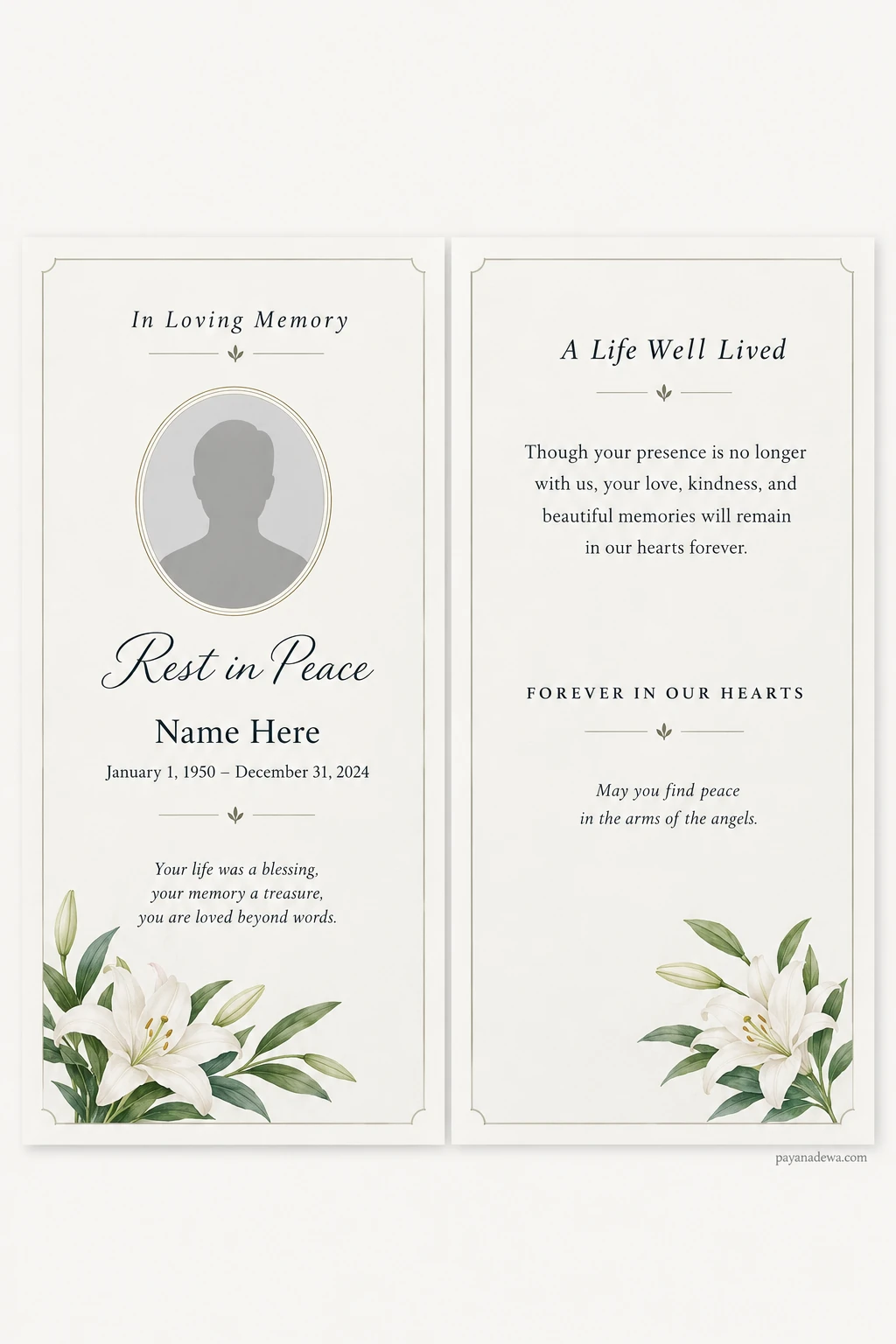
This elegant funeral card template features a soft cream background, delicate white lilies, refined typography, and a two-panel layout. It provides a practical starting point for creating a personalized memorial card while keeping the overall design calm, respectful, and easy to read.
How to Create a Funeral Card Step by Step
Making a funeral card becomes easier when you organize the content before choosing the final layout. Follow these steps to create a thoughtful and polished result.
Step 1: Choose a Suitable Template
Start with a layout that matches the tone of the tribute. A simple printable funeral card template is often the most practical option because you can adjust the text, photograph, colors, and decorative details without starting from scratch.
Step 2: Gather the Necessary Information
Prepare the full name, birth and death dates, preferred photograph, and memorial message. If the card includes service information, confirm the details with the family or funeral organizer before adding them.
Step 3: Write a Personal Tribute
Choose words that reflect the person’s life and relationships. You might mention their kindness, sense of humor, generosity, or devotion to family. A short and sincere message is often more meaningful than a long passage filled with general statements.
Step 4: Customize the Visual Design
Select readable fonts, complementary colors, and subtle decorations. Use one font for headings and another for body text if needed. Keep the layout balanced, with enough spacing around the portrait, dates, and message.
Step 5: Review and Print
Proofread the card carefully. Verify names, dates, spelling, and service details. Before printing a large quantity, print one test copy to check the text size, image quality, margins, and color balance.
Choosing the Right Funeral Card Size and Paper
The ideal size depends on how the card will be distributed and displayed. A small card is convenient for guests to carry, while a folded design offers more room for a photograph and longer tribute.
- Small flat card: Suitable for a brief remembrance message and essential details.
- Folded memorial card: Provides separate spaces for a portrait, biography, prayer, and closing message.
- Bookmark-style card: A practical keepsake that recipients can use long after the service.
- Digital funeral card: Easy to share with relatives and friends who cannot attend in person.
For printed cards, consider uncoated or lightly textured cardstock for a refined finish. A paper weight around 200–300 gsm can work well for many flat or folded designs, depending on your printer and preferred feel. Always confirm that your printer supports the selected paper.
Funeral Card Wording Examples
If you are unsure what to write, begin with a short message that feels sincere and appropriate. The following examples can be adapted to suit different relationships and beliefs.
Simple and Heartfelt Message
In loving memory of a cherished soul whose kindness touched so many lives. Your love, laughter, and beautiful memories will remain in our hearts forever.
Religious Memorial Message
May you find eternal peace in God’s loving presence. Your faith, kindness, and love will continue to guide those who hold you dear.
Message for a Parent
Thank you for a lifetime of love, wisdom, and sacrifice. Your lessons will stay with us, and your memory will always be a treasured part of our lives.
Message for a Friend
Your friendship brought joy, comfort, and unforgettable memories. Although we must say goodbye, the happiness you shared with us will never be forgotten.
Common Funeral Card Design Mistakes to Avoid
A beautiful memorial card should be easy to read and emotionally appropriate. A few simple precautions can help you avoid common problems.
- Using too much text: Keep the main tribute concise and move longer biographies to a separate page if necessary.
- Choosing decorative fonts for everything: Reserve script fonts for short headings and use a readable font for dates and body text.
- Using low-resolution photographs: Select a clear, high-quality image to prevent blurring during printing.
- Overloading the layout: Too many colors, borders, and illustrations can distract from the remembrance message.
- Forgetting to proofread: Double-check names, dates, quotations, and service information before approving the final design.
- Ignoring family preferences: Confirm the wording, imagery, and religious references with the appropriate family members.
Where to Find a Printable Funeral Card Template
A printable funeral card template can save time when you need to prepare a memorial keepsake quickly. Look for a design that offers editable text, a clear photograph area, balanced spacing, and print-friendly dimensions.
Choose a template that suits your preferred format and allows you to personalize the details. Depending on the available file type, you may be able to edit the design in a graphics editor, a document application, or an online design tool.
Before using a template, check its licensing terms and confirm whether personal or commercial use is permitted. If you plan to distribute the card digitally, export a high-quality image or PDF that preserves the layout and makes the text readable on mobile devices.
You can use the funeral card template featured in this article as a visual reference for creating a tasteful memorial design. Personalize the placeholder text, add an appropriate photograph if desired, and review the finished card before printing or sharing it.
Conclusion
A funeral card is more than a piece of printed paper. It is a lasting keepsake that honors a loved one’s life, preserves meaningful memories, and offers comfort to those who are grieving. With thoughtful wording, a suitable photograph, and a clean design, you can create a memorial card that feels personal and respectful.
Whether you choose a minimalist layout, a floral memorial design, or a religious tribute, focus on clarity and sincerity. Start with a suitable funeral card template, verify the essential details, and personalize each element with care. The result can become a treasured reminder of a life that will always be remembered.