A canteen is more than a place to buy a quick meal. In schools, offices, factories, hospitals, and community spaces, it gives people convenient access to food during a busy day. A well-managed canteen can support healthier eating, save time, build community, and make a workplace or campus feel more welcoming. Whether you are planning a new food service area or improving an existing one, understanding the essentials can help you create a space that is practical, safe, and enjoyable.
This guide explains what a canteen is, how it works, what to include in a canteen menu, and how to manage daily service. It also covers hygiene, layout, budgeting, and simple ways to improve the experience for customers and staff.
What Is a Canteen?
A canteen is a food service area where people can purchase or receive meals and drinks, often within an institution or workplace. You may find a school canteen, office canteen, factory canteen, hospital canteen, or community canteen. Some operate like small cafeterias with counters and seating, while others offer takeaway meals from a compact serving area.
The exact setup depends on the people being served. A school canteen may focus on balanced meals, clear prices, and quick service between classes. An office canteen may offer breakfast, lunch, snacks, and coffee. A factory canteen might need to serve many workers in short meal breaks, so speed and efficient food preparation become especially important.
Canteen vs Cafeteria
The terms canteen and cafeteria are sometimes used interchangeably. In many places, a cafeteria describes a self-service dining area, while canteen can refer more broadly to an institutional food outlet or the food service itself. Local usage varies, so the name matters less than the quality, safety, affordability, and convenience of the service.
Why a Well-Run Canteen Matters
A good canteen helps people eat without having to leave a school, workplace, or facility. That convenience can reduce long breaks and make meals easier to plan. It can also encourage social connection because customers have a shared place to sit, talk, and recharge.
- Convenience: Meals and drinks are available close to where people study, work, or receive care.
- Better food choices: A thoughtful menu can make balanced meals easier to find.
- Time savings: Organized ordering and serving help customers return to their activities on time.
- Community: Shared tables and friendly service can create a welcoming atmosphere.
- Operational value: Planned purchasing and portion control can help reduce food waste and manage costs.
These benefits depend on consistent execution. A menu that looks attractive but is often unavailable, a queue that moves slowly, or a dining area that feels unclean can quickly undermine customer trust.
How to Plan a Canteen Menu
The menu is one of the most visible parts of a canteen. It should suit the customers, the available equipment, the food budget, and the time staff have to prepare and serve meals. A clear menu also helps customers decide quickly and helps managers estimate ingredient needs.
Offer Variety Without Making Operations Complicated
Build a manageable selection of main dishes, sides, snacks, and drinks. A small rotating menu can provide variety without requiring an excessive number of ingredients. For example, a lunch menu might include a rice or grain option, a protein-based dish, vegetables, soup, fruit, and water or unsweetened drinks. Adapt the choices to local tastes, dietary needs, and ingredient availability.
Make Prices and Ingredients Easy to Understand
Display prices clearly beside each item. Where practical, identify common allergens and note whether dishes are vegetarian or contain ingredients customers may need to avoid. Staff should be able to answer basic questions accurately, and they should never guess when they are unsure about an ingredient or cross-contact risk.
Use a Simple Weekly Menu Plan
A weekly plan makes purchasing and preparation more predictable. Review sales and leftovers at the end of each day, then adjust quantities. Rotate popular dishes thoughtfully, and avoid changing every item at once. Keeping a few familiar choices alongside occasional specials helps regular customers while still offering something new.
A practical menu planning checklist includes:
- Estimate the number of customers for each service period.
- Choose dishes that can be prepared safely with available equipment.
- Balance taste, nutrition, portion size, and price.
- Check ingredient availability before publishing the menu.
- Prepare a backup option for unexpected shortages.
- Track sales and waste to improve the next menu cycle.
Canteen Layout and Essential Equipment
An effective canteen layout guides customers naturally from entry to ordering, payment, collection, and seating. Clear movement reduces congestion, particularly when many people arrive at the same time. Keep staff preparation areas separate from customer routes wherever possible, and make exits and handwashing facilities easy to access.
Plan Around the Customer Journey
Place menu boards where customers can read them before reaching the counter. Make the ordering point obvious, separate payment from collection if space allows, and provide a clear route for customers leaving the serving area. Arrange tables to leave enough room for people to move safely, including customers using mobility aids.
Choose Equipment for the Menu
Equipment needs vary, but a canteen may require refrigerators, freezers, food preparation tables, cooking appliances, handwashing sinks, utensils, storage shelves, serving counters, and suitable cleaning supplies. Select equipment based on expected volume, food safety requirements, available space, and maintenance support. Avoid buying machines simply because they look professional; every item should serve a defined operational need.
Use durable, easy-to-clean surfaces and keep storage organized. Label containers where appropriate, separate raw ingredients from ready-to-eat food, and ensure staff can reach frequently used tools without crossing busy work areas.
Food Safety and Hygiene in a Canteen
Food safety is essential in every canteen, regardless of its size. A clean appearance is important, but safe procedures must also be followed behind the counter. Requirements differ by location, so managers should follow applicable local food regulations and training standards.
- Wash hands properly: Provide accessible handwashing facilities and reinforce handwashing at key moments.
- Prevent cross-contamination: Keep raw food separate from cooked and ready-to-eat items, and clean tools between tasks.
- Control temperatures: Store, cook, cool, and hold food according to local safety guidance and the requirements for each food type.
- Clean and sanitize: Use a written schedule for counters, equipment, utensils, floors, and high-touch surfaces.
- Check deliveries: Inspect food when it arrives and store it promptly under suitable conditions.
- Train the team: Make sure every worker understands their responsibilities and knows how to report a safety concern.
Keep records for cleaning, temperature checks, deliveries, and other procedures where required. If a food item may be unsafe, do not serve it simply to avoid waste. Remove it from service and follow the appropriate reporting and disposal process.
Managing Canteen Costs and Reducing Food Waste
A sustainable canteen needs a clear view of its costs. Food purchases are only one part of the budget. Labor, utilities, packaging, cleaning products, equipment repairs, and waste disposal can also affect the final result. Reviewing costs regularly makes it easier to identify problems before they grow.
Use Portion Control and Inventory Checks
Consistent serving tools and written portion guidance help maintain value for customers and predictability for the business. Count key ingredients regularly, use older suitable stock first, and label items with dates according to food safety procedures. Order perishable ingredients in quantities that match realistic demand rather than optimistic guesses.
Learn from Sales Data
Record which dishes sell well, which sell slowly, and what is left over. If a meal is repeatedly unpopular, ask customers for feedback and consider changing the recipe, portion, price, or serving time. If demand spikes on particular days, adjust staffing and preparation. Use safe surplus planning, but never compromise food safety to reduce waste.
Improving Customer Service
Friendly service can make a simple meal feel like a positive part of the day. Staff should greet customers respectfully, keep queues moving, explain menu choices clearly, and handle complaints calmly. When delays happen, a brief and honest update is better than leaving customers uncertain.
Useful improvements include:
- Display a readable menu with prices and availability.
- Offer convenient payment methods where feasible.
- Keep tables, trays, and condiment areas tidy.
- Provide a clear way to share suggestions or report a problem.
- Review customer comments regularly and explain what has changed.
Accessibility also matters. Clear signs, uncluttered paths, suitable table spacing, and readable menu information help more people use the canteen comfortably. Where possible, provide seating options for different needs and make assistance available without making customers feel uncomfortable.
Using a Canteen Template for Daily Operations
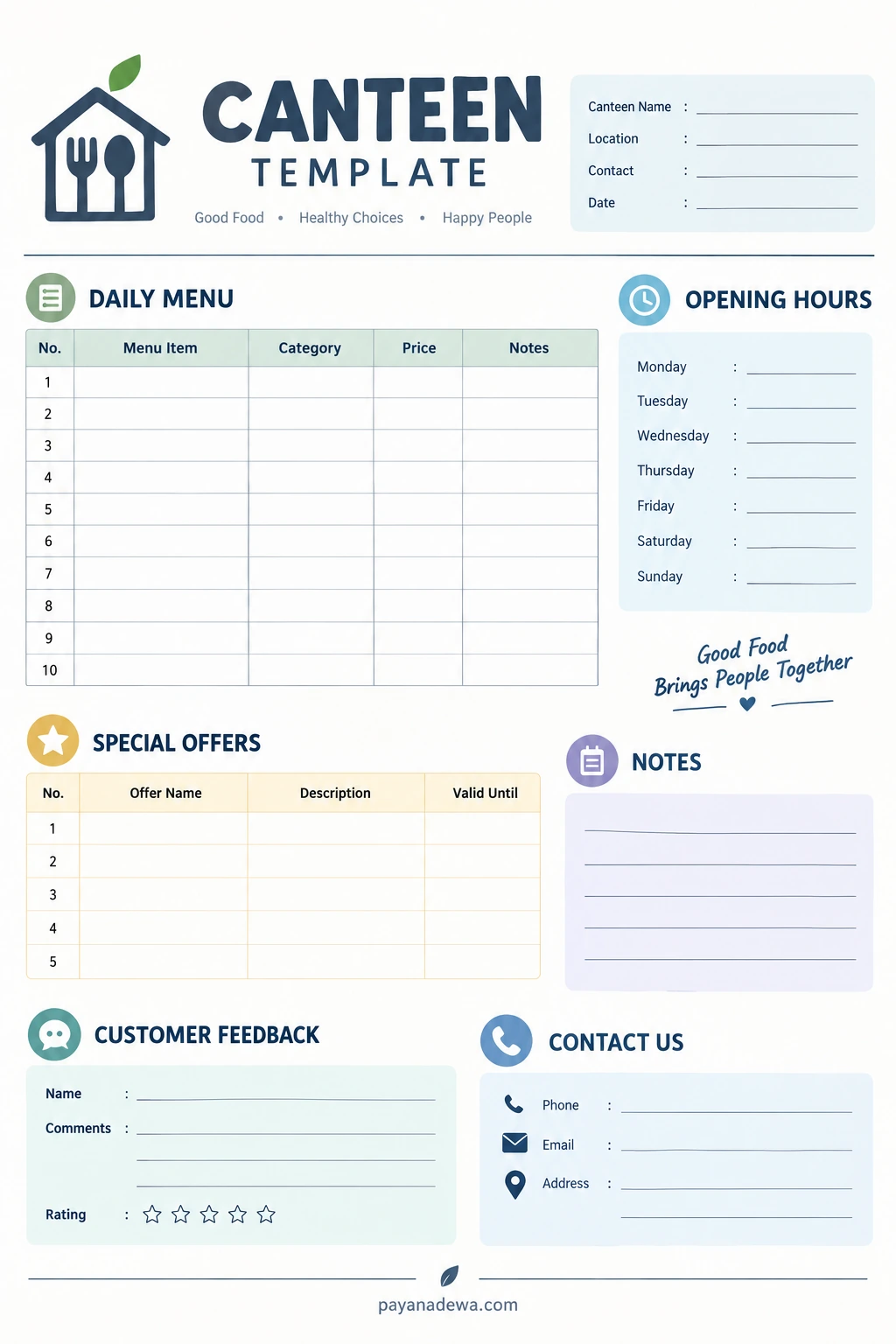
A printable canteen template can help staff organize routine information in one place. Depending on the needs of the site, it can include the daily menu, prices, opening hours, special offers, contact details, customer feedback, and a notes area for reminders. A consistent format reduces the chance that important details will be forgotten during a busy shift.
Use the template as a working document rather than a substitute for formal records required by local regulations. Assign someone to update it, check that prices and hours are current, and remove outdated offers. If the template is displayed publicly, ensure the information is legible from a reasonable distance and that private staff notes are kept separate.
Practical Steps for Starting or Improving a Canteen
If you are opening a new canteen or reviewing an existing one, begin with the people who will use it. Ask about preferred meal times, budget, dietary requirements, and common frustrations. Then assess the space, equipment, staffing, food safety requirements, and expected daily demand.
- Define your customers: Identify who the canteen serves and when demand is highest.
- Set a realistic budget: Include equipment, ingredients, staffing, utilities, maintenance, and contingency costs.
- Plan the menu: Choose a focused range that fits customer needs and kitchen capacity.
- Organize the space: Make preparation, ordering, payment, collection, and seating easy to navigate.
- Write operating procedures: Document cleaning, storage, stock rotation, service, and safety routines.
- Test and improve: Gather feedback, monitor waiting times, review sales, and adjust one issue at a time.
Start with a manageable plan and improve it using real observations. Small changes, such as moving a menu board or preparing a popular dish in a more efficient batch, can make a noticeable difference when they are based on actual customer behavior.
Conclusion
A successful canteen combines convenient service, a well-planned menu, safe food handling, sensible cost control, and a welcoming environment. The best setup is not necessarily the biggest or most elaborate. It is the one that consistently meets the needs of its customers and can be operated reliably by its team.
Whether you manage a school canteen, workplace dining area, or small food counter, use clear processes and listen to customer feedback. A simple canteen template can support daily organization, while regular reviews help improve menu choices, reduce waste, and keep service running smoothly.