Although Thanksgiving is often associated with roast turkey and pumpkin pie, its meaning goes beyond the menu. The day can be an opportunity to reconnect, help others, reflect on personal blessings, and create memories that last. Whether you are hosting a large gathering or enjoying a quiet celebration, a little planning can make the occasion more welcoming and meaningful.
What Is Thanksgiving?
Thanksgiving is a holiday centered on giving thanks for the people, experiences, and resources that enrich our lives. In the United States, it is celebrated on the fourth Thursday of November. Many people mark the day with a special meal, family visits, community events, and expressions of appreciation.
Other countries and communities also hold harvest festivals or days of gratitude, although their dates and customs differ. Therefore, Thanksgiving can mean different things depending on a family’s background, beliefs, and traditions. At its heart, however, the holiday encourages people to slow down and notice what they value.
A Brief History of Thanksgiving
American Thanksgiving is commonly linked to a 1621 harvest gathering in Plymouth, where English colonists and members of the Wampanoag people shared a meal. That event took place within a much longer history of Indigenous communities giving thanks for harvests and the natural world. It is important to remember that the relationship between colonists and Native peoples later involved displacement, conflict, and lasting harm.
Thanksgiving did not become a regular national holiday immediately after the 1621 gathering. Different colonies and states held days of thanksgiving at various times. In 1863, during the Civil War, President Abraham Lincoln proclaimed a national day of Thanksgiving. Congress later established the holiday’s current date in federal law in 1941.
Today, people observe the day in many ways. Some focus on family traditions and gratitude, while others use the occasion to learn about Native American history and reflect on the complicated stories behind national celebrations.
Popular Thanksgiving Traditions
Every family develops its own customs. Some traditions have been passed down for generations, while others begin with a simple idea that everyone enjoys. Here are a few common ways people celebrate.
Sharing a Thanksgiving Meal
A meal is often the centerpiece of the day. Relatives and friends may travel to gather around one table, bring favorite dishes, or share cooking duties. Potluck meals can make hosting easier because each guest contributes something meaningful.
Expressing Gratitude
Before eating, guests may take turns naming something they appreciate. Others write short notes, keep a gratitude journal, or send messages to people who have made a difference in their lives. These small gestures help shift attention from busy routines to meaningful relationships.
Watching Parades and Football
In the United States, televised parades and football games are familiar parts of the holiday for many households. Some families watch together, while others prefer board games, music, or an outdoor walk. Choose activities that suit your guests rather than trying to follow every tradition.
Helping the Community
Thanksgiving can also be a time to support neighbors. People may donate food, volunteer at a community meal, contribute to a local pantry, or check in on someone who might otherwise spend the day alone. Even a short visit or thoughtful message can make a difference.
Classic Thanksgiving Foods
Thanksgiving menus vary by region and family, but many feature comforting dishes made for sharing. If you are planning a meal, consider your guests’ preferences, dietary needs, and the time available for cooking.
- Roast turkey: A traditional centerpiece for many American Thanksgiving dinners, often served with gravy.
- Stuffing or dressing: A savory bread-based side dish that may include herbs, vegetables, or other family-favorite ingredients.
- Mashed potatoes: Creamy potatoes pair well with gravy and are easy to prepare in a large batch.
- Cranberry sauce: Its bright, tart flavor balances richer dishes.
- Roasted vegetables: Carrots, squash, green beans, and Brussels sprouts add color and variety to the table.
- Pumpkin pie: A well-known dessert made with spiced pumpkin custard and commonly served with whipped cream.
You do not need to prepare an elaborate feast to make the day special. A smaller menu with two or three favorite dishes can be just as satisfying. In addition, labeling dishes and asking guests about allergies ahead of time helps everyone feel considered.
How to Plan a Stress-Free Thanksgiving
A thoughtful plan can reduce last-minute pressure and leave more time for the people you invited. Start with the essentials, then add details only if they make the day easier or more enjoyable.
Make a Realistic Guest List and Menu
Confirm how many people are coming before you decide how much food to prepare. Next, choose a menu that fits your kitchen, budget, and schedule. If guests offer to help, assign simple tasks such as bringing dessert, setting the table, or preparing a side dish.
Prepare Ahead of Time
Write a shopping list and buy shelf-stable ingredients early. You can often prepare sauces, chop vegetables, set out serving dishes, and plan the seating arrangement the day before. Keep a short cooking timeline so you know which dishes need the oven and when.
Create a Warm, Simple Table
Autumn leaves, small pumpkins, candles, and natural colors can create a welcoming atmosphere without expensive decorations. Leave enough room for serving dishes and drinks. If children are attending, consider a separate activity area with coloring pages, puzzles, or a Thanksgiving worksheet.
Make Space for Different Needs
Not everyone celebrates in the same way. Some guests may have dietary restrictions, mobility needs, cultural differences, or mixed feelings about the holiday’s history. Ask considerate questions in advance, offer food choices where possible, and let people participate at a level that feels comfortable to them.
Meaningful Thanksgiving Activities for Families
Activities give guests a way to connect beyond the meal. They can be especially helpful when people of different ages are gathering together.
- Start a gratitude jar: Invite everyone to write one thing they appreciate on a slip of paper. Read the notes aloud if everyone is comfortable sharing.
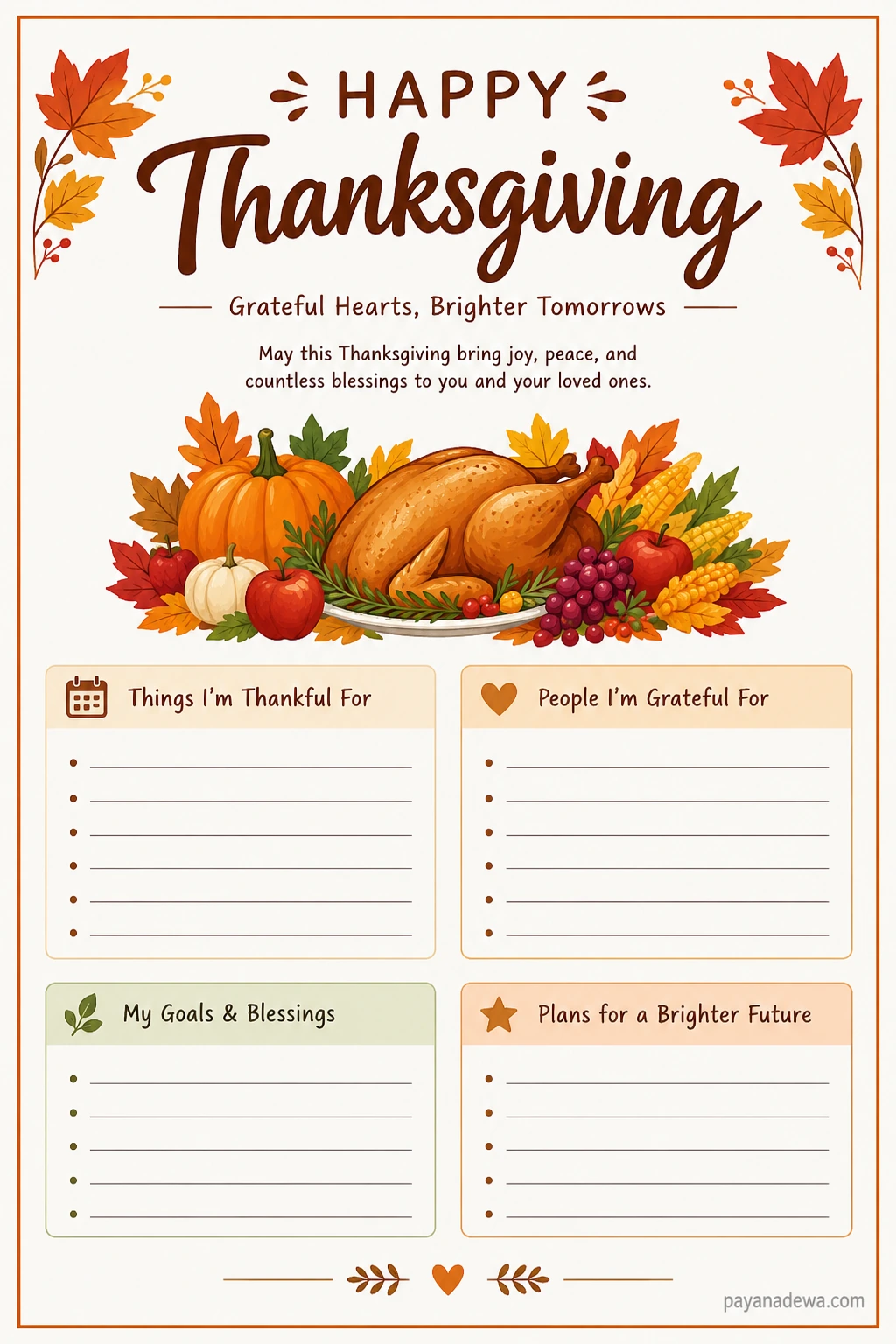
- Create a Thanksgiving worksheet: Use a printable page to record favorite memories, helpful people, goals, and hopes for the coming year.
- Share family stories: Ask older relatives about meaningful memories, favorite recipes, or traditions they would like to pass on.
- Take a seasonal walk: Enjoy the autumn weather, notice the changing leaves, and spend time talking away from screens.
- Make a kindness plan: Choose one practical way to help someone, such as delivering groceries, writing thank-you notes, or supporting a local organization.
For a simple keepsake, place a Thanksgiving template at each seat. Guests can fill in the prompts during the meal and take their pages home afterward. This works well for children and adults because everyone can reflect in their own words.
Teaching Children About Gratitude
Thanksgiving offers a natural chance to talk with children about appreciation and kindness. Keep the conversation concrete and age-appropriate. For example, ask what made them smile this week, who helped them, or what they enjoyed doing with family or friends.
Children can also help with simple tasks, such as arranging napkins, decorating place cards, or writing thank-you messages. Praise their effort rather than expecting perfect results. Most importantly, show gratitude in everyday life throughout the year. Children learn from what adults practice as much as from what they say.
Celebrating Thanksgiving on a Budget
A meaningful Thanksgiving does not depend on expensive food or decorations. With a few practical choices, you can welcome guests while keeping costs manageable.
- Plan the menu around seasonal ingredients and dishes you already know how to prepare.
- Ask guests to bring a side dish or dessert if they are willing and able.
- Use reusable plates and decorations you already own.
- Choose a potluck or dessert gathering instead of hosting a full dinner.
- Focus on conversation, games, music, and shared memories rather than elaborate purchases.
Also, consider food safety when preparing a large meal. Keep raw poultry separate from ready-to-eat foods, wash hands and surfaces, and use a food thermometer to check that turkey reaches a safe internal temperature of 165°F (74°C). Refrigerate leftovers within two hours, and store them in shallow containers so they cool quickly.
What Thanksgiving Means Today
For many people, Thanksgiving remains a cherished chance to gather, cook, and express appreciation. For others, it can bring up complicated emotions or questions about the holiday’s historical context. Both realities deserve room for honest conversation.
A thoughtful celebration can honor personal traditions while also making space for learning, respect, and generosity. You might explore Indigenous perspectives, support Native-led organizations, or discuss the history of the land where you live. These actions do not need to replace family customs; they can add understanding and purpose to the day.
Conclusion
Thanksgiving is more than a meal or a date on the calendar. It is an opportunity to express gratitude, strengthen relationships, share food, and offer kindness to others. From classic dishes and family activities to simple printable worksheets, there are many ways to make the celebration personal and welcoming.
Whether your gathering is large or small, focus on what matters most to you and your guests. Plan realistically, respect different perspectives, and make room for moments of appreciation. Those thoughtful choices can help turn Thanksgiving into a meaningful tradition that people look forward to year after year.