A promotional brochure is a powerful marketing tool that helps businesses present their products, services, benefits, and brand message in a clear and visually appealing format. Whether printed and handed to customers or shared digitally, a well-designed brochure can introduce your business, build credibility, and encourage potential customers to take action.
Unlike a simple flyer, a brochure can provide more detailed information while maintaining an organized and professional appearance. It can explain what your business offers, highlight important benefits, answer common questions, and guide readers toward contacting your company or making a purchase.
From small businesses and startups to established companies, organizations can use promotional brochures for events, trade shows, sales campaigns, product launches, local marketing, and customer outreach. The key is to combine attractive design with useful information and a clear marketing objective.
What Is a Promotional Brochure?
A promotional brochure is a printed or digital marketing document created to promote a business, product, service, event, or special offer. It typically combines headlines, images, short descriptions, benefits, contact information, and calls to action in a compact layout.
Common brochure formats include bi-fold, tri-fold, z-fold, gate-fold, and multi-page booklet designs. The best format depends on how much information you need to communicate and where the brochure will be distributed.
A successful brochure should do more than look attractive. It should quickly communicate value and help readers understand why they should choose your business.
Why Promotional Brochures Are Still Effective
Digital marketing is essential, but physical marketing materials can still create a memorable experience. A professionally designed brochure gives customers something tangible that they can read later, share with others, or keep for reference.
Brochures can also support other marketing channels. For example, a printed brochure can include a QR code that directs readers to your website, online store, booking page, portfolio, or social media profile.
- Builds brand awareness: A consistent brochure design reinforces your company identity.
- Communicates important information: Customers can quickly review products, services, pricing, or benefits.
- Supports face-to-face marketing: Brochures are useful at meetings, conferences, exhibitions, and local events.
- Creates a professional impression: High-quality design can increase perceived credibility.
- Encourages action: Strong calls to action can direct readers toward contacting or purchasing from your business.
- Works with digital campaigns: QR codes and website addresses can connect printed materials with online resources.
Essential Elements of an Effective Promotional Brochure
A brochure should be easy to scan. Most readers will not study every sentence, so important information needs to be visible and logically organized.
1. A Strong Headline
The headline should immediately communicate the main benefit or purpose of the brochure. Instead of using a vague phrase, focus on what the customer can gain from your product or service.
For example, a business consulting brochure could use a headline such as “Smarter Strategies for Sustainable Business Growth.” The message is specific, benefit-focused, and relevant to the target audience.
2. High-Quality Visuals
Images can attract attention before readers begin exploring the text. Use photographs, illustrations, product images, or brand graphics that support the message rather than simply filling empty space.
Images should be sharp enough for the intended printing size. For digital brochures, optimize image file sizes so the document remains easy to load and share.
3. Clear Benefits
Customers are generally more interested in how a product or service can help them than in a long list of technical features. Translate features into practical benefits whenever possible.
- Explain the problem your product solves.
- Show how your service saves time or reduces complexity.
- Highlight qualities that differentiate your business.
- Use short sections instead of large blocks of text.
4. Contact Information
Make it easy for interested readers to reach you. Depending on your business, include a phone number, email address, website, physical location, social media account, or QR code.
5. A Clear Call to Action
Every promotional brochure should have a clear next step. Examples include “Request a Free Consultation,” “Visit Our Website,” “Book Your Appointment,” “Get a Quote,” or “Shop the Collection.”
A strong call to action prevents the brochure from becoming purely informational. It gives the reader a reason to continue the customer journey.
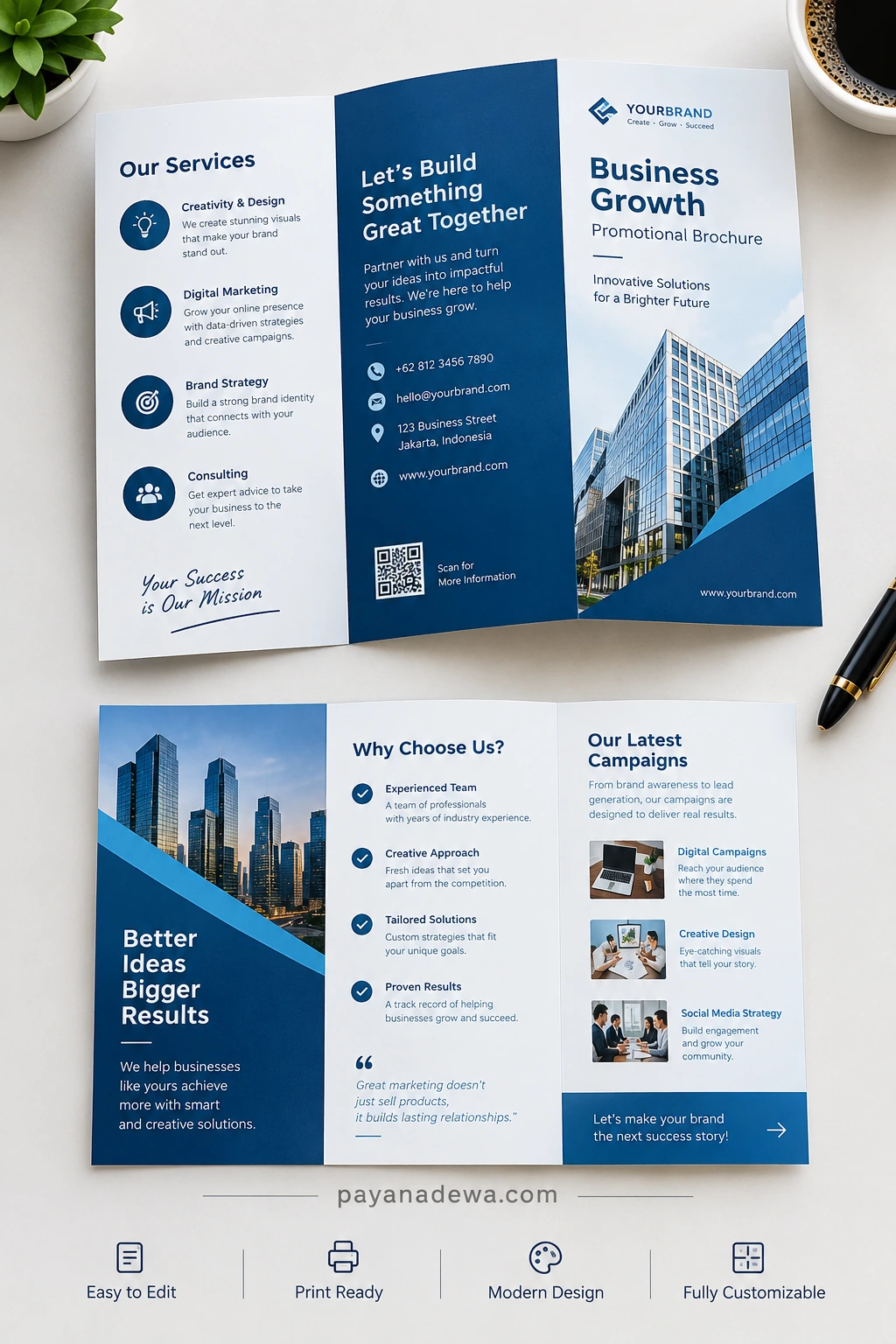
How to Design a Promotional Brochure
Good brochure design starts with a clear objective. Before choosing colors, fonts, or images, determine what you want the reader to understand and do after viewing the brochure.
Define Your Target Audience
Think about the people who will receive the brochure. Their age, interests, needs, purchasing behavior, and expectations can influence your design and messaging.
A luxury service may require an elegant and minimal layout, while a family-oriented business may benefit from friendly colors, approachable photography, and simple language.
Choose a Suitable Layout
Use sections, columns, headings, and visual hierarchy to guide the reader through the content. Avoid placing too much information on a single panel.
For a tri-fold brochure, for example, each panel can have a specific purpose. One panel might introduce the business, another can explain services, and another can provide contact details and a call to action.
Use Consistent Branding
Your brochure should look like it belongs to your brand. Use consistent colors, typography, logos, imagery, and messaging across your marketing materials.
Brand consistency makes your business easier to recognize and can create a more professional customer experience.
Keep the Copy Concise
Short paragraphs and bullet points make brochures easier to scan. Remove unnecessary words and focus on information that helps customers understand your offer.
Instead of writing several paragraphs about one service, consider using a short heading, a two- or three-sentence explanation, and a few key benefits.
Promotional Brochure Ideas for Different Businesses
Almost any business can adapt a brochure to its marketing goals. The content should change according to the audience and industry.
- Restaurants: Promote signature dishes, catering services, special menus, and reservations.
- Real estate agencies: Showcase properties, services, market expertise, and contact details.
- Hotels: Highlight rooms, amenities, facilities, local attractions, and booking options.
- Professional services: Explain expertise, service packages, credentials, and customer benefits.
- Retail businesses: Present products, promotions, loyalty programs, and store information.
- Schools and educational organizations: Highlight programs, facilities, achievements, and enrollment information.
- Healthcare businesses: Explain available services, facilities, appointment options, and patient resources.
Tips for Writing Better Promotional Brochure Content
Effective brochure copy should be persuasive without sounding exaggerated. Write for the customer rather than simply describing your company.
Focus on Customer Problems
Start by identifying the problem or need your audience has. Then explain how your product or service provides a useful solution.
Use Simple Language
Avoid unnecessary industry jargon. Clear language helps readers understand your message quickly and makes the brochure accessible to a wider audience.
Make Benefits Easy to Scan
Use short headings, bullet lists, bold highlights, and brief paragraphs. Visual structure is especially important because brochures are often read quickly.
Create Urgency When Appropriate
If your brochure promotes a limited-time offer, seasonal campaign, event, or special discount, clearly communicate the deadline or availability. However, only use urgency when it is genuine.
Print and Digital Promotional Brochure Best Practices
A brochure intended for professional printing requires different preparation from a digital-only document. For print materials, pay attention to page dimensions, image resolution, margins, folds, and bleed requirements.
Before sending the final design to a printer, proofread every panel and verify phone numbers, website addresses, prices, dates, and promotional terms.
For digital brochures, make the document easy to view on desktop and mobile devices. Compress unnecessarily large images, use readable fonts, and make website links clickable whenever possible.
Common Promotional Brochure Mistakes to Avoid
Even attractive brochures can perform poorly when the message is unclear or the layout is difficult to navigate.
- Too much text: Large blocks of copy can discourage readers.
- Weak headlines: A generic headline may fail to capture attention.
- Too many design elements: Excessive colors, fonts, icons, or decorative graphics can create visual clutter.
- No clear call to action: Readers may not know what to do next.
- Low-quality images: Blurry or poorly cropped visuals can make the business appear less professional.
- Inconsistent branding: Different fonts, colors, and styles can weaken brand recognition.
- Outdated information: Incorrect contact details or expired promotions can damage credibility.
How to Make Your Promotional Brochure More Effective
Start with one primary marketing objective. A brochure designed to generate leads should not try to communicate every detail about your company. Instead, focus on the information that supports lead generation.
Use visual hierarchy to establish an information path. The reader should naturally move from the headline to the main benefit, supporting information, proof or credibility, and finally the call to action.
You can also strengthen your brochure with testimonials, customer statistics, awards, certifications, guarantees, or short case studies when they are relevant and verifiable.
Finally, test your brochure before distributing it widely. Ask someone unfamiliar with your business to review it and explain what they think the brochure is promoting. If they cannot identify the main message quickly, simplify the design and copy.
Promotional Brochure vs Flyer: What Is the Difference?
Although brochures and flyers are both marketing materials, they serve slightly different purposes. A flyer is typically a single-page promotional document designed to communicate a message quickly. A brochure generally provides more structured information and may contain multiple panels or pages.
Choose a flyer when you need to promote a specific event, sale, announcement, or limited offer. Choose a brochure when you need to explain multiple services, product categories, benefits, or aspects of your business.
Final Thoughts
A well-designed promotional brochure can be much more than a printed marketing document. It can act as a compact sales presentation that introduces your brand, explains your value, builds trust, and encourages customers to take action.
The most effective brochures combine a strong headline, useful information, compelling visuals, consistent branding, concise copy, and a clear call to action. Whether you are creating a brochure for a small business, product launch, professional service, event, or promotional campaign, always design it around the needs of your target audience.
With thoughtful content and a clean layout, a promotional brochure can become a valuable part of both your offline and digital marketing strategy.