A Music Brochure is more than a collection of images and information. It is a powerful marketing tool that can introduce a music school, band, artist, event, studio, or music organization to potential audiences in a clear and memorable way. With the right design, a brochure can communicate your identity, showcase your services, and encourage people to take action.
Whether you are promoting music lessons, announcing a concert, presenting a new artist, or introducing a recording studio, a well-designed music brochure can make your message easier to understand. It combines attractive visuals with concise information, making it useful for both printed and digital marketing.
A professional brochure should also reflect the personality of your music brand. Colors, typography, photography, icons, and layout can work together to create a strong visual impression. The goal is not simply to make the brochure look attractive, but to make every section useful to the reader.
Modern audiences often receive promotional information from many different sources. A carefully planned music brochure can help your message stand out. It gives readers a convenient way to discover your programs, services, events, contact information, and unique value.
In this guide, you will learn what makes an effective music brochure, what information to include, how to organize the layout, and how to make the final design useful for both marketing and communication.
What Is a Music Brochure?
A Music Brochure is a printed or digital marketing document created to present music-related information in an organized and visually appealing format. It can be used by musicians, bands, music schools, recording studios, event organizers, music communities, and entertainment businesses.
Unlike a simple flyer, a brochure usually provides more space for information. It can contain multiple sections that explain services, programs, upcoming events, artist profiles, contact details, and calls to action.
Common Uses of a Music Brochure
Music brochures can support many different marketing goals. A music school can use one to explain its lessons and programs, while a band can use it to promote performances and booking services.
- Promoting music lessons and courses
- Introducing musicians, singers, and bands
- Advertising concerts and live performances
- Promoting recording studios
- Presenting music workshops
- Sharing information about music festivals
- Promoting entertainment services
- Building awareness for a music community
Because the format is flexible, a brochure can be customized for almost any music-related purpose. The most important factor is matching the content and design to the intended audience.
Why a Music Brochure Is Important
A good brochure helps turn complex information into an easy-to-follow visual experience. Instead of presenting visitors with a long block of text, you can divide information into clear sections that guide readers through your message.
A brochure can also strengthen brand recognition. When your logo, colors, fonts, images, and messaging remain consistent, readers are more likely to remember your organization or music brand.
Build a Strong First Impression
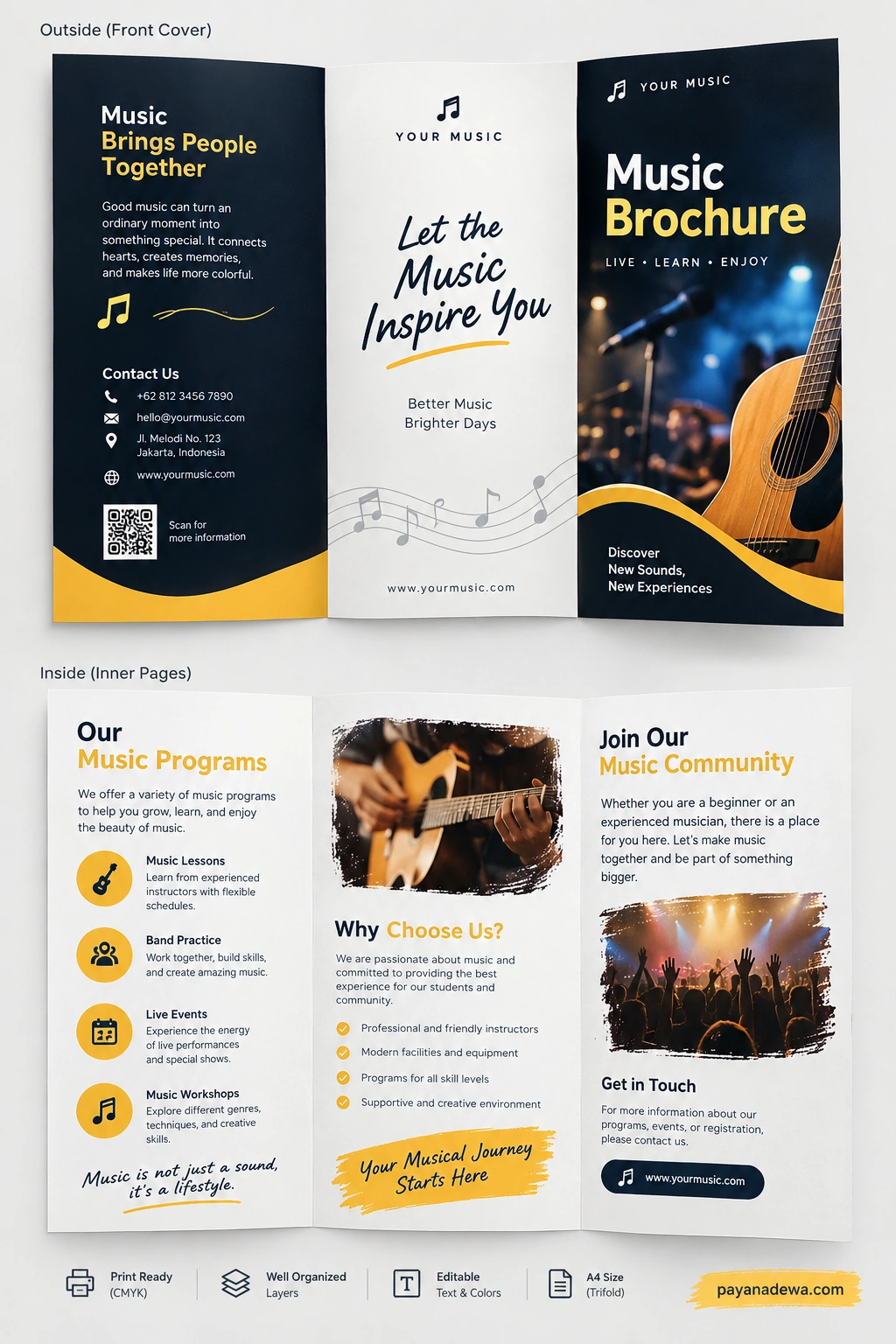
The front cover is usually the first part people notice. A strong headline, attractive music photography, and clear branding can immediately communicate what the brochure is about.
For example, a music school could use a headline such as “Learn Music. Build Confidence. Find Your Sound.” This type of message quickly communicates a benefit while creating an emotional connection.
The cover should avoid unnecessary information. Focus on one main message and use visual elements that support it.
A clean design can often be more effective than a crowded layout. Readers should understand the purpose of the brochure within a few seconds.
Essential Elements of a Professional Music Brochure
A successful brochure combines design and useful information. Every element should have a clear purpose and contribute to the overall message.
1. Strong Cover Design
The cover should immediately tell readers what they can expect inside. Use a memorable title, relevant image, and recognizable brand identity.
A high-quality photograph of a musician, instrument, stage, or performance can create an emotional connection. However, the image should not overpower the main message.
2. Clear Music Services
Explain what you offer in simple language. If you provide music lessons, list the instruments and learning options. If you are promoting a band, explain performance packages or booking services.
- Music lessons
- Private coaching
- Band practice
- Live performances
- Music workshops
- Recording services
- Event entertainment
3. High-Quality Images
Images can communicate the atmosphere of your music brand faster than long descriptions. Choose photographs that are relevant, sharp, and consistent with your visual identity.
For a music school, photographs of students learning instruments can make the brochure feel welcoming. For a concert promoter, energetic stage photography may be more appropriate.
4. Contact Information
Make it easy for readers to contact you. Include your website, email address, phone number, social media accounts, or physical location when relevant.
A QR code can also connect printed brochures with digital resources. For example, the QR code could lead to a registration page, event schedule, music portfolio, or online booking form.
How to Design an Effective Music Brochure
Good brochure design begins with a clear understanding of the audience. Before choosing colors and images, determine who will read the brochure and what action you want them to take.
Choose a Consistent Visual Style
Your visual style should match your music identity. A classical music organization may benefit from an elegant and sophisticated design, while a contemporary music festival may use bold typography and energetic photography.
Try to maintain consistency across the entire brochure. Use a limited color palette, consistent heading styles, and similar image treatments.
Too many fonts or colors can make the design look confusing. A simple visual system usually creates a more professional result.
Use Visual Hierarchy
Visual hierarchy helps readers understand which information is most important. Your main headline should receive stronger emphasis than supporting text.
- Use large headings for major topics.
- Use smaller subheadings to divide information.
- Highlight important benefits with bold text.
- Use icons to support short descriptions.
- Leave enough white space between sections.
This approach makes the brochure easier to scan. Readers can quickly find the information they need without reading every sentence.
Music Brochure Ideas for Different Purposes
There is no single brochure format that works for every music project. The best design depends on the purpose and audience.
Music School Brochure
A music school brochure can introduce available classes, instructors, schedules, facilities, and registration information. Include photographs that show students actively learning and enjoying music.
Useful sections can include beginner programs, advanced lessons, private classes, group sessions, workshops, and performance opportunities.
Band and Artist Brochure
A band brochure should focus on identity, performance style, experience, and booking information. Include a short artist biography, selected achievements, music genres, performance photographs, and contact details.
A QR code can direct potential clients to songs, videos, or a complete online portfolio.
Music Event Brochure
For concerts and festivals, the brochure should make event information easy to find. Include the date, venue, performers, schedule, ticket information, and important instructions.
Strong event photography and bold typography can help communicate excitement while maintaining readability.
Tips for Writing Music Brochure Content
Great design cannot compensate for unclear writing. Brochure copy should be concise, informative, and focused on the reader.
Focus on Benefits
Instead of simply describing what you provide, explain why it matters. For example, rather than saying “We offer guitar lessons,” you could explain that students receive practical instruction designed to help them build confidence and improve their playing skills.
Benefits answer the reader’s most important question: “Why should I choose this music service?”
Keep Sentences Short and Clear
Brochures are usually scanned rather than read like books. Short paragraphs and direct sentences make important information easier to understand.
Avoid unnecessary technical terms unless your audience already understands them. Use familiar language and explain specialized terms when they are necessary.
Include a Clear Call to Action
Every promotional brochure should encourage the reader to take the next step. Your call to action could invite people to register, book a performance, visit a website, attend an event, or contact your team.
- Book a music performance
- Register for music lessons
- Explore upcoming events
- Contact our music team
- Visit our website
- Scan the QR code for more information
Print and Digital Music Brochure Considerations
A brochure designed for printing needs different considerations from one created specifically for digital distribution. Understanding the final format can prevent design problems later.
For Printed Brochures
Use high-resolution images and prepare the document according to your printer’s specifications. Pay attention to margins, bleed areas, paper size, and color mode.
CMYK color preparation is commonly used for professional printing. It is also important to test a physical proof before producing a large quantity.
For Digital Brochures
Digital brochures can include clickable links, QR codes, website addresses, and interactive elements. PDF is a common format because it maintains the layout across different devices.
Keep the file size reasonable so users can open or download the brochure easily. Large images should be optimized without sacrificing important visual details.
How to Make Your Music Brochure More Engaging
Engagement comes from combining useful information with a strong visual story. Think about the experience you want readers to have as they move from the cover to the final call to action.
Tell a Visual Story
Start with your main message, introduce your services or programs, demonstrate your value, and finish with a clear action. This creates a natural flow through the brochure.
Photography can support this story. For example, a music school brochure can begin with a welcoming classroom image, continue with lesson information, and finish with students performing on stage.
Use White Space Effectively
White space does not mean wasted space. It gives content room to breathe and helps readers distinguish between different sections.
A crowded brochure can make even valuable information difficult to read. Give headlines, images, and paragraphs enough space so the design feels balanced.
Common Music Brochure Design Mistakes
Even attractive brochures can become ineffective when basic design principles are ignored. Avoiding common mistakes can significantly improve the final result.
Too Much Information
Trying to include every detail can overwhelm readers. Select the most useful information and provide links or QR codes for additional details.
Poor Image Quality
Blurry or low-resolution photographs can make a professional music brand look less credible. Always use appropriate image quality for the intended output.
Weak Call to Action
A brochure should not leave readers wondering what to do next. Make the next step obvious and easy to complete.
Inconsistent Branding
Different colors, fonts, and visual styles across sections can make the brochure appear unfinished. Maintain a consistent brand system from the cover to the final page.
Music Brochure Template: A Practical Starting Point
Using a Music Brochure Template can make the design process faster, especially when you need a professional layout without starting from a blank document.
A well-organized template can provide predefined sections for headlines, images, descriptions, contact information, and calls to action. You can then customize the colors, text, photographs, and branding to match your project.
What to Look for in a Template
- Clean and professional layout
- Editable text and colors
- Well-organized sections
- High-quality image areas
- Print-ready structure
- Suitable brochure dimensions
- Space for contact information
- Clear call-to-action areas
The best template is not necessarily the most complicated one. Choose a design that makes your content easier to communicate and gives you enough flexibility to create a unique result.
Final Tips for Creating a Successful Music Brochure
Before publishing or printing your brochure, review both the content and design carefully. Check spelling, contact details, website addresses, event dates, prices, and other important information.
Look at the brochure from the perspective of someone who has never heard about your organization. Can they understand what you offer quickly? Can they find your contact information? Is the next action obvious?
Also check the brochure on the device or paper size where it will actually be used. A design that looks excellent on a large monitor may require adjustments when printed as a small brochure.
Final Checklist
- Confirm that the main message is clear.
- Check that the primary keyword appears naturally.
- Review all headings and subheadings.
- Use relevant, high-quality images.
- Check contact information carefully.
- Make the call to action easy to find.
- Test QR codes and links.
- Review the design for readability.
- Confirm print specifications when necessary.
- Proofread the entire brochure before publishing.
Conclusion
A professional Music Brochure can help musicians, music schools, bands, studios, event organizers, and entertainment businesses communicate their message effectively. The combination of clear content, strong visuals, consistent branding, and a useful call to action can turn a simple brochure into an effective marketing asset.
The most successful brochure designs focus on the audience. They provide the right information, use attractive visuals, and make the next step simple. Whether you are creating a printed brochure or a digital PDF, thoughtful planning can make a significant difference.
If you are starting from scratch, a well-designed Music Brochure Template can provide a practical foundation. Customize it with your own branding, photographs, services, and messaging to create a brochure that feels original and professional.
With the right approach, your brochure can do more than share information. It can introduce your music brand, build trust, showcase your creativity, and encourage readers to become students, customers, listeners, attendees, or supporters.