A medical brochure is an effective communication tool that helps healthcare organizations present important information in a clear, professional, and easy-to-understand format. Hospitals, clinics, medical practices, wellness centers, laboratories, and healthcare professionals can use brochures to introduce their services, explain treatments, provide health information, and help patients understand their available care options.
Unlike ordinary promotional materials, a medical brochure needs to balance visual appeal with accuracy, readability, and trust. Healthcare information should be presented carefully so readers can quickly understand the purpose of a service without feeling overwhelmed by complicated terminology.
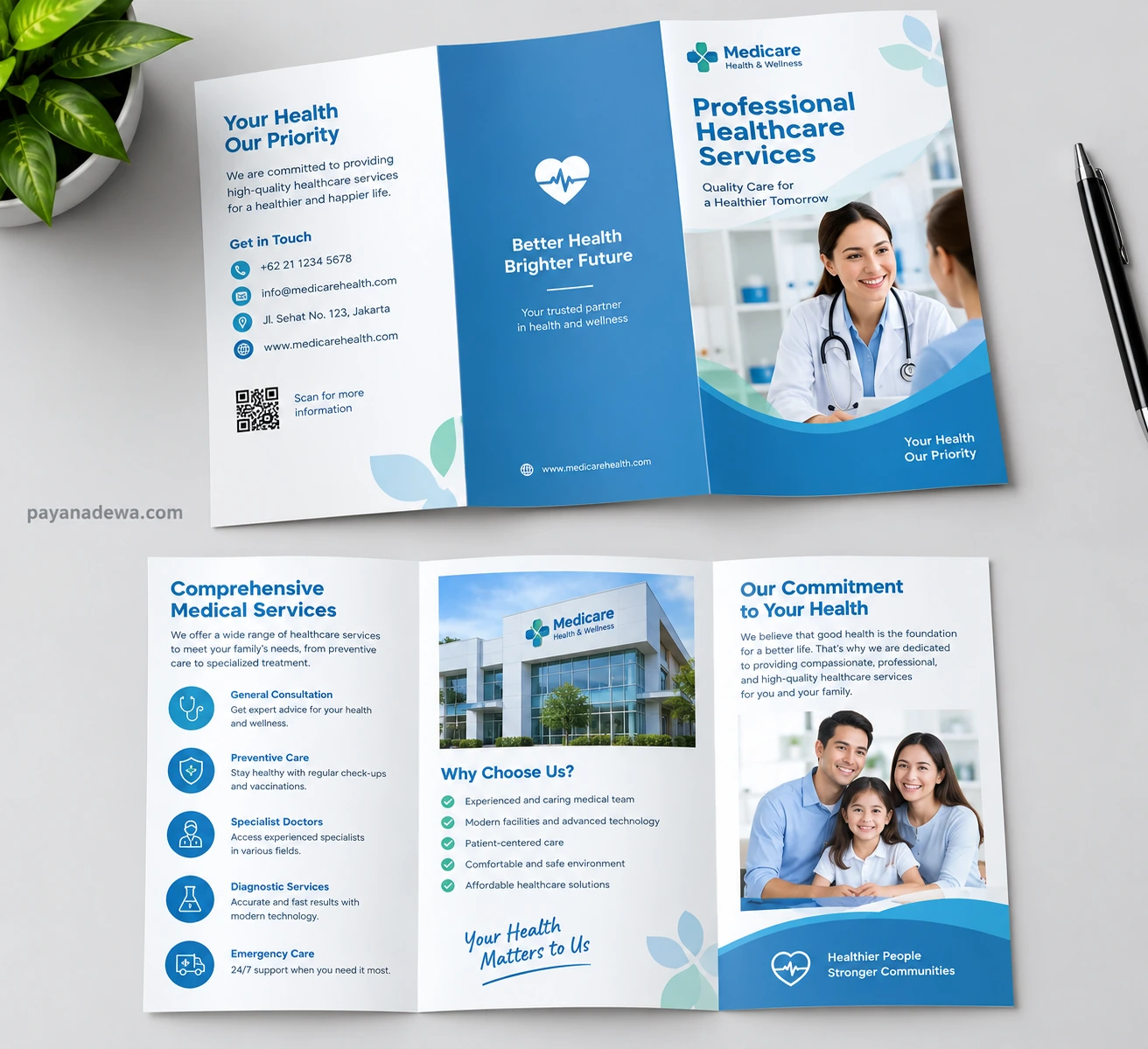
A well-designed medical brochure template can make this process easier. It provides a structured layout where healthcare providers can organize service descriptions, medical imagery, contact information, facility details, and calls to action while maintaining a consistent professional appearance.
Whether you are creating a brochure for a hospital, private clinic, dental practice, medical laboratory, or wellness organization, the right design can make healthcare information more accessible and memorable.
What Is a Medical Brochure?
A medical brochure is a printed or digital document designed to communicate healthcare-related information to patients, families, medical professionals, or prospective customers. It can contain information about medical services, treatments, facilities, healthcare professionals, preventive care, and contact details.
Medical brochures can be created in different formats, including bi-fold, tri-fold, gatefold, and digital PDF layouts. The appropriate format depends on how much information needs to be presented and how the brochure will be distributed.
The primary objective is to communicate important information efficiently. Readers should be able to identify the healthcare provider, understand the available services, and determine what action they should take next.
Why Are Medical Brochures Important?
Healthcare organizations often need to communicate complex information to people with different levels of medical knowledge. A brochure can simplify that communication by combining short explanations, visual elements, headings, icons, and organized sections.
- Introduces medical services and healthcare facilities.
- Provides patients with useful health information.
- Explains treatments and healthcare programs.
- Builds a professional and trustworthy brand image.
- Provides important contact and appointment information.
- Supports healthcare marketing and patient education.
Essential Elements of a Professional Medical Brochure
A successful medical brochure should be informative without becoming difficult to read. Every design element should have a clear purpose and contribute to the reader’s understanding.
The strongest brochures combine a simple structure with professional photography, readable typography, appropriate colors, and concise healthcare information.
Clear Healthcare Branding
The brochure should clearly identify the hospital, clinic, medical practice, or healthcare organization. Include the logo, organization name, brand colors, and other appropriate visual elements.
Consistent branding helps readers recognize the organization and creates a more professional impression across printed and digital healthcare materials.
Professional Medical Images
Images can make healthcare information more approachable. Depending on the purpose of the brochure, appropriate images may include doctors, nurses, healthcare facilities, medical equipment, patients, families, or wellness activities.
Images should support the message rather than simply decorate the page. High-quality and relevant photography can make the brochure more credible and visually engaging.
Easy-to-Read Medical Information
Healthcare terminology can sometimes be difficult for general audiences. Whenever possible, explain complex concepts using straightforward language and short paragraphs.
Use headings, bullet points, icons, and sufficient spacing to divide information into manageable sections. This allows readers to scan the brochure and quickly locate the information they need.
How to Create an Effective Medical Brochure
Creating a medical brochure starts with understanding its purpose. Before choosing colors or arranging images, determine what information the brochure needs to communicate and who will read it.
1. Define the Purpose
Every medical brochure should have a specific objective. It may introduce a clinic, promote a healthcare service, explain a treatment, provide preventive health information, or encourage patients to schedule an appointment.
A focused purpose makes it easier to decide which information belongs in the brochure and which details can be left out.
2. Identify the Target Audience
Consider whether the brochure is intended for patients, parents, families, older adults, healthcare professionals, or another audience. The tone, vocabulary, imagery, and amount of technical information should reflect the intended reader.
3. Organize the Information
Divide the content into logical sections. A medical services brochure, for example, might include an introduction, available services, reasons to choose the facility, healthcare team information, contact details, and an appointment call to action.
- Healthcare organization introduction.
- Medical services and specialties.
- Important benefits or features.
- Information about healthcare professionals.
- Facility or technology information.
- Patient support information.
- Contact and appointment details.
4. Use a Clear Visual Hierarchy
The most important information should be visually prominent. Use larger headings for major sections and smaller text for supporting information.
A strong hierarchy helps readers move naturally from the main message to supporting details and finally toward the desired call to action.
Medical Brochure Design Ideas
The visual appearance of a medical brochure can influence how readers perceive a healthcare organization. A clean and organized design often communicates professionalism, reliability, and attention to detail.
Use Appropriate Colors
Healthcare brochures commonly use clean and calming color combinations. Blue, teal, green, white, and neutral tones can create a professional visual environment, although the exact colors should match the organization’s brand identity.
Avoid using too many colors because excessive visual variation can make important information harder to recognize.
Choose Readable Typography
Typography should prioritize readability. Select fonts that remain clear in both printed and digital versions, and maintain enough contrast between the text and background.
Headings can use stronger weights or larger sizes, while body text should remain comfortable to read. Avoid excessively decorative fonts for important healthcare information.
Use White Space Effectively
White space helps separate different sections and prevents the brochure from appearing crowded. It also allows important information and images to stand out.
A common design mistake is attempting to fill every available area with text or graphics. A cleaner layout often communicates more effectively than a crowded one.
Medical Brochure Content Ideas
The content of a medical brochure depends on the organization and its communication goals. However, several sections are useful for many healthcare brochures.
Medical Services
List the major services provided by the healthcare organization. Keep descriptions concise and explain the primary benefit or purpose of each service when appropriate.
- General medical consultation.
- Preventive healthcare.
- Diagnostic services.
- Specialist consultations.
- Emergency care information.
- Health and wellness programs.
About the Healthcare Facility
Introduce the hospital, clinic, or medical organization with a concise description. Information about facilities, technology, medical teams, or patient-centered care can help readers understand what makes the organization different.
Contact Information
Contact information should be easy to locate. Include the organization’s address, phone number, email address, website, and other relevant communication channels.
If the brochure is intended to encourage appointments, make the appointment process clear and simple.
Benefits of Using a Medical Brochure Template
Creating a professional healthcare brochure from scratch can require significant design work. A medical brochure template provides a useful foundation for organizing content and visual elements.
Templates can help establish consistent spacing, typography, image placement, headings, and content sections. Healthcare organizations can then customize the template with their own branding and information.
Save Design Time
A ready-made structure reduces the amount of time spent creating the basic layout. This allows designers and healthcare teams to focus on the accuracy and quality of the content.
Maintain Brand Consistency
A reusable template can help healthcare organizations maintain a consistent visual identity across different brochures. Colors, logos, fonts, and graphic elements can be standardized.
Make Information Easier to Organize
A structured template provides dedicated areas for services, images, contact information, introductions, and calls to action. This can prevent important details from being overlooked.
Common Medical Brochure Mistakes to Avoid
Healthcare communication requires particular attention to clarity and accuracy. Several common mistakes can reduce the effectiveness of a medical brochure.
- Including excessive medical jargon.
- Using too much text without sufficient spacing.
- Choosing low-quality or irrelevant images.
- Making contact information difficult to find.
- Using fonts that are too small to read comfortably.
- Adding too many decorative design elements.
- Using inconsistent branding throughout the brochure.
- Failing to proofread medical information.
- Including outdated service or contact information.
Medical Brochure Printing Tips
If the brochure will be printed, the design should be prepared according to professional printing requirements. Consider the final paper size, folding method, margins, bleed, image resolution, and color specifications before exporting the final document.
High-resolution images are important because low-quality graphics can appear blurry when printed. Text should also remain sufficiently large and clear for comfortable reading.
Select the Right Paper
The paper choice can influence how professional the final brochure feels. Healthcare organizations may choose coated or uncoated paper depending on their branding, budget, intended audience, and distribution environment.
Check the Final Proof
Always review a proof before printing a large quantity. Check spelling, medical terminology, names, phone numbers, website addresses, service descriptions, and other important information.
Digital Medical Brochures
A medical brochure does not have to exist only as a printed document. Digital brochures can be distributed through websites, email, social media, patient portals, and messaging platforms.
PDF is a practical format for digital distribution because it can preserve the original layout across different devices. However, make sure the text remains readable on smaller screens.
For digital use, consider adding clickable website addresses, email links, or other appropriate interactive elements. This can make it easier for readers to move from the brochure to the organization’s online resources.
How to Make a Medical Brochure More Effective
An effective medical brochure should answer the questions that matter most to its intended audience. Readers should quickly understand who the healthcare provider is, what services are available, why those services may be useful, and how to obtain additional information.
Keep the main message focused. Avoid filling the brochure with every piece of information about the organization. Instead, provide the most relevant details and direct readers to appropriate resources for additional information.
Use visuals strategically and maintain a consistent design throughout the document. A professional appearance combined with clear information can make the brochure easier to understand and more trustworthy.
Before publication, have the content reviewed by an appropriate healthcare or communications professional when necessary. Accuracy is particularly important when presenting medical information to patients and the public.
Conclusion
A well-designed medical brochure can be a valuable tool for healthcare communication, patient education, and professional marketing. By combining clear information, appropriate medical imagery, readable typography, consistent branding, and an organized layout, healthcare organizations can create brochures that are both attractive and useful.
Using a medical brochure template can make the design process faster while providing a structured foundation for presenting healthcare services, facility information, patient resources, and contact details.
The key is to keep the reader in mind throughout the entire design process. Use simple language, prioritize important information, maintain a clean visual structure, and make the next step easy to understand. With the right approach, a medical brochure can communicate important healthcare information professionally and effectively.