Breakfast is an important part of a well-organized day. A thoughtful breakfast can help you start the morning with a satisfying meal, useful nutrients, and a clear plan for the hours ahead. However, busy schedules often make it difficult to decide what to eat every morning. A simple breakfast template can make meal planning easier, faster, and more enjoyable.
Whether you prefer oatmeal, eggs, toast, yogurt, smoothies, fresh fruit, or a combination of several foods, having a breakfast plan can reduce morning stress. Instead of wondering what to prepare, you can simply choose an option from your weekly breakfast schedule and get started.
A practical breakfast template can also help you create more balanced meals. By planning protein, whole grains, fruits, vegetables, and healthy fats in advance, you can build a variety of breakfast ideas without making your routine complicated.
The goal is not to make every breakfast perfect. Instead, the idea is to create a flexible system that works with your lifestyle, preferences, budget, and available preparation time. A good plan should make mornings easier rather than create another demanding task.
In this guide, you will learn how to use a breakfast template, what foods to include, how to organize a weekly breakfast schedule, and how to make simple breakfast planning practical for everyday life.
What Is a Breakfast Template?
A Simple Tool for Morning Meal Planning
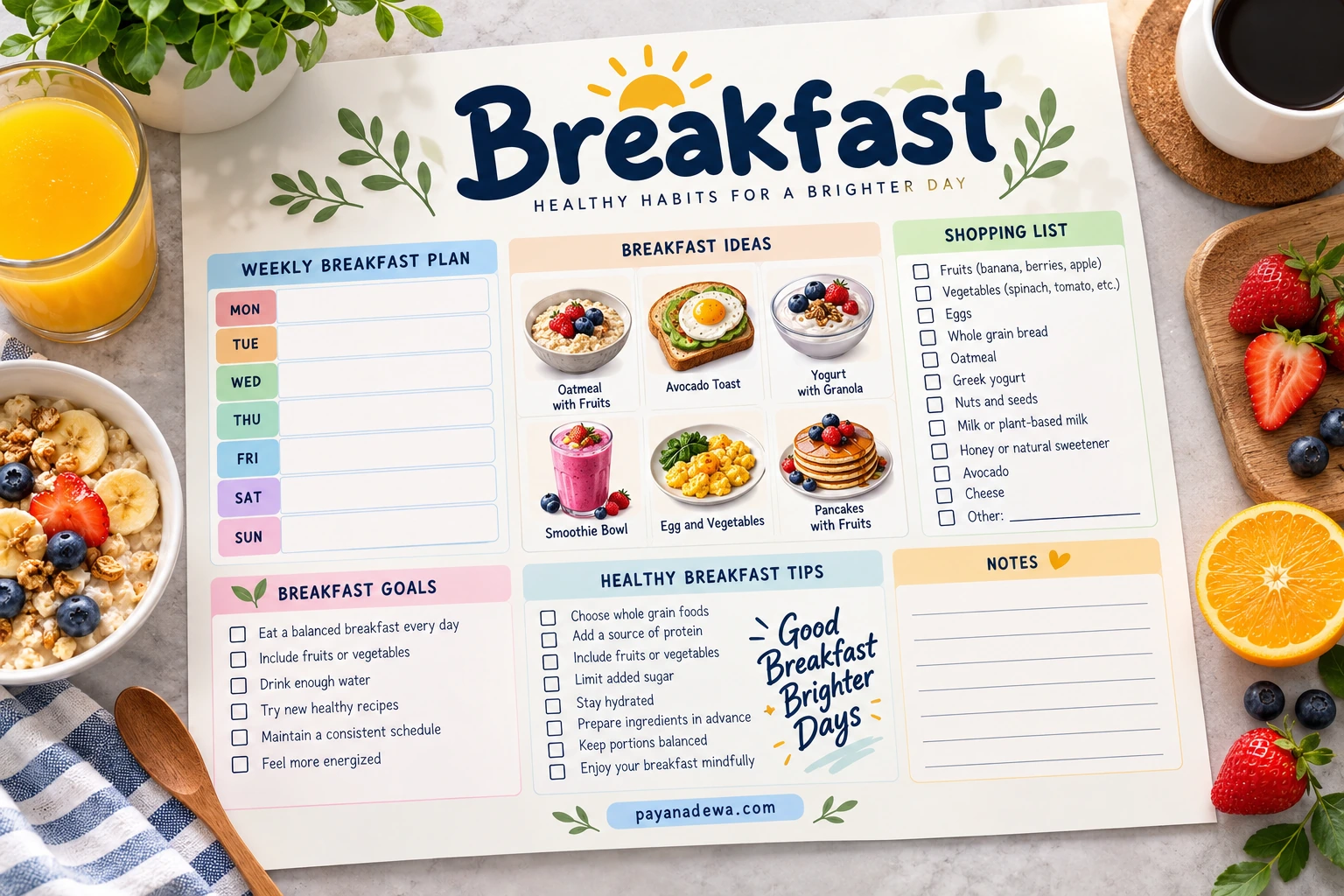
A breakfast template is a reusable planning format that helps you organize what you want to eat in the morning. Instead of creating a completely new meal plan every day, you can use a simple structure and change individual foods according to your preferences.
A useful template may include sections for each day of the week, breakfast ideas, ingredients, shopping lists, nutrition goals, and personal notes. This makes it easier to see your entire breakfast routine at a glance.
The biggest advantage is convenience. When breakfast choices are planned ahead, you spend less time making decisions in the morning. You can also prepare ingredients in advance, which can be particularly helpful when you have work, school, exercise, or family responsibilities.
Why Use a Breakfast Template?
Save Time During Busy Mornings
Morning routines can become hectic quickly. A breakfast template gives you a clear starting point, so you do not have to decide what to cook or prepare at the last minute.
Planning can also make grocery shopping more efficient. When you know which breakfast meals you want to prepare during the week, you can create a focused shopping list and avoid buying unnecessary ingredients.
Create More Variety
Eating the same breakfast every day can become boring. A weekly breakfast template encourages you to rotate different meals while still keeping the planning process simple.
- Oatmeal with berries and nuts
- Whole grain toast with eggs and avocado
- Greek yogurt with fruit and granola
- Vegetable omelet with toast
- Smoothie with fruit and yogurt
- Pancakes with fresh fruit
- Overnight oats with seeds and banana
You can repeat favorite meals while introducing one or two new breakfast ideas each week. This creates variety without making meal planning overwhelming.
How to Build a Balanced Breakfast
Include a Source of Protein
Protein can be an important part of a satisfying breakfast. Eggs, Greek yogurt, milk, cottage cheese, nuts, seeds, beans, and other protein-rich foods can be incorporated into different breakfast combinations.
Choosing a protein source can also make your breakfast more substantial. For example, you could combine eggs with whole grain toast, yogurt with fruit and seeds, or oatmeal with nuts and milk.
Add Whole Grains and Fiber
Whole grain foods can provide fiber and make breakfast more filling. Options include oatmeal, whole grain bread, whole grain cereals, and other minimally processed grain choices.
Fiber-rich foods can also come from fruits, vegetables, nuts, and seeds. Adding berries to oatmeal or spinach and tomatoes to eggs is an easy way to introduce more variety into your breakfast.
Include Fruits or Vegetables
Fresh produce can add color, flavor, texture, and nutrients to breakfast. Bananas, berries, apples, oranges, tomatoes, spinach, mushrooms, and avocado are versatile choices.
You do not need an elaborate recipe to include produce. A banana beside toast, berries mixed into yogurt, or spinach added to scrambled eggs can make a simple breakfast more interesting.
Breakfast Ideas for Different Schedules
Quick Breakfast for Busy Days
When you have only a few minutes, choose meals that require minimal preparation. Yogurt with fruit, overnight oats, a smoothie, whole grain toast, or a boiled egg with fruit can be convenient options.
Preparing some ingredients the night before can make your morning even easier. Portioning fruit, preparing overnight oats, or keeping breakfast ingredients organized can reduce the amount of work required before leaving home.
Relaxed Weekend Breakfast
Weekends may provide more time to prepare a breakfast that requires cooking. You could make vegetable omelets, pancakes, French toast, breakfast bowls, or homemade oatmeal with several toppings.
A slower breakfast can also become an enjoyable opportunity to experiment with new recipes. Use your breakfast template to record successful combinations so you can prepare them again later.
How to Organize a Weekly Breakfast Schedule
Start With Seven Simple Choices
Begin by selecting one breakfast idea for each day. Do not worry about creating seven completely different recipes. Repeating ingredients can save money and reduce food waste.
- Monday: Oatmeal with banana and nuts
- Tuesday: Eggs with whole grain toast and fruit
- Wednesday: Greek yogurt with berries and granola
- Thursday: Smoothie with fruit and yogurt
- Friday: Avocado toast with eggs
- Saturday: Vegetable omelet with toast
- Sunday: Pancakes with fresh fruit
Once you have a basic schedule, you can adjust it based on your appetite, available ingredients, family preferences, and time constraints.
Create a Matching Shopping List
After choosing your weekly meals, write down the ingredients you need. Grouping similar ingredients together can make shopping easier and help you avoid unnecessary purchases.
For example, if several meals use bananas, berries, yogurt, eggs, oats, and whole grain bread, you can purchase those ingredients once and use them throughout the week.
Breakfast Meal Prep Tips
Prepare Ingredients in Advance
Meal preparation does not have to mean cooking every breakfast for an entire week. Even small preparations can save time. Wash fruit, portion nuts, prepare overnight oats, boil eggs, or organize dry ingredients ahead of time.
Keep prepared foods stored appropriately and follow safe food-handling practices. Perishable ingredients should be refrigerated promptly and used within suitable storage periods.
Keep Easy Backup Options
Even the best breakfast schedule can change. You may wake up late, run out of an ingredient, or suddenly need to leave home earlier than expected. Keeping a few simple backup foods can prevent the entire plan from falling apart.
Good backup options might include whole grain cereal, fruit, yogurt, oats, nut butter, or ingredients for a quick smoothie. The goal is flexibility rather than perfection.
Common Breakfast Planning Mistakes
Making the Plan Too Complicated
A breakfast template should simplify your routine. If every day requires a completely different recipe with many ingredients, the plan may become difficult to maintain.
Keep several basic meals in rotation and change toppings or ingredients when you want something different. A simple system that you actually use is more valuable than an elaborate plan that becomes stressful.
Ignoring Personal Preferences
A breakfast plan should reflect the people who will eat the meals. If you dislike a particular ingredient, there is no reason to force it into your schedule. Choose foods that fit your tastes, dietary needs, budget, and lifestyle.
Forgetting Hydration
Breakfast planning can focus heavily on food, but beverages matter too. Water is a simple choice for staying hydrated. Depending on your preferences, coffee, tea, or other beverages may also be part of your morning routine.
How to Make Your Breakfast Template More Useful
Track What Works
Use the notes section of your template to record meals that you enjoyed, ingredients that need to be purchased, preparation times, and ideas you want to try. Over time, this creates a personalized collection of reliable breakfast options.
You can also mark meals that are especially quick, affordable, family-friendly, or suitable for busy mornings. This makes it easier to select the right meal for different situations.
Review Your Plan Weekly
Spend a few minutes at the end or beginning of each week reviewing your breakfast schedule. Check which ingredients you still have and decide which meals you want to repeat.
A weekly review keeps your breakfast routine flexible. You can make small changes without rebuilding the entire plan from scratch.
Final Thoughts on Using a Breakfast Template
Make Breakfast Planning Simple and Sustainable
A breakfast template is a practical way to bring structure to your morning routine. It can help you organize meals, simplify grocery shopping, reduce decision-making, and create more variety throughout the week.
The most effective breakfast plan is one that fits your real life. Choose meals you enjoy, use ingredients you can easily find, prepare what you can in advance, and leave room for unexpected changes.
Whether you are planning breakfast for yourself, your family, a busy workweek, or a relaxed weekend, a simple template can provide a useful foundation. Start with a few favorite meals, build a weekly schedule, and gradually improve it based on what works best for you.
With a clear breakfast template, your mornings can become more organized without becoming complicated. A little planning today can make tomorrow’s breakfast faster, easier, and more enjoyable.