A well-written brief can make the difference between a project that runs smoothly and one that becomes confusing, delayed, or difficult to manage. Whether you are planning a marketing campaign, developing a design project, launching a product, or working with a creative team, a clear brief gives everyone the same direction from the beginning.
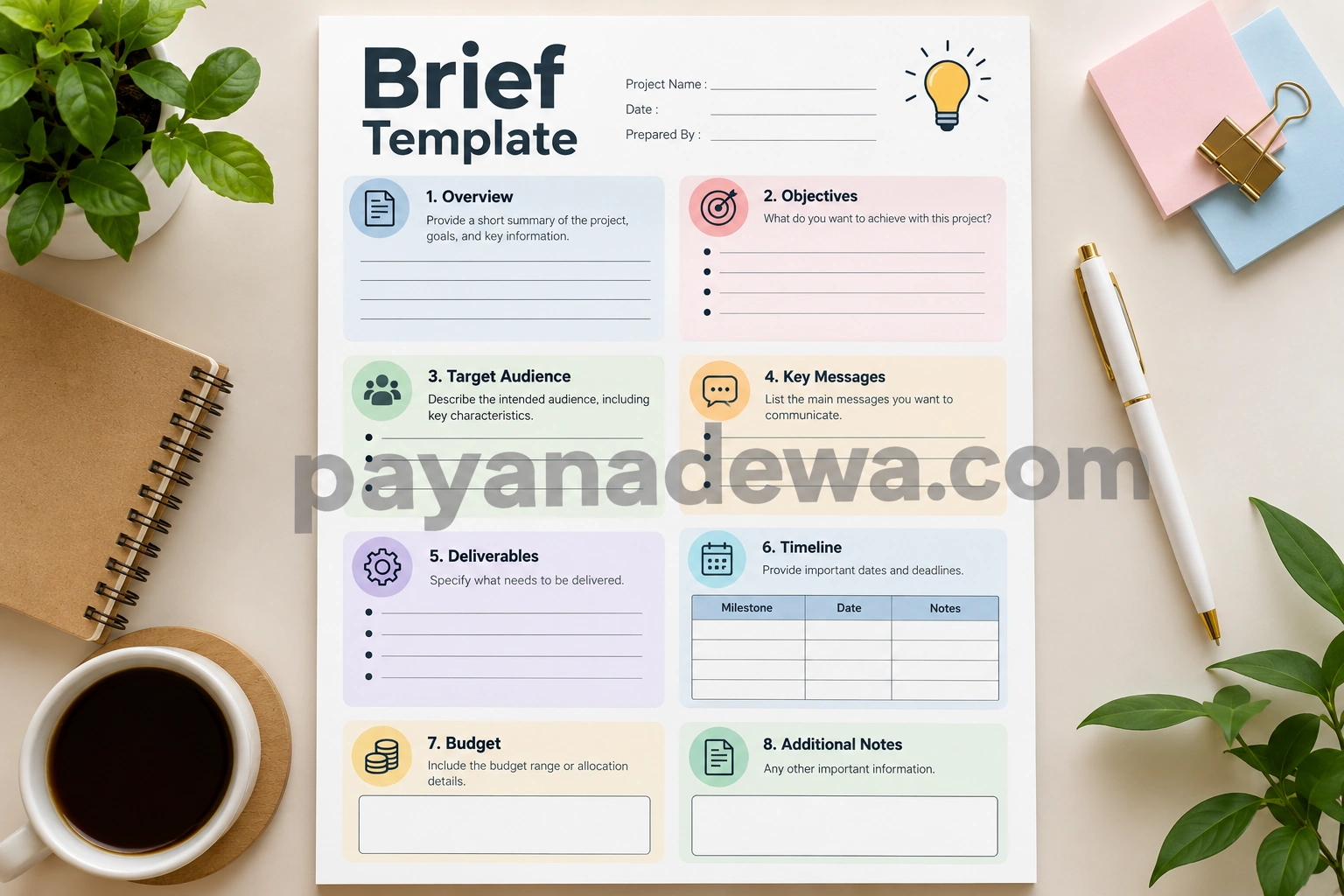
A Brief Template provides a structured way to organize important project information in one place. Instead of starting with a blank document, you can use predefined sections to describe the project overview, objectives, target audience, key messages, deliverables, timeline, budget, and additional requirements.
For businesses, freelancers, agencies, students, and project teams, a brief can simplify communication and reduce unnecessary revisions. It helps stakeholders understand what needs to be accomplished, who the project is intended for, and what the final result should look like.
The best brief is not necessarily the longest one. It is the one that communicates essential information clearly and gives the people involved enough context to make good decisions. A practical template can help you achieve that balance without spending unnecessary time formatting documents.
In this guide, you will learn what a brief is, what information it should contain, how to use a Brief Template effectively, and how to create a document that keeps your project focused from start to finish.
What Is a Brief?
Understanding the Purpose of a Project Brief
A brief is a concise document that explains the essential details of a project. It provides context, establishes expectations, and gives a team a shared understanding of what needs to be achieved. Depending on the industry, a brief may be called a project brief, creative brief, marketing brief, design brief, or business brief.
The primary purpose of a brief is communication. Before work begins, everyone should understand the project’s goals, audience, scope, expected deliverables, deadlines, and other important requirements. This information creates a foundation for productive collaboration.
A brief can also serve as a reference throughout the project. When questions arise, team members can return to the original document and compare proposed decisions with the project’s initial objectives. This makes it easier to maintain consistency.
Instead of relying on scattered emails, messages, meetings, and notes, a structured brief brings critical information together. That simple change can reduce misunderstandings and make project management more efficient.
Why Use a Brief Template?
Save Time and Improve Project Communication
Creating every project document from scratch can take unnecessary time. A Brief Template provides a ready-made structure so you can focus on the information rather than document formatting.
A template is especially useful when a team handles multiple projects. Using a consistent format makes it easier for employees, clients, designers, marketers, and managers to find information quickly.
A good template can also improve the quality of project planning. By providing dedicated sections for important information, it reminds you to consider details that might otherwise be overlooked.
- Creates a consistent project planning format.
- Makes important information easier to find.
- Reduces communication gaps between stakeholders.
- Helps define project expectations before work begins.
- Supports faster approvals and decision-making.
- Reduces unnecessary revisions caused by unclear requirements.
For these reasons, a well-designed Brief Template can become a valuable part of a team’s regular workflow.
Essential Sections of a Brief Template
Build a Complete but Easy-to-Read Brief
A useful brief should contain enough information to guide the project without overwhelming the reader. The exact sections can vary, but several components are useful for almost any type of project.
The project overview should provide a short explanation of what the project is about. It can include background information, the reason for the project, and the problem that the project is intended to solve.
The objectives section explains what you want to achieve. Objectives should be specific enough to guide decisions and, when possible, measurable so that the team can evaluate progress.
The target audience section identifies the people who will interact with or benefit from the project. Depending on the project, this may include demographic information, customer needs, interests, behaviors, or professional characteristics.
The key messages section describes the main ideas that need to be communicated. This is particularly important for marketing, advertising, branding, content, and communication projects.
The deliverables section lists the items that need to be completed. Examples may include social media graphics, websites, presentations, reports, videos, advertisements, documents, or product assets.
The timeline establishes important dates, milestones, review periods, and final deadlines. A clear schedule helps everyone understand when work needs to happen.
The budget section provides financial expectations. Depending on the project, it may include a total budget, estimated costs, production expenses, advertising allocation, or other financial limitations.
Finally, the additional notes section can capture requirements, references, restrictions, approval processes, brand guidelines, or other information that does not fit naturally into the previous sections.
How to Write an Effective Brief
Keep Information Clear and Actionable
The first step is to explain the project in simple language. Avoid filling the brief with unnecessary background information. Readers should be able to understand the purpose of the project quickly.
Next, define the desired outcome. Instead of using vague statements such as “make the project successful,” explain what success means. A stronger objective might describe a measurable business result, communication goal, audience response, or completed deliverable.
When describing the audience, be as specific as the project requires. A general statement such as “customers” may not provide enough direction. Identifying a particular customer segment can help the team make better creative and strategic decisions.
It is also important to separate essential requirements from optional preferences. If something is mandatory, state it clearly. If something is simply a suggestion, label it accordingly.
Finally, review the brief before sharing it with the team. Check whether the information is accurate, whether the deadline is realistic, and whether someone unfamiliar with the project could understand the document without additional explanation.
Tips for Using a Brief Template Successfully
Make the Template Work for Your Project
A template should provide structure without restricting the project. Customize the sections when necessary, but avoid adding too many fields that make the document difficult to complete.
Use concise language and short paragraphs. Bullet points are useful when listing requirements, deliverables, milestones, or specifications. Clear formatting allows readers to scan the document quickly.
Keep important information near the top. Project name, client, owner, deadline, objectives, and key requirements should be easy to locate.
Make sure everyone agrees on the brief before significant work begins. If the client, manager, or project owner has not approved the requirements, changes later in the process may result in additional time and cost.
- Use clear and specific project objectives.
- Define the intended audience carefully.
- Separate mandatory requirements from optional ideas.
- Include realistic deadlines and milestones.
- Clarify who is responsible for approvals.
- Keep the document updated when major requirements change.
- Share the final approved version with everyone involved.
Brief Template for Different Types of Projects
Adapt the Structure to Your Needs
A marketing brief may focus on campaign goals, customer segments, channels, messaging, promotional offers, and performance targets. A design brief may place more emphasis on visual direction, brand guidelines, required formats, references, and design deliverables.
A creative brief often includes the core idea, audience insight, communication challenge, desired response, tone of voice, and creative requirements. Meanwhile, a business project brief may focus more heavily on scope, stakeholders, risks, resources, milestones, and measurable outcomes.
Even though these documents have different purposes, they share the same principle: important project information should be clear, organized, and accessible.
Using a flexible Brief Template means you can create a consistent starting point and then adjust it according to the needs of each project. This approach is particularly useful for agencies and teams managing different types of work.
Common Mistakes to Avoid
Prevent Confusion Before the Project Starts
One common mistake is writing a brief that is too vague. If objectives, audience, or deliverables are unclear, team members may interpret the project differently.
Another problem is including too much unnecessary information. A brief should provide context, but it should not become a lengthy collection of unrelated details. Focus on information that helps people make decisions or complete the work.
Unrealistic deadlines are another frequent issue. A timeline should consider research, production, feedback, revisions, approvals, and final delivery rather than focusing only on the final deadline.
Projects can also become complicated when decision-makers are not identified. Make it clear who provides feedback, who approves the work, and who has final responsibility for important decisions.
Finally, avoid treating the brief as a document that is created once and immediately forgotten. If major project requirements change, update the brief so that it remains a reliable source of information.
Benefits of a Printable Brief Template
Make Planning Convenient and Accessible
A printable Brief Template can be useful for meetings, workshops, brainstorming sessions, and project kickoffs. Team members can write notes directly on the document before transferring final information into a digital project management system.
Printed templates can also make collaborative discussions more focused. Instead of moving between multiple applications, participants can work through the major project questions in a logical order.
For freelancers and small businesses, a printable template can provide a professional way to collect information from clients. It can help clients explain their goals while giving the service provider a clearer understanding of expectations.
The template can also be saved as a digital file after completion, creating a simple project record that can be referenced later.
How a Brief Supports Better Project Results
Create Alignment From the Beginning
The biggest advantage of a strong brief is alignment. When everyone understands the same objectives, audience, deliverables, and timeline, the team has a stronger foundation for making decisions.
A brief also helps identify problems early. If the budget does not match the requested deliverables or the timeline is unrealistic, those issues can be discussed before significant resources are invested.
Clear documentation can improve collaboration between clients and internal teams. Instead of relying on memory or assumptions, everyone can refer to the agreed project requirements.
In the long term, a consistent briefing process can improve efficiency across an organization. Teams spend less time clarifying basic requirements and more time working toward meaningful outcomes.
Conclusion
Start Every Project With a Clear Brief
A Brief Template is a simple but powerful tool for organizing project information and improving communication. By bringing objectives, audience details, key messages, deliverables, timelines, budgets, and notes together, it gives everyone a clear starting point.
The most effective brief is focused, practical, and easy to understand. It should provide enough detail to guide decisions while avoiding unnecessary information that makes the document difficult to use.
Whether you are creating a marketing campaign, managing a design assignment, planning a business project, or working with a creative team, starting with a structured brief can reduce confusion and improve collaboration.
Choose a Brief Template that fits your workflow, customize it when necessary, and make it part of your standard project planning process. A few minutes spent creating clarity at the beginning can save significant time later.