Becoming an influencer is more than posting attractive photos or creating entertaining videos. Successful creators need a clear strategy, consistent content, organized campaigns, and a good understanding of their audience. An influencer template can make these tasks much easier by providing a practical structure for planning and managing everyday creator activities.
Whether you are a beginner, content creator, social media manager, or experienced influencer, having a reliable planning system can save time and reduce unnecessary stress. Instead of keeping content ideas, collaboration details, deadlines, and performance numbers in different places, you can organize everything with one simple template.
A well-designed influencer template can also help you maintain consistency across platforms. You can use it to plan Instagram posts, TikTok videos, YouTube content, brand collaborations, promotional campaigns, and other social media activities.
Most importantly, an organized workflow allows you to focus more on creativity. When your schedule and responsibilities are clearly arranged, you have more time to develop better ideas and connect with your audience.
This guide explains what an influencer template is, what it should include, how to use one effectively, and how it can support long-term social media growth.
What Is an Influencer Template?
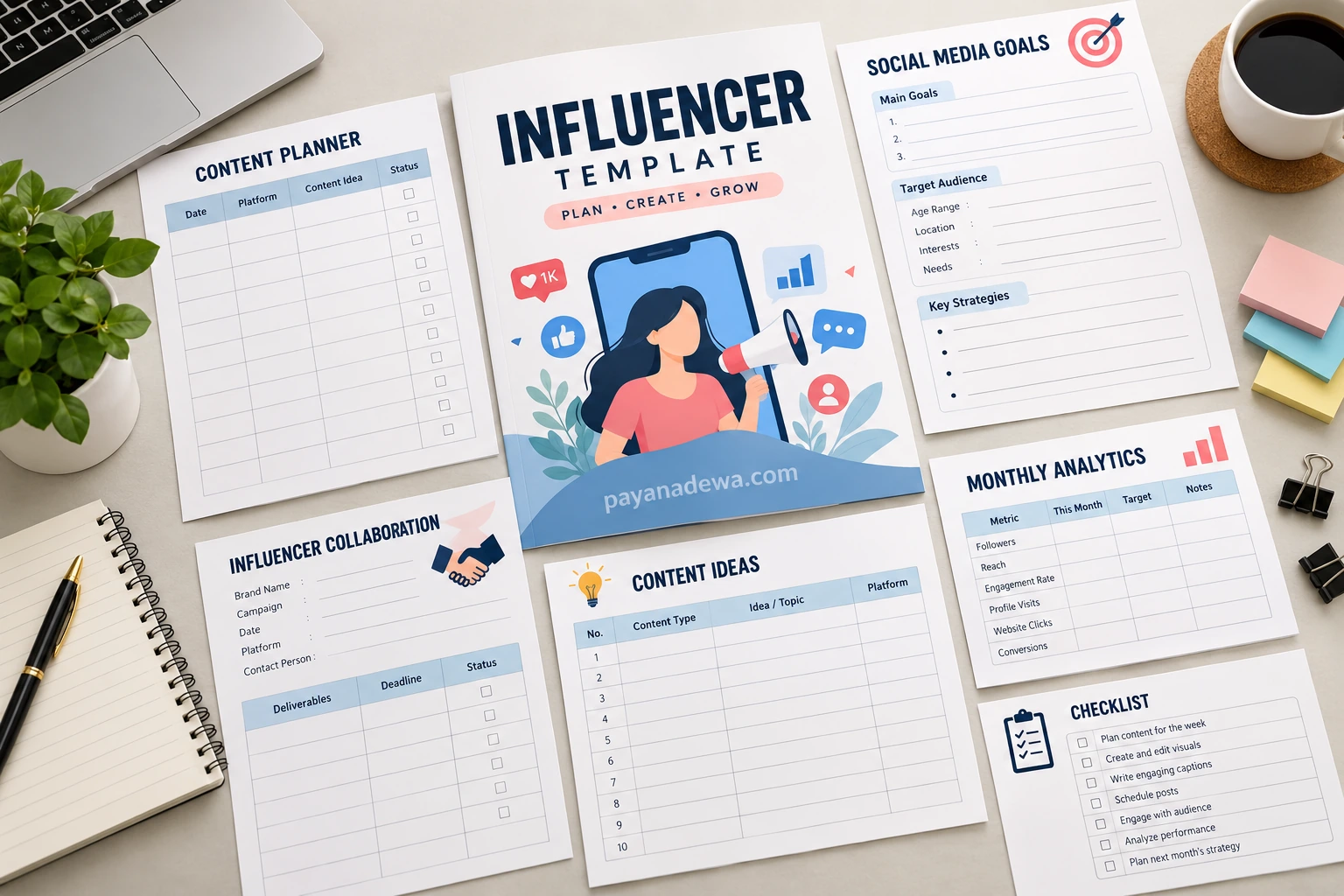
An influencer template is a ready-to-use planning document designed to help content creators organize their social media activities. It can contain sections for content ideas, publishing schedules, audience information, collaborations, campaign goals, and performance tracking.
Instead of starting from a blank page every time you plan your content, a template gives you a framework that can be reused. This makes your workflow more efficient and helps ensure that important tasks are not forgotten.
Why Use an Influencer Template?
Influencers often manage several responsibilities at the same time. They may need to create content, communicate with brands, respond to followers, analyze statistics, and meet campaign deadlines. Without an organized system, these tasks can quickly become overwhelming.
A template provides a central place to organize important information. It can help you identify what needs to be created, when it should be published, which platform should be used, and what result you want to achieve.
- Organize content ideas in one place.
- Plan posts and videos ahead of time.
- Track brand collaborations and deadlines.
- Define specific social media goals.
- Monitor audience and engagement performance.
- Create a more consistent publishing routine.
As a result, an influencer template is useful for both personal creators and professional influencer marketing teams.
Essential Sections of an Influencer Template
The best template should be simple enough to use regularly while still containing the information you need. You do not need dozens of complicated fields. Instead, focus on the sections that directly support your content strategy.
Content Planning
A content planning section is one of the most useful parts of an influencer template. It can include the publishing date, platform, content type, topic, caption status, visual status, and publication status.
For example, you could plan educational content for Monday, a short-form video for Wednesday, and a product review for Friday. Planning these activities in advance makes it easier to maintain a consistent publishing schedule.
You can also use the section to identify content gaps. If you notice that your schedule contains too many promotional posts, you can add educational, entertaining, or community-focused content to create a better balance.
Content Ideas
Creative ideas can appear at unexpected times. Therefore, an influencer template should include a dedicated area for saving content ideas before they are forgotten.
You can record potential video topics, trending subjects, frequently asked questions, audience requests, product ideas, storytelling concepts, and educational topics. Later, you can review the list and turn the strongest ideas into finished content.
A content idea database also prevents you from repeatedly asking yourself what to post. Instead, you already have a collection of possibilities waiting to be developed.
Social Media Goals
Content becomes more effective when it has a clear purpose. Your goals might include increasing followers, improving engagement, generating website visits, building brand awareness, or increasing product sales.
Write specific goals rather than using vague statements. For example, instead of saying “grow my Instagram,” you could set a goal to increase relevant followers by a certain percentage over a defined period.
Clear goals make it easier to evaluate whether your content strategy is working.
How to Plan Content More Efficiently
Consistency is important for influencers, but consistency does not mean publishing content without a strategy. A better approach is to create a content plan that connects individual posts to broader goals.
Create Content Categories
Start by identifying several categories that fit your niche. A fashion creator might use categories such as outfit inspiration, styling tips, product reviews, and behind-the-scenes content. A business creator might focus on educational advice, industry insights, case studies, and personal experiences.
These categories make content planning easier because you always have a clear direction. They also help your audience understand what they can expect from your account.
Build a Weekly Schedule
Once you have your content categories, create a weekly schedule. Decide which topics should be published on specific days and which platforms are most appropriate for each piece of content.
You do not necessarily need to publish every day. Instead, choose a schedule that you can realistically maintain. A consistent schedule that you can follow is usually more useful than an ambitious schedule that quickly becomes impossible to manage.
Prepare Content in Batches
Batch production can save considerable time. Rather than creating one post from beginning to end every day, dedicate specific periods to planning, filming, editing, writing captions, and scheduling.
For example, you could spend one afternoon developing ideas and another session recording several short videos. This approach reduces the time lost when repeatedly switching between different tasks.
Managing Influencer Brand Collaborations
Brand partnerships can become an important part of an influencer’s business. However, collaborations often involve deadlines, deliverables, approval processes, payment information, and communication with several people.
Track Important Campaign Details
A dedicated collaboration section can help you record the brand name, campaign name, contact person, agreed deliverables, publication date, platform, deadline, and current status.
You can also include notes about required hashtags, mentions, links, talking points, product information, or content guidelines. Having these details in one place reduces the risk of missing important campaign requirements.
Protect Your Professional Workflow
Professional organization can improve your relationship with brands. When you consistently meet deadlines and provide the agreed content, brands are more likely to view you as a reliable partner.
For that reason, an influencer template is not simply a personal planning tool. It can also support a more professional creator business.
Tracking Influencer Performance
Creating content is only one part of an effective strategy. You also need to understand how your audience responds to what you publish.
Important Metrics to Monitor
The right metrics depend on your goals and platform. However, several measurements are useful for most creators.
- Follower growth
- Reach and impressions
- Likes and comments
- Shares and saves
- Engagement rate
- Profile visits
- Website clicks
- Conversions
Recording these numbers regularly makes trends easier to identify. For example, you may discover that educational videos generate more saves while personal stories generate more comments.
Use Data to Improve Your Strategy
Analytics should not simply be collected and forgotten. Use the information to make better decisions about future content.
If a particular topic consistently performs well, consider creating more content around that subject. If another format receives little engagement, experiment with a different presentation, headline, visual style, or publishing time.
Over time, this process turns your influencer template into a practical decision-making tool.
Tips for Creating Better Influencer Content
Good planning should support creativity rather than restrict it. Your template should give you structure while leaving enough room for experimentation.
Know Your Audience
Effective content starts with understanding the people you want to reach. Consider their interests, problems, questions, preferences, and reasons for following you.
When your content addresses real audience needs, it becomes easier to create posts that feel relevant and valuable.
Balance Promotional and Valuable Content
Audiences may lose interest if every post feels like an advertisement. Therefore, balance promotional content with education, entertainment, inspiration, personal stories, and community interaction.
This balance can strengthen trust and make promotional campaigns feel more natural.
Keep Your Brand Consistent
Consistency can apply to more than posting frequency. Your visual style, tone of voice, topics, and overall message should create a recognizable identity.
A planning template can help you review upcoming content and determine whether each post fits your overall brand.
How to Make an Influencer Template Work for You
The most useful template is one that matches your actual workflow. Avoid adding complicated sections simply because they look professional. If you never use a field, remove it.
Review the Template Regularly
Set aside time each week to review upcoming content, deadlines, campaigns, and goals. At the end of the month, review your performance data and identify what worked well.
Then update your strategy based on those findings. Your template should evolve as your audience, niche, platforms, and business goals change.
Keep Everything Simple
A simple system is easier to maintain. Whether you print your influencer template or use a digital version, make sure the information is easy to scan and update.
Use clear categories, short notes, checklists, and straightforward status indicators. The purpose is to reduce mental clutter, not create another complicated task.
Benefits of Using an Influencer Template
When used consistently, an influencer template can provide several practical benefits. First, it helps you save time because you do not have to recreate your planning system every week.
Second, it improves organization. Content ideas, campaigns, deadlines, and performance information can be managed through a consistent structure.
Third, it encourages strategic thinking. Instead of posting randomly, you can connect your content with specific goals and audience needs.
Finally, it can make your creator workflow feel more professional. This becomes especially valuable when you begin managing multiple brand partnerships or treating content creation as a business.
Conclusion
An influencer template is a simple but powerful tool for creators who want to organize their content and build a more consistent social media strategy. By combining content planning, idea management, collaboration tracking, goal setting, and analytics, you can create a workflow that is easier to manage.
The key is to use the template consistently and adapt it to your own needs. Start with the sections that provide the most value, review your progress regularly, and use performance data to improve future content.
Whether you are starting your influencer journey or already working with brands, better organization can give you more time to focus on what matters most: creating useful content, building genuine relationships with your audience, and growing your personal brand.