A well-organized transportation plan can make any journey easier, safer, and more efficient. Whether you are planning a family vacation, coordinating business travel, organizing a group trip, or managing transportation for an event, having a clear plan helps you avoid unnecessary delays, control expenses, and travel with greater confidence. Instead of making last-minute decisions, you can prepare your routes, compare transportation options, and organize important travel details in advance.
A transportation plan template provides a practical way to bring all these details together in one convenient document. You can use it to record your starting point, destination, travel schedule, estimated costs, packing requirements, and important safety reminders. In this guide, you will learn what a transportation plan is, why it matters, how to create one, and how to use a printable template to organize your next journey.
What Is a Transportation Plan?
A transportation plan is a structured document that outlines how people or goods will move from one location to another. For personal travel, it typically includes destinations, transportation methods, departure times, arrival times, travel costs, and alternative arrangements. For businesses and organizations, it may also cover vehicle allocation, delivery schedules, route optimization, and transportation budgets.
The purpose of a transportation plan is to make travel more predictable and manageable. By identifying your needs before departure, you can select suitable transportation options, coordinate schedules, and prepare for potential disruptions.
What Should a Transportation Plan Include?
Although every journey is different, a useful transportation plan generally includes the following information:
- Trip overview: The purpose of the journey, starting location, destination, duration, and number of travelers.
- Transportation options: Available modes of transport, including cars, buses, trains, flights, and ferries.
- Travel itinerary: Daily destinations, departure times, arrival times, and planned connections.
- Estimated costs: Transportation fares, fuel, parking, tolls, and other travel-related expenses.
- Packing checklist: Essential documents, clothing, electronics, medication, and other necessary items.
- Safety information: Emergency contacts, weather considerations, local regulations, and backup arrangements.
Including these details in one place makes it easier to review your plans, communicate with other travelers, and identify missing information before leaving.
Why Is a Transportation Plan Important?
Planning transportation in advance offers several benefits, especially when a journey involves multiple destinations, different transportation methods, or several travelers.
1. Saves Time and Reduces Delays
A clear itinerary helps you understand where you need to be and when you need to arrive. You can estimate travel times, identify connections, and allow extra time for traffic or unexpected interruptions. This is particularly useful when catching a flight, attending an important meeting, or traveling between several cities.
2. Helps Control Transportation Costs
Transportation expenses can increase quickly when you make decisions at the last minute. Comparing fares, estimating fuel consumption, and checking parking or toll charges can help you establish a realistic budget. You can also identify opportunities to save money by booking tickets early, sharing rides, or choosing public transportation when practical.
3. Improves Safety and Preparedness
Travel planning gives you time to check road conditions, weather forecasts, transportation schedules, and local requirements. It also encourages you to prepare essential documents, share your itinerary with trusted contacts, and identify alternative routes if your original arrangements become unavailable.
4. Makes Group Travel Easier
When several people travel together, misunderstandings about departure times, meeting points, or transportation arrangements can create unnecessary stress. A shared transportation plan helps everyone understand the schedule and responsibilities. It is especially valuable for school trips, family holidays, corporate events, and organized tours.
How to Create a Transportation Plan Step by Step
Creating a transportation plan does not have to be complicated. Follow these practical steps to organize your journey from beginning to end.
Step 1: Define Your Travel Objectives
Start by identifying the purpose of your trip. Consider whether you are traveling for business, leisure, education, an event, or another reason. Your objective will influence the transportation methods, budget, schedule, and level of flexibility you need.
Next, record your starting location, destination, travel dates, expected duration, and the number of people traveling. These basic details establish the foundation for the rest of your plan.
Step 2: Compare Available Transportation Options
Consider the transportation methods available for your journey. Each option has different advantages depending on distance, budget, convenience, accessibility, and the number of travelers.
- Car: Offers flexibility and convenient access to locations that may not be served by public transportation.
- Bus: Can be an economical option for local travel and intercity journeys.
- Train: May provide comfortable travel between connected cities while reducing the need to drive.
- Flight: Is often suitable for long-distance journeys when travel time is a major consideration.
- Ferry: May be necessary or convenient when traveling between islands or across bodies of water.
Compare ticket prices, estimated travel times, departure schedules, luggage restrictions, and transfer requirements before making a decision. The cheapest option is not always the most practical, so consider the total cost and convenience of the entire journey.
Step 3: Build a Detailed Travel Itinerary
Once you have selected your transportation methods, organize the journey into manageable stages. Record each destination, departure time, expected arrival time, and transportation connection. If your trip lasts several days, create a separate entry for each day.
Allow reasonable breaks between connections and avoid scheduling every minute too tightly. Traffic congestion, weather conditions, delayed services, and unexpected stops can affect your arrival time. A flexible itinerary helps you respond to these changes without disrupting the entire journey.
Step 4: Calculate Your Transportation Budget
Estimate the cost of every transportation segment and add the figures to your plan. Depending on your journey, your budget may include:
- Public transportation tickets and reservations.
- Fuel, vehicle rental, and parking fees.
- Road tolls and other route-related charges.
- Airport transfers, taxis, or rideshare services.
- Luggage fees and transportation-related service charges.
- An additional allowance for unexpected expenses.
Keep your calculations realistic and check current prices before finalizing the budget. If you are traveling with a group, determine which expenses will be shared and who will be responsible for each payment.
Step 5: Prepare Your Packing and Safety Checklists
Make a checklist of the items you need for the journey. Important documents, identification, tickets, payment cards, chargers, personal medication, and appropriate clothing should be considered according to your destination and travel requirements.
Review your transportation arrangements before departure. Confirm reservations, check weather conditions, save important contact information, and make sure everyone knows the meeting point. For longer journeys, identify a reasonable alternative if your preferred transportation service becomes unavailable.
Step 6: Review and Update Your Plan
A transportation plan should remain useful throughout the journey. Review it whenever travel dates, reservations, destinations, or transportation schedules change. For group trips, make sure all participants receive the latest itinerary rather than relying on outdated information.
Before departure, perform one final review of your reservations, estimated costs, travel times, and essential documents. This simple habit can help you catch mistakes while there is still time to correct them.
How to Use a Transportation Plan Template
A printable transportation plan template makes the planning process easier by providing designated spaces for the most important details. Instead of creating a document from scratch, you can fill in the relevant sections and adjust the information to match your needs.
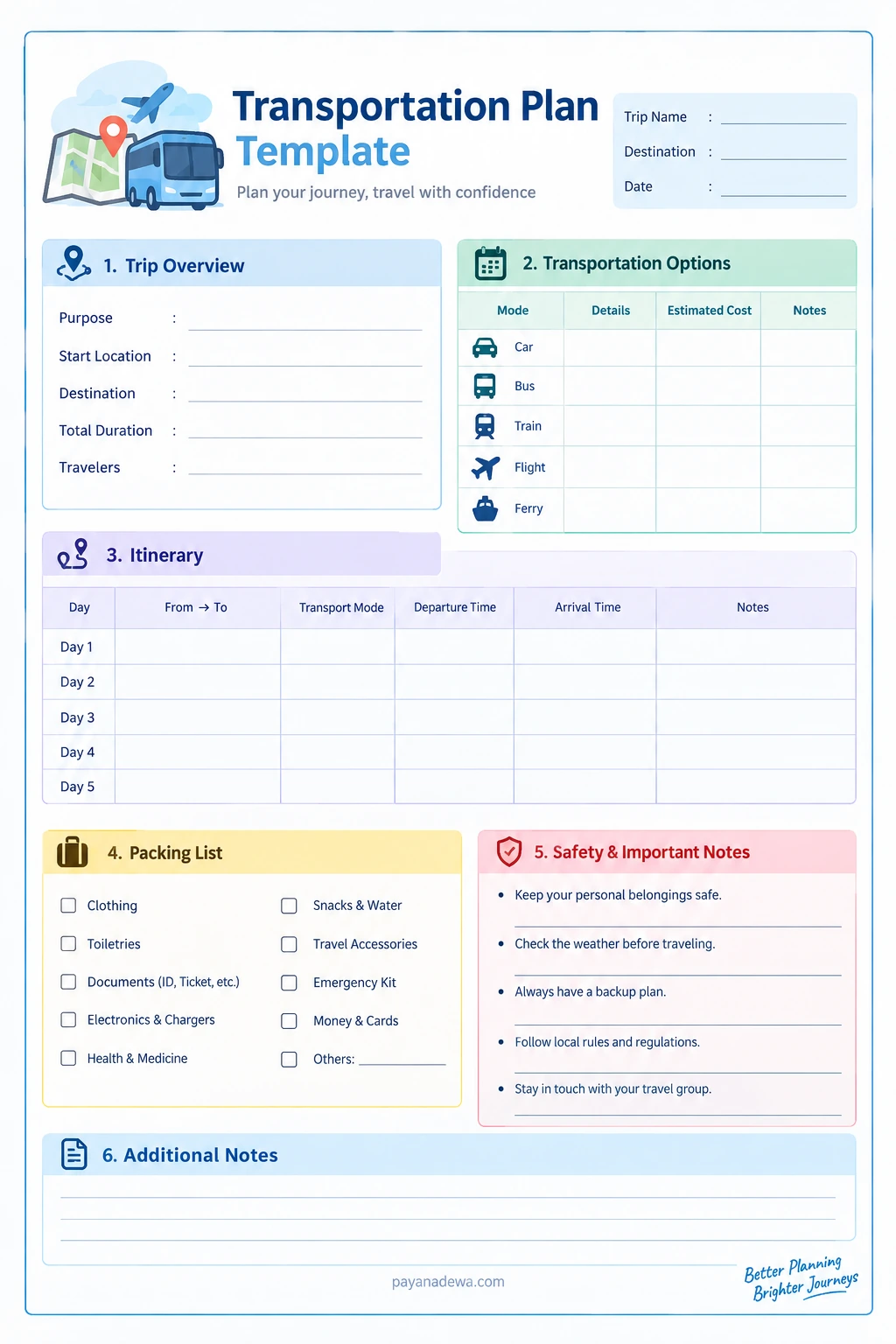
The Transportation Plan Template below is designed to help you organize trip information, compare transportation methods, record daily schedules, prepare a packing checklist, and keep safety reminders in one place.
Section 1: Trip Overview
Begin by entering the trip name, destination, travel date, purpose, starting location, total duration, and number of travelers. These details provide a quick overview of the journey and make the document easier to identify later.
Section 2: Transportation Options
Use this section to compare transportation methods and record useful information about each option. Add estimated costs, reservation details, and notes about convenience or accessibility. This comparison helps you choose the most appropriate option for your travel requirements.
Section 3: Daily Itinerary
Record each travel day, route, transportation method, departure time, arrival time, and relevant notes. For a longer journey, you can add extra rows or attach a separate itinerary. Keep the schedule realistic and include enough flexibility for delays.
Section 4: Packing Checklist
Use the checklist to track clothing, toiletries, travel documents, electronics, chargers, health essentials, snacks, water, and other necessary items. Check each item as you prepare it so that important belongings are less likely to be forgotten.
Section 5: Safety and Important Notes
Write down reminders about protecting personal belongings, checking the weather, following local regulations, maintaining communication with other travelers, and preparing alternative arrangements. Add emergency contact information when appropriate, and keep sensitive personal information secure.
Section 6: Additional Notes
Use the final section for information that does not fit elsewhere, such as confirmation numbers, special transportation requirements, meeting instructions, accessibility arrangements, or changes to the original schedule.
Practical Tips for Better Transportation Planning
A transportation plan becomes more effective when it reflects the realities of your journey. Apply these tips to make your arrangements more reliable and easier to manage.
- Start early: Begin planning as soon as your travel dates and destinations are known, especially when reservations are required.
- Check official schedules: Verify departure times, ticket conditions, service updates, and route information with the relevant transportation provider.
- Include extra time: Allow a buffer for traffic, security checks, transfers, and other potential delays.
- Keep digital and printed copies: Save your itinerary on your phone and print a copy when having an offline reference would be useful.
- Consider accessibility: Check whether the selected transportation options accommodate mobility needs, luggage requirements, children, or older travelers.
- Prepare a backup option: Identify alternative routes or services for important parts of the journey.
- Communicate changes promptly: Inform everyone involved if departure times, meeting points, or reservations change.
- Review expenses: Compare your estimated transportation costs with actual spending to improve future travel budgets.
These practical habits can make a transportation plan more than a simple schedule. They turn it into a useful reference for making decisions, coordinating people, and managing unexpected situations.
Common Transportation Planning Mistakes to Avoid
Even a detailed plan can become unreliable if important factors are overlooked. One common mistake is underestimating travel time. A route that appears short on a map may take longer because of congestion, transfers, road conditions, or limited service availability.
Another mistake is focusing only on ticket prices. A low-cost transportation option may require expensive transfers, additional accommodation, or substantial waiting time. Compare the overall cost and convenience before deciding.
Travelers also sometimes forget to confirm reservations, check luggage restrictions, or prepare alternative arrangements. These small oversights can lead to additional expenses or unnecessary stress.
Finally, avoid treating the itinerary as something that cannot change. A good transportation plan provides structure while allowing you to adapt when circumstances change. Review important details regularly and update the document whenever necessary.
Who Can Benefit From a Transportation Plan?
A transportation plan is useful for many different situations. Individual travelers can use it to organize holidays, weekend getaways, and business trips. Families can coordinate departure times, activities, luggage, and transportation between destinations.
Teachers, schools, and event organizers can use a travel planning document to coordinate group movements and communicate essential instructions. Businesses can adapt transportation planning principles to manage employee travel, vehicle use, deliveries, and logistics schedules.
The same basic approach can be customized for short local journeys or complex trips involving multiple destinations. You only need to include the sections relevant to your specific requirements.
Conclusion
A well-prepared transportation plan helps you organize travel arrangements, manage expenses, coordinate schedules, and prepare for unexpected changes. By defining your travel objectives, comparing transportation options, creating a realistic itinerary, and checking essential details, you can make your journey more efficient and less stressful.
Using a printable transportation plan template simplifies this process by keeping your trip overview, transportation choices, daily itinerary, packing checklist, and safety reminders together in one document. You can customize the template for vacations, business trips, group travel, or other transportation needs.
Start planning your next journey with a clear schedule, a realistic budget, and a practical backup option. A little preparation can make a meaningful difference in how smoothly your trip unfolds.