A greeting card is a simple yet meaningful way to express emotions, celebrate important occasions, and stay connected with the people who matter most. Whether you want to say happy birthday, congratulate someone, express gratitude, or send warm holiday wishes, the right card can make your message memorable.
In today’s digital world, greeting cards remain a thoughtful way to show appreciation. A beautifully designed card carries a personal touch that a quick text message sometimes cannot provide. From elegant floral designs to funny illustrations and handmade creations, there are countless ways to make someone feel special.
In this guide, you will discover different types of greeting cards, creative design ideas, practical writing tips, and easy ways to create a personalized card for any occasion.
What Is a Greeting Card?
A greeting card is a printed or digital message created to communicate feelings, wishes, or congratulations. People commonly exchange cards during birthdays, weddings, anniversaries, holidays, graduations, and other special events.
Most traditional greeting cards feature decorative artwork on the front and a written message inside. Some include photographs, illustrations, inspirational quotes, or humorous messages. Digital greeting cards, also known as e-cards, deliver similar experiences through email, messaging applications, or social media.
The main purpose is simple: to make someone feel remembered, appreciated, and valued.
Popular Types of Greeting Cards
Greeting cards come in many styles and serve different purposes. Choosing the right type depends on the occasion, your relationship with the recipient, and the message you want to share.
1. Birthday Greeting Cards
Birthday cards are among the most popular choices. They celebrate another year of life and provide an opportunity to share happiness and good wishes. Designs range from colorful balloons and birthday cakes to minimalist typography and elegant floral illustrations.
For a personal touch, include a favorite memory or a meaningful birthday wish. This makes the card more memorable than a generic greeting.
2. Thank You Cards
A thank you card communicates appreciation for someone’s kindness, generosity, support, or thoughtful gesture. It is suitable for friends, family members, teachers, colleagues, and business partners.
Keep your message sincere and specific. Mention what the person did and explain why it meant something to you.
3. Holiday Greeting Cards
Holiday cards help people share seasonal happiness and maintain relationships throughout the year. Christmas, New Year, Easter, Valentine’s Day, and other celebrations are popular occasions for sending them.
Traditional holiday artwork often includes festive colors, seasonal decorations, and cheerful messages. However, modern minimalist designs are also excellent choices.
4. Wedding and Anniversary Cards
These cards celebrate love, commitment, and meaningful milestones. Wedding greeting cards usually contain congratulations and wishes for a happy future. Anniversary cards recognize the time a couple has spent together.
Elegant typography, soft colors, floral patterns, and romantic illustrations work particularly well for these occasions.
5. Congratulations Cards
Congratulations cards recognize achievements and exciting life events. They are suitable for graduations, promotions, new jobs, business openings, and personal milestones.
A short message celebrating the recipient’s hard work can make the card feel encouraging and genuine.
6. Sympathy and Get Well Soon Cards
Some moments require thoughtful words rather than cheerful celebrations. Sympathy cards offer comfort during difficult times, while get well soon cards communicate care and encouragement to someone recovering from illness.
Choose gentle colors and simple designs. Most importantly, keep the message respectful, compassionate, and sincere.
Why Greeting Cards Are Still Meaningful
Although instant messaging and social media make communication easier, traditional greeting cards continue to have special value. Their physical appearance and personal messages create a lasting experience.
- Personal connection: A handwritten message shows that you spent time thinking about someone.
- Emotional value: Cards can communicate feelings that are sometimes difficult to express in conversation.
- Lasting memories: Recipients can keep meaningful cards as personal keepsakes.
- Creative expression: Colors, illustrations, photographs, and typography allow you to express your personality.
- Versatility: There is a suitable greeting card for almost every occasion and relationship.
Furthermore, a personalized greeting card can strengthen friendships, family relationships, and professional connections.
How to Choose the Perfect Greeting Card
Selecting the right card does not have to be complicated. A few simple considerations can help you find a design that matches the occasion and recipient.
Consider the Occasion
Start by identifying the reason for sending the card. A birthday card should feel cheerful, while a sympathy card should communicate warmth and understanding. Matching the design to the occasion makes your message more appropriate.
Think About the Recipient
Consider the recipient’s personality, interests, and preferences. Someone who loves flowers may appreciate a botanical design. Meanwhile, a friend with a great sense of humor might enjoy a funny illustrated card.
Choose Suitable Colors and Artwork
Colors influence the overall appearance and mood of a greeting card. Pastel shades often create a gentle, romantic feeling. Bright colors communicate excitement, while neutral tones can produce an elegant and professional appearance.
Check the Message and Design Quality
Make sure the wording is appropriate and easy to read. The artwork should complement the message rather than distract from it. Also, check spelling, spacing, image quality, and overall presentation before giving or sending the card.
Creative Greeting Card Design Ideas
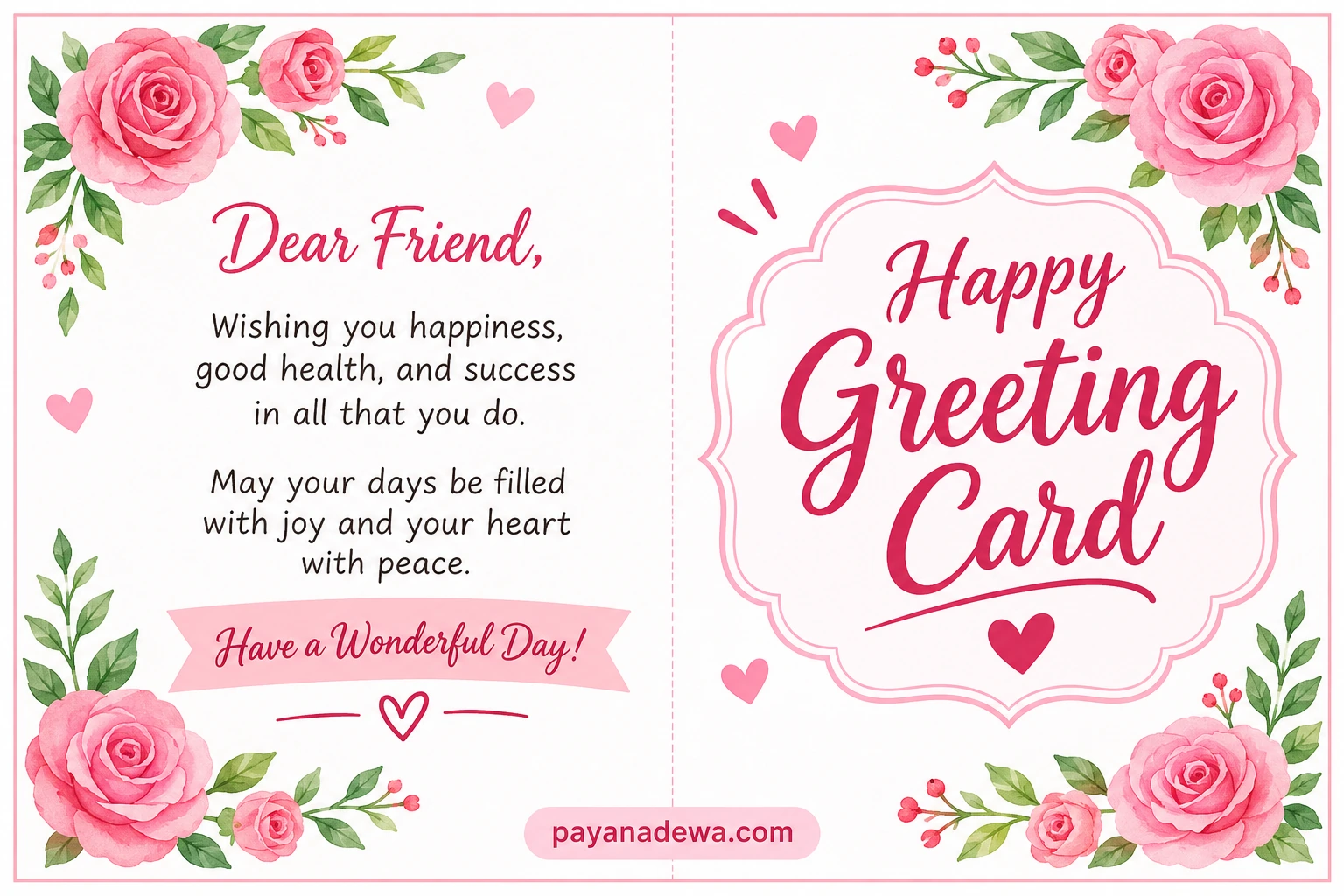
Creating an attractive greeting card is easier when you start with a clear theme. Here are several ideas that can inspire your next design.
- Floral greeting cards: Use roses, tulips, leaves, and botanical illustrations for an elegant appearance.
- Minimalist cards: Combine simple typography, clean backgrounds, and limited colors.
- Watercolor designs: Add soft painted flowers, abstract shapes, or artistic backgrounds.
- Photo greeting cards: Include personal photographs to create a meaningful keepsake.
- Handmade cards: Use paper cutouts, ribbons, stickers, and decorative elements.
- Funny greeting cards: Add playful illustrations and clever messages for friends and family.
For a versatile option, floral greeting card templates are particularly useful. They can be adapted for birthdays, thank you messages, friendship greetings, and many other occasions.
How to Make a Personalized Greeting Card
You do not need professional design skills to create a beautiful card. With a suitable template and a little creativity, you can make something special at home.
Step 1: Choose a Template
Begin with a greeting card template that matches your occasion. Printable templates save time because the basic layout and decorative elements are already prepared.
Step 2: Customize the Message
Replace the sample wording with your own greeting. Include the recipient’s name, a personal wish, or a short memory that makes the message unique.
Step 3: Personalize the Artwork
Add photographs, illustrations, decorative borders, or favorite colors. Keep the layout balanced so that the text remains easy to read.
Step 4: Print or Share Digitally
If you prefer a physical card, print your design on quality cardstock. Choose a suitable paper size and check the printer settings before printing. Alternatively, save the design as an image or PDF and share it digitally.
Step 5: Add a Personal Signature
Finally, include your name or a handwritten signature. This small detail gives the card a more personal and thoughtful finish.
Tips for Writing a Heartfelt Greeting Card Message
A beautiful design attracts attention, but the message gives a greeting card its emotional meaning. Use these practical tips to write something memorable.
- Start with a warm greeting: Address the recipient naturally using their name or a friendly expression.
- Be specific: Mention the occasion or reason you are sending the card.
- Use genuine words: Write in your natural voice instead of relying on complicated phrases.
- Keep it concise: A few meaningful sentences are often more effective than a long message.
- Add a personal detail: Include a shared experience, personal compliment, or special wish.
- End positively: Finish with a warm closing that suits your relationship.
For example, a simple friendship greeting could say: “Wishing you happiness, good health, and success in everything you do. May every day bring you new reasons to smile!”
Printable Greeting Cards vs Digital Greeting Cards
Both printed and digital greeting cards offer convenient ways to communicate. However, each option has different advantages.
Printable Greeting Cards
Printable cards are ideal for people who enjoy physical keepsakes. You can choose your preferred paper, fold the design, and write a personal message by hand. They are also useful for classroom activities, family celebrations, and handmade gifts.
Digital Greeting Cards
Digital cards are convenient when you need to send wishes quickly. They can be shared through email, social media, or messaging applications. In addition, they eliminate printing costs and make it easier to reach people who live far away.
Ultimately, the best option depends on your needs. Choose a printable design for a traditional experience or a digital greeting for fast and convenient communication.
Where to Find Greeting Card Templates
Finding a suitable greeting card template can make the creative process much easier. Look for printable designs that offer clear layouts, attractive artwork, and enough space for your personal message.
Websites that provide free printable templates are useful starting points. You can explore floral cards, birthday designs, thank you cards, holiday greetings, and other creative options.
Before downloading a template, check its file format, print dimensions, image resolution, and usage permissions. A high-quality design should look clear both on screen and when printed.
Conclusion
A greeting card is more than a decorative piece of paper or a digital image. It is a meaningful way to share emotions, celebrate important moments, and remind people that they are appreciated. Whether you choose a birthday card, floral design, thank you message, or handmade creation, the most important element is the thought behind it.
With the right template, thoughtful wording, and creative design, anyone can make a memorable greeting card. Explore different styles, personalize your favorite design, and share a little happiness with someone special.
Sometimes, a simple card and a sincere message are all it takes to make someone’s day brighter.