Starting a daycare business can be a rewarding opportunity for entrepreneurs who love working with children and want to build a sustainable business. However, opening a childcare center requires more than passion. You need a clear strategy, proper funding, qualified staff, a safe environment, and a strong understanding of your local market. This is where a well-prepared daycare business plan becomes essential.
A daycare business plan serves as a roadmap for launching, managing, and growing your childcare center. It helps you organize your business goals, estimate startup costs, identify your target customers, and develop strategies to attract families. Whether you plan to open a home daycare, a small childcare center, or a larger early learning facility, this guide will help you create a practical business plan from the beginning.
1. What Is a Daycare Business Plan?
A daycare business plan is a written document that explains how your childcare business will operate, generate revenue, serve families, and achieve long-term growth. It outlines your business concept, services, target market, financial expectations, staffing requirements, and marketing strategy.
More importantly, it helps you identify potential challenges before investing significant money. A detailed plan can also help when applying for business loans, seeking investors, or discussing your project with potential partners.
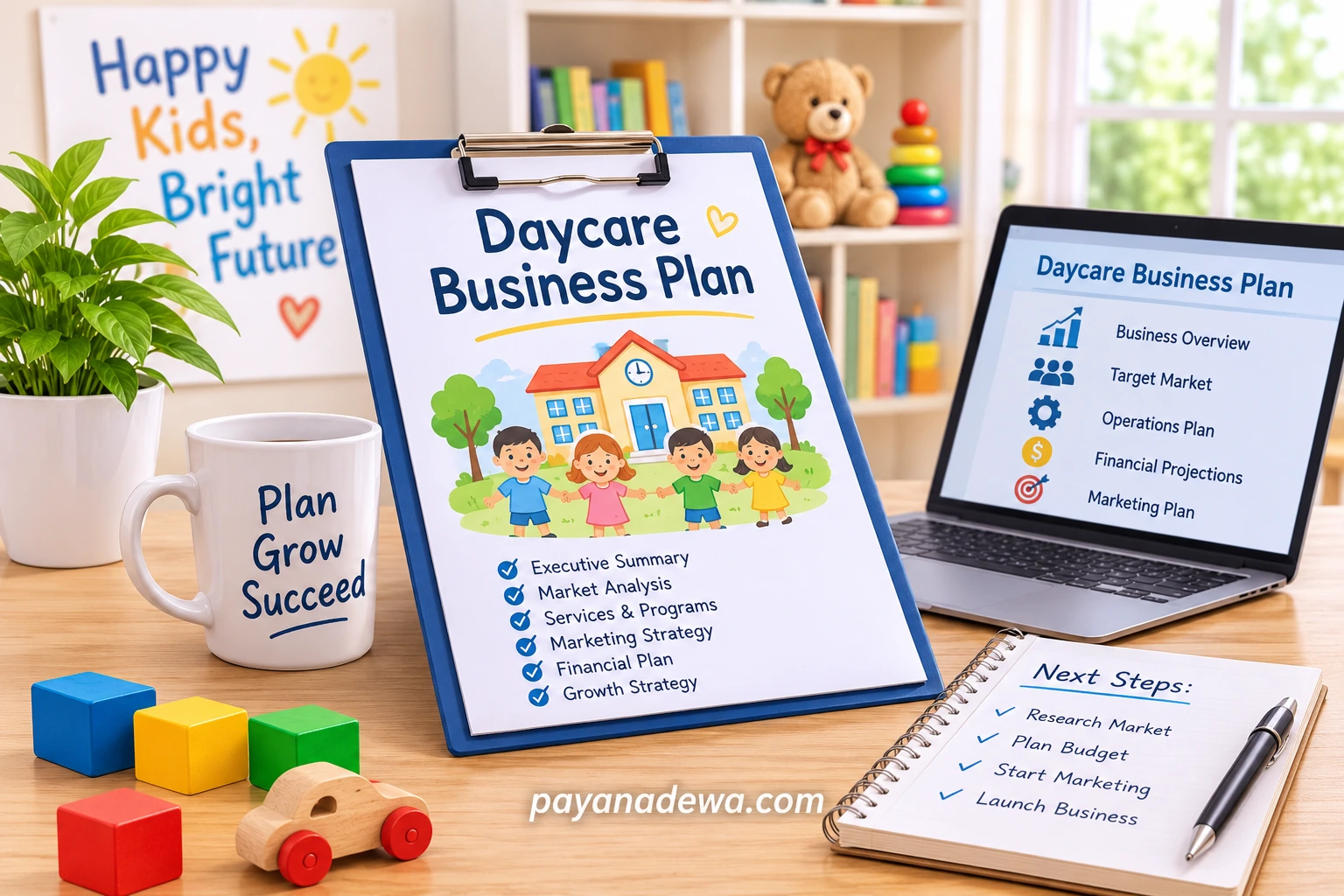
A professional childcare business plan should cover these essential areas:
- Business overview: Your daycare name, location, mission, and business structure.
- Market research: Information about local families, competitors, and childcare demand.
- Services and programs: The age groups, care options, and educational activities you will provide.
- Marketing strategy: How you will reach parents and attract new enrollments.
- Operations plan: Daily schedules, staffing, safety procedures, and facility management.
- Financial plan: Startup expenses, monthly costs, pricing, revenue forecasts, and profitability.
2. Create an Executive Summary
The executive summary introduces your daycare business and explains what makes it valuable to families. Although it appears at the beginning of your business plan, it is often easier to write after completing the other sections.
Keep this section clear, concise, and focused on your business objectives. Explain what type of childcare center you want to establish, where it will operate, and why parents should choose your services.
What to Include in Your Executive Summary
- Daycare business name and proposed location.
- Mission statement and long-term vision.
- Types of childcare services offered.
- Target age groups and expected enrollment capacity.
- Competitive advantages and unique selling points.
- Estimated startup investment and funding requirements.
- Short-term and long-term business goals.
For example, your mission could focus on providing affordable, dependable, and development-focused childcare in a welcoming environment. A strong mission statement communicates your values and builds trust with prospective families.
3. Conduct Market Research for Your Daycare Business
Market research helps you understand whether there is sufficient demand for another childcare provider in your chosen area. Before renting a building or purchasing equipment, study the families who live and work nearby.
Start by identifying your potential customers. These may include working parents, single-parent households, families with young children, and parents who need flexible childcare schedules.
Analyze Your Local Competition
Research other daycare centers, preschool programs, home-based childcare providers, and early learning facilities in your area. Compare their services, operating hours, pricing, enrollment availability, and online reviews.
Look for opportunities to offer something different. For instance, you could provide extended operating hours, smaller learning groups, bilingual activities, flexible enrollment options, or specialized early childhood programs.
Identify Your Target Market
Define the families most likely to use your services. Consider their household income, working schedules, childcare preferences, and expectations regarding safety and education.
Useful market research methods include:
- Surveying parents in your neighborhood.
- Interviewing families about their childcare needs.
- Reviewing local population and demographic information.
- Comparing competitor pricing and service packages.
- Checking local childcare demand and enrollment trends.
This information will help you make better decisions about your location, pricing, services, and marketing activities.
4. Define Your Daycare Services and Programs
Your childcare services determine your business identity and influence your operating costs. Therefore, choose programs that match the needs of local families and the qualifications of your staff.
Depending on your licensing permissions and business model, you may offer several childcare options.
Common Daycare Services
- Infant care: Supervised care for babies with age-appropriate feeding, sleeping, and developmental routines.
- Toddler care: Activities that support language development, movement, social interaction, and early independence.
- Preschool programs: Learning activities that introduce basic literacy, numbers, creativity, and problem-solving.
- Full-day childcare: Regular care for families who need support throughout the working day.
- Part-time childcare: Flexible schedules for parents who need care on selected days or during specific hours.
- After-school care: Supervised activities for school-age children, where legally permitted.
Consider creating a simple daily schedule that balances learning, meals, outdoor activities, rest, and free play. A consistent routine helps children feel comfortable while giving parents confidence in your services.
5. Choose a Suitable Location and Facility
The location of your daycare can significantly influence enrollment and operating expenses. Ideally, choose a facility that is accessible to families, close to residential neighborhoods or workplaces, and suitable for childcare activities.
Before signing a lease or purchasing property, verify local zoning rules, building requirements, fire safety standards, sanitation regulations, and childcare licensing conditions.
Essential Daycare Facility Requirements
- Secure entrances and controlled visitor access.
- Age-appropriate classrooms and play areas.
- Clean bathrooms and handwashing facilities.
- Safe sleeping and resting areas.
- Proper ventilation and sufficient natural lighting.
- Child-safe furniture, toys, and learning materials.
- Emergency exits and appropriate safety equipment.
- Outdoor play space where required and available.
Remember that facility requirements and child-to-staff ratios vary by location and children’s age groups. Always confirm the applicable regulations before designing your space.
6. Develop an Operations and Staffing Plan
A reliable operations plan explains how your daycare will function every day. It should describe staff responsibilities, enrollment procedures, attendance tracking, communication with parents, cleaning schedules, and emergency protocols.
Hire Qualified Childcare Staff
Your employees play an important role in children’s safety, development, and overall experience. Recruit individuals with appropriate childcare experience, relevant qualifications, and a genuine commitment to early childhood education.
Depending on local regulations, staff may need background checks, first-aid training, CPR certification, or specific early childhood credentials.
Establish Daily Operating Procedures
Create written procedures for important activities, including:
- Child drop-off and pickup authorization.
- Daily attendance and parent communication.
- Meal preparation and food allergy management.
- Medication administration, where permitted.
- Cleaning, sanitizing, and hygiene routines.
- Incident reporting and emergency response.
- Child supervision and activity planning.
Clear procedures help your team maintain consistent service quality and reduce operational risks.
7. Build a Realistic Daycare Financial Plan
Financial planning is one of the most important parts of a daycare business plan. You need to understand how much money is required to open your center, what it costs to operate each month, and how many enrolled children are needed to cover expenses.
Estimate Your Startup Costs
Your initial investment will depend on your location, facility size, licensing requirements, and business model. Common startup expenses include:
- Building deposits, rent, or property expenses.
- Renovations and safety improvements.
- Furniture, classroom equipment, and playground materials.
- Educational toys, books, and supplies.
- Licensing, permits, and professional services.
- Insurance and initial staff recruitment.
- Website development and marketing.
- Working capital for the first few months.
Calculate Monthly Operating Expenses
Once your daycare opens, you will need to manage recurring expenses. These commonly include employee salaries, rent, utilities, food, cleaning supplies, insurance, maintenance, and administrative costs.
Create a monthly budget and update it regularly. This allows you to monitor spending and identify financial problems early.
Set Your Tuition and Calculate Break-Even Enrollment
Research local childcare prices before setting your tuition fees. Your pricing should reflect service quality, operating expenses, local competition, and the financial needs of your target customers.
A simple break-even calculation is:
Break-Even Enrollment = Monthly Fixed Costs / Contribution per Child
For example, if monthly fixed costs are $8,000 and the monthly contribution per enrolled child after variable costs is $400, you need approximately 20 enrolled children to cover those costs.
This is a simplified example. Your actual financial forecast should also account for taxes, financing, seasonal enrollment changes, and unexpected expenses.
8. Create an Effective Daycare Marketing Strategy
Even a well-equipped childcare center needs a consistent marketing strategy to attract families. Your goal is to build local awareness, demonstrate your value, and make it easy for parents to contact your business.
Build a Professional Online Presence
Create a website that explains your childcare services, operating hours, location, enrollment process, and contact information. Include authentic photos of your facility, staff qualifications, and learning environment, while protecting children’s privacy.
Optimize your website for local search terms such as daycare near me, childcare center in your area, preschool programs, and affordable daycare services.
Use Social Media and Local Marketing
Social media platforms can help you share educational activities, announcements, parenting resources, and updates about enrollment availability.
You can also promote your daycare through:
- Google Business Profile and local search listings.
- Community groups and neighborhood events.
- Referral programs for existing families.
- Partnerships with local family-focused organizations.
- Open-house events and facility tours.
- Parent testimonials shared with proper permission.
Focus on building trust rather than relying only on discounts. Parents want to know that their children will receive safe, attentive, and dependable care.
9. Understand Daycare Licensing and Legal Requirements
Before opening your childcare business, research the licensing and legal requirements in your jurisdiction. Regulations can differ significantly depending on your country, state, province, or municipality.
Common requirements may include childcare operating licenses, background checks, health inspections, fire safety approvals, staff qualifications, insurance, and facility inspections.
You should also prepare written policies covering enrollment agreements, payment terms, illness procedures, emergency contacts, child protection, privacy, and parent communication.
Consult the appropriate childcare licensing authority and qualified legal or accounting professionals to ensure your business meets all applicable requirements.
10. Set Measurable Goals for Long-Term Growth
A daycare business plan should not stop at opening day. Establish measurable goals that help you evaluate performance and identify opportunities for improvement.
Consider tracking these key business indicators:
- Monthly enrollment and available capacity.
- Parent satisfaction and retention rates.
- Monthly revenue and operating expenses.
- Staff turnover and training completion.
- Marketing inquiries and enrollment conversions.
- Compliance, safety, and inspection performance.
Review your results every month or quarter. If enrollment is lower than expected, improve your marketing or review your service offerings. If expenses are increasing, examine your budget and operating procedures.
As your business becomes established, you may consider adding new programs, extending operating hours, or opening another location, provided that demand, staffing, finances, and licensing requirements support expansion.
Conclusion: Turn Your Daycare Business Plan into Reality
Creating a daycare business plan is an important first step toward building a successful childcare business. By researching your market, defining your services, choosing a suitable facility, hiring qualified staff, and preparing realistic financial projections, you can establish a strong foundation for long-term success.
Remember that a great daycare business is about more than generating revenue. It is about creating a safe, supportive, and engaging environment where children can learn and grow while parents feel confident about their care.
Start with a clear business strategy, follow local licensing requirements, and review your progress regularly. With careful preparation and consistent management, your daycare business can become a trusted part of your community and a sustainable business for years to come.
Use a daycare business plan template to organize your ideas, estimate your startup costs, and take the first step toward opening your own childcare center.