A well-designed daycare brochure can help parents understand your childcare services before they ever visit your center. It gives you a simple way to introduce your programs, explain your values, highlight your facilities, and encourage families to schedule a tour.
For many parents, choosing a daycare is an important decision. They want to know that their child will be safe, supported, and happy. A clear brochure can answer common questions while also showing what makes your daycare special. With the right layout and information, a daycare brochure can become a valuable marketing tool for attracting new families.
This guide explains what to include in a daycare brochure, how to organize the content, and how to create a design that feels professional, friendly, and trustworthy.
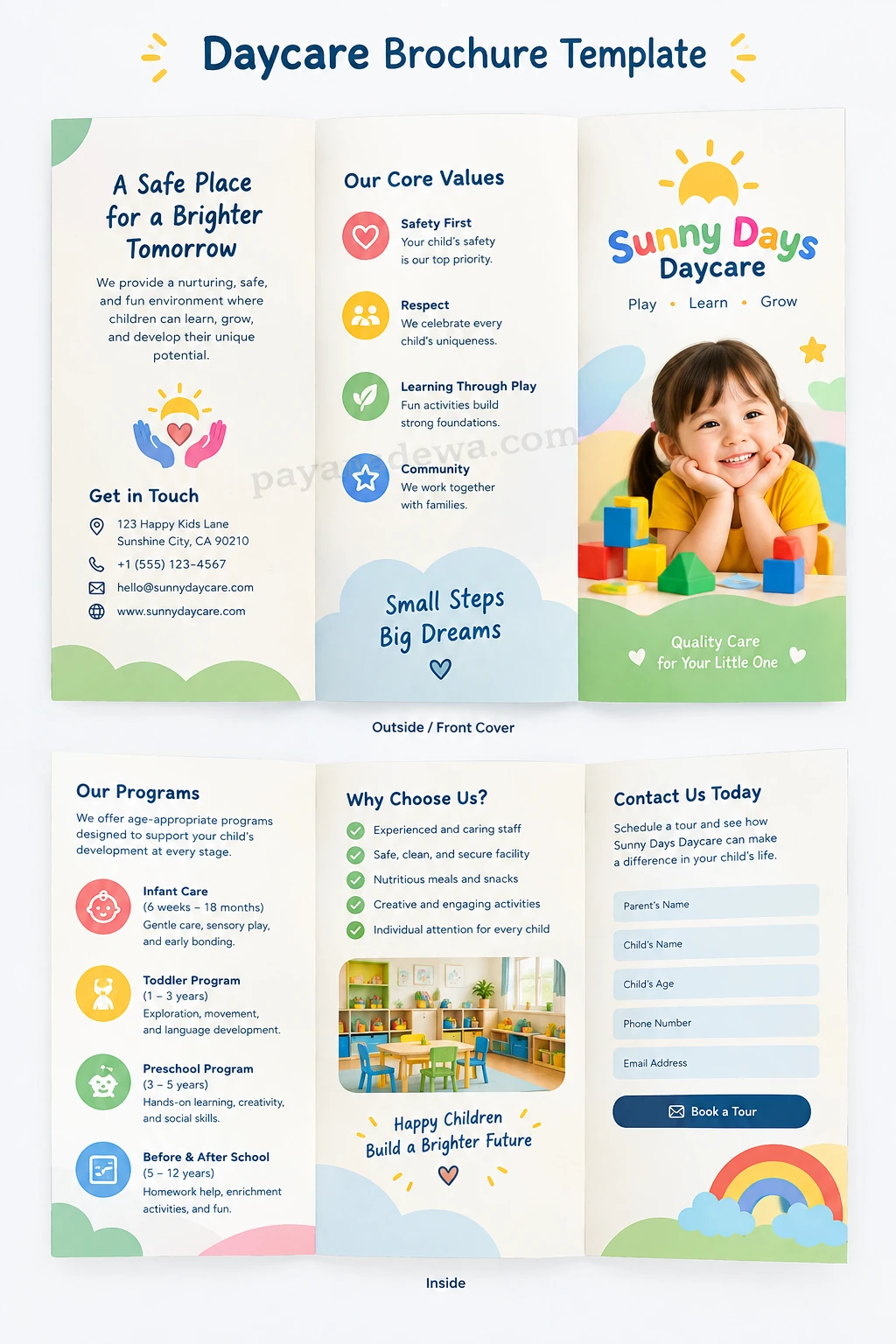
What Is a Daycare Brochure?
A daycare brochure is a printed or digital marketing document that provides important information about a childcare center. It is usually designed for parents who want to learn more about available programs, daily activities, staff, facilities, tuition information, and enrollment options.
A brochure can be handed to parents during a facility tour. It can also be displayed at community events, shared with local organizations, or offered as a downloadable document on a daycare website.
Unlike a long webpage, a brochure presents key information in a compact and easy-to-scan format. This makes it especially useful for busy parents who want the most important details quickly.
Why a Daycare Brochure Is Important
Parents often compare several childcare providers before making a decision. Your brochure gives your daycare an opportunity to make a strong first impression.
A professional brochure can help you:
- Introduce your daycare and its philosophy.
- Explain your childcare programs and age groups.
- Highlight safety, cleanliness, and security measures.
- Showcase qualified and caring staff.
- Present facilities and learning environments.
- Explain the benefits of choosing your center.
- Provide contact and enrollment information.
- Encourage parents to schedule a tour.
Most importantly, a good brochure builds trust. Parents want clear information before they contact a childcare provider. Therefore, your brochure should be informative without feeling overwhelming.
What to Include in a Daycare Brochure
The best daycare brochure combines useful information with a warm and inviting design. Each section should have a clear purpose and help parents understand what your center offers.
1. Daycare Name and Introduction
Start with your daycare name, logo, tagline, and a short introduction. Use this section to communicate your overall approach to childcare.
For example, you might explain that your center provides a safe, nurturing, and engaging environment where children can learn through play and age-appropriate activities.
Keep this introduction concise. Parents should understand your core message after reading only a few sentences.
2. Childcare Programs
Clearly explain the programs you offer. Grouping programs by age makes the information easier to understand.
- Infant Care: Gentle care, sensory activities, feeding support, and age-appropriate routines.
- Toddler Program: Activities that encourage movement, communication, independence, and exploration.
- Preschool Program: Early learning, creativity, social development, and school-readiness activities.
- Before and After School Care: Supervised activities, homework support, enrichment, and recreation.
If your daycare provides additional services, such as summer programs or flexible scheduling, include them in this section as well.
3. Safety and Security
Safety is one of the most important concerns for parents. Your daycare brochure should explain how your center creates a secure environment.
You can mention staff supervision, secure entry systems, emergency procedures, clean facilities, child-safe equipment, and other relevant safety practices. Only include claims that accurately describe your daycare.
4. Learning and Daily Activities
Parents also want to know what children will do during the day. Describe activities that support physical, social, emotional, and cognitive development.
Examples include story time, music, art, outdoor play, sensory activities, creative projects, group games, and early learning exercises.
Showing the variety of daily activities helps parents see that your daycare offers more than basic supervision.
5. Staff and Teachers
Introduce your teaching team when appropriate. Briefly explain their experience, qualifications, and commitment to children.
You do not need to create a long biography for every staff member. Instead, focus on information that helps parents understand the experience and care available at your center.
How to Design an Effective Daycare Brochure
A strong daycare brochure should be attractive without sacrificing readability. Since the audience includes busy parents, the information should be easy to scan.
Use a Friendly Color Palette
Soft and cheerful colors can create a welcoming impression. Pastel blue, green, yellow, coral, and other gentle tones can work well for childcare marketing materials.
However, avoid using too many colors. Choose a small palette and use it consistently throughout the brochure.
Choose Readable Fonts
Decorative fonts can work well for headings, but body text should remain easy to read. Use a clear font with sufficient spacing between lines and sections.
Good typography makes your brochure look more professional. It also helps parents find important information quickly.
Use High-Quality Images
Images can make a childcare brochure more engaging. Consider using photos or original illustrations that represent your environment, activities, classrooms, and learning materials.
Make sure every image supports your message. Avoid filling every available space with pictures. A balanced combination of text, images, icons, and white space usually produces a cleaner result.
How to Organize the Brochure Layout
A tri-fold brochure is a popular choice because it provides several panels for organizing information. However, a bi-fold brochure, flyer, or digital PDF can also work well.
A simple layout might include:
- Front cover: Daycare name, logo, tagline, and an engaging image.
- Introduction: Short overview of your childcare philosophy.
- Programs: Details about age groups and services.
- Why choose us: Key benefits, staff, facilities, and safety features.
- Daily activities: Examples of learning and play experiences.
- Contact section: Phone number, email, website, address, and tour information.
This structure creates a natural flow. First, introduce the daycare. Next, explain what you offer. Finally, give parents a clear reason and an easy way to contact you.
Tips for Writing Better Daycare Brochure Content
Good design attracts attention, but useful content helps convert that attention into action. Keep the writing clear, specific, and parent-focused.
Focus on Parents and Children
Write about the benefits families receive rather than simply listing features. For example, instead of saying that your center has outdoor play areas, explain how outdoor activities encourage movement, exploration, and social interaction.
Keep Information Easy to Scan
Use short paragraphs, descriptive headings, and bullet points. Avoid large blocks of text. Parents should be able to locate important details in seconds.
Use a Clear Call to Action
Every effective childcare brochure should tell parents what to do next. A simple call to action can encourage them to schedule a tour, contact the center, request enrollment information, or visit your website.
Examples include Schedule a Tour, Contact Us Today, Explore Our Programs, and Start Your Enrollment.
Benefits of Using a Daycare Brochure Template
Creating a brochure from scratch can take considerable time. A daycare brochure template gives you a starting point for the layout, typography, content sections, and visual structure.
A template can help you:
- Save time during the design process.
- Maintain consistent formatting.
- Organize information more effectively.
- Create a professional presentation.
- Customize colors, text, images, and contact details.
- Prepare materials for printing or digital sharing.
Templates are especially useful for daycare owners, administrators, teachers, and marketing teams who need a professional brochure without spending hours designing every element.
Common Mistakes to Avoid
Even a beautiful brochure can lose its effectiveness if the content is difficult to understand. Avoid these common problems.
- Too much text: Keep descriptions concise and focused.
- Weak headlines: Use headings that tell readers what each section contains.
- Poor contrast: Make sure text is easy to read against the background.
- Missing contact information: Always provide a clear way for parents to reach you.
- Unclear programs: Explain the age range and purpose of each program.
- Too many design elements: Leave enough white space to create a clean appearance.
- No call to action: Tell parents what step they should take next.
How to Make Your Daycare Brochure More Trustworthy
Trust is essential in childcare marketing. Parents want to feel confident before leaving their children in someone else’s care.
Use real and accurate information throughout your brochure. Highlight genuine strengths such as your educational approach, experienced team, safe environment, communication practices, and family-focused services.
You can also include practical details such as operating hours, enrollment requirements, meal options, age groups, and tour availability. Clear information reduces uncertainty and helps parents decide whether your daycare is a good fit.
Final Thoughts on Creating a Daycare Brochure
A daycare brochure is more than a collection of text and images. It is an introduction to your childcare center and an opportunity to build trust with prospective families.
The strongest brochures combine clear information, friendly design, useful program details, and a simple call to action. Start with your daycare’s most important message. Then organize the content into easy-to-read sections. Finally, use consistent colors, readable typography, and appropriate visuals to create a polished presentation.
Whether you are creating a printed brochure, a downloadable PDF, or a digital marketing asset, a well-planned Daycare Brochure Template can make the process faster and more professional. With the right information and thoughtful design, your brochure can help parents understand your services and take the next step toward joining your daycare community.