A well-designed contractor brochure can do much more than list your construction services. It can introduce your company, demonstrate your expertise, build trust, and give potential clients a clear reason to choose you. For contractors, builders, remodelers, and construction companies, a professional brochure is a powerful marketing tool that can support both digital and offline campaigns.
Whether you specialize in residential construction, commercial projects, home remodeling, roofing, landscaping, or general contracting, the right brochure helps communicate your value in a simple and professional format. It gives prospective customers important information at a glance while presenting your brand in a memorable way.
A strong contractor brochure combines professional design, persuasive content, high-quality project images, clear service information, and an easy-to-follow call to action. When these elements work together, your brochure can turn casual interest into real inquiries and consultations.
What Is a Contractor Brochure?
A contractor brochure is a printed or digital marketing document that presents a construction company’s services, experience, strengths, and contact information. It is commonly used by general contractors, construction companies, remodeling businesses, builders, architects, and specialized trade professionals.
A brochure can be designed as a bi-fold, tri-fold, booklet, or multi-page presentation. The format depends on how much information you need to communicate and how you plan to distribute it.
A professional contractor brochure typically includes:
- Company name and branding
- Construction and contracting services
- Company experience and qualifications
- Photos of completed projects
- Key benefits or competitive advantages
- Construction process or project workflow
- Customer-focused messaging
- Phone number, email, website, and address
- A clear call to action
The goal is not to fill every available space with information. Instead, the brochure should make it easy for a potential customer to understand who you are, what you do, and how they can get started.
Why a Contractor Brochure Is Important for Your Business
Construction is a trust-based industry. Clients want to know that the contractor they hire is experienced, reliable, professional, and capable of delivering quality results. A thoughtfully designed brochure can help establish that trust before the first meeting.
Build a Professional First Impression
Your marketing materials often influence how customers perceive your business. A clean and professional brochure can make a small contracting company appear organized, established, and serious about its work.
Consistent colors, professional typography, quality photography, and concise messaging create a stronger brand image. This is especially important when competing with other contractors offering similar services.
Showcase Your Services Clearly
Potential customers should not have to guess what your company does. Use dedicated sections to explain your most important services, such as new construction, home additions, remodeling, commercial construction, renovation, roofing, or design-build services.
Short descriptions work well because customers can quickly scan the brochure and identify the services that match their needs.
Demonstrate Your Experience
Construction clients often want evidence before they make a decision. Project photography, experience statements, certifications, testimonials, and examples of completed work can help demonstrate your capabilities.
Instead of simply saying that your company provides high-quality construction, show what that quality looks like through strong project images and specific information.
Essential Elements of a Successful Contractor Brochure
A successful brochure should guide the reader naturally from introduction to action. Each section should have a specific purpose and support the overall marketing message.
1. Strong Cover Design
The cover is the first thing people see, so it needs to communicate your brand quickly. Include your company name, logo, a short headline, and an attractive construction-related image.
A headline such as “Built on Trust. Constructed for a Better Tomorrow.” can create an emotional connection while reinforcing professionalism.
2. Clear Service List
Organize your services into easy-to-read categories. For example, a general contractor might highlight:
- Residential construction
- Commercial construction
- Home remodeling
- Kitchen and bathroom renovation
- Home additions
- Design-build services
- Property improvements
- Project management
Only include services that your company actually provides. Accurate information creates credibility and helps attract better-qualified leads.
3. Professional Project Photography
Images can communicate construction quality faster than long paragraphs. Use sharp, well-lit photographs of completed projects whenever possible.
Choose images that show different aspects of your work, including exterior architecture, interior spaces, construction details, finished rooms, and team members working professionally on-site.
4. Reasons to Choose Your Company
Your brochure should answer an important customer question: Why should I choose this contractor?
Possible advantages include experienced professionals, transparent pricing, quality materials, dependable project management, safety-focused construction, clear communication, and reliable timelines.
Keep these points specific and customer-focused. Avoid unsupported claims that sound exaggerated or generic.
5. Simple Contact Information
Make it easy for readers to contact you. Your phone number, email address, website, and business location should be easy to find.
Consider adding a QR code that leads to your website, project portfolio, consultation form, or online quote request page. This creates a direct connection between a printed brochure and your digital marketing strategy.
How to Write Effective Contractor Brochure Content
Good brochure content should be informative without becoming overwhelming. Most readers will scan the document rather than read every sentence, so use concise sections and strong headings.
Focus on Customer Benefits
Instead of only describing what you do, explain how your services benefit the customer. For example, rather than writing “We provide remodeling services,” consider messaging that explains how your team can transform an outdated space into a functional and attractive home.
Benefit-focused writing makes your contractor brochure more persuasive because it connects your services with the customer’s goals.
Use Simple and Direct Language
Avoid unnecessary industry jargon. Your audience may include homeowners who have little construction experience. Explain your services in language that is easy to understand.
Short paragraphs, descriptive headings, bullet points, and concise sentences also make the brochure easier to scan.
Contractor Brochure Design Tips
Design plays an important role in how your business is perceived. A professional brochure should look polished while remaining easy to read.
- Use consistent branding: Match your brochure colors, fonts, and visual style with your website and other marketing materials.
- Choose high-quality images: Construction photography should be sharp, relevant, and professionally presented.
- Leave enough white space: Empty space helps separate sections and prevents the design from looking crowded.
- Create visual hierarchy: Make headings, important benefits, and calls to action easy to notice.
- Keep colors professional: Navy, charcoal, white, gray, gold, and other construction-inspired colors can create a strong visual identity.
- Make contact details prominent: Customers should never have to search for your phone number or website.
A clean design is often more effective than a brochure filled with decorative elements. The purpose of the design is to support the message, not compete with it.
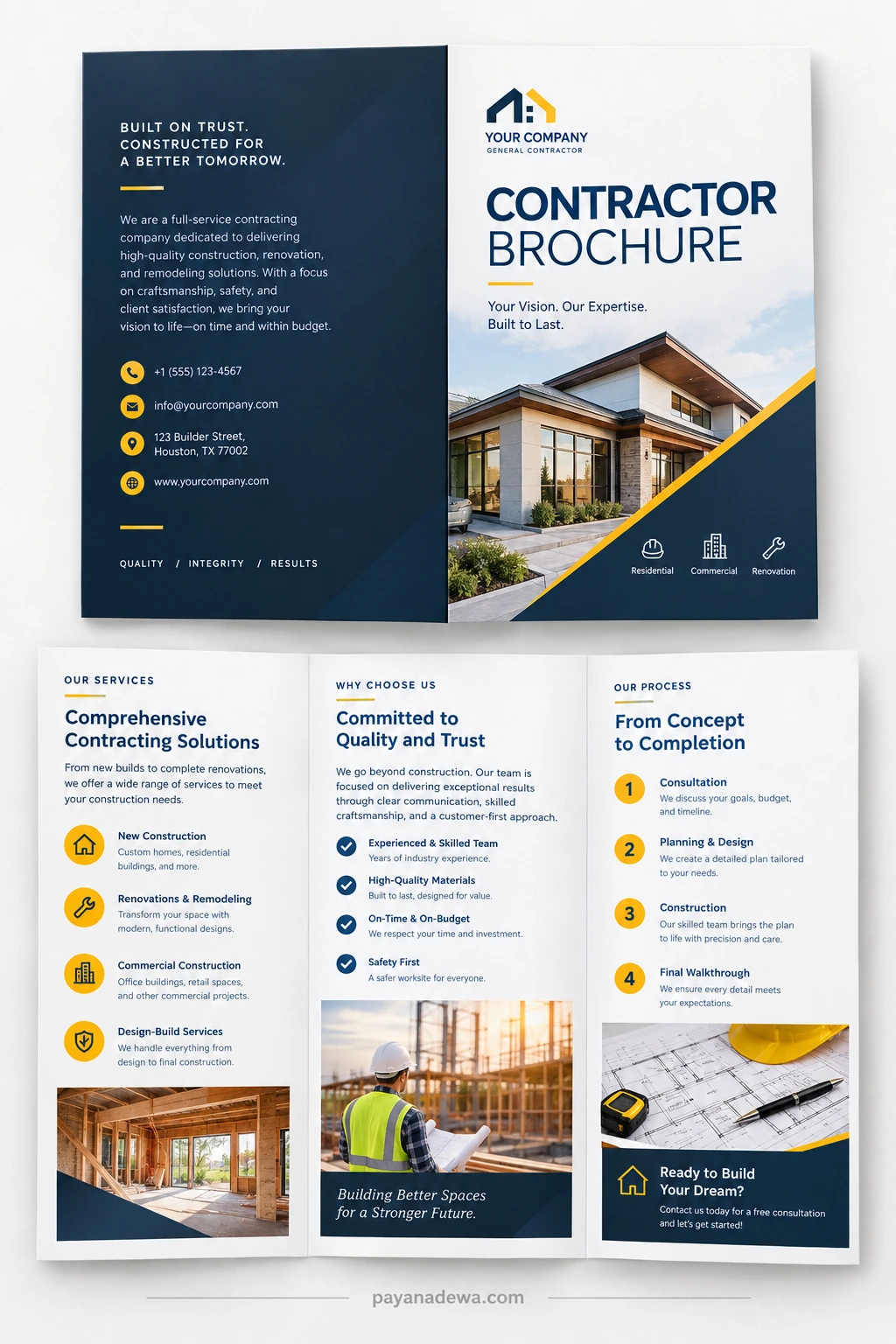
How to Structure a Contractor Brochure
A tri-fold brochure is a popular option because it provides several panels for organizing information without becoming too large. A practical structure could look like this:
Front Cover
Use your logo, company name, a strong construction image, and a memorable headline. The cover should immediately communicate what your business does.
Company Introduction
Introduce your company in a short paragraph. Explain your experience, values, and approach to construction. Focus on information that builds confidence.
Services Section
Present your primary services with short descriptions and supporting icons or photographs. Keep the wording concise so customers can quickly identify relevant services.
Why Choose Us Section
Highlight your most important strengths. This could include craftsmanship, communication, experienced professionals, quality materials, project management, safety, or customer satisfaction.
Project Process
Explain what customers can expect after contacting you. A simple process might include consultation, planning, design, construction, inspection, and final walkthrough.
Call to Action
Finish with a clear next step. Encourage readers to request a consultation, call for an estimate, visit your website, or schedule a project discussion.
How to Use a Contractor Brochure for Marketing
A brochure becomes more valuable when it is part of a larger marketing strategy. Do not limit its use to a display rack in your office.
You can distribute contractor brochures at:
- Home improvement events
- Construction trade shows
- Local business networking events
- Real estate offices
- Property management companies
- Community events
- Customer consultations
- Project estimates and sales meetings
- Local business partnerships
You can also create a digital PDF version for email campaigns, website downloads, social media promotions, and online inquiries.
Common Contractor Brochure Mistakes to Avoid
Even a visually attractive brochure can fail if the content is difficult to understand or the design lacks focus.
Too Much Information
A brochure is not a complete company manual. Avoid long blocks of text and unnecessary details. Direct readers to your website for additional information when appropriate.
Poor-Quality Images
Blurry, dark, or unrelated images can make a professional construction company look less credible. Use your strongest project photographs.
No Clear Call to Action
Do not assume customers will know what to do next. Tell them. A simple message such as “Schedule Your Free Consultation” can provide a clear next step.
Inconsistent Branding
If your brochure looks completely different from your website, signage, business cards, and social media profiles, your brand may feel less established. Keep your visual identity consistent across marketing channels.
Tips for Creating a Contractor Brochure That Converts
Before sending your brochure to print or publishing a digital version, review it from the customer’s perspective.
- Make sure the company name and services are immediately clear.
- Use real project images whenever possible.
- Explain customer benefits instead of only listing services.
- Keep important information easy to scan.
- Check every phone number, email address, and website URL.
- Use a strong and visible call to action.
- Proofread all text carefully.
- Test the digital version on desktop and mobile screens.
- Choose professional printing materials if producing physical brochures.
- Update the brochure when services, contact information, or branding changes.
Final Thoughts on Contractor Brochures
A professional contractor brochure can become one of the most useful marketing assets for a construction business. It provides a compact way to present your services, communicate your expertise, showcase completed projects, and build confidence with potential customers.
The most effective brochure is not necessarily the one with the most information. It is the one that communicates the right information clearly, professionally, and at the right time. Focus on your customers, highlight your strongest advantages, use compelling project photography, and make the next step easy.
Whether you are promoting residential construction, commercial building, remodeling, renovation, or general contracting services, a well-planned brochure can strengthen your brand and help turn prospects into clients. Start with a clean structure, professional visuals, useful content, and a clear call to action, then refine the design around the needs of your target audience.