A strong company profile helps people understand who you are, what your business does, and why they should trust you. Whether you run a startup, a small business, or an established organization, a well-structured company profile can introduce your brand to potential customers, partners, suppliers, and investors. A practical company profile template makes the process easier by giving you a clear layout and reminding you which details matter most.
This guide explains what to include in a company profile, how to organize the information, and how to adapt a template to your brand. You will also find practical writing tips to help you create a professional company overview without making it too long or complicated.
What Is a Company Profile?
A company profile is a concise introduction to a business. It usually describes the company’s background, products or services, target audience, values, goals, and contact information. Depending on its purpose, it may also include milestones, leadership details, achievements, or a short summary of the company’s market position.
A company profile is different from a detailed business plan. A business plan explains strategy, operations, and financial projections in depth. A company profile focuses on helping readers quickly understand the business and decide whether they want to learn more.
Why Use a Company Profile Template?
Starting with a template saves time and creates a consistent structure. Instead of designing every section from scratch, you can focus on writing accurate, useful information about your organization.
- Saves time: A ready-made structure helps you organize information faster.
- Improves consistency: Headings, spacing, and content sections follow a clear pattern.
- Builds credibility: A professional presentation can make your business appear organized and prepared.
- Supports branding: You can add your logo, brand colors, typography, and company photography.
- Works across formats: Adapt the same core content for a website, PDF, presentation, proposal, or printed handout.
A template is a starting point, not a substitute for useful content. Keep the design aligned with your business and remove any section that does not serve your audience.
What to Include in a Company Profile
1. Company Name and Contact Details
Begin with your official business name and logo. Add essential contact information, such as your website, business email, phone number, and location if it is relevant to customers. Make these details easy to find, especially when the profile will be shared as a PDF or printed document.
2. Company Overview
Write a short introduction that explains what your company does, whom it serves, and what makes its approach useful. Aim for a few focused sentences rather than a long history. Use plain language and avoid claims that you cannot support.
3. Mission and Vision
Your mission describes what the company does today and the value it aims to deliver. Your vision describes the future you want to help create. Keep both statements specific enough to guide decisions. For example, a mission might focus on making reliable tools accessible to small businesses, while a vision might describe a future in which those businesses can operate more efficiently.
4. Products or Services
Explain your main products or services in terms your audience understands. Focus on the problems you solve, the benefits you provide, and the types of customers who may benefit. If your offering is complex, group it into a few clear categories instead of listing every feature.
5. Values, Strengths, and Differentiators
Describe the principles that shape how your company works. These might include customer service, responsible sourcing, innovation, reliability, or collaboration. Then show how those values appear in practice. Specific examples are more persuasive than broad statements such as “we provide the best service.”
6. Achievements and Experience
Relevant milestones can help readers assess your experience. Depending on your business, you might mention years in operation, certifications, notable projects, service coverage, or measurable results. Use accurate, current information and explain why each achievement matters to your audience.
7. A Clear Next Step
Finish with a useful call to action. Invite readers to request a quotation, schedule a consultation, explore your services, or contact your team. The next step should match the purpose of the profile and be easy to follow.
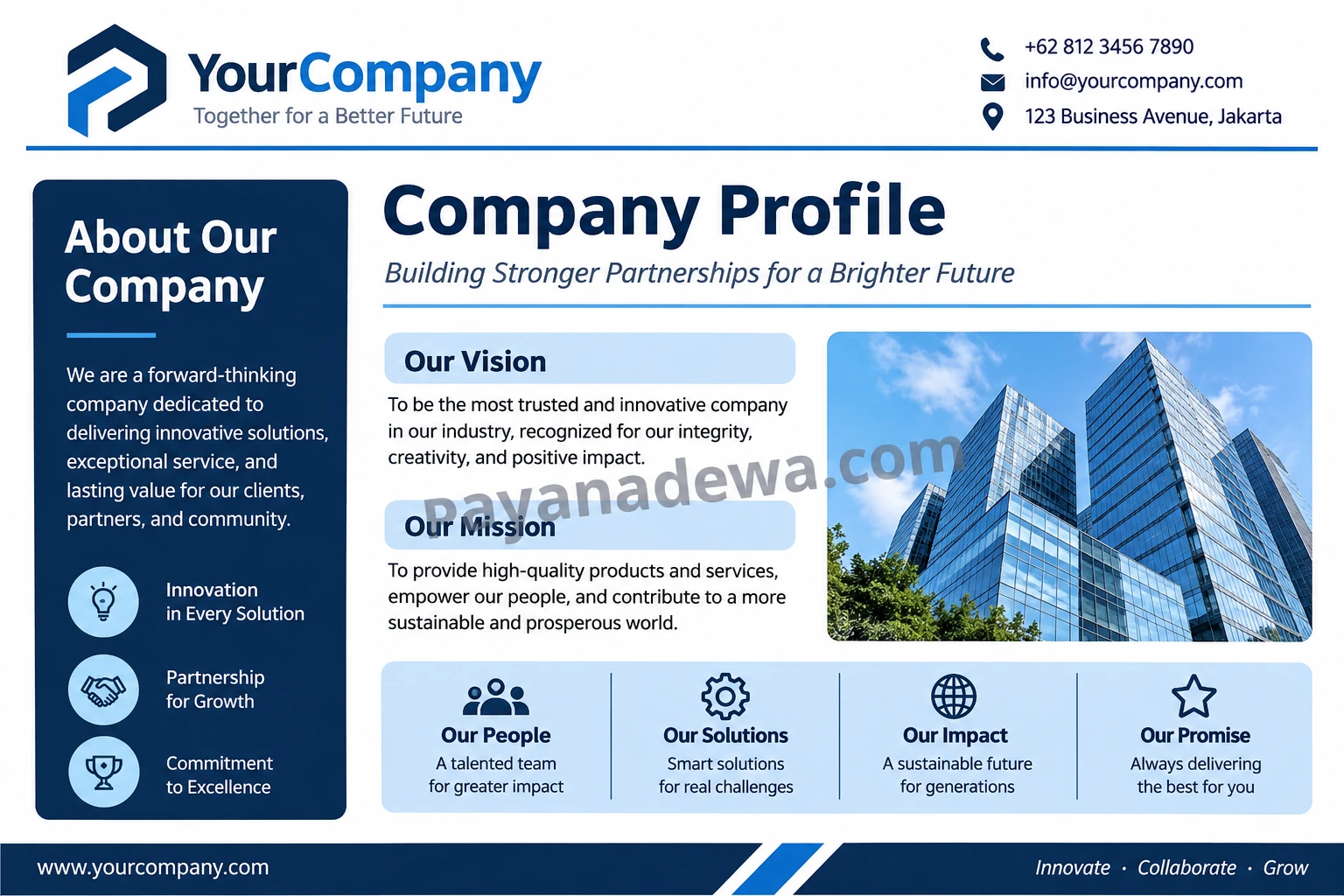
Company Profile Template: A Simple Structure to Follow
Use the following outline to draft your own company overview. You can expand or shorten each section according to the needs of your business.
- Company name: [Enter your official business name]
- Tagline: [Summarize your promise in a short phrase]
- About the company: [Explain what you do, who you serve, and where you operate]
- Mission: [Describe your current purpose]
- Vision: [Describe the future you aim to support]
- Products or services: [List your main offerings and their benefits]
- Core values: [Name the principles that guide your work]
- Key strengths: [Explain what distinguishes your approach]
- Achievements: [Add relevant milestones or evidence]
- Contact details: [Add your website, email, phone, and location as appropriate]
- Call to action: [Tell readers how to take the next step]
Use this outline as a content checklist before designing the final document. The goal is to make the company easy to understand, not to fill every space with text.
How to Customize Your Company Profile
Match the Design to Your Brand
Use your logo, brand colors, and a small set of readable fonts. Keep headings visually distinct and leave enough white space around each section. A restrained color palette often looks more professional than using many competing colors. Check that text remains easy to read on screens and when printed.
Write for Your Intended Audience
A profile for prospective customers should emphasize services, benefits, and customer support. A profile for investors may need more information about the market, business model, and growth plans. A supplier or corporate partner may care more about capabilities, compliance, reliability, and operating locations. Identify the main reader before you decide what to include.
Use Specific, Verifiable Language
Replace vague claims with details. Instead of saying that your company is “highly experienced,” mention a relevant number of years in business or describe a representative project, if the information is accurate. Avoid unsupported superlatives and do not publish confidential customer details without permission.
Choose Images Carefully
Use a high-quality logo and relevant photographs of your team, products, workplace, or projects. Images should support the message rather than compete with it. Make sure you have permission to use each image and add descriptive alt text when publishing the profile online.
Practical Tips for a Professional Result
- Keep it concise: Include enough information to answer common questions, but remove repetition and unnecessary company history.
- Use clear headings: Readers should be able to scan the document and find important details quickly.
- Check every fact: Verify names, dates, contact information, certifications, and statistics before sharing.
- Make contact easy: Use a monitored email address and current phone number. Test links in digital versions.
- Review the layout: Preview the profile on a desktop, phone, and printed page if you plan to use multiple formats.
- Update it regularly: Review the profile when your services, team, locations, or business priorities change.
Common Company Profile Mistakes to Avoid
Even an attractive design can fail if the content is unclear or outdated. Watch out for these common problems:
- Too much jargon: Use familiar terms and explain specialized language when necessary.
- Generic mission statements: Describe a purpose that reflects your actual work and customers.
- Unsupported claims: Only include awards, results, and credentials that you can verify.
- Overcrowded pages: Break up long text and prioritize the most useful information.
- Missing contact details: Make sure readers know how to reach the right person.
- Outdated information: Remove old services, expired credentials, and inaccurate details.
Using a Company Profile on Your Website
A company profile can also form the foundation of your website’s About page. Adapt the wording for online reading by using descriptive headings, short paragraphs, and links to relevant service pages. Include the primary keyword naturally where it helps readers understand the page, but do not repeat it unnaturally.
For search visibility, write a unique page title and meta description, use descriptive image alt text, and ensure the page works well on mobile devices. Keep important company information in readable text rather than placing everything inside a single image. If your business serves a specific area, mention that location where it is useful and accurate.
Frequently Asked Questions
How long should a company profile be?
There is no fixed length. A short profile may fit on one page, while a larger organization may need several pages to explain its services and capabilities. Choose the length that answers your audience’s questions without unnecessary detail.
Is a company profile the same as an About Us page?
They serve similar purposes, but their formats can differ. A company profile is often a standalone document used in proposals, presentations, or introductions. An About Us page is written for a website and may include links to other pages, team stories, and additional brand information.
Can a new business create a company profile without many achievements?
Yes. A new business can focus on its purpose, expertise, services, customer needs, working principles, and plans. Be honest about your stage of development and avoid implying a track record you do not yet have.
Conclusion
A well-prepared company profile helps readers quickly understand your business, its values, and the solutions it offers. By using a company profile template, you can organize the essentials, maintain a consistent design, and spend more time making the content relevant to your audience. Start with a clear overview, explain your mission and services, include accurate contact details, and finish with a simple next step. Review the document regularly so it continues to represent your company accurately and professionally.