Communication is an essential part of everyday life. Whether you are talking with family, working with colleagues, studying, or building relationships, the ability to share information clearly makes a significant difference. Good communication helps people understand one another, solve problems, exchange ideas, and build lasting connections.
However, effective communication involves more than simply speaking or sending messages. It requires active listening, empathy, clear language, and an understanding of how different people receive information. In today’s connected world, communication skills are valuable in personal relationships, education, and professional environments.
This guide explores the meaning of communication, its different types, its importance, and practical ways to improve your communication skills in everyday situations.
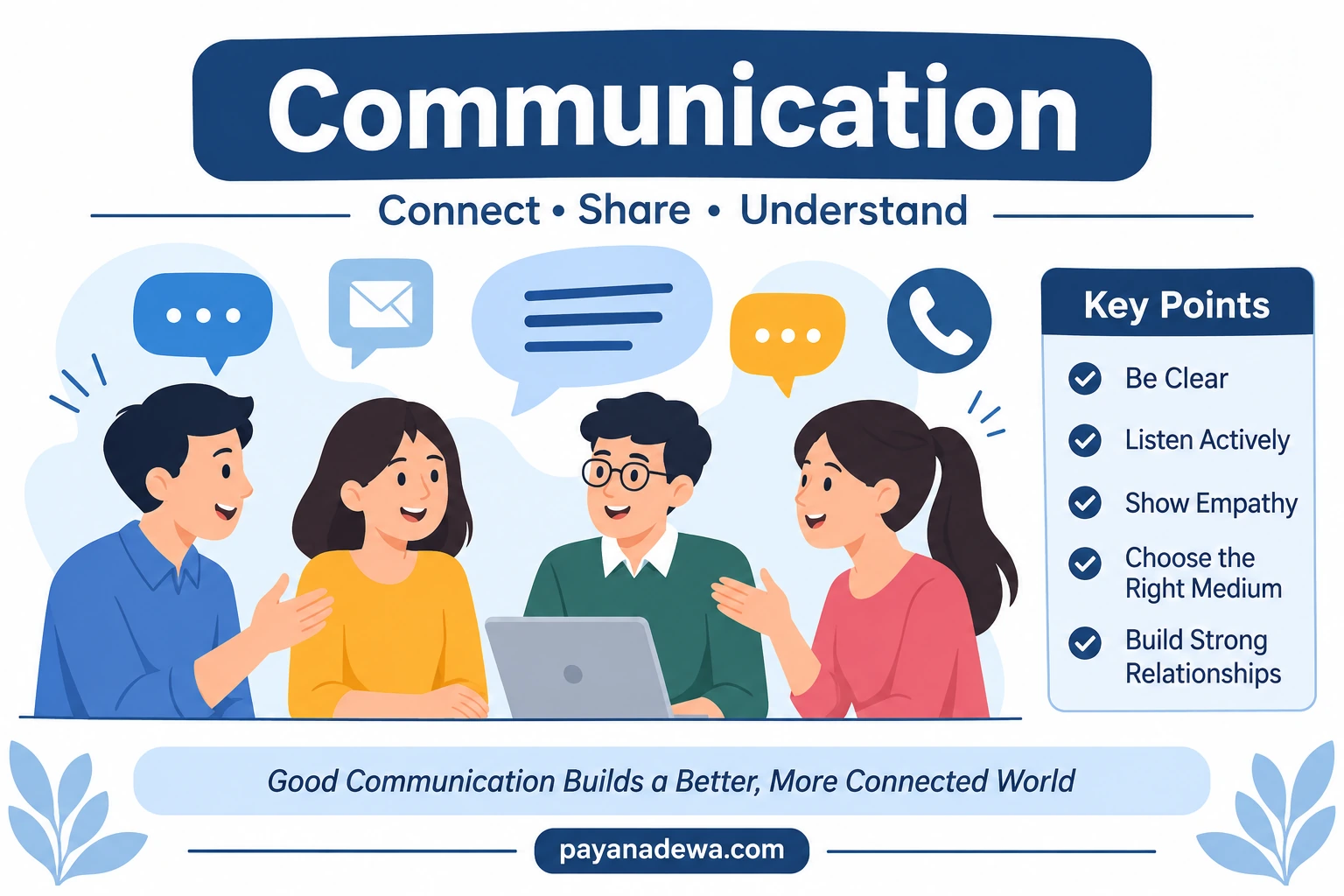
What Is Communication?
Communication is the process of exchanging information, thoughts, feelings, and ideas between two or more people. It can happen through spoken words, written messages, body language, facial expressions, and digital platforms.
The main purpose of communication is to create understanding. A message is only effective when the receiver understands the information in the way the sender intended.
For example, a manager explaining a project to employees uses communication to share expectations. Similarly, friends discussing their feelings use communication to maintain trust and understanding.
Although communication may seem simple, several elements influence how successfully a message is delivered:
- Sender: The person who creates and delivers the message.
- Message: The information, idea, or feeling being shared.
- Channel: The method used to deliver the message.
- Receiver: The person who receives and interprets the information.
- Feedback: The response that shows whether the message was understood.
- Context: The situation or environment in which communication takes place.
Why Is Communication Important?
Effective communication supports almost every aspect of human interaction. It helps people express themselves, understand different perspectives, and work toward shared goals.
1. Builds Stronger Relationships
Healthy relationships depend on honest and respectful conversations. When people communicate openly, they can express their needs, discuss concerns, and understand each other’s feelings.
As a result, good communication builds trust and reduces unnecessary misunderstandings. It also helps maintain stronger relationships with friends, family members, and colleagues.
2. Improves Teamwork and Productivity
In the workplace, clear communication helps employees understand responsibilities, deadlines, and project expectations. Everyone can work more efficiently when information is shared accurately.
Furthermore, open discussions encourage collaboration. Team members can exchange ideas, identify problems, and develop better solutions together.
3. Reduces Conflicts and Misunderstandings
Many disagreements happen because people misunderstand messages or make assumptions. Effective communication encourages individuals to ask questions, clarify information, and listen before responding.
Instead of allowing small problems to grow, people can address concerns early and find reasonable solutions.
4. Supports Personal and Professional Growth
Strong communication skills can improve confidence, leadership, and decision-making. People who express ideas clearly often find it easier to participate in discussions, present their work, and build professional relationships.
Different Types of Communication
Communication takes many forms. Understanding these types can help you choose the most appropriate method for different situations.
Verbal Communication
Verbal communication involves sharing information through spoken words. Examples include face-to-face conversations, telephone calls, meetings, interviews, and presentations.
To communicate effectively, speak clearly, organize your thoughts, and adjust your language to suit your audience. Your tone and speaking pace also influence how people interpret your message.
Nonverbal Communication
Nonverbal communication uses physical behavior rather than words. It includes facial expressions, gestures, posture, eye contact, and body movements.
For example, maintaining comfortable eye contact can demonstrate attention, while an open posture may make a conversation feel more welcoming.
However, body language can have different meanings across cultures. Therefore, consider the situation before interpreting someone’s nonverbal signals.
Written Communication
Written communication involves exchanging information through text. Emails, reports, letters, instant messages, and business documents are common examples.
Good writing should be clear, organized, and appropriate for its audience. Use simple sentences, explain important details, and review your message before sending it.
Visual Communication
Visual communication uses images, charts, diagrams, symbols, and other visual elements to explain information. It is particularly useful when presenting complex ideas or large amounts of data.
For example, an infographic can summarize important information in a format that readers can understand quickly. Visual materials can also make presentations and educational content more engaging.
Digital Communication
Digital communication happens through electronic devices and online platforms. Video conferences, social media, messaging applications, and collaborative tools allow people to communicate across different locations.
Although digital channels are convenient, they require attention to tone, clarity, privacy, and response time. A short message can sometimes be misunderstood because the receiver cannot hear your voice or see your facial expressions.
Essential Skills for Effective Communication
Anyone can improve their communication abilities through regular practice. The following skills are especially valuable in personal and professional settings.
Practice Active Listening
Active listening means giving someone your full attention instead of simply waiting for your turn to speak.
To become a better listener:
- Avoid interrupting while someone is speaking.
- Maintain appropriate eye contact.
- Ask questions when information is unclear.
- Pay attention to the speaker’s tone and emotions.
- Summarize important points to confirm your understanding.
Active listening demonstrates respect and helps prevent misunderstandings.
Speak Clearly and Confidently
Clear communication makes your ideas easier to understand. Before speaking, identify your main point and organize the information you want to share.
Use familiar words, avoid unnecessary explanations, and speak at a comfortable pace. Confidence is important, but it should always be combined with respect for other people’s opinions.
Develop Empathy
Empathy is the ability to recognize and understand another person’s feelings or perspective. It allows you to respond thoughtfully rather than reacting immediately.
For instance, when a colleague experiences a difficult situation, listen to their concerns before offering advice. Showing empathy can make conversations more supportive and productive.
Ask Questions and Provide Feedback
Questions help clarify information and encourage meaningful conversations. Meanwhile, constructive feedback allows people to recognize strengths and identify opportunities for improvement.
When giving feedback, focus on specific behavior rather than personal criticism. Keep your comments respectful, practical, and solution-oriented.
Practical Ways to Improve Communication Skills
Improving communication does not require complicated techniques. Small changes in daily habits can produce meaningful results over time.
- Think before speaking: Organize your thoughts so your message has a clear purpose.
- Know your audience: Adjust your language, tone, and level of detail to suit the people you are addressing.
- Be concise: Focus on important information instead of adding unnecessary details.
- Observe body language: Pay attention to facial expressions, posture, and other nonverbal signals.
- Choose the right channel: Use face-to-face conversations for sensitive topics and written messages when a clear record is needed.
- Stay open-minded: Respect different opinions, even when you disagree.
- Request feedback: Ask trusted people how you can communicate more effectively.
- Practice regularly: Participate in discussions, presentations, and everyday conversations.
Consistency is more important than perfection. Every conversation provides an opportunity to learn and improve.
Common Communication Barriers and How to Overcome Them
Even when people have good intentions, communication can become difficult. Recognizing common barriers is the first step toward overcoming them.
Language Differences
People may use different languages, expressions, or technical terms. These differences can create confusion. Use straightforward language, explain unfamiliar terms, and confirm that everyone understands the message.
Distractions and Poor Listening
Mobile notifications, background noise, and multitasking can interrupt conversations. Whenever possible, choose a quiet environment and give the speaker your attention.
Emotional Reactions
Stress, anger, and frustration can influence how people interpret messages. If a discussion becomes emotional, take a short break and return when everyone can communicate calmly.
Cultural Differences
Communication styles vary across cultures. Differences in gestures, personal space, eye contact, and directness may affect conversations. Respect cultural differences and avoid making assumptions about other people’s intentions.
Communication in the Modern Workplace
Modern workplaces depend on communication across departments, teams, and locations. Employees often combine face-to-face discussions with emails, video meetings, and collaboration platforms.
To maintain effective workplace communication, organizations should establish clear expectations and encourage employees to share information openly.
Some useful practices include:
- Set clear goals and responsibilities for every project.
- Keep meetings focused and provide written summaries when necessary.
- Encourage employees to ask questions and share suggestions.
- Use appropriate communication tools for different tasks.
- Provide regular, constructive feedback.
- Promote respectful discussions and transparent decision-making.
When communication works well, employees are more likely to understand their responsibilities, solve problems efficiently, and contribute to shared objectives.
Conclusion: Make Communication a Daily Priority
Communication is much more than exchanging words. It is the foundation of understanding, cooperation, and meaningful relationships. Whether you are communicating with family, friends, classmates, or colleagues, effective communication helps you express ideas clearly and understand others more deeply.
By practicing active listening, speaking clearly, showing empathy, and choosing the right communication channels, you can gradually become a more confident communicator.
Remember that effective communication is a continuous learning process. Start with small improvements, remain open to feedback, and make every conversation an opportunity to build stronger connections.