A well-designed promotional card can help a business attract attention, communicate its message, and encourage potential customers to take action. A Business And Advertising DL Card combines professional branding with practical advertising space, making it a useful marketing tool for companies, freelancers, retailers, and service providers. Its compact format is easy to distribute, display, and include in promotional packages.
Whether you want to promote a new service, introduce your company, or advertise a special offer, a DL card provides an effective way to share essential information. With the right layout, colors, images, and call to action, your design can make a memorable impression. This guide explains how to create an attractive DL advertising card, choose suitable printing options, and use your design to support your marketing goals.
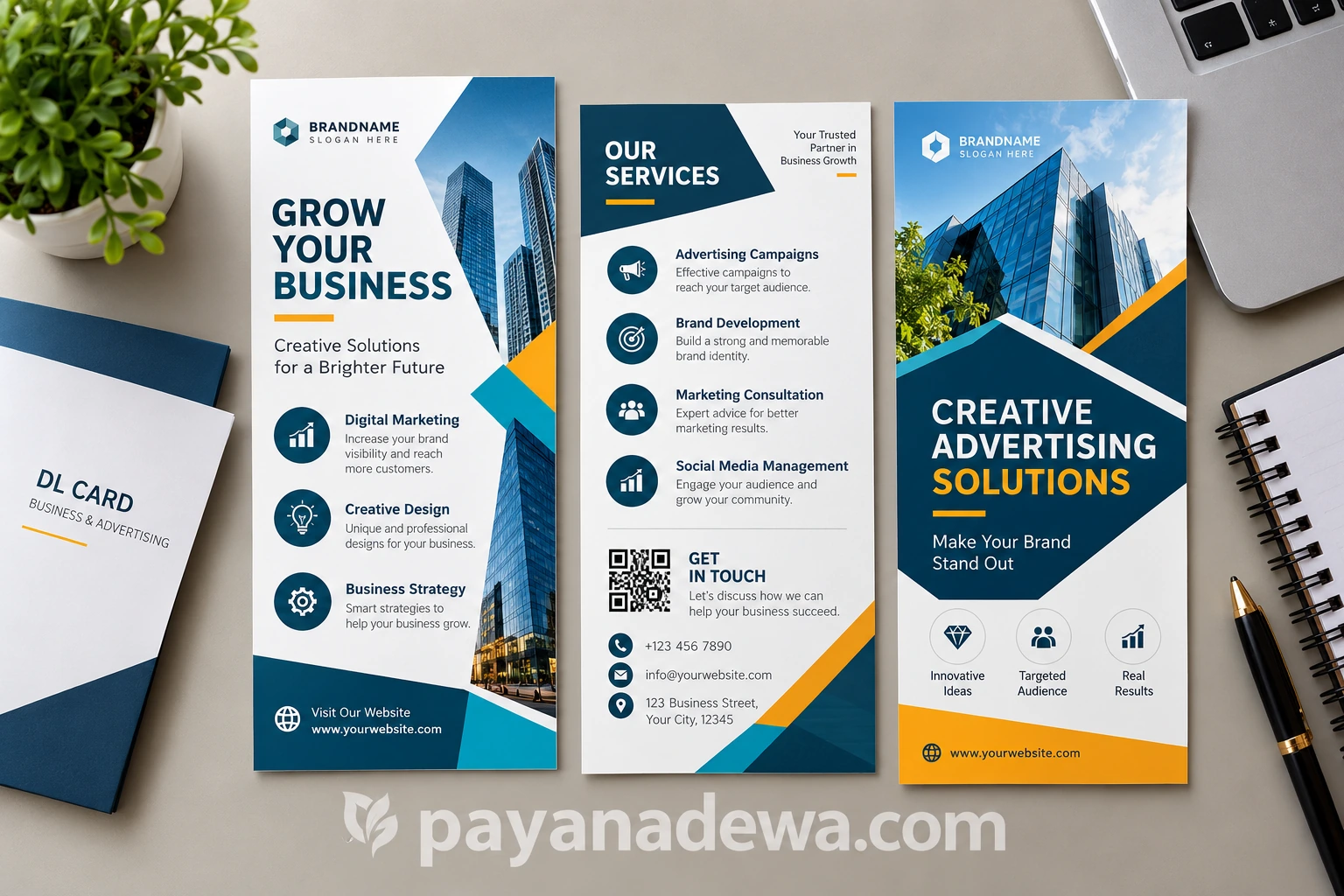
What Is a Business And Advertising DL Card?
A Business And Advertising DL Card is a compact printed marketing piece designed to introduce a business, highlight its services, or promote an offer. It combines elements of a business card and a promotional flyer. As a result, it provides more room for information than a traditional business card while remaining easy to distribute.
The term DL commonly refers to a finished size of approximately 99 × 210 mm. This long, narrow format fits many standard DL envelopes and works well for menus, promotional mailers, service lists, and event announcements. However, dimensions and envelope compatibility can vary by printer and region, so confirm the specifications before ordering.
Businesses can use DL cards for several purposes, including:
- Promoting products, services, and seasonal offers.
- Introducing a company to potential customers.
- Sharing contact information and business locations.
- Advertising events, workshops, and product launches.
- Distributing discount codes and loyalty promotions.
- Supporting direct mail and local marketing campaigns.
Because the format balances size and information, it is suitable for both new businesses and established brands.
Benefits of Using a DL Advertising Card
1. More Space for Marketing Information
A traditional business card usually focuses on a person’s name, position, and contact details. In comparison, a DL advertising card offers more room for headlines, service descriptions, product photographs, and promotional messages.
This additional space helps customers understand what your business offers without requiring them to visit your website immediately. Keep the message focused, however. Too much text can make even a spacious layout difficult to read.
2. Professional Brand Presentation
Consistent visual branding helps customers recognize your business across different marketing channels. By using your company logo, brand colors, typography, and photography, you can create a DL card that feels connected to your website, packaging, and social media profiles.
A professional appearance does not require complicated graphics. Clear typography, balanced spacing, and a strong headline can communicate credibility more effectively than excessive decorative elements.
3. Flexible Distribution Options
DL cards are easy to hand out at trade shows, include in shopping bags, place at reception desks, or distribute through local partnerships. They can also support targeted direct mail campaigns when prepared according to the mailing service’s requirements.
For example, a beauty salon might distribute a card featuring its services and a first-visit offer. Meanwhile, a digital marketing agency could use the same format to introduce its services and invite prospects to book a consultation.
4. Support for Measurable Campaigns
Printed advertising becomes easier to evaluate when you include a specific response mechanism. A QR code, campaign-specific landing page, discount code, or dedicated contact method can help you track customer engagement.
Compare the responses generated by different designs or distribution locations. This information can guide future marketing decisions and help you improve your promotional materials.
Essential Elements of an Effective DL Card Design
A successful Business And Advertising DL Card communicates its main message quickly. Each element should have a clear purpose and support the overall marketing objective.
Choose a Clear Headline
Your headline should explain the main benefit or offer. Instead of using a vague phrase such as “Welcome to Our Business,” consider a more specific message such as “Professional Printing Services for Growing Brands.” A clear headline helps readers understand why the card is relevant to them.
Use Strong Visual Branding
Place your logo where customers can identify it easily. Choose two or three complementary brand colors and maintain consistent typography throughout the design. High-quality images can add visual interest, but they should reinforce the message rather than distract from it.
For a corporate audience, navy, white, and teal can create a clean, contemporary appearance. Retail promotions may benefit from brighter colors and larger product photographs. Choose a palette that matches your brand personality and audience expectations.
Highlight Services and Benefits
List your main services using short descriptions or concise bullet points. Focus on the benefits customers receive instead of simply listing technical features. For instance, a design agency might emphasize consistent branding, faster campaign production, and tailored marketing materials.
Add Complete Contact Information
Make it easy for readers to contact your business. Depending on your goals, include:
- Business name and logo.
- Telephone number or messaging contact.
- Professional email address.
- Website or landing page.
- Business address, when relevant.
- A QR code linking to a useful destination.
Before printing, verify every detail. A beautiful card with an incorrect phone number or broken QR code can undermine the campaign.
Include a Compelling Call to Action
A call to action tells readers what to do next. Examples include “Book a Consultation,” “Scan to Explore Our Services,” and “Claim Your Introductory Offer.” Use one primary action to avoid confusing readers with competing instructions.
How to Create a Business And Advertising DL Card
Step 1: Define Your Marketing Objective
Begin by deciding what the card needs to achieve. You may want to generate enquiries, increase store visits, introduce a new service, or encourage repeat purchases. A defined objective makes it easier to choose the right message and design.
Step 2: Understand Your Target Audience
Consider the needs, preferences, and buying habits of your intended customers. A corporate audience may prefer a restrained layout with detailed service information. A younger consumer audience might respond better to bold imagery, concise copy, and a prominent promotional offer.
Step 3: Organize the Layout
Arrange content in a clear visual hierarchy. Start with your logo or headline, followed by the main benefit, supporting information, and contact details. Use white space to separate sections and guide the reader’s attention.
For a double-sided DL card, use the front to attract attention and communicate the primary offer. Reserve the back for service details, supporting images, testimonials, or contact information. Make sure both sides work together as one cohesive design.
Step 4: Prepare Print-Ready Artwork
Use the dimensions and file requirements supplied by your chosen printer. Many print providers request artwork at 300 dpi, with bleed and safe margins appropriate to the finished size. A common bleed allowance is 3 mm, but you should always confirm the printer’s exact specifications.
Keep important text and logos away from trimming edges. Export the artwork in the requested format, such as print-ready PDF, and embed fonts or convert them to outlines when required. Review the final file before approving production.
Step 5: Proofread and Test Every Element
Check spelling, prices, dates, contact information, and promotional conditions. Test QR codes on multiple devices and confirm that the destination page works on mobile screens. If possible, request a physical proof to review colors, readability, and paper quality before ordering a large quantity.
Choosing the Right Paper and Printing Finish
Paper selection influences how your DL card looks, feels, and performs. The best option depends on your budget, brand identity, distribution method, and expected lifespan.
- Matte finish: Creates a refined appearance and reduces glare, making text comfortable to read.
- Gloss finish: Adds shine and can make colorful photographs appear more vibrant.
- Uncoated paper: Offers a natural texture and may be suitable when writing space is important.
- Thicker cardstock: Provides a more substantial feel for premium promotions and professional introductions.
- Recycled paper: Can support sustainability-focused branding when sourced from a suitable supplier.
Ask your printer about available paper weights, coatings, color profiles, and minimum order quantities. Request samples when possible. Comparing physical options can help you select a finish that matches your design and budget.
Common DL Card Design Mistakes to Avoid
Even an attractive design can become less effective when important information is difficult to understand. Avoid these common problems:
- Too much text: Prioritize the most useful information and remove unnecessary wording.
- Poor contrast: Use readable text and background combinations, especially for small contact details.
- Inconsistent branding: Keep logos, colors, and fonts aligned with your existing identity.
- Low-resolution images: Use suitable high-resolution artwork to prevent blurry printed results.
- Weak calls to action: Give readers a clear next step that matches the campaign objective.
- Incorrect print settings: Confirm dimensions, bleed, safe areas, and export requirements before submitting files.
- Untested QR codes: Check scanning performance and verify that the linked page is accessible.
Reviewing these details before printing can reduce production errors and help your promotional material communicate more effectively.
How to Measure the Performance of Your DL Advertising Card
Printing and distributing promotional cards is only part of the process. Measuring their performance helps you understand whether the campaign is generating meaningful customer engagement.
Start by selecting one or two measurable objectives. For example, a restaurant may track voucher redemptions, while a consultancy may count enquiries received through a dedicated landing page.
Useful performance indicators include:
- Number of enquiries attributed to the campaign.
- QR code scans and landing-page visits.
- Discount code redemptions.
- Appointments or purchases generated.
- Estimated cost per lead or customer.
Use unique tracking links or promotional codes for different distribution locations. After the campaign, compare results with printing and distribution costs. Although a printed card may not generate an immediate response, consistent tracking can reveal which messages and audiences deserve further testing.
Conclusion
A Business And Advertising DL Card offers a practical way to introduce your brand, promote services, and connect with potential customers. Its compact format provides enough room for a strong headline, essential business information, supporting visuals, and a clear call to action.
To create an effective design, define your objective, understand your audience, maintain consistent branding, and prioritize readability. Then, choose suitable paper, prepare print-ready artwork, and verify every detail before production. Finally, measure responses through dedicated links, QR codes, or promotional offers.
With thoughtful planning and a well-organized layout, a DL advertising card can become a useful part of your wider marketing strategy. Start with a clear message, keep the design focused, and make it easy for customers to take the next step.