A Rhode Island Bill Of Sale is an important written record that documents the transfer of ownership of a vehicle or other property from a seller to a buyer. It can help both parties keep a clear record of the transaction, including the sale date, purchase price, identifying information, and signatures.
For vehicle transactions in Rhode Island, the bill of sale is part of the paperwork used during registration and title transactions. The Rhode Island Division of Motor Vehicles provides an official bill of sale form that includes seller and buyer information, vehicle details, sale price, signatures, and an odometer disclosure.
Whether you are buying or selling a used car, motorcycle, recreational vehicle, or another qualifying item, using a properly completed document can make the transaction easier to document. The following guide explains what a Rhode Island Bill Of Sale should contain, how to complete one, and what buyers and sellers should keep after the transaction.
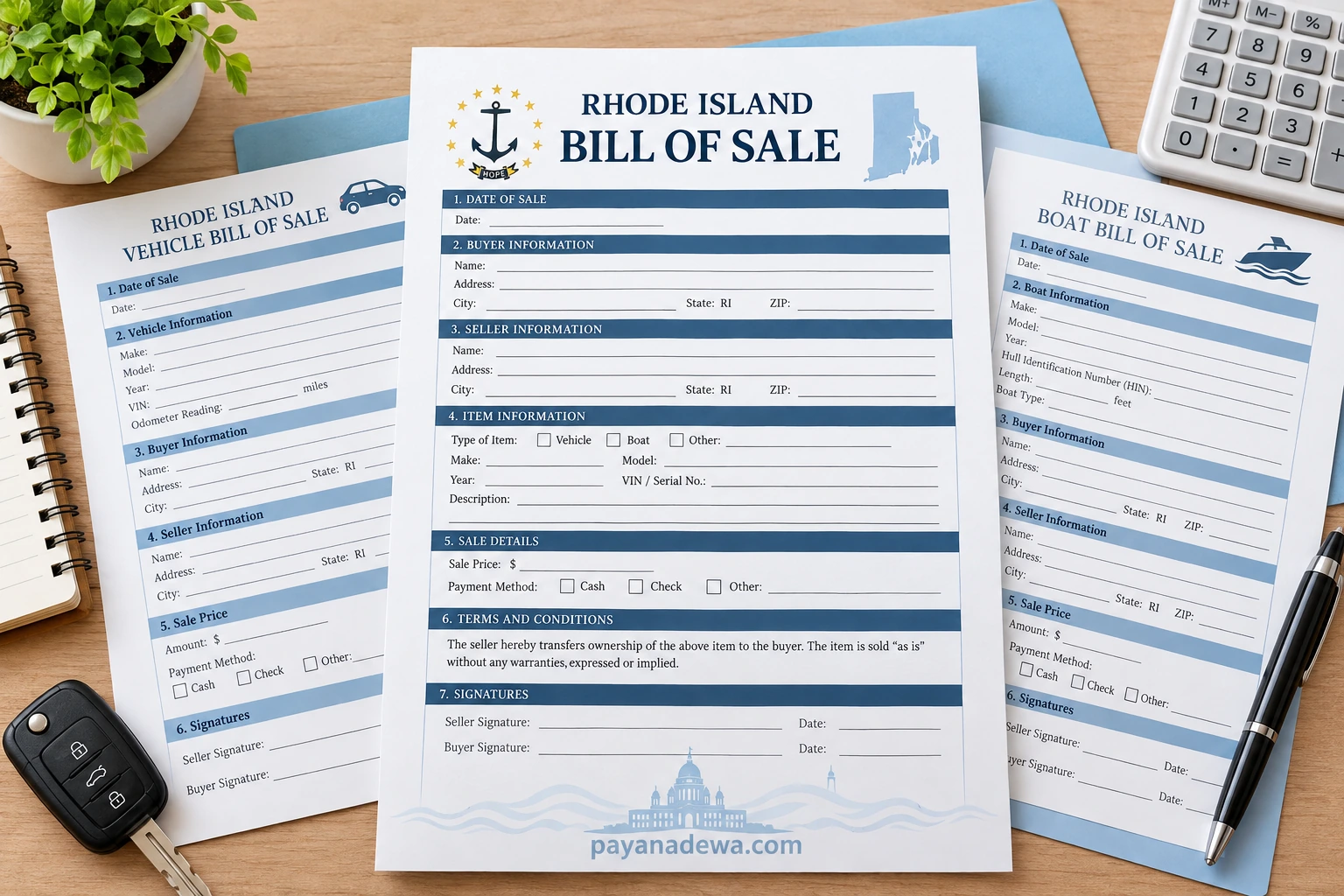
What Is a Rhode Island Bill Of Sale?
A Rhode Island Bill Of Sale is a document that records the basic details of a private sale. It identifies the people involved, describes the item being sold, records the agreed purchase price, and provides a written record of the transaction.
For vehicle sales, the Rhode Island DMV has an official bill of sale form. The form asks for the date of sale, sale price, seller information, vehicle information, buyer information, signatures, and an odometer disclosure. The DMV form also states that all fields must be completed and that alterations or erasures can void the document.
Why Is a Bill of Sale Important?
A written bill of sale gives both parties a transaction record they can keep with their other paperwork. It can also help clarify what was sold, when it was sold, and for how much.
- It documents the date of the transaction.
- It identifies the buyer and seller.
- It records the agreed purchase price.
- It describes the vehicle or other property.
- It provides a record of signatures.
- It can support registration, title, tax, or ownership paperwork when applicable.
What Information Should a Rhode Island Bill Of Sale Include?
A useful Rhode Island Bill Of Sale should be complete, accurate, and easy to read. The exact information required can depend on the type of transaction, so buyers and sellers should also check the current requirements of the appropriate Rhode Island agency.
1. Date of Sale
Start by entering the exact date on which the transaction takes place. Using the correct date helps establish when ownership or possession was transferred according to the terms of the transaction.
2. Seller Information
Enter the seller’s full legal name and address. If there are two owners, the Rhode Island DMV’s vehicle bill of sale form provides space for both owners to print their names and sign.
3. Buyer Information
The buyer’s full name and address should also be recorded. Accurate information is especially important when the document will be used together with registration or title paperwork.
4. Vehicle or Property Information
For a vehicle transaction, include identifying information such as the year, make, model, body type, color, and VIN. The official Rhode Island DMV bill of sale also includes a field for cylinders and an odometer disclosure.
5. Purchase Price
Clearly state the agreed sale price. The purchase price should match the amount agreed upon by the parties and should be consistent with other transaction documents whenever applicable.
6. Signatures
The buyer and seller should sign the document where required. Before signing, review every field carefully to make sure names, addresses, vehicle information, and financial details are correct.
Rhode Island Bill Of Sale for a Used Vehicle
A bill of sale is particularly useful when buying or selling a used vehicle. Rhode Island DMV guidance lists a bill of sale among the documents used for private-party vehicle registration transactions.
Rhode Island’s title rules have also changed. Since January 1, 2024, Rhode Island has expanded vehicle titling so that all vehicles are now eligible for a Rhode Island Certificate of Title. The specific documents required can depend on the vehicle’s model year, previous registration history, and whether the vehicle is coming from another state.
Private-Party Vehicle Sales
When purchasing a vehicle from a private seller, buyers should keep the bill of sale together with the title, registration records, insurance documentation, and other paperwork required for the transaction.
For a Rhode Island vehicle, the DMV states that a private-party registration transaction may require the original title or acceptable proof of previous ownership, a bill of sale, proof of insurance, identification, and other applicable documents.
Out-of-State Vehicles
If the vehicle is coming into Rhode Island from another state, additional requirements may apply. Rhode Island DMV states that out-of-state vehicles require a VIN inspection, regardless of model year, and title or other proof-of-ownership requirements depend partly on whether the originating state requires titles.
Because these requirements can change, buyers should verify the current checklist with the Rhode Island DMV before completing an out-of-state purchase.
Odometer Disclosure on a Rhode Island Bill Of Sale
Odometer information is an important part of a vehicle transaction. The Rhode Island DMV bill of sale includes an odometer disclosure where the seller states the mileage shown on the vehicle’s odometer.
The official form provides options for situations where the mileage exceeds the mechanical limits or where the displayed mileage is not the actual mileage. Buyers and sellers should complete this section carefully rather than guessing or leaving required information blank.
Rhode Island Bill Of Sale for a Boat
Boat transactions have different documentation requirements from ordinary vehicle sales. The Rhode Island Department of Environmental Management states that a used boat registration may require a notarized bill of sale or gift statement from the seller.
Additional paperwork can include a properly signed and notarized title when applicable, registration documentation, vessel title applications, and information identifying the boat such as the Hull Identification Number.
Used Boat Transactions
If you are buying a used boat, do not assume that a standard vehicle bill of sale will satisfy every marine registration requirement. Check the current Rhode Island DEM requirements for the vessel and make sure the bill of sale contains the information needed for the registration process.
Boat and Outboard Motor Documentation
Rhode Island DEM also provides separate requirements for outboard motors. A seller’s signature on the bill of sale or gift statement may need to be notarized, and additional tax or registration documentation may apply depending on how the motor was acquired.
How to Complete a Rhode Island Bill Of Sale
Completing the document carefully can prevent avoidable problems later. Use the following process as a practical checklist.
- Step 1: Enter the complete date of sale.
- Step 2: Record the seller’s legal name and address.
- Step 3: Record the buyer’s legal name and address.
- Step 4: Enter accurate vehicle or property identification details.
- Step 5: Record the exact agreed purchase price.
- Step 6: Complete the odometer disclosure when required for a vehicle.
- Step 7: Review every field for accuracy.
- Step 8: Have the required parties sign the document.
- Step 9: Make copies or retain digital records for both parties.
- Step 10: Submit the bill of sale with other required documents when completing registration or title procedures.
Tips for Buyers and Sellers
Tips for Buyers
- Compare the VIN on the bill of sale with the VIN on the vehicle and title.
- Make sure the purchase price is written clearly.
- Review the seller’s information before signing.
- Keep the original or a secure copy of the completed document.
- Ask the seller for all applicable ownership and registration documents.
- Check current Rhode Island DMV requirements before visiting the DMV.
Tips for Sellers
- Use the buyer’s complete legal name and address.
- Describe the vehicle accurately.
- Record the correct sale price.
- Enter the actual odometer reading when required.
- Review the document before signing.
- Keep a copy of the completed bill of sale for your records.
Common Mistakes to Avoid
A bill of sale is only useful when its information is accurate. Simple mistakes can create confusion when the buyer later handles registration, title, tax, or ownership paperwork.
- Leaving required fields blank.
- Writing an incorrect VIN.
- Using an incorrect sale date.
- Recording an inaccurate purchase price.
- Failing to complete the odometer disclosure when applicable.
- Using a vehicle form for a transaction that requires specialized boat documentation.
- Failing to obtain required notarization for a boat transaction.
- Failing to keep a copy of the completed document.
Is a Rhode Island Bill Of Sale the Same as a Title?
No. A bill of sale and a certificate of title serve different purposes. A bill of sale documents the transaction, while a title is an ownership document used in the applicable title process.
For vehicle purchases, buyers should not assume that a bill of sale alone replaces a required title. Rhode Island DMV requirements may call for both documents, depending on the vehicle and transaction.
Printable Rhode Island Bill Of Sale Template
A printable Rhode Island Bill Of Sale Template can make it easier to organize the information needed for a transaction. A useful template should provide dedicated areas for the date, buyer, seller, item or vehicle details, purchase price, terms, signatures, and any transaction-specific disclosures.
However, a generic template should not automatically be treated as an official government form. When an agency provides a specific form or checklist, compare your document with the current official requirements before submitting it.
What to Do After Signing the Bill of Sale
After the transaction is complete, both parties should store their copies securely. The buyer should organize the bill of sale with the title, registration documents, insurance records, receipts, and other paperwork associated with the purchase.
If the purchase involves a vehicle that must be titled or registered in Rhode Island, review the current DMV instructions before completing the transaction. If it involves a boat, review the Rhode Island DEM boating registration requirements because notarization and additional documents may apply.
Frequently Asked Questions
Do I need a bill of sale when buying a vehicle in Rhode Island?
Rhode Island DMV lists a bill of sale among the documents used for private-party vehicle registration transactions. Other documents, including a title or proof of previous ownership, may also be required depending on the transaction.
Does a Rhode Island Bill Of Sale need to be notarized?
Not every vehicle bill of sale requires notarization. However, Rhode Island DEM specifically states that a seller’s bill of sale for a used boat must be notarized. Always check the requirements for the specific type of transaction.
What should I put on a Rhode Island Bill Of Sale?
For a vehicle transaction, include the sale date, seller information, buyer information, vehicle identification details, purchase price, signatures, and applicable odometer disclosure information.
Can I create my own bill of sale?
You can use a well-organized template to record a private transaction, but a custom document should not replace a required official government form. Check the current requirements of the Rhode Island DMV or another applicable state agency before submitting paperwork.
Conclusion
A properly completed Rhode Island Bill Of Sale creates a clear written record of a sale and can help buyers and sellers organize important transaction information. For vehicles, the document should accurately identify the parties, vehicle, purchase price, signatures, and applicable odometer information.
The most important step is to match the bill of sale with the current requirements for the transaction. Vehicle purchases may involve title, registration, insurance, tax, and VIN inspection requirements, while boat transactions can involve notarization and additional marine documentation. By checking the latest Rhode Island requirements and keeping complete copies of the paperwork, buyers and sellers can maintain a clearer record of the transaction.
Note: This article is for general informational purposes and is not legal advice. Government requirements can change, so verify current requirements with the appropriate Rhode Island agency before completing an important transaction.