An Alaska Bill of Sale is a useful written record for documenting the transfer of personal property from a seller to a buyer. Whether you are selling a vehicle, boat, ATV, snowmobile, trailer, or another valuable item, a properly completed bill of sale can help both parties keep clear evidence of the transaction.
A bill of sale typically records important details such as the names of the buyer and seller, the date of the transaction, a description of the property, the purchase price, payment method, and signatures. Although the exact requirements can vary depending on the type of property being transferred, keeping a detailed record can make the transaction easier to document and reference later.
This guide explains what to include in an Alaska Bill of Sale, when you may need one, how to complete a printable form, and practical steps that can help buyers and sellers maintain accurate transaction records.
What Is an Alaska Bill of Sale?
An Alaska Bill of Sale is a document used to record the sale or transfer of personal property between two parties. The seller provides information about the item being sold, while the buyer records the purchase information and acknowledges the transaction.
A bill of sale can be particularly useful when the property has significant value or when both parties want a written record of the agreement. It may also provide supporting documentation when other ownership or registration paperwork is being completed.
The document should accurately describe the transaction rather than relying on vague descriptions. For example, instead of writing only “vehicle,” the parties can include the make, model, year, vehicle identification number, color, and other identifying information when applicable.
When Should You Use an Alaska Bill of Sale?
A bill of sale can be useful for many private-party transactions. The appropriate documentation can depend on the property involved and applicable Alaska requirements, so buyers and sellers should verify any specific requirements with the relevant Alaska government agency.
Common Transactions
- Private vehicle sales
- Boat and watercraft transactions
- ATV and off-road vehicle sales
- Snowmobile transactions
- Trailer sales
- Equipment and machinery transfers
- Other valuable personal property transactions
For property that requires registration or a title, a bill of sale should not automatically be treated as a replacement for the official ownership or registration documents. The buyer and seller should complete all additional paperwork required for the particular transaction.
What Information Should an Alaska Bill of Sale Include?
A well-prepared bill of sale should contain enough information to identify the parties, property, and terms of the transaction. Providing complete information can reduce confusion and make the document more useful as a transaction record.
Buyer and Seller Information
Include the full legal names and contact information of both parties. Depending on the form and transaction, this can include mailing addresses, telephone numbers, and email addresses.
Property Description
Describe the item as precisely as possible. For a vehicle, relevant information may include the make, model, year, VIN, color, and odometer information when applicable. For other property, include model numbers, serial numbers, identifying marks, or other details that distinguish the item.
Sale Price and Payment Method
Clearly state the agreed purchase price. If relevant, identify the payment method, such as cash, check, bank transfer, or another arrangement. If the parties have agreed to additional payment terms, those terms should be documented separately or included clearly in the agreement.
Date and Signatures
Record the date of the sale and provide signature lines for the buyer and seller. Each party should review the completed information before signing and should retain a copy of the signed document.
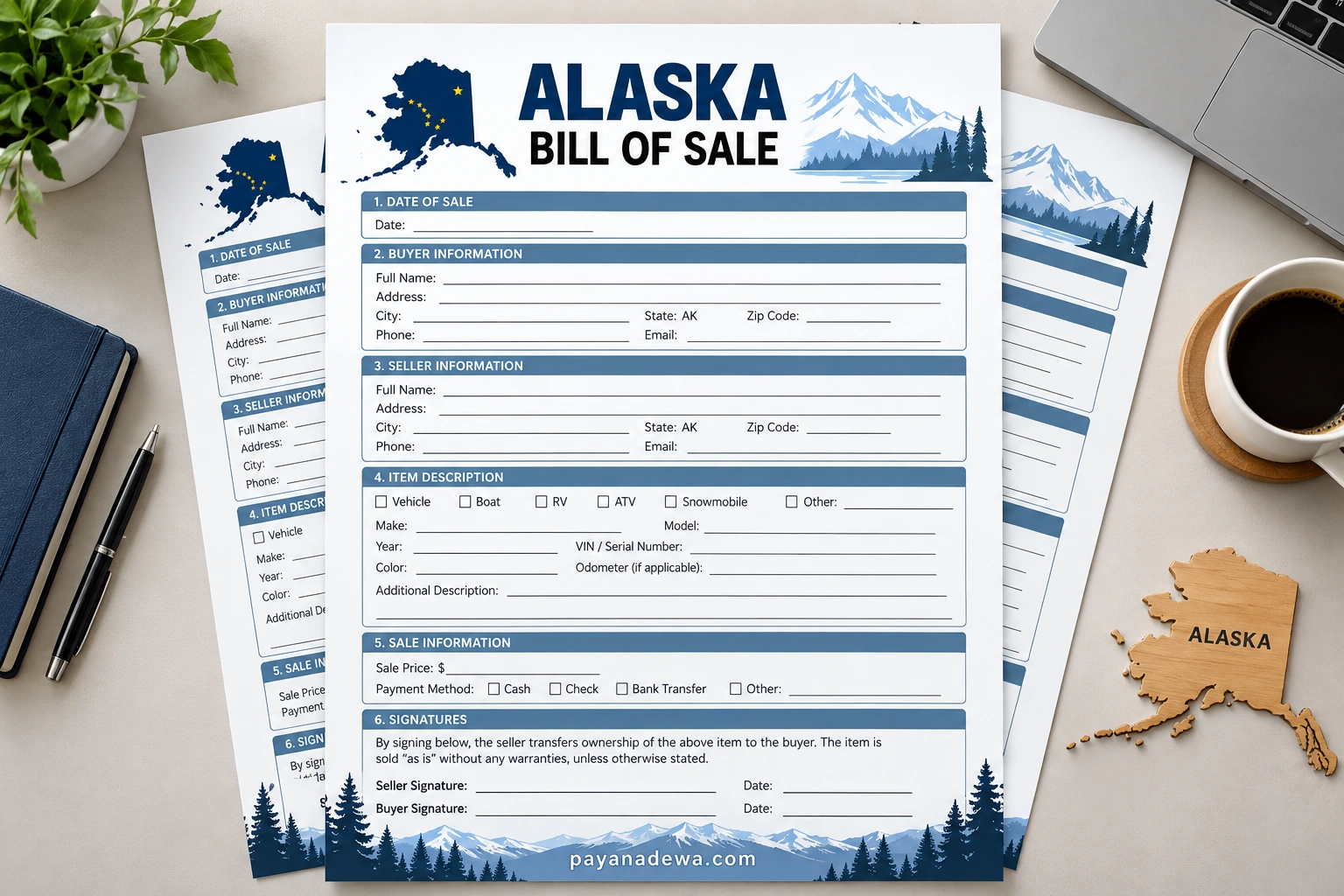
How to Fill Out an Alaska Bill of Sale
Completing a bill of sale is generally straightforward when you have the necessary transaction information available. Take your time and check every identifying number before signing.
Step 1: Enter the Sale Date
Begin by recording the date on which the transaction takes place. Use a consistent date format and make sure both parties agree that the date accurately reflects the transaction.
Step 2: Identify the Buyer and Seller
Enter the complete names and available contact information for both parties. Avoid nicknames or incomplete names when the document is intended to serve as an official transaction record.
Step 3: Describe the Property
Provide detailed identifying information about the item. For a motor vehicle, carefully compare the VIN with the vehicle and existing ownership documents. For equipment or other property, check serial numbers and model information.
Step 4: Record the Purchase Price
Enter the agreed sale price and identify the payment method when appropriate. If the property was exchanged for another item or the transaction involves additional terms, describe those terms clearly.
Step 5: Review and Sign
Both parties should review the document before signing. Correct errors before the final signatures are added. Each party should receive a copy of the completed bill of sale for their records.
Alaska Bill of Sale for Vehicles
Vehicle transactions often require more documentation than an ordinary personal property sale. A bill of sale can help document the purchase agreement, but buyers should confirm the current Alaska requirements for title, registration, taxes, and other applicable paperwork.
When documenting a vehicle transaction, make sure the identifying information is consistent across the bill of sale and other vehicle documents. Pay particular attention to the VIN, vehicle description, seller information, buyer information, and sale date.
For current requirements, buyers and sellers should consult the appropriate Alaska Division of Motor Vehicles resources rather than relying solely on a generic bill of sale template.
Tips for Using a Printable Alaska Bill of Sale
A printable template can save time, but the quality of the completed document depends on the accuracy of the information entered. Consider these practical tips before finalizing the transaction.
- Use complete names: Write the buyer’s and seller’s names clearly and consistently.
- Check identification numbers: Compare VINs and serial numbers directly with the property.
- Write the purchase price clearly: Avoid ambiguous amounts or handwritten corrections.
- Document special conditions: Include relevant terms that both parties have agreed upon.
- Keep copies: Both parties should retain a copy of the signed document.
- Complete additional paperwork: A bill of sale may not replace title, registration, or other required documents.
- Verify current requirements: Government rules and procedures can change, so check official Alaska sources when necessary.
Bill of Sale vs. Title and Registration
A common mistake is assuming that a bill of sale automatically proves legal ownership for every type of property. These documents can serve different purposes.
A bill of sale records the terms of a transaction between a buyer and seller. A title, where applicable, is an ownership document issued or recognized by the relevant authority. Registration generally concerns the official registration of property for use under applicable rules.
For vehicles and other regulated property, the buyer should determine which documents are required in addition to the bill of sale. Completing only a bill of sale may leave important registration or ownership steps unfinished.
Common Mistakes to Avoid
Small errors can create unnecessary problems after a transaction. Before signing an Alaska Bill of Sale, review the document carefully.
- Leaving the buyer or seller information incomplete
- Writing an incorrect VIN or serial number
- Failing to include the agreed sale price
- Using an incorrect transaction date
- Failing to obtain signatures from the appropriate parties
- Giving the buyer and seller different versions of the document
- Assuming the bill of sale replaces other required government paperwork
How to Keep Your Bill of Sale Records
After the transaction is complete, keep the signed document in a secure location. A paper copy can be stored with other ownership documents, while a digital copy can provide a convenient backup.
It is also helpful to keep related documentation together. Depending on the transaction, this may include receipts, title documents, registration records, maintenance records, photographs, payment confirmations, or correspondence concerning the sale.
Good recordkeeping makes it easier to establish what was sold, when the transaction occurred, who participated in it, and what price was agreed upon.
Frequently Asked Questions About Alaska Bill of Sale Forms
Is an Alaska Bill of Sale required for every private sale?
Not necessarily. Requirements can depend on the type of property and the transaction. For vehicles and other regulated property, additional documentation may be required. Always verify the current requirements that apply to your specific transaction.
Can I use a printable Alaska Bill of Sale template?
A printable template can be used as a convenient way to organize transaction information, provided that it contains the information needed for the particular transaction. For regulated property, confirm that the template is consistent with current official requirements.
Should the buyer and seller keep copies?
Yes. Both parties should retain a copy of the completed and signed document. Keeping matching copies can provide a useful record of the transaction.
Does a bill of sale transfer ownership by itself?
The effect of a bill of sale depends on the property and applicable law. For titled or registered property, additional ownership-transfer procedures may apply. A bill of sale should therefore be considered part of the transaction documentation rather than automatically assuming it replaces every other document.
Final Thoughts on the Alaska Bill of Sale
An Alaska Bill of Sale provides a practical way to document an agreement between a buyer and seller. A complete form should identify the parties, accurately describe the property, record the purchase price and transaction date, and include appropriate signatures.
Using a printable template can make the process more organized, especially for private-party sales involving vehicles, boats, ATVs, snowmobiles, trailers, or other valuable property. However, always check the current Alaska requirements for the specific type of transaction, particularly when title or registration is involved.
By entering accurate information, reviewing the document carefully, keeping copies, and completing any additional required paperwork, buyers and sellers can maintain a clear and useful record of their transaction.