Advisory agreement templates give businesses, organizations, schools, healthcare groups, and nonprofits a structured starting point for documenting an advisor relationship. A well-prepared agreement can clarify responsibilities, compensation, confidentiality, term limits, ownership issues, communication expectations, and termination procedures before the advisory relationship begins.
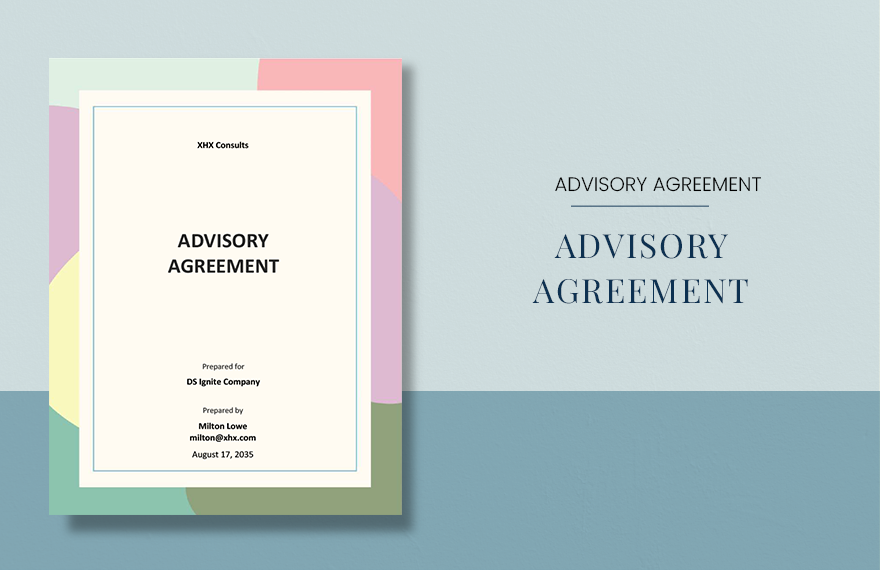
The best document is not necessarily the longest one. It is the one that accurately describes what the advisor will do, what the client or organization expects, how the relationship will operate, and what happens when circumstances change. This guide explains how to evaluate advisory agreement templates, what clauses deserve attention, and how to adapt a template to a specific professional situation.
What is an advisory agreement?
What is an advisory agreement? It is a written arrangement between an advisor and a person, company, institution, or organization that defines the terms of an advisory relationship. Depending on the situation, the advisor may provide strategic guidance, financial planning, industry expertise, academic support, clinical consultation, governance advice, or specialized professional knowledge.
Unlike an employment agreement, an advisory agreement generally focuses on guidance rather than day-to-day operational employment duties. The advisor may attend meetings, review plans, make recommendations, provide introductions, evaluate opportunities, or contribute specialist knowledge. The agreement should distinguish advice from authority so both parties understand who makes final decisions.
A carefully drafted agreement also creates a common reference point. If expectations change, the parties can review the written terms rather than relying entirely on informal conversations. That can be particularly useful when the advisor receives a retainer, consulting fee, equity interest, reimbursement, or another form of compensation.
Why use advisory agreement templates?
A structured template can reduce the chance that important contractual topics are overlooked. Starting with a logical framework allows the parties to spend more time discussing the substance of the relationship instead of deciding how a document should be organized.
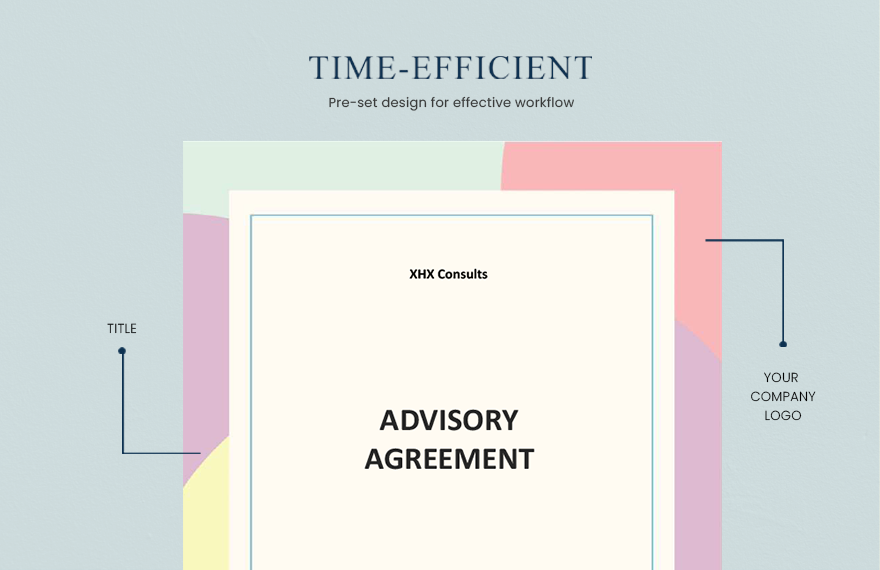
For advisory agreement templates for business, the document may address strategic planning, market expansion, technology decisions, leadership guidance, product development, or corporate governance. The agreement can be relatively concise when the advisory role is narrow, while a more complex engagement may require schedules or attachments describing specific services.
- Define the advisor’s role and professional scope.
- Establish the relationship’s start date and duration.
- Explain compensation, reimbursements, and payment timing.
- Set confidentiality and information-handling expectations.
- Clarify ownership of work products and intellectual property.
- Describe conflicts of interest and competing engagements.
- Specify termination procedures and required notice.
- Identify the governing law and dispute-resolution process.
Core sections to include in an advisor agreement template
1. Parties and effective date
Begin by identifying every party accurately. Include the legal name of the company or organization, the advisor’s legal name or business entity, relevant addresses, and the effective date. If the advisor works through a consulting company, clarify whether the company or the individual is the contracting party.
2. Purpose and scope of services
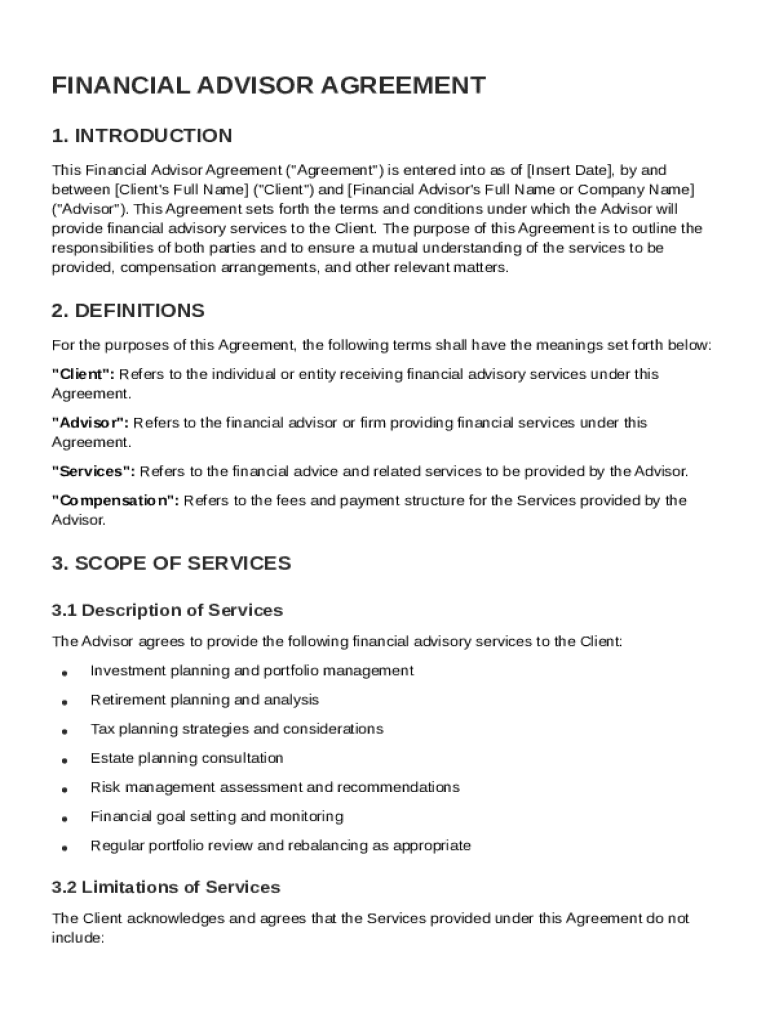
The scope is one of the most important sections because it establishes what the advisor is actually being engaged to do. Avoid vague wording such as “provide general advice” when the parties can be more specific. Instead, identify expected activities such as monthly strategy meetings, document reviews, industry introductions, financial planning discussions, technical evaluations, or board consultations.
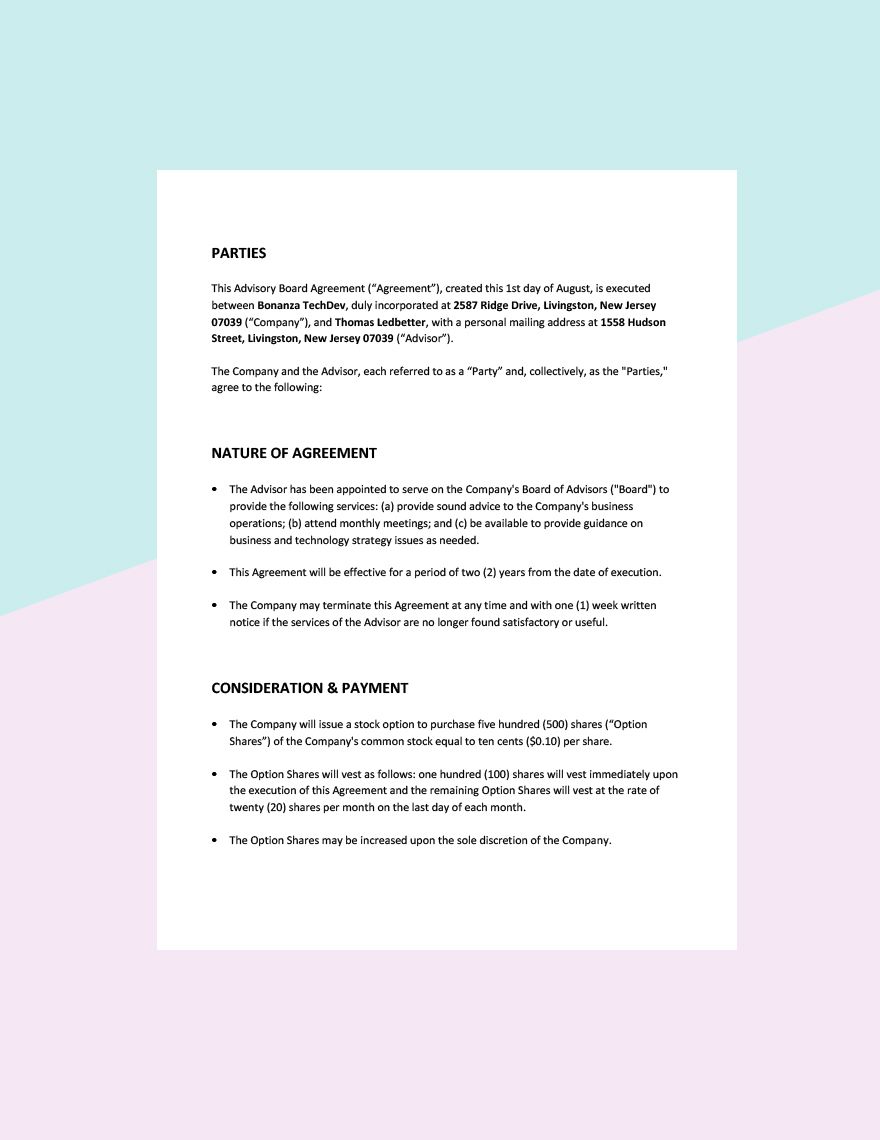
A useful advisory agreement template should also state what the advisor is not responsible for. For example, an advisor may provide recommendations but have no authority to approve purchases, sign contracts, manage funds, hire employees, or make final organizational decisions.
3. Compensation and expenses
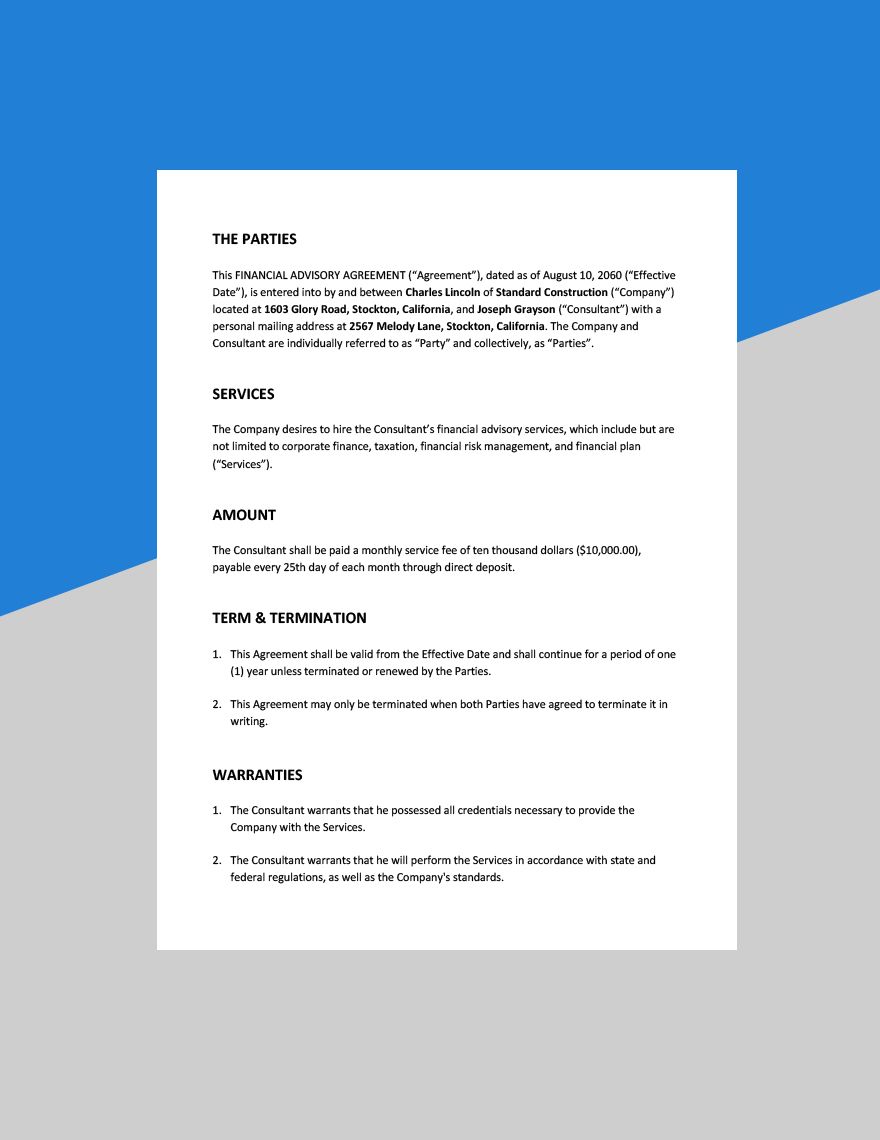
Compensation can be structured in several ways. Common arrangements include an hourly rate, fixed monthly retainer, project-based fee, meeting fee, performance-based compensation, equity, or a combination of these methods. The document should state exactly when payment becomes due and how approved expenses will be handled.

For a financial advisor agreement template, compensation language deserves particular care. The agreement should distinguish advisory fees from commissions, account-related charges, reimbursable expenses, and other compensation. Regulatory requirements can vary by jurisdiction and service type, so specialized financial arrangements should receive appropriate professional review.
4. Term and termination
State whether the relationship lasts for a fixed period or continues until one party terminates it. Include the required notice period and explain whether immediate termination is possible for serious breaches, confidentiality violations, misconduct, or other defined circumstances.
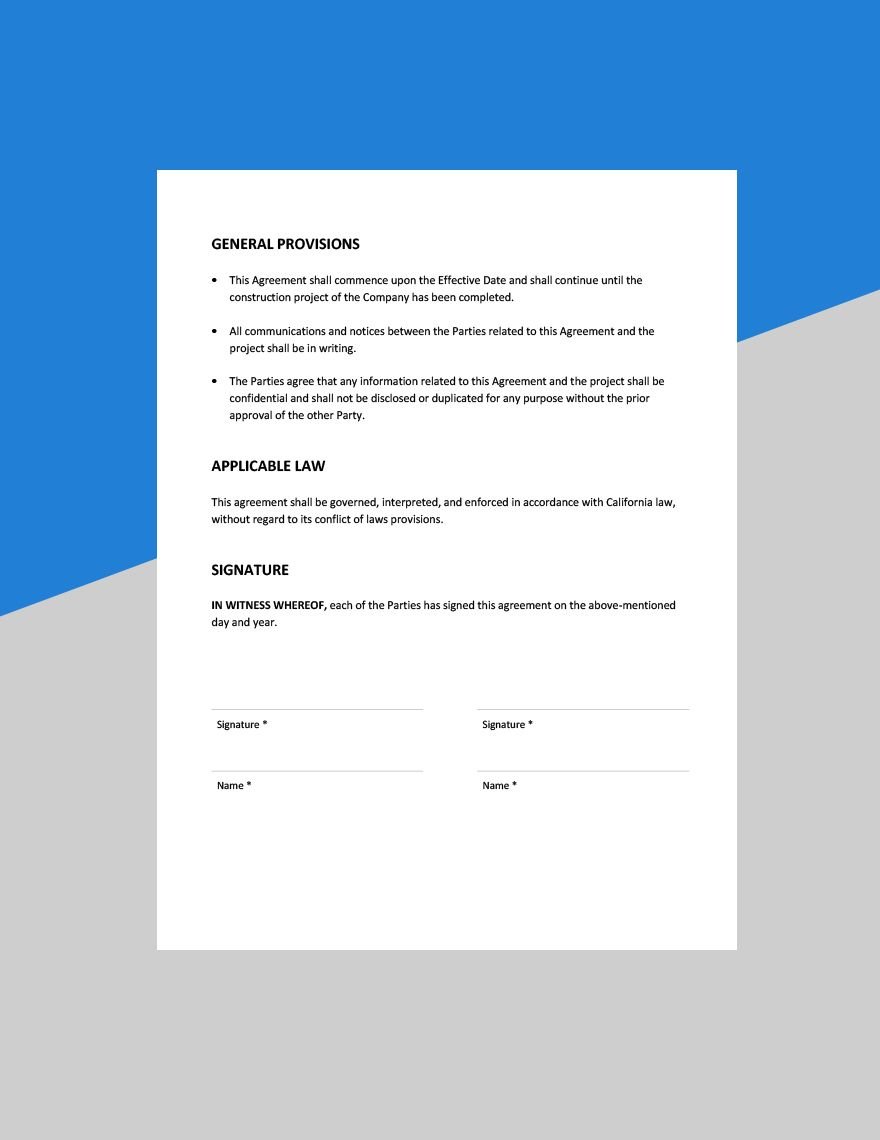
Termination language should also explain what happens afterward. Consider outstanding invoices, reimbursement claims, return of confidential information, continuing confidentiality obligations, intellectual property, and any provisions intended to survive termination.
How do I create an advisor agreement?
How do I create an advisor agreement? Start by defining the relationship before choosing the wording. Identify why the advisor is being engaged, what expertise is expected, how often the parties will communicate, and what measurable responsibilities belong to each side.
- Step 1: Identify the parties and the purpose of the engagement.
- Step 2: Write a detailed but practical description of advisory services.
- Step 3: Agree on compensation, expenses, payment dates, and any equity terms.
- Step 4: Establish confidentiality, data protection, and intellectual property provisions.
- Step 5: Address conflicts of interest and competing engagements.
- Step 6: Set the term, renewal process, termination rights, and post-termination duties.
- Step 7: Select governing law and an appropriate dispute-resolution mechanism.
- Step 8: Review the completed document with the appropriate legal or professional advisor before signing.
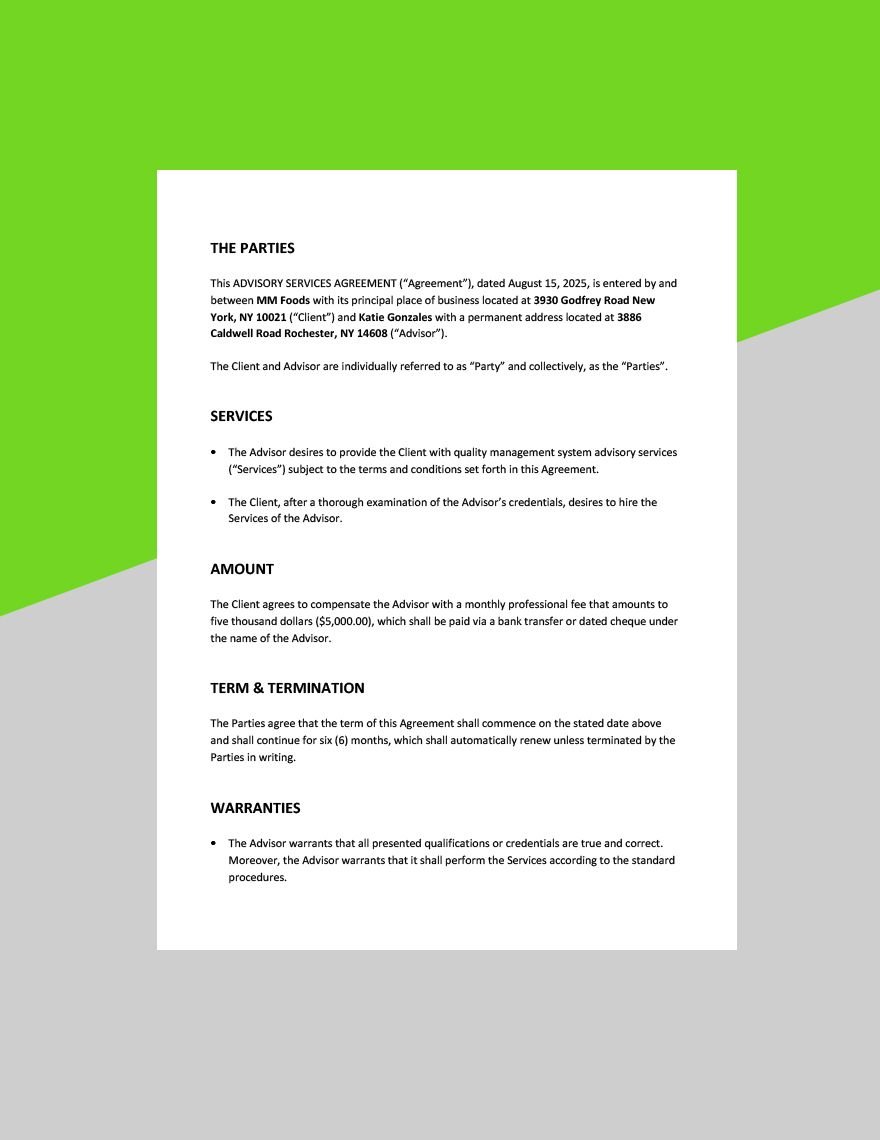
The objective is clarity rather than unnecessary complexity. A short advisory relationship may require only a few pages, while an arrangement involving sensitive information, equity, regulated services, or multiple advisors may require more detailed provisions and attachments.
Choosing advisory agreement templates for different situations
Advisory agreement templates for schools
Advisory agreement templates for schools may be used for curriculum advisors, education consultants, program specialists, academic advisory groups, or external subject-matter experts. These documents should clearly distinguish advisory responsibilities from administrative authority.
Schools should pay special attention to student information, safeguarding obligations, access to institutional systems, intellectual property, meeting schedules, and communication protocols. When an advisor has access to confidential student or staff information, applicable privacy requirements should be considered before the agreement is finalized.
Advisory agreement templates for healthcare
Advisory agreement templates for healthcare require additional attention to confidentiality, professional qualifications, patient information, regulatory obligations, and the precise boundaries of the advisor’s role. An advisor who offers strategic guidance is not necessarily acting as a treating clinician, so the document should make that distinction clear.
Healthcare organizations should also consider data access, security procedures, conflicts of interest, professional licensing, insurance requirements, and reporting responsibilities. Legal and regulatory review is especially important when the arrangement involves protected health information or regulated clinical activities.
Advisory agreement templates for nonprofits
Advisory agreement templates for nonprofits can support strategic advisors, fundraising specialists, community experts, program advisors, and advisory board members. The document should clarify whether the person is an advisor, director, officer, employee, volunteer, or independent contractor because those roles can carry different responsibilities.
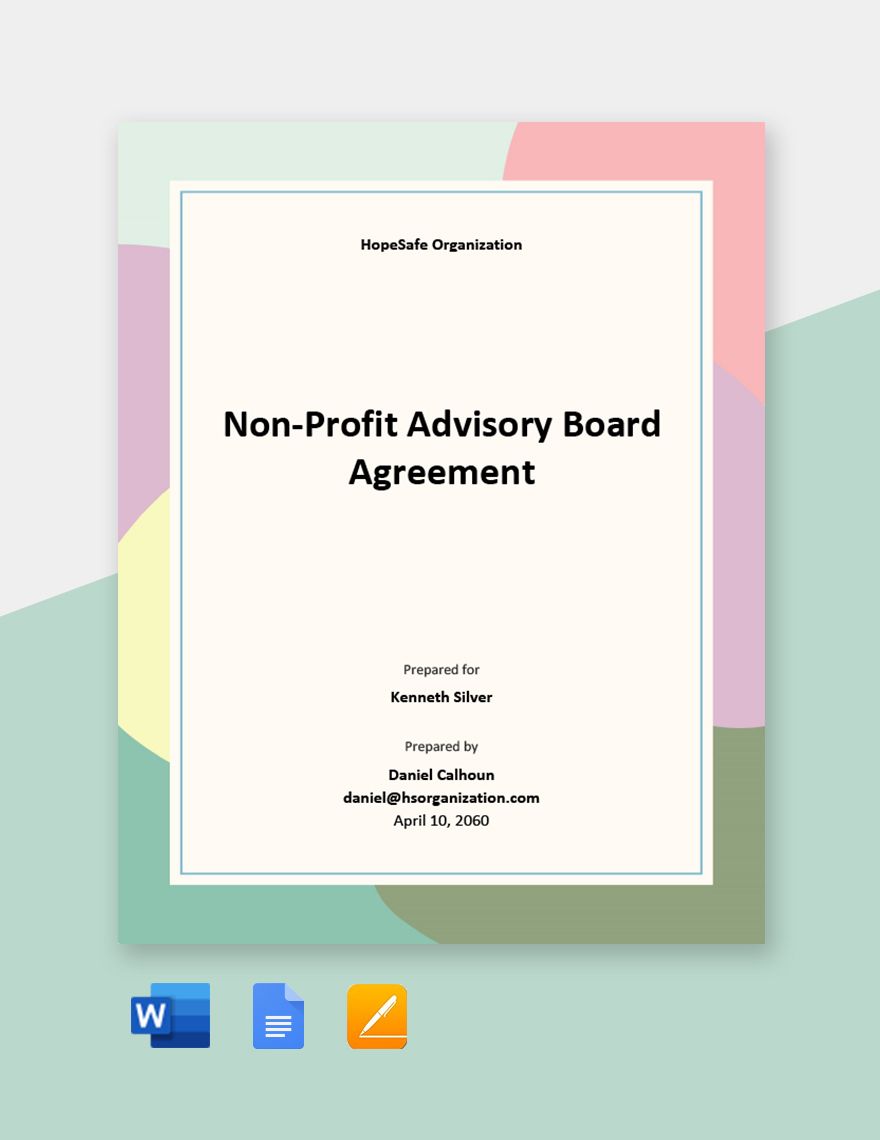
For nonprofit organizations, useful provisions may cover mission alignment, confidentiality, public representation, conflicts of interest, fundraising activities, donor information, expenses, and expectations for meetings. A separate board policy may also be appropriate when several advisors participate collectively.
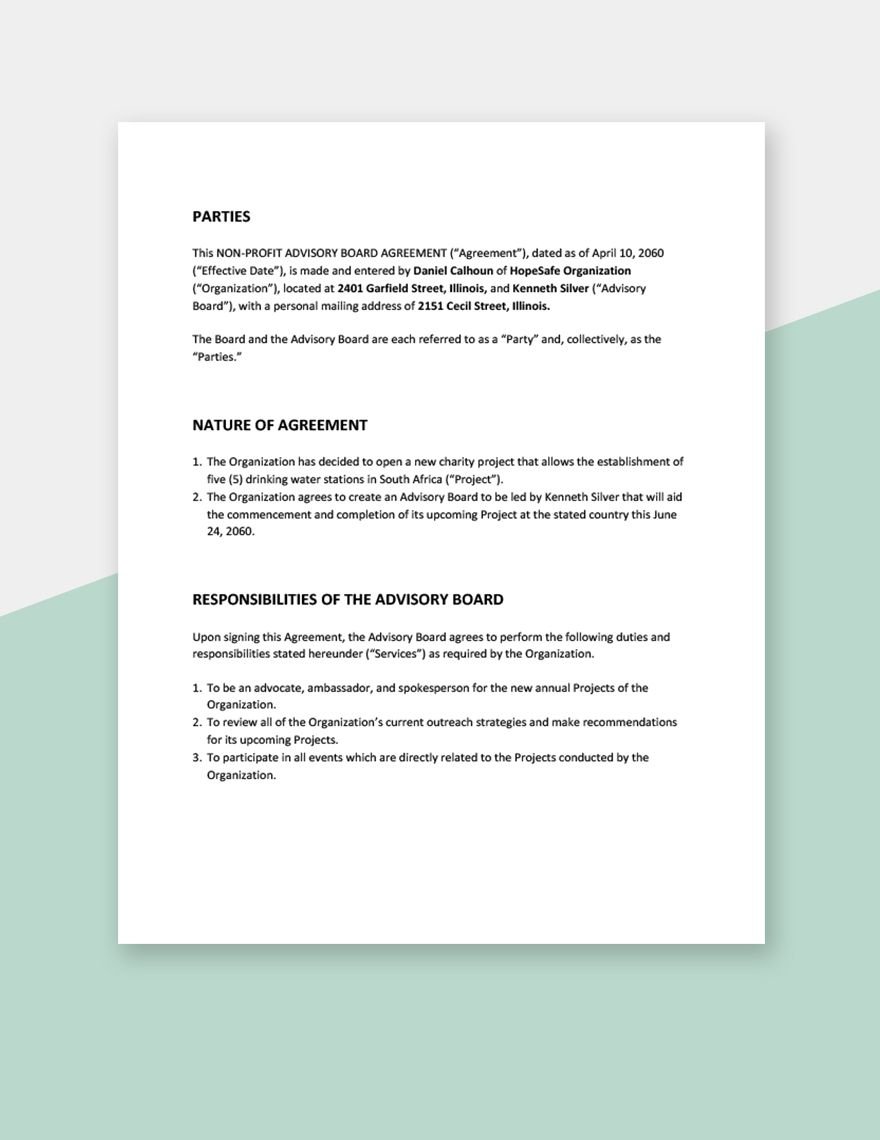
Advisory board agreements versus individual advisor agreements
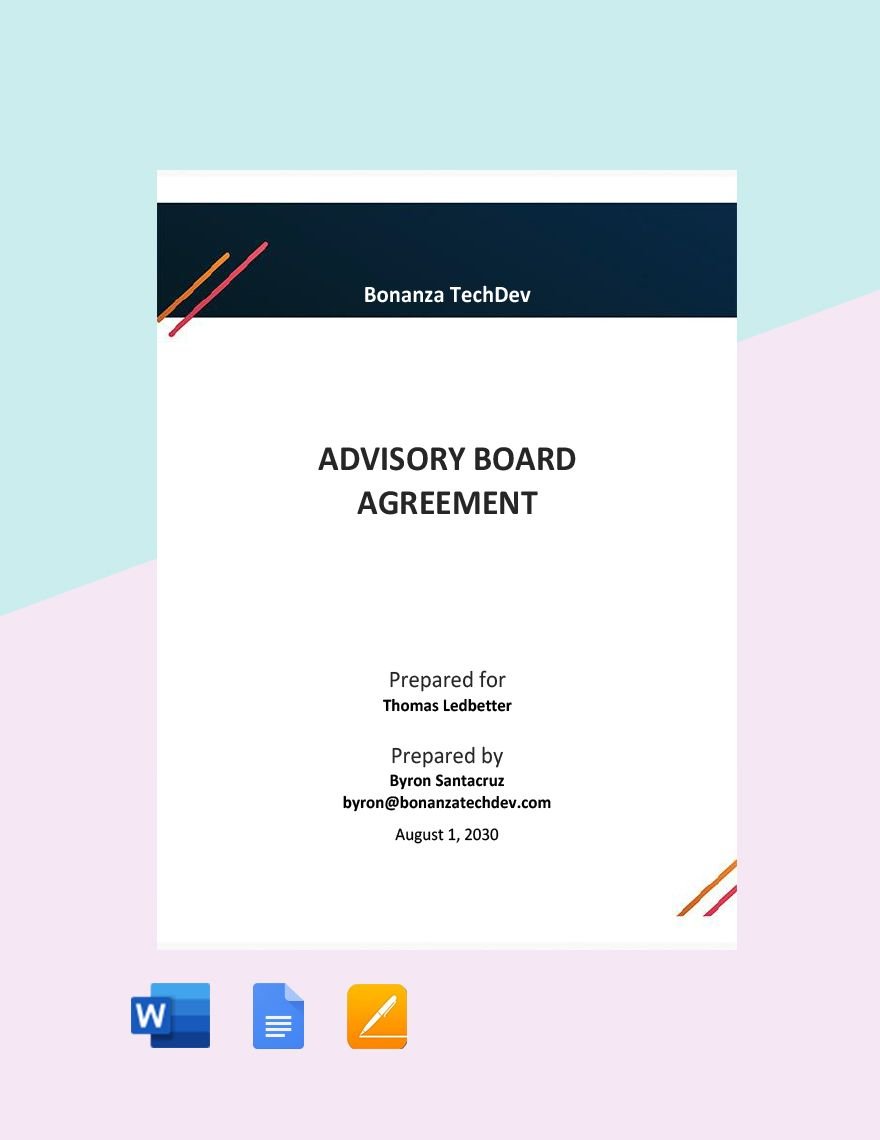
An individual advisor agreement establishes a relationship with one person. An advisory board agreement, by contrast, usually addresses a group that provides collective guidance. The latter should describe meeting procedures, appointment terms, voting or recommendation practices, confidentiality, conflicts, compensation, and the limits of board authority.
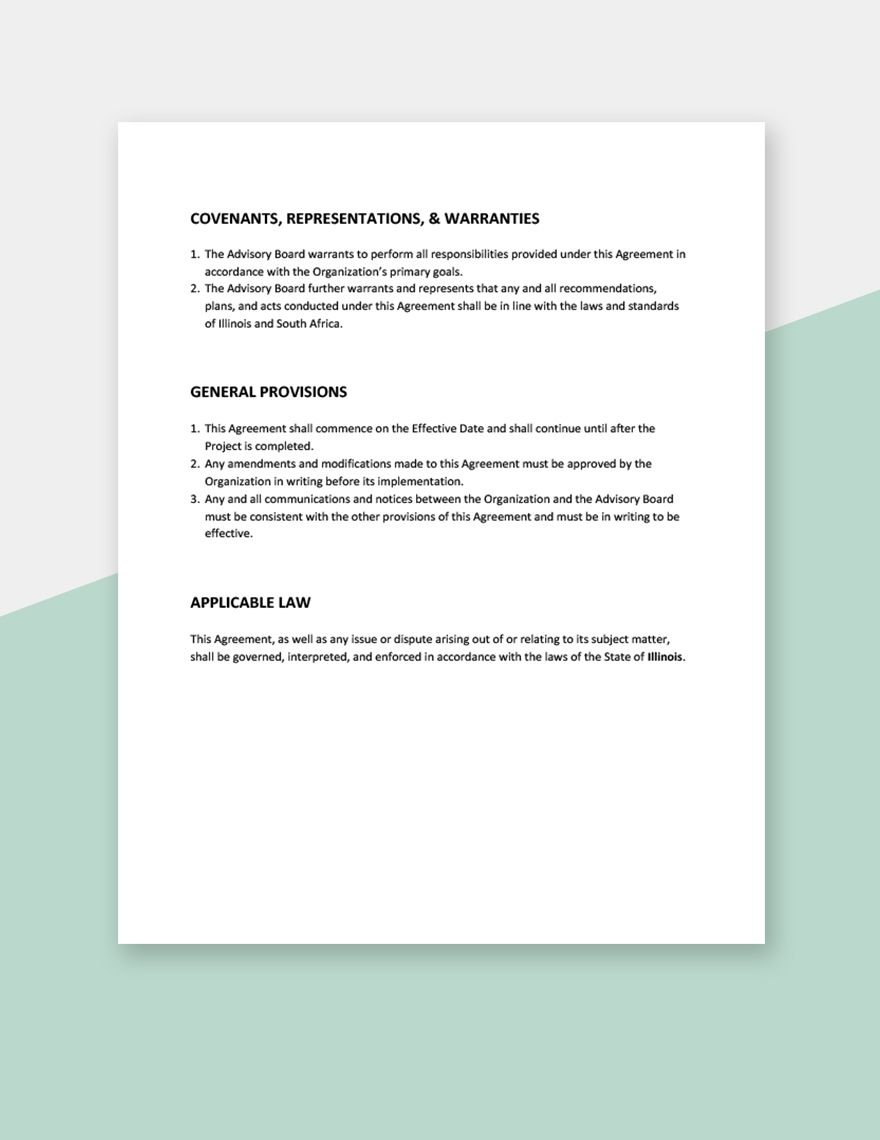
An advisory board agreement template word can be particularly useful when an organization wants a document that can be customized for different board members. However, the organization should ensure that each person’s actual role and compensation are accurately reflected rather than relying on identical wording for everyone.
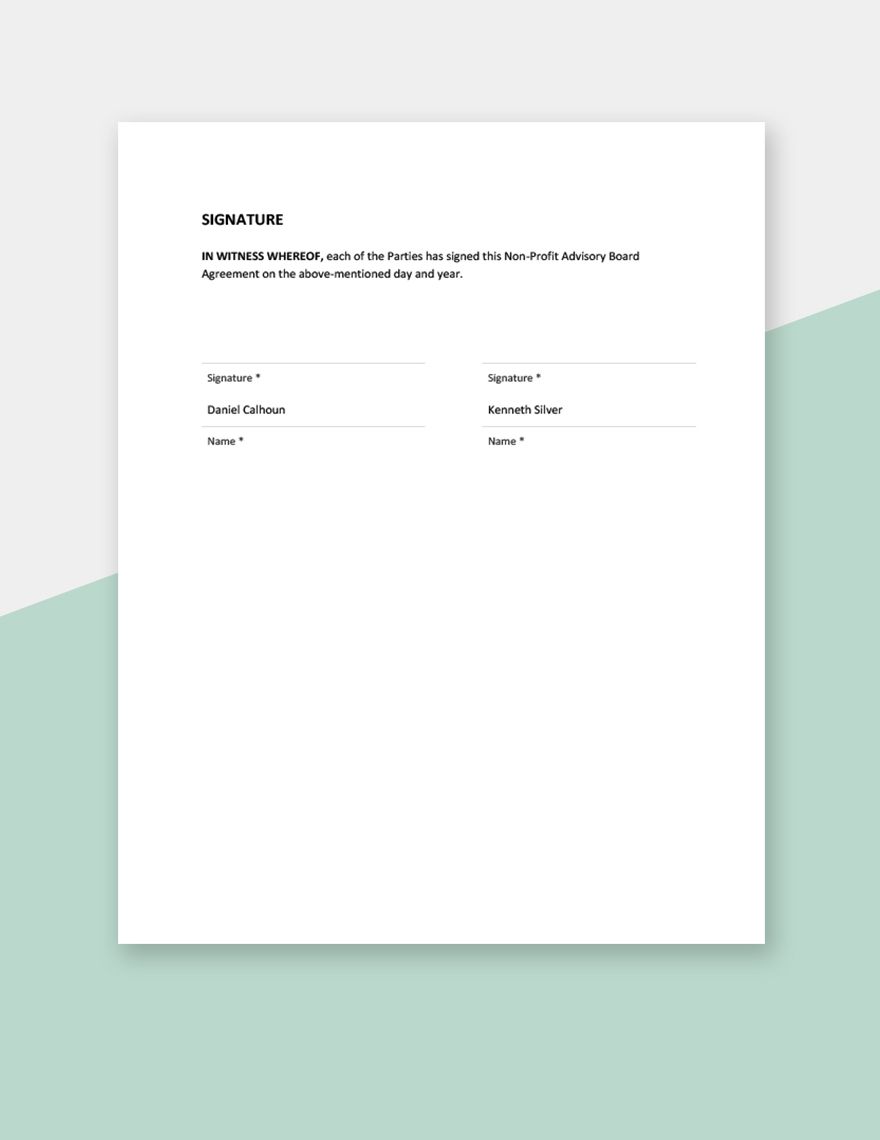
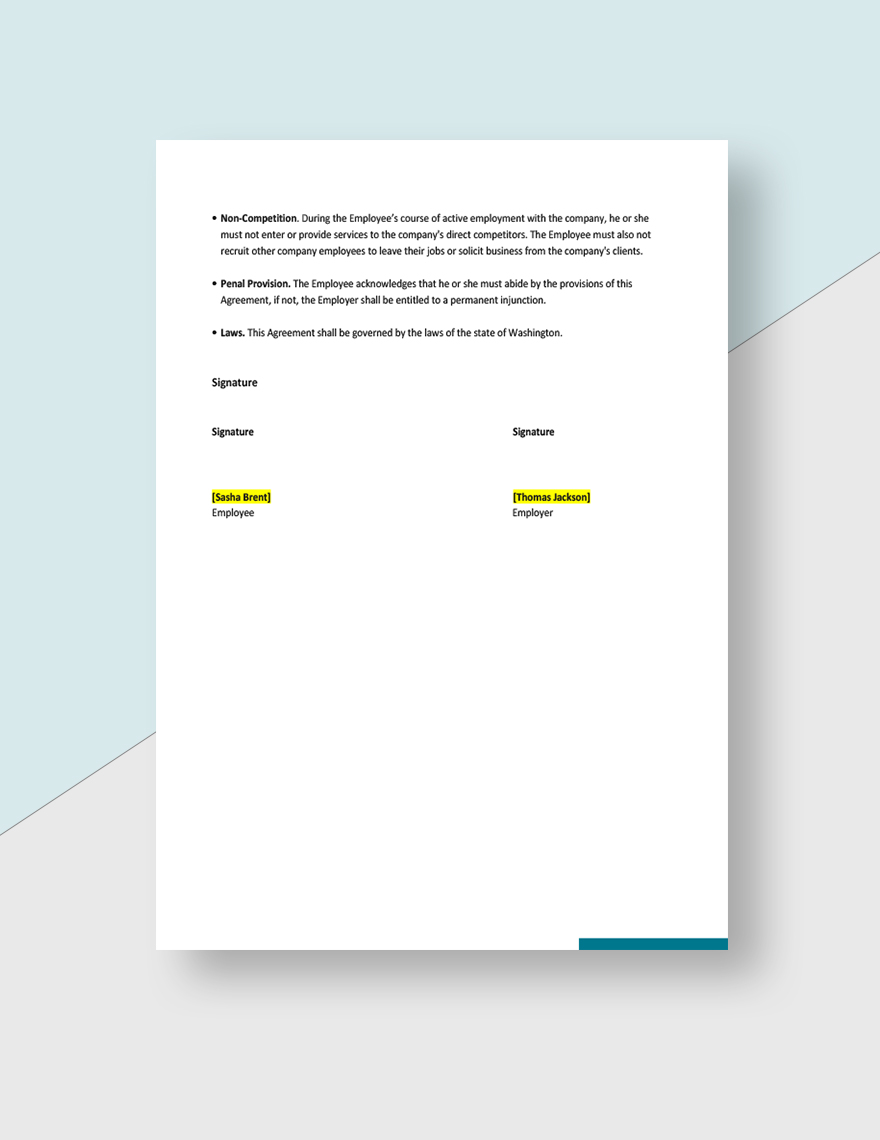
A signature section should identify the authorized representatives and the date of execution. If separate schedules are used for compensation or services, the main agreement should clearly state that those schedules form part of the agreement.
Startup advisor agreements and equity arrangements
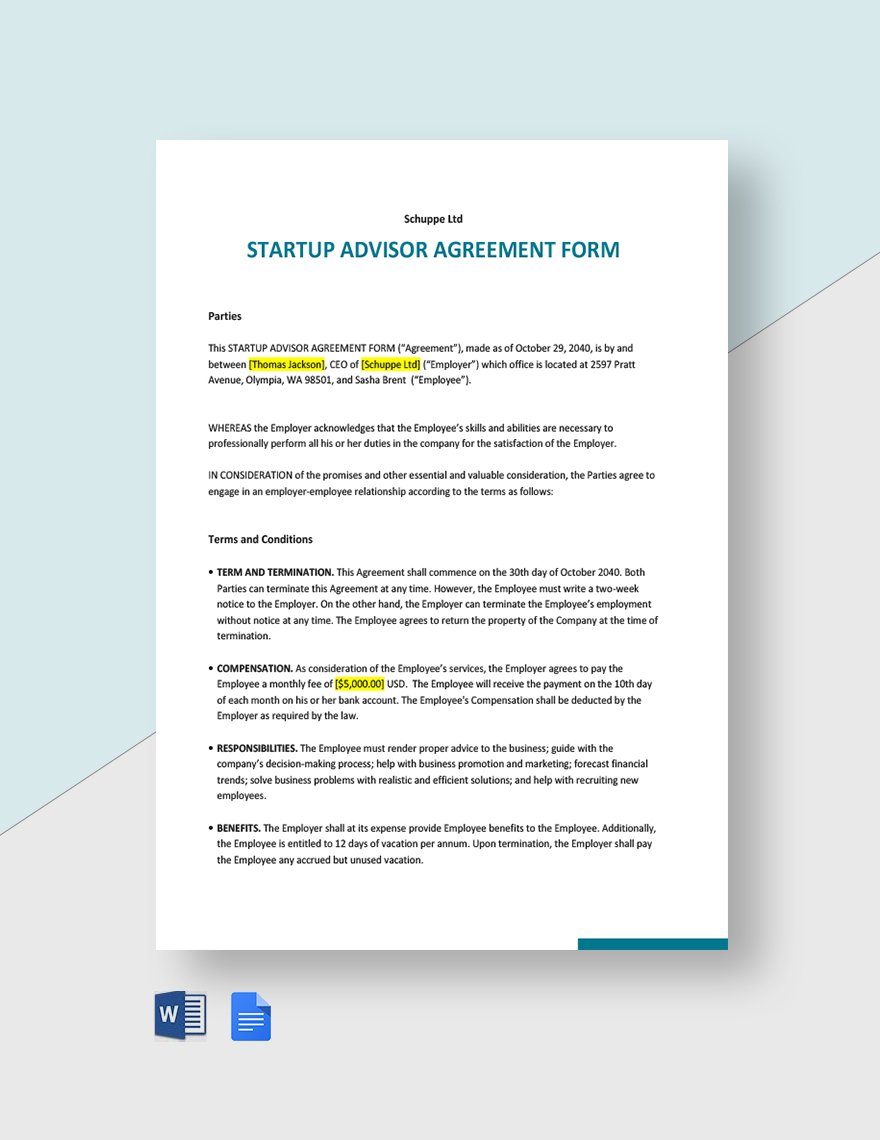
Startup advisory relationships often have different priorities from conventional consulting engagements. The advisor may receive equity or options in exchange for strategic guidance, introductions, product feedback, recruiting support, or industry expertise. In these situations, the agreement should clearly describe the equity instrument, vesting schedule, conditions, and what happens when the relationship ends.

The search phrase advisor agreement template ycombinator is commonly associated with startup advisor arrangements. When reviewing examples in this category, focus on the actual commercial terms rather than copying language without considering the startup’s jurisdiction, capitalization structure, tax position, securities requirements, and relationship with the advisor.
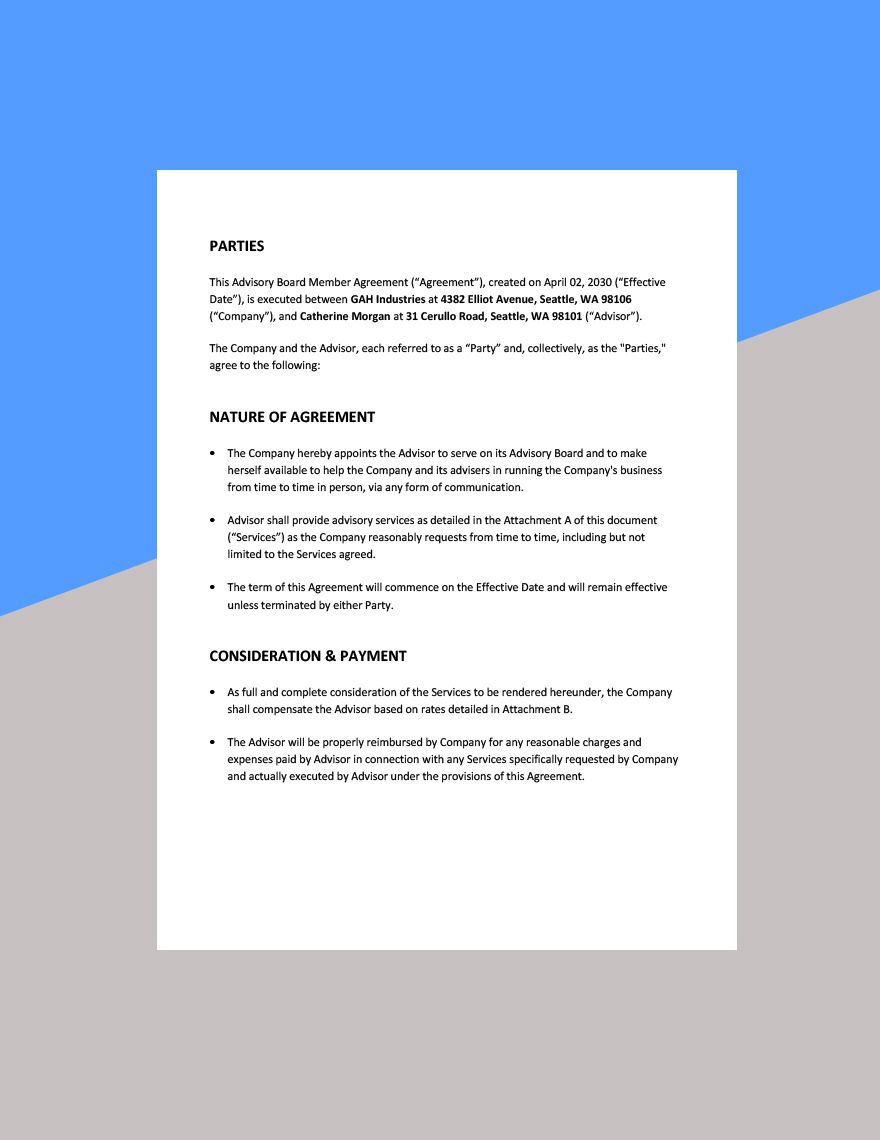
A strong startup agreement should also explain confidentiality, intellectual property, conflicts, public announcements, use of the company’s name, and whether the advisor may work with competitors. Equity provisions should be reviewed carefully because seemingly small differences in vesting or termination language can have significant consequences.
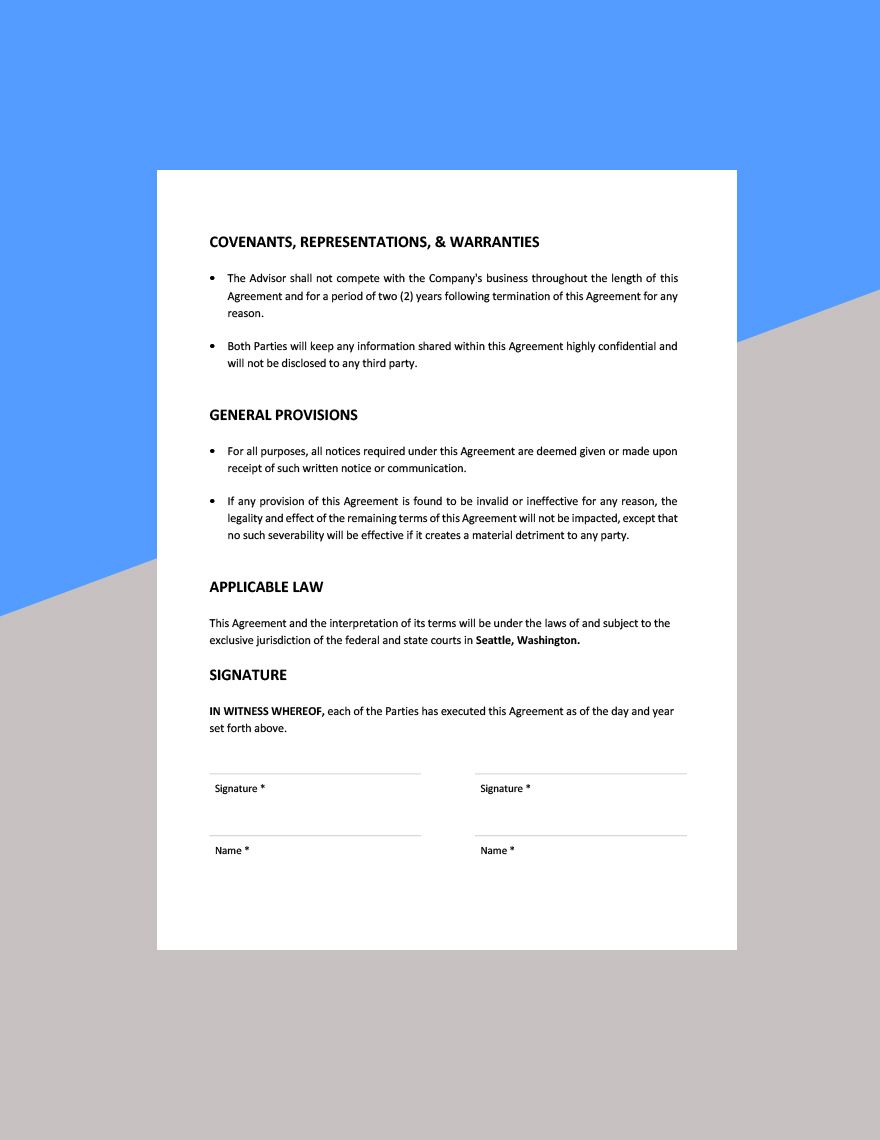
Using an advisory agreement template in Word or PDF
An advisory agreement template word format can be convenient when the parties need extensive editing, tracked changes, internal comments, or collaboration during negotiation. A document-oriented workflow is useful when several stakeholders need to review individual clauses before the final version is approved.

Advisory agreement templates pdf formats can be useful when the wording has been finalized and the parties want a stable version for review and signature. The key is to avoid treating the file format as a substitute for legal review. A polished document can still contain unsuitable terms.
Before signing, compare the final document against the negotiated business terms. Check names, dates, payment amounts, service descriptions, notice periods, governing law, signature blocks, attachments, and any references to schedules or exhibits.
Important clauses that are easy to overlook
Some provisions receive less attention because they appear secondary, yet they can become important when circumstances change. Confidentiality should specify what information is protected, permitted disclosures, and how information should be returned or destroyed.
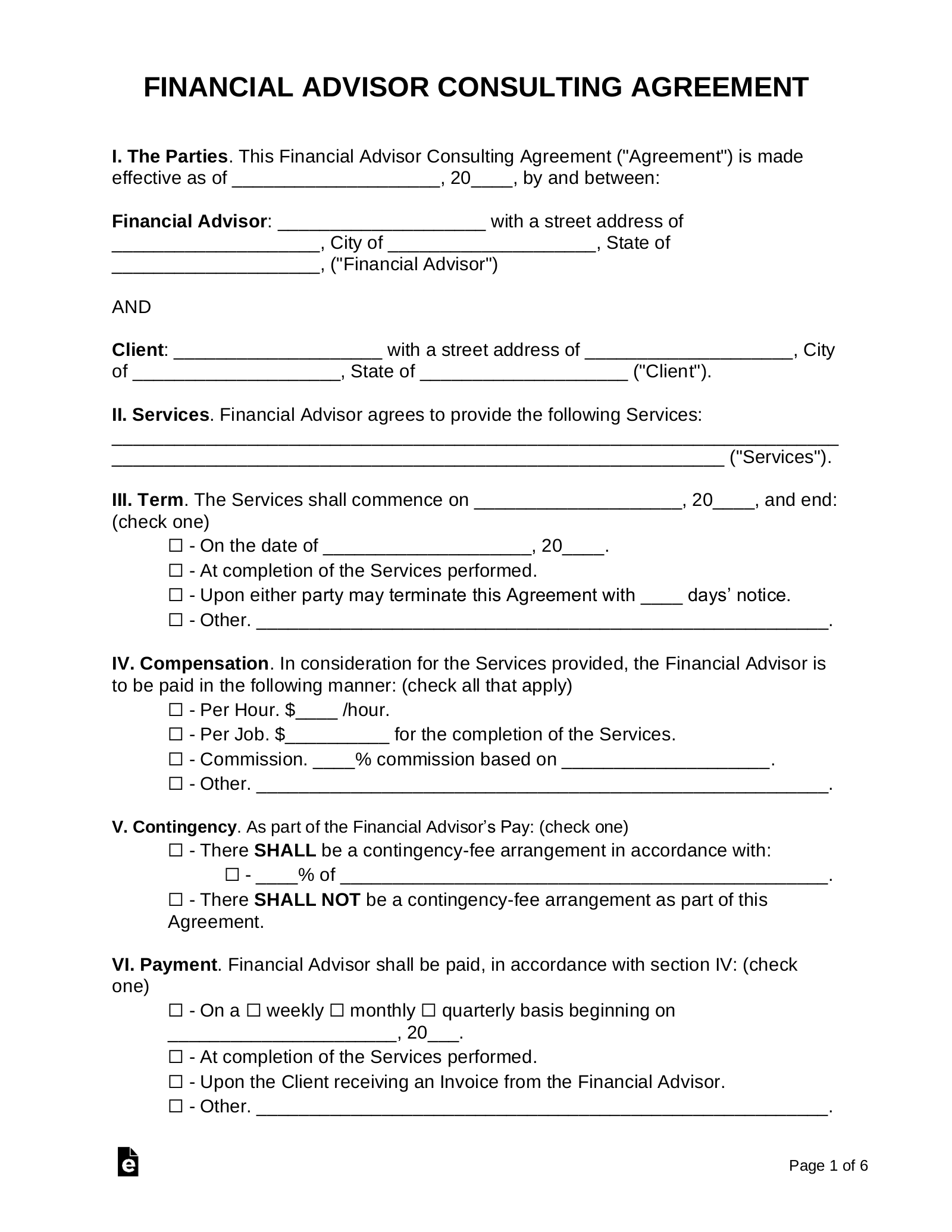
Intellectual property provisions should distinguish materials created before the engagement from materials produced during it. If an advisor contributes frameworks, presentations, software, research, or other original work, ownership and licensing should be addressed clearly.
- Conflict of interest: Identify competing engagements and disclosure obligations.
- Independence: Clarify whether recommendations are independent or subject to organizational approval.
- Records: Explain how reports, notes, research, and deliverables will be retained.
- Publicity: State whether either party may use the other’s name or logo.
- Data access: Limit access to information necessary for the advisory role.
- Amendments: Require important changes to be documented and approved.
Common mistakes when adapting an advisory agreement
Using a generic scope
A vague service description creates uncertainty. Instead of stating that an advisor will “assist with business matters,” describe the specific categories of guidance, expected meetings, reporting responsibilities, and boundaries of authority.
Ignoring compensation details
Payment disputes often arise when the agreement does not define timing, invoices, reimbursable expenses, taxes, equity, or performance-based compensation. Put the commercial arrangement in writing before work begins.
Overlooking conflicts
An advisor may have other clients, investments, employment relationships, or industry affiliations. The agreement should establish how potential conflicts are disclosed and managed.
Failing to update the document
Advisory relationships can evolve. If the advisor’s responsibilities, compensation, term, or access to information changes significantly, update the agreement through a properly authorized amendment rather than relying on informal messages.
Practical checklist before signing
Use the following checklist to review your document before execution:
- Are the legal names of all parties correct?
- Is the effective date clear?
- Does the scope accurately describe the advisor’s work?
- Are exclusions and decision-making boundaries clear?
- Are compensation and expenses defined precisely?
- Are confidentiality and data-handling obligations appropriate?
- Are intellectual property rights addressed?
- Are conflicts of interest disclosed and managed?
- Is the term and renewal process clear?
- Can either party terminate the relationship, and with what notice?
- Does the agreement identify governing law?
- Are all attachments and schedules included?
- Are the signature blocks complete?
Frequently asked questions about advisory agreement templates
Can an advisory agreement be used for a business consultant?
Yes. An advisory agreement can document a consulting relationship when the primary purpose is professional guidance. The scope should distinguish advisory recommendations from operational duties and define compensation, deliverables, confidentiality, and termination rights.
Should an advisor agreement include confidentiality?
Usually, yes when the advisor will receive sensitive business, financial, technical, customer, employee, student, donor, or patient information. The clause should be tailored to the type of information involved and any applicable privacy requirements.
What should a financial advisor agreement template contain?
A financial advisor agreement template should generally address the parties, advisory services, compensation, responsibilities, limitations, confidentiality, conflicts, term, termination, applicable regulations, dispute procedures, and signatures. Specialized financial engagements may require additional disclosures or regulatory documents.
Is an advisory board agreement different from an advisor agreement?
Yes. An individual advisor agreement normally covers one advisor’s engagement. An advisory board agreement usually governs a group and may include meeting procedures, collective responsibilities, appointment terms, confidentiality, compensation, and rules concerning recommendations.
Can an advisory agreement be customized for schools or healthcare organizations?
Yes. Customization is important for specialized environments. Schools may need provisions involving student information and institutional policies, while healthcare organizations may need stronger confidentiality, professional qualification, data security, and regulatory provisions.
Final thoughts on choosing advisory agreement templates
The right advisory agreement templates should make the relationship easier to understand, not merely make the document look professional. Start with the purpose of the engagement, define the advisor’s responsibilities precisely, establish compensation and boundaries, protect sensitive information, and explain how the relationship can change or end. Whether you are preparing an agreement for a business advisor, financial professional, school consultant, healthcare specialist, nonprofit advisor, or startup mentor, careful customization is more important than simply selecting a polished format. Before signing, have the completed agreement reviewed by an appropriate legal or professional advisor when the engagement involves regulated services, equity, significant financial commitments, confidential information, or jurisdiction-specific requirements.