Government plays an essential role in shaping society, maintaining order, and improving people’s quality of life. From providing public services to protecting citizens’ rights, government institutions influence almost every aspect of daily life. Whether people are studying, working, running businesses, or raising families, they interact with government policies and services in many ways.
Understanding how government works is important for everyone. It helps citizens make informed decisions, recognize their rights, and participate in their communities. It also provides a better understanding of how public institutions manage resources, establish laws, and address social challenges.
In this guide, you will discover what government means, how it operates, its main responsibilities, different forms of government, and why good governance matters for sustainable development.
What Is Government?
Government is a system or organization responsible for managing a country, state, region, or community. It creates and enforces laws, maintains public order, provides essential services, and makes decisions that affect society.
In simple terms, government is the institution through which public authority is exercised. Its primary purpose is to serve the public interest while maintaining stability, protecting individual rights, and supporting economic and social development.
Although government structures differ between countries, most governments share several fundamental responsibilities. These include public administration, national security, law enforcement, infrastructure development, and economic management.
The Main Functions of Government
Every government performs several important functions to ensure that society operates effectively. These responsibilities extend beyond creating laws. They also involve delivering services, managing public resources, and planning for the future.
1. Maintaining Law and Order
One of the most important responsibilities of government is maintaining peace and public safety. Governments establish legal systems, support law enforcement agencies, and provide courts to resolve disputes.
These institutions help protect individuals and businesses from crime, violence, and unlawful activities. Furthermore, clear laws create a stable environment where people can exercise their rights and fulfill their responsibilities.
2. Providing Public Services
Government institutions provide essential services that support everyday life. These services help communities become healthier, safer, and more productive.
Common public services include:
- Public education, including schools and universities.
- Healthcare facilities and public health programs.
- Roads, bridges, public transportation, and infrastructure.
- Emergency services, including fire departments and disaster response.
- Social assistance programs for eligible individuals and families.
- Water supply, sanitation, and environmental management.
Access to reliable public services can improve living standards and create more opportunities for individuals across different communities.
3. Managing the Economy
Government also plays a major role in economic development. It establishes economic policies, manages public spending, collects taxes, and creates regulations for businesses and financial institutions.
Additionally, governments may invest in infrastructure, support small businesses, encourage innovation, and develop employment programs. These activities can strengthen economic stability and create opportunities for long-term growth.
4. Protecting Citizens’ Rights
Another fundamental responsibility is protecting individual freedoms and human rights. Depending on a country’s legal framework, these protections may include freedom of expression, equal treatment, access to justice, and the right to participate in public affairs.
Effective government institutions should ensure that laws apply fairly and that public authorities remain accountable for their decisions.
Different Types of Government
Not every country follows the same political system. Different forms of government distribute power in different ways. Understanding these systems helps explain how countries make decisions and organize public authority.
Democracy
Democracy is a system in which citizens have the opportunity to participate in political decision-making. People commonly exercise this right by voting in elections and choosing representatives.
Democratic systems generally emphasize political participation, civil liberties, public accountability, and the rule of law. However, the quality of democratic institutions can vary significantly between countries.
Republic
A republic is a form of government in which political authority is exercised through representatives and established constitutional arrangements. Instead of inheriting political power through a monarchy, public officials typically obtain authority through elections or other legally defined processes.
Many modern republics combine representative democracy with constitutional protections and independent institutions.
Monarchy
A monarchy is a system in which a monarch serves as the head of state. The position is usually inherited through a royal family.
Some monarchies are constitutional, meaning elected governments exercise most political authority while the monarch performs primarily ceremonial or limited constitutional duties. Other historical and contemporary monarchies give the ruler greater political power.
Authoritarian Government
An authoritarian government concentrates significant political power in a single leader or a small group. Political competition, independent media, and public participation may be restricted.
Such systems often limit the ability of citizens to influence government decisions through open political processes.
The Three Main Branches of Government
Many countries divide government authority among different institutions. This arrangement is designed to distribute responsibilities and prevent excessive concentration of power.
The Legislative Branch
The legislative branch is responsible for creating, discussing, and approving laws. Depending on the country’s political system, this institution may be called parliament, congress, or a national assembly.
Legislators also review government spending, represent public interests, and monitor the work of other government institutions.
The Executive Branch
The executive branch implements laws and manages public administration. It is commonly led by a president, prime minister, or another authorized executive official.
Its responsibilities include developing policies, managing government departments, coordinating public services, and carrying out national programs.
The Judicial Branch
The judicial branch interprets laws and resolves legal disputes. Courts help protect legal rights, determine whether laws have been violated, and ensure that legal procedures are followed.
An independent judiciary is particularly important because it helps maintain fairness and provides legal oversight of government authority.
Why Good Governance Matters
Having government institutions is not enough. Their effectiveness also depends on how responsibly they use public authority and resources. This is where good governance becomes essential.
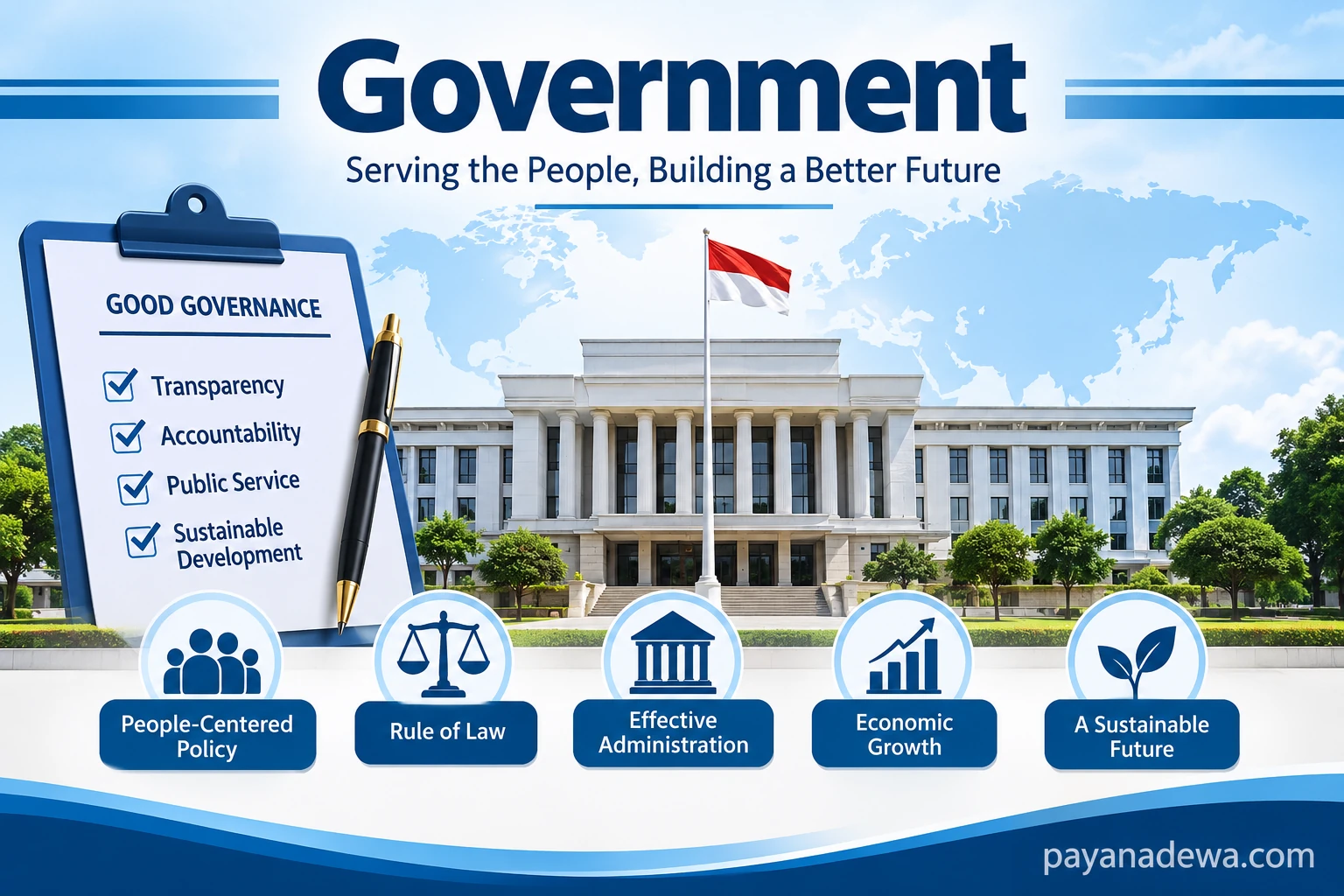
Good governance refers to the principles and practices that make public institutions transparent, accountable, effective, and responsive to citizens’ needs.
Several principles are particularly important:
- Transparency: Public decisions, budgets, and policies should be accessible and understandable.
- Accountability: Government officials should be responsible for their actions and decisions.
- Participation: Citizens should have meaningful opportunities to contribute to public discussions.
- Rule of law: Laws should apply fairly to individuals, organizations, and public officials.
- Effectiveness: Public institutions should use resources efficiently and deliver reliable services.
- Inclusiveness: Government policies should consider the needs of different groups in society.
When these principles are applied consistently, public trust can improve. Furthermore, effective governance helps reduce corruption, strengthen institutions, and support sustainable development.
How Citizens Can Participate in Government
Government is not only about political leaders and public institutions. Citizens also have an important role in shaping public decisions and improving their communities.
Active participation helps ensure that government policies reflect real community needs. Fortunately, there are several practical ways to become involved.
1. Stay Informed
Follow reliable news sources and official government announcements. Understanding new laws, public policies, and community programs makes it easier to recognize issues that may affect your daily life.
2. Participate in Elections
Voting is one of the most direct ways to influence political representation in democratic systems. Learn about candidates, compare their policies, and make informed decisions before voting.
3. Contact Public Representatives
Citizens can communicate with elected representatives and relevant government departments. Questions, suggestions, and complaints can help public officials understand community concerns.
4. Attend Community Meetings
Public consultations, neighborhood meetings, and community forums provide opportunities to discuss local problems. These activities can also help residents propose practical solutions.
5. Use Official Government Services
Many governments provide online platforms for applications, document requests, public information, and service complaints. Using official channels can make administrative processes more convenient and transparent.
Government in the Digital Age
Technology is changing how governments operate and communicate with the public. Digital government services allow citizens to access information and complete administrative tasks without always visiting physical offices.
Common examples include:
- Online tax filing and payment systems.
- Digital identity and civil registration services.
- Electronic licensing and business registration.
- Online public service applications.
- Digital healthcare and education platforms.
- Open government data and public information portals.
These innovations can reduce paperwork, improve efficiency, and make public services more accessible. However, digital transformation also creates challenges involving cybersecurity, personal data protection, digital literacy, and unequal internet access.
Therefore, governments should develop secure digital systems while ensuring that citizens who cannot access online services still receive appropriate assistance.
Challenges Facing Modern Governments
Modern governments face increasingly complex challenges. Economic uncertainty, environmental problems, technological developments, and changing public expectations all influence how institutions operate.
Some of the most common challenges include:
- Corruption: Misuse of public authority can weaken institutions and reduce public trust.
- Economic inequality: Unequal access to employment, education, and opportunities can create social divisions.
- Environmental sustainability: Governments must balance economic development with environmental protection.
- Cybersecurity: Digital government systems need protection against data breaches and cyberattacks.
- Public debt: Responsible financial management is necessary to maintain long-term economic stability.
- Public trust: Poor communication and ineffective services can weaken confidence in public institutions.
Addressing these issues requires strong leadership, reliable institutions, public participation, and evidence-based policymaking. Cooperation between governments, businesses, civil society, and international organizations can also support better outcomes.
Practical Tips for Understanding Government Policies
Government policies can sometimes seem complicated. However, citizens can understand them more easily by following a few practical steps.
- Read the official policy document rather than relying only on social media summaries.
- Identify which government institution is responsible for the policy.
- Check who may benefit from the policy and who may be affected.
- Review the implementation timeline and available public resources.
- Compare information from multiple reliable sources.
- Look for official updates when policies or regulations change.
These simple habits can help readers evaluate public decisions more critically and avoid misinformation.
Conclusion: The Importance of Effective Government
Government is a fundamental part of modern society. It maintains public order, protects rights, provides essential services, manages economic activities, and supports national development.
However, successful government depends on more than political authority. Transparency, accountability, public participation, and the rule of law are equally important for building strong and trustworthy institutions.
Citizens also contribute to effective governance by staying informed, participating in public discussions, voting where applicable, and using official services responsibly.
Ultimately, a government that listens to its people, manages resources responsibly, and responds to changing social needs can help create a safer, fairer, and more prosperous future for everyone.