A flower is one of nature’s most beautiful creations. With its vibrant colors, delicate petals, and wonderful fragrances, a flower can brighten any space and bring happiness to people’s lives. Flowers are also meaningful symbols of love, friendship, appreciation, sympathy, and new beginnings. Whether displayed in a vase, planted in a garden, or given as a thoughtful gift, flowers have a special way of expressing emotions.
From classic roses and cheerful sunflowers to elegant lilies and colorful tulips, there are thousands of flower varieties around the world. Each type has unique characteristics, growing requirements, and symbolic meanings. Flowers are also popular for creative activities, including floral arrangements, home decorations, handmade crafts, and printable coloring templates.
In this guide, you will discover different types of flowers, their meanings, popular uses, gardening tips, and creative ways to enjoy beautiful floral designs.
What Is a Flower?
A flower is the reproductive structure of a flowering plant, scientifically known as an angiosperm. Flowers help plants reproduce by producing seeds after pollination and fertilization. They often attract pollinators such as bees, butterflies, birds, and other insects through their colors, shapes, and fragrances.
Although flowers come in many different forms, most contain several important parts that support their growth and reproduction.
Main Parts of a Flower
- Petals: The colorful parts that attract pollinators and protect the reproductive structures.
- Sepals: Small leaf-like structures that protect the developing flower bud.
- Stamen: The male reproductive part, consisting of a filament and anther that produces pollen.
- Pistil: The female reproductive structure, which includes the stigma, style, and ovary.
- Stem: Supports the flower and transports water and nutrients.
- Leaves: Help the plant produce food through photosynthesis.
Understanding these parts makes it easier to appreciate how flowers grow and why they are essential to healthy ecosystems.
Popular Types of Flowers and Their Meanings
Different flowers have different appearances, fragrances, and symbolic meanings. Some are commonly associated with romantic love, while others represent happiness, purity, friendship, or remembrance.
1. Rose
The rose is one of the most recognizable flowers in the world. Its layered petals, beautiful fragrance, and variety of colors make it a popular choice for bouquets, weddings, and special occasions.
Red roses traditionally symbolize romantic love and passion. Pink roses represent admiration and appreciation, while white roses are often associated with purity and new beginnings. Yellow roses are commonly used to express friendship and happiness.
2. Sunflower
Sunflowers are famous for their large golden petals and dark central disks. Their bright appearance makes them a wonderful symbol of positivity, warmth, happiness, and loyalty.
These flowers grow best in sunny locations with well-drained soil. They are also valuable to wildlife because their seeds provide food for birds and other animals.
3. Lily
Lilies are elegant flowers with large petals and a distinctive fragrance. They are available in several colors, including white, pink, orange, and yellow.
White lilies are often associated with purity and peace, while orange lilies can symbolize confidence and enthusiasm. Lilies are popular choices for floral arrangements, celebrations, and meaningful gifts.
4. Tulip
Tulips are popular spring flowers known for their smooth petals and simple cup-shaped appearance. They come in many colors and are frequently used in gardens, bouquets, and decorative arrangements.
Red tulips are traditionally associated with deep love, while yellow tulips often represent cheerful thoughts and happiness. Their elegant appearance makes them suitable for both casual and formal occasions.
5. Hibiscus
Hibiscus flowers are tropical blooms recognized by their large, colorful petals and prominent central stamens. They are especially popular in warm climates and can add a tropical atmosphere to gardens.
These flowers commonly appear in red, pink, orange, yellow, and white. Hibiscus plants generally prefer warm temperatures, plenty of sunlight, and moist but well-drained soil.
6. Daisy
Daisies are cheerful flowers with simple petals surrounding a central disk. They are often associated with innocence, purity, and happiness.
Because of their simple appearance, daisies are popular in gardens, flower arrangements, greeting cards, and creative art projects.
7. Orchid
Orchids are admired for their unusual shapes, elegant appearance, and long-lasting blooms. They come in numerous varieties and colors, making them popular decorative plants.
Orchids are commonly associated with beauty, elegance, admiration, and luxury. Many varieties grow well indoors when provided with suitable light, humidity, and airflow.
8. Lotus
The lotus is an aquatic flower that grows in ponds and other freshwater environments. Its beautiful petals emerge above the water, creating a graceful appearance.
In many cultures, the lotus symbolizes purity, spiritual growth, resilience, and renewal. Its ability to grow in muddy water makes it a powerful symbol of transformation.
Why Are Flowers Important?
Flowers are more than decorative elements. They play an important role in nature, support biodiversity, and contribute to human well-being.
1. Supporting Pollinators
Flowers provide nectar and pollen for bees, butterflies, hummingbirds, and other pollinators. These animals help transfer pollen between flowers, allowing many plants to produce fruits and seeds.
2. Improving Garden Beauty
Planting different flower varieties can transform an ordinary outdoor space into a colorful and welcoming garden. Combining flowers with different blooming seasons also helps maintain visual interest throughout the year.
3. Expressing Emotions
Flowers are a meaningful way to communicate feelings without using words. A bouquet can express love, gratitude, sympathy, congratulations, or appreciation.
4. Encouraging Creativity
Flower designs inspire many creative activities, including painting, drawing, photography, scrapbooking, paper crafts, and printable coloring projects. Floral patterns are also commonly used in invitations, stationery, and home decorations.
How to Choose the Right Flower for Different Occasions
Choosing the right flower can make a gift or celebration more memorable. Consider the occasion, the recipient’s preferences, and the meaning associated with each flower.
- Birthdays: Choose colorful gerberas, sunflowers, tulips, or mixed flower bouquets to create a cheerful impression.
- Weddings: Roses, peonies, lilies, and orchids are popular choices for elegant floral arrangements.
- Anniversaries: Red roses and other romantic flowers can express affection and lasting commitment.
- Graduations: Bright sunflowers and colorful seasonal flowers are excellent options for celebrating achievements.
- Sympathy: White lilies, white roses, and other soft-colored flowers can communicate respect and comfort.
- Everyday gifts: Daisies, tulips, and seasonal flowers are lovely ways to brighten someone’s day.
When selecting flowers, remember that personal preferences matter just as much as traditional meanings. A flower in someone’s favorite color can make an especially thoughtful present.
How to Grow and Care for Flowers
Growing flowers at home can be a rewarding activity, even for beginners. With the right location, watering routine, and basic maintenance, many flower varieties can thrive in gardens, pots, and containers.
1. Choose the Right Location
Most flowering plants need adequate sunlight to produce healthy leaves and beautiful blooms. However, some varieties prefer partial shade. Check the specific sunlight requirements before planting.
2. Prepare Healthy Soil
Use nutrient-rich soil with good drainage. Many flowers grow well in soil enriched with organic matter, such as compost. Avoid planting in areas where water collects for long periods.
3. Water Regularly
Watering requirements depend on the flower variety, climate, and soil conditions. Check the soil before watering, and avoid keeping the roots constantly saturated. Watering near the base of the plant can also help reduce unnecessary moisture on leaves.
4. Provide Suitable Fertilizer
Flowering plants need nutrients to support healthy growth and blooming. Use a suitable fertilizer according to the plant’s requirements and follow the recommended application instructions.
5. Remove Dead Flowers
Removing faded or dead blooms, a process called deadheading, can help some flowering plants produce additional flowers. It also keeps garden beds looking neat and attractive.
6. Watch for Pests and Diseases
Inspect leaves, stems, and flower buds regularly for signs of insects or disease. Good airflow, appropriate watering, and proper plant spacing can help reduce common gardening problems.
Creative Flower Activities and Printable Flower Templates
Flowers are wonderful subjects for arts and crafts because they offer endless possibilities for colors, shapes, and patterns. You do not need an expensive collection of art supplies to create something beautiful. A simple flower template can be a useful starting point for children, students, teachers, and craft enthusiasts.
Flower Coloring Activities
Printable flower outlines allow children and adults to explore different color combinations. You can use crayons, colored pencils, watercolor paints, or markers to decorate roses, sunflowers, tulips, daisies, and other floral designs.
Paper Flower Crafts
Paper flowers are affordable decorations for birthdays, classrooms, parties, and handmade gifts. Cut out flower shapes from colored paper, layer the petals, and attach a paper center and stem to create a simple three-dimensional decoration.
DIY Greeting Cards
Use small flower illustrations to decorate handmade greeting cards. You can add floral designs to birthday messages, thank-you notes, invitations, and seasonal celebrations.
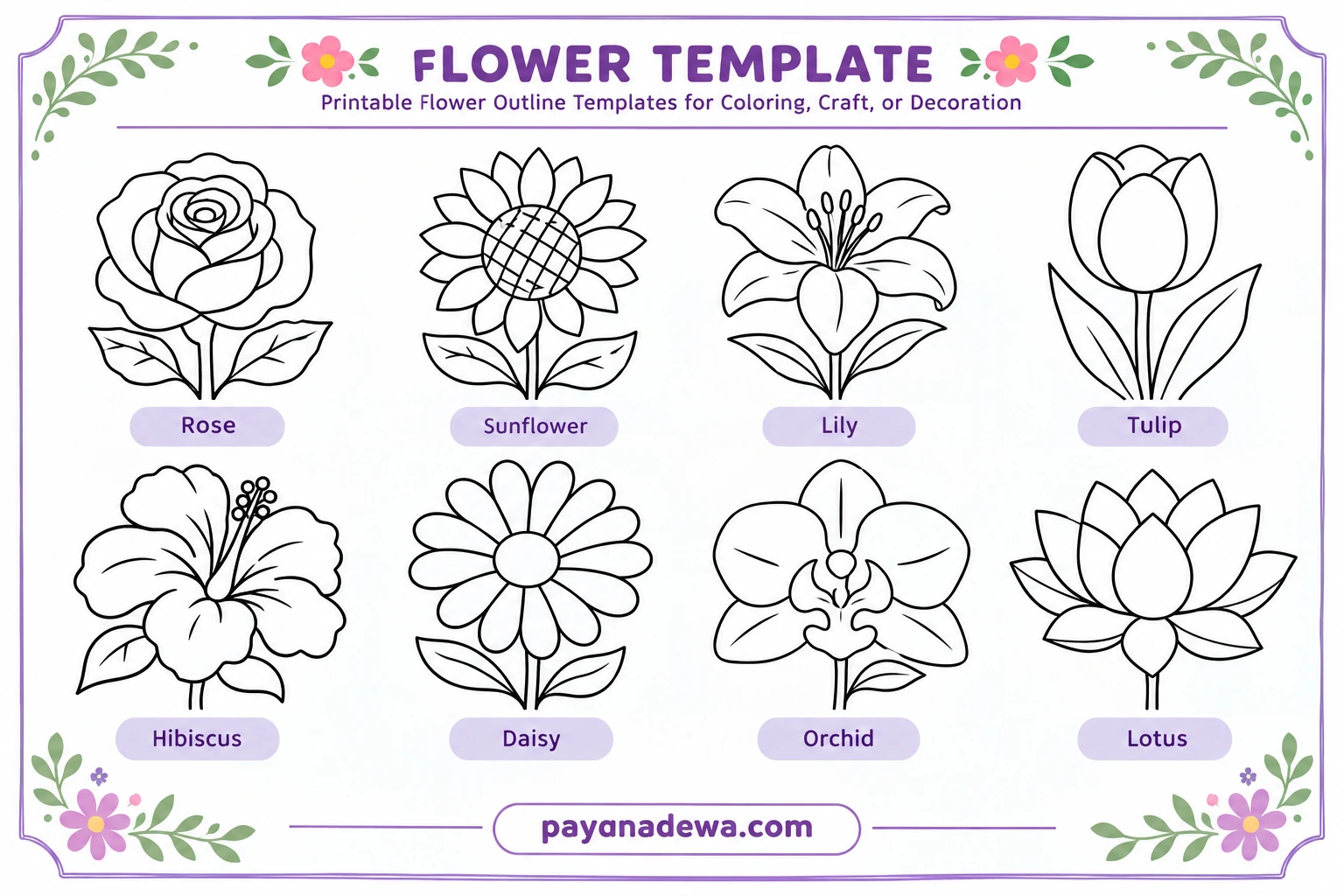
How to Use a Printable Flower Template
Follow these simple steps to turn a printable flower outline into a creative project:
- Step 1: Download and print the flower template on standard paper or cardstock.
- Step 2: Choose your favorite flower design, such as a rose, sunflower, tulip, or daisy.
- Step 3: Color the petals, leaves, and flower center using your preferred art supplies.
- Step 4: Carefully cut out the flower shapes if you are making a paper craft.
- Step 5: Arrange and glue the pieces together to create a flower decoration.
- Step 6: Display your finished artwork on a wall, greeting card, scrapbook, or classroom bulletin board.
Fun Flower Facts You Should Know
Flowers have many fascinating characteristics. Here are some interesting facts that make them even more enjoyable to explore.
- Sunflowers are known for their relationship with sunlight, especially when young plants track the sun’s movement across the sky.
- Some flowers release stronger fragrances at night to attract nocturnal pollinators.
- Orchids belong to one of the largest families of flowering plants.
- Not all flowers have colorful petals. Some rely on fragrance or other characteristics to attract pollinators.
- Flowers come in a wide range of sizes, from tiny blooms to enormous flowers that can reach impressive dimensions.
- Many flowering plants are important sources of food, medicine, and materials used in everyday life.
Conclusion
A flower is much more than a beautiful natural decoration. Flowers support ecosystems, attract pollinators, express emotions, and inspire creativity. From romantic roses and cheerful sunflowers to elegant orchids and symbolic lotus flowers, every variety has something special to offer.
Whether you enjoy growing flowers in your garden, giving floral gifts, decorating your home, or creating handmade crafts, there are countless ways to appreciate their beauty. You can even use printable flower templates to explore different designs, practice coloring, and create unique paper decorations.
Start exploring the wonderful world of flowers today. Choose your favorite variety, learn how to care for it, or create your own floral artwork and bring a little more color and beauty into everyday life.