Farming is one of the most important activities in the world because it provides the food, raw materials, and natural resources that communities depend on every day. From growing vegetables and raising livestock to managing large agricultural businesses, farming plays a vital role in supporting economies and maintaining food security.
Today, farming is evolving through modern technology, sustainable agricultural practices, and innovative production methods. Whether you are interested in starting a small farm, improving an existing agricultural business, or simply learning how food is produced, understanding the fundamentals of farming can help you make better decisions.
This complete guide explores different types of farming, essential agricultural techniques, modern equipment, sustainable practices, and practical tips for building a productive and successful farm.
Understanding how farming works is the first step toward appreciating agriculture and discovering opportunities in this essential industry.
What Is Farming?
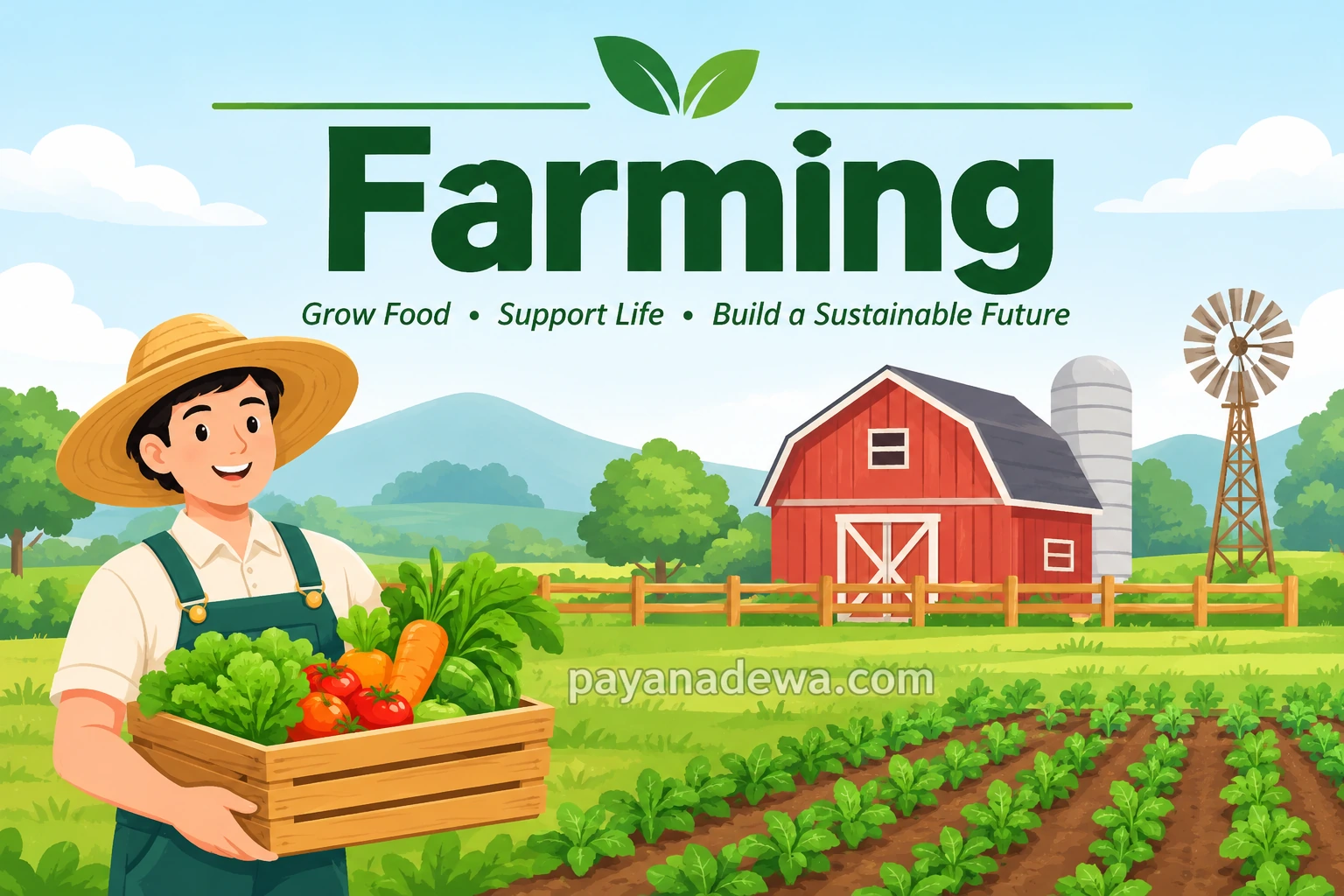
Farming is the practice of cultivating land, growing crops, raising animals, and managing natural resources to produce food and other agricultural products. It includes a wide range of activities, from planting seeds and irrigating fields to harvesting crops and caring for livestock.
Farmers work with soil, water, weather conditions, plants, and animals to maintain agricultural production. Their responsibilities often include preparing farmland, selecting suitable crops, controlling pests, managing fertilizers, and distributing harvested products.
Farming is also an important economic activity. It creates employment opportunities, supports food processing industries, supplies raw materials, and contributes to international trade.
Although traditional farming methods remain valuable, modern agriculture increasingly combines practical experience with scientific research, digital tools, and advanced machinery.
Different Types of Farming
There are several types of farming, and each has different objectives, production methods, and resource requirements. Understanding these approaches can help beginners choose a farming system that matches their land, budget, and goals.
1. Crop Farming
Crop farming focuses on growing plants for food, animal feed, fibers, and commercial products. Common agricultural crops include rice, wheat, corn, soybeans, potatoes, fruits, and vegetables.
Successful crop production requires suitable soil, healthy seeds, sufficient water, proper sunlight, and effective pest management.
Farmers should also consider seasonal conditions and local market demand before choosing which crops to grow. Rotating crops can help maintain soil fertility and reduce the buildup of certain pests and diseases.
2. Livestock Farming
Livestock farming involves raising animals for meat, milk, eggs, wool, and other agricultural products. Common farm animals include cattle, goats, sheep, pigs, chickens, and ducks.
Good livestock management includes providing nutritious feed, clean drinking water, appropriate shelter, veterinary care, and enough space for animals to move comfortably.
Healthy animals are essential for consistent production. Farmers should maintain hygiene standards, monitor animal health, and follow responsible animal welfare practices.
3. Mixed Farming
Mixed farming combines crop cultivation with livestock production on the same farm. This approach can create a more balanced agricultural system because different farming activities can support one another.
For example, crop residues may be used as animal feed, while properly managed animal manure can provide nutrients for agricultural soil.
Mixed farming can also diversify farm income and reduce dependence on a single agricultural product.
4. Organic Farming
Organic farming emphasizes natural production methods and responsible ecosystem management. It generally avoids synthetic pesticides and fertilizers that are prohibited under applicable organic certification standards.
Common organic farming practices include composting, crop rotation, biological pest control, cover cropping, and using organic soil amendments.
Farmers interested in organic production should understand local certification requirements and identify reliable markets before making the transition.
5. Sustainable Farming
Sustainable farming aims to produce agricultural goods while protecting soil, water, biodiversity, and the long-term productivity of farmland.
Common practices include reducing unnecessary chemical applications, conserving water, maintaining soil cover, improving nutrient management, and protecting beneficial insects.
This approach helps farmers balance agricultural productivity with environmental responsibility and long-term economic stability.
Essential Requirements for Starting a Farm
Starting a farming business requires careful preparation. Before investing in equipment, seeds, or livestock, evaluate the resources available and develop a realistic production plan.
1. Suitable Land and Soil
Land is one of the most important resources in agriculture. Different crops and animals require different environmental conditions, so choosing the right location is essential.
Evaluate soil texture, drainage, fertility, water availability, sunlight, and accessibility. A soil test can help identify nutrient deficiencies and determine whether additional soil amendments are necessary.
2. Reliable Water Supply
Water is essential for crop growth and animal health. Farmers should identify reliable water sources and develop an irrigation system appropriate for their production needs.
Drip irrigation, sprinkler systems, rainwater harvesting, and efficient watering schedules can help reduce water waste.
3. Quality Seeds and Livestock
Starting with healthy seeds and suitable animal breeds can improve farm productivity. Choose crop varieties and livestock that are adapted to local climate conditions and market requirements.
Purchase seeds and animals from reputable suppliers, and check their quality before beginning production.
4. Farming Equipment
Farm equipment makes agricultural activities more efficient and reduces manual labor. Depending on the scale of production, useful tools may include:
- Tractors for land preparation and transportation.
- Plows and cultivators for preparing soil.
- Seeders and planters for planting crops.
- Irrigation equipment for watering farmland.
- Sprayers for appropriate pest and disease management.
- Harvesting tools and machinery for collecting crops.
- Storage equipment for protecting agricultural products.
Small farms do not always need expensive machinery. Beginners can start with essential tools and gradually invest in additional equipment as production increases.
Modern Farming Methods and Agricultural Technology
Technology is transforming agriculture by helping farmers improve efficiency, monitor crops, and manage resources more accurately. Modern farming combines traditional knowledge with data-driven decision-making.
Precision Agriculture
Precision agriculture uses technology such as GPS, sensors, satellite imagery, and digital mapping to monitor agricultural conditions.
These tools help farmers identify differences in soil moisture, nutrient levels, and crop development. As a result, resources can be applied more accurately, potentially reducing unnecessary costs and environmental impacts.
Smart Irrigation Systems
Smart irrigation systems use sensors and automated controls to deliver water according to soil moisture and crop requirements.
These systems can reduce water waste while maintaining suitable growing conditions. They are especially useful in areas where rainfall is unpredictable or water resources are limited.
Greenhouse Farming
Greenhouse farming allows crops to grow in a controlled environment. Farmers can manage temperature, humidity, ventilation, and irrigation to create favorable growing conditions.
This method is commonly used for tomatoes, cucumbers, peppers, leafy vegetables, and ornamental plants.
Vertical Farming
Vertical farming involves growing crops in stacked layers, often in indoor facilities. It can use hydroponic, aeroponic, or other soilless cultivation systems.
This approach can make productive use of limited urban space. However, electricity, equipment, maintenance, and operating costs must be carefully considered.
Practical Tips for Successful Farming
Successful farming requires planning, observation, consistency, and continuous learning. The following practices can help improve agricultural performance.
- Understand your local climate: Choose crops and livestock that suit local temperatures, rainfall patterns, and seasonal conditions.
- Test your soil: Regular soil testing helps identify nutrient requirements and supports better fertilizer decisions.
- Plan planting schedules: Organize planting and harvesting activities according to seasonal conditions and crop maturity.
- Practice crop rotation: Alternate suitable crops to support soil health and manage certain pests and diseases.
- Monitor plant health: Inspect crops regularly to identify weeds, pests, diseases, and nutrient deficiencies early.
- Manage farm expenses: Record spending on seeds, fertilizer, labor, irrigation, equipment, and transportation.
- Keep production records: Track planting dates, harvest quantities, yields, and sales to evaluate farm performance.
- Learn continuously: Follow agricultural research, attend training programs, and exchange knowledge with experienced farmers.
Small improvements in everyday farm management can make a meaningful difference over time. Consistent monitoring helps farmers recognize problems before they become expensive.
Common Challenges in Agriculture
Although farming provides important economic opportunities, agricultural production comes with several challenges. Understanding these risks helps farmers prepare better strategies.
Weather and Climate Change
Droughts, floods, extreme temperatures, and unpredictable rainfall can affect crop yields and livestock health.
Farmers can improve resilience by diversifying crops, using suitable planting schedules, improving drainage, conserving water, and adopting climate-smart agricultural practices.
Pests and Plant Diseases
Insects, weeds, fungi, bacteria, and other organisms can damage crops and reduce agricultural productivity.
Integrated pest management combines monitoring, preventive practices, biological controls, and carefully selected treatments to manage pest populations responsibly.
Rising Production Costs
Seeds, fertilizer, animal feed, fuel, labor, and equipment can represent significant operating expenses.
Maintaining financial records, comparing suppliers, reducing waste, and improving resource efficiency can help farmers manage production costs.
Market Access and Price Changes
Agricultural prices can change due to supply, demand, transportation costs, seasonal production, and international market conditions.
Farmers can reduce some business risks by researching customers, exploring different sales channels, improving product quality, and considering value-added agricultural products.
How to Make Farming More Profitable
Profitability depends on more than producing large quantities of crops or livestock. Farmers must also manage costs, understand customer demand, and maintain consistent product quality.
Consider these practical strategies:
- Choose agricultural products with realistic demand in your local market.
- Compare production costs before expanding your farming operation.
- Improve crop quality through proper soil and water management.
- Explore direct sales through farmers’ markets and local retailers.
- Consider food processing, packaging, or other value-added products.
- Diversify production when suitable to reduce dependence on one product.
- Use digital marketing to introduce agricultural products to potential customers.
For small farms, building relationships with local customers can be particularly valuable. Consistent quality, reliable delivery, and transparent business practices help establish long-term customer trust.
The Future of Farming
The future of farming will increasingly depend on innovation, sustainability, and efficient resource management. As the global population grows and environmental pressures increase, agricultural systems must find better ways to produce food.
Artificial intelligence, agricultural robotics, biotechnology, renewable energy, and advanced irrigation systems may provide new opportunities for farmers.
However, technology alone cannot solve every agricultural challenge. Successful farming will continue to require skilled workers, local knowledge, responsible land management, and access to education and agricultural resources.
Small-scale farmers and large agricultural businesses both have important roles in building resilient food systems. Combining practical experience with sustainable innovation can help agriculture remain productive for future generations.
Conclusion
Farming is much more than growing crops or raising livestock. It is an essential industry that supports food security, economic development, employment, and environmental management.
Whether you are planning to start a small farm or improve an established agricultural business, success begins with understanding your resources, choosing appropriate farming methods, and developing a practical management strategy.
By combining effective agricultural techniques, modern technology, responsible resource management, and continuous learning, farmers can build productive and sustainable farming operations.
As agriculture continues to evolve, farming will remain one of the most important foundations of a healthy and sustainable future.