However, creating successful social media content requires more than simply writing a few sentences and uploading an image. You need an appealing message, relevant visuals, and a clear understanding of what your audience wants to see.
In this guide, you will discover how to create an effective Facebook Post, explore different content ideas, learn practical writing techniques, and understand how to improve engagement. You will also find useful tips and examples that can make your social media strategy more effective.
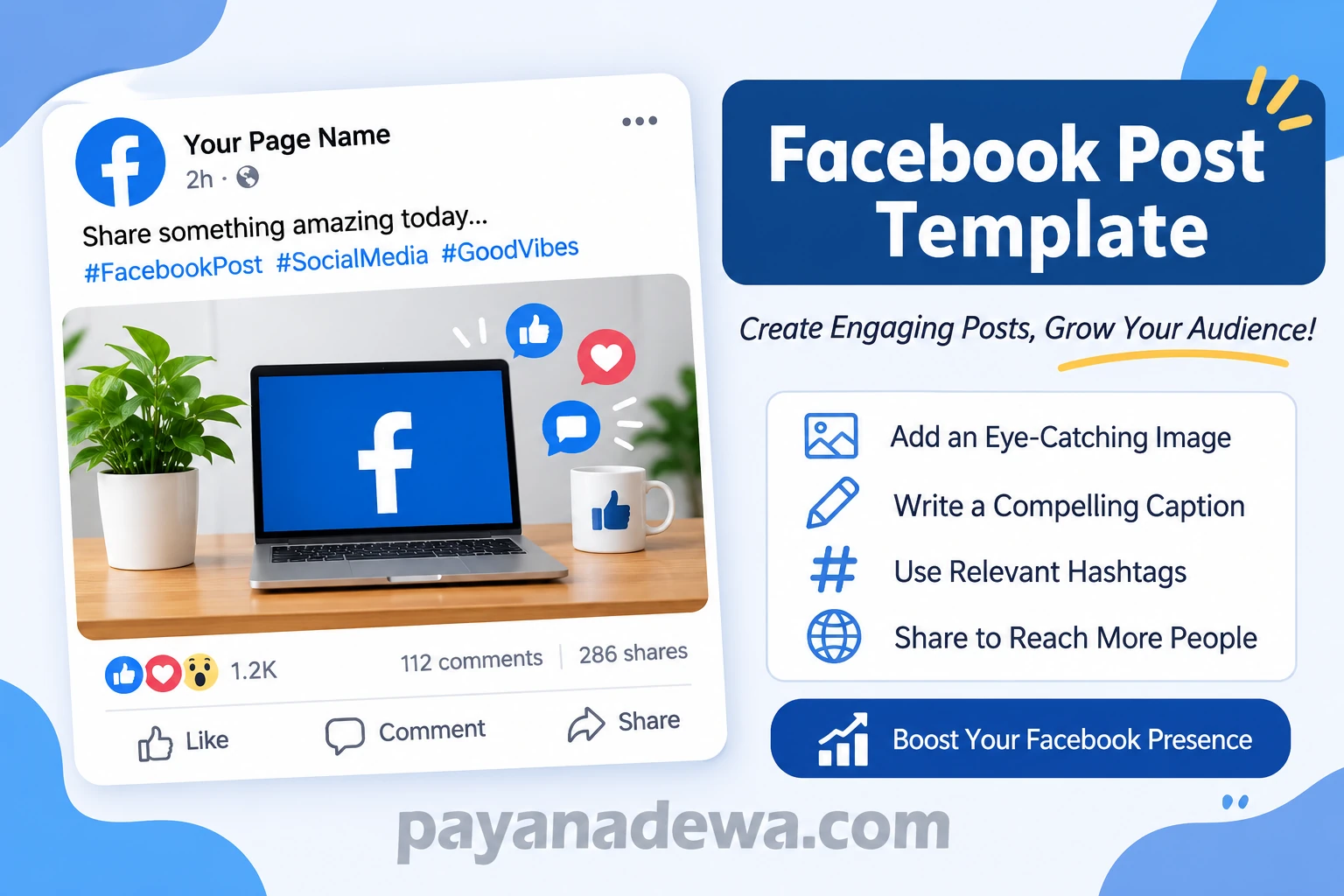
What Is a Facebook Post?
A Facebook Post is a piece of content shared on Facebook through a personal profile, business page, group, or other supported publishing feature. It allows users to communicate with friends, customers, followers, and online communities.
Facebook supports several content formats. These include:
- Text posts: Written updates, announcements, questions, and personal thoughts.
- Photo posts: Images that showcase products, services, events, or everyday moments.
- Video posts: Short clips, tutorials, demonstrations, and entertaining videos.
- Link posts: Shared website links that direct visitors to external content.
- Carousel content: Multiple images or cards that present related information.
- Story content: Short-lived visual updates shared through Facebook Stories.
Each format serves a different purpose. For example, a product photograph can attract potential customers, while an informative text update can encourage meaningful discussions.
Why Creating Engaging Facebook Posts Matters
Facebook remains an important platform for personal communication, community building, and business promotion. Publishing useful content gives people a reason to interact with your page.
Here are several benefits of creating engaging posts.
1. Build Brand Awareness
Consistent publishing helps people become familiar with your business, products, and services. When your content provides value, audiences have more reasons to recognize and remember your brand.
2. Encourage Audience Engagement
Interesting posts can inspire people to react, comment, share, and participate in conversations. Asking relevant questions is another simple way to invite interaction.
3. Promote Products and Services
Businesses can use Facebook content to introduce new products, explain services, announce special offers, and highlight customer experiences. Helpful information can make potential customers more confident about their purchasing decisions.
4. Drive Website Traffic
Sharing useful website articles, landing pages, and product links can introduce visitors to your website. Make sure the accompanying description explains why someone should click the link.
How to Create an Effective Facebook Post
Creating an engaging post does not have to be complicated. Following a simple process can help you produce clear, attractive, and relevant content.
Step 1: Understand Your Target Audience
Before writing, identify the people you want to reach. Consider their interests, challenges, preferences, and common questions.
For example, a fitness business might publish workout advice, healthy lifestyle tips, and exercise demonstrations. Meanwhile, an online clothing store could share styling inspiration, new arrivals, and product recommendations.
The more relevant your content is, the easier it becomes to connect with your audience.
Step 2: Choose an Interesting Topic
Every successful post starts with a clear idea. Select a topic that matches your audience’s interests and your publishing goals.
Some useful content ideas include:
- Helpful tips and educational information.
- Product announcements and new arrivals.
- Behind-the-scenes photographs.
- Customer reviews and testimonials.
- Questions and interactive discussions.
- Special promotions and seasonal offers.
- Industry news and interesting facts.
Step 3: Write an Attention-Grabbing Caption
Your caption should encourage people to stop scrolling and pay attention. Start with an interesting question, useful statement, or relatable observation.
Keep your message simple and easy to understand. Break longer explanations into shorter paragraphs. Also, focus on one main message instead of discussing too many unrelated topics.
Step 4: Add High-Quality Visuals
Visual content can make your Facebook Post more appealing. Choose clear photographs, professional graphics, or short videos that support your message.
For better results, consider these visual content tips:
- Use high-resolution images.
- Choose colors that match your brand identity.
- Avoid placing too much text inside images.
- Use consistent fonts and visual styles.
- Make sure important elements are easy to see on mobile devices.
Step 5: Include a Clear Call to Action
A call to action, also known as a CTA, tells readers what to do next. Without a clear direction, people may read your content and simply move on.
Here are some examples:
- Visit our website to learn more.
- Share your thoughts in the comments.
- Explore our latest collection today.
- Save this post for future reference.
- Send us a message if you have questions.
Choose a CTA that matches your content and marketing objective.
Facebook Post Examples You Can Use
Sometimes, finding the right words is the hardest part of creating social media content. Fortunately, simple templates can make the process faster.
1. Business Promotion Post
Example:
Looking for something special? Discover our latest collection and find products designed to make your everyday life easier. Explore our selection today and let us know which item is your favorite!
Best for: Online stores, product launches, and business promotions.
2. Engagement Post
Example:
We want to hear from you! What is one thing you would love to learn this month? Share your answer in the comments. Your ideas help us create better content for our community.
Best for: Increasing conversations and understanding audience interests.
3. Educational Post
Example:
Want to improve your daily productivity? Start by writing down your three most important tasks every morning. This simple habit can help you stay organized and focus on what matters most.
Best for: Sharing knowledge, building trust, and providing value.
4. Inspirational Post
Example:
Progress does not happen overnight. Every small step brings you closer to your goals. Stay consistent, keep learning, and celebrate the improvements you make along the way.
Best for: Personal brands, motivational pages, and online communities.
Best Practices for Better Facebook Post Engagement
Publishing content regularly is important, but quality should always come first. Instead of posting randomly, develop a strategy that helps you deliver meaningful information.
Publish Consistently
Create a realistic posting schedule that you can maintain. Consistency helps establish audience expectations and makes content planning easier.
You do not need to publish several times every day. Start with a manageable schedule and adjust it according to your audience’s response.
Use Hashtags Naturally
Relevant hashtags can help categorize your content and make topics easier to identify. However, avoid adding unrelated hashtags just to make a caption look longer.
Choose a few relevant hashtags that accurately describe your post.
Respond to Comments
Engagement should not stop after publishing. Reply to questions, acknowledge feedback, and participate in discussions whenever possible.
These interactions help build relationships and create a more welcoming online community.
Experiment With Publishing Times
There is no single publishing time that works for every Facebook page. Audience habits vary depending on location, interests, and daily routines.
Experiment with different posting times. Then review your page insights to identify when your audience is most active.
Analyze Your Performance
Use available Facebook insights and analytics tools to understand how your content performs.
Pay attention to useful indicators such as:
- Reach and impressions.
- Likes and other reactions.
- Comments and shares.
- Link clicks.
- Video views and watch time.
- Follower growth.
Review these results regularly. This information can help you identify successful topics and improve future posts.
Common Facebook Post Mistakes to Avoid
Even attractive content may perform poorly when important details are overlooked. Avoid these common mistakes when managing your social media presence.
- Posting without a clear purpose: Every post should support an objective, such as educating, entertaining, or promoting.
- Writing overly long paragraphs: Large blocks of text can make content difficult to scan.
- Using low-quality images: Blurry or poorly designed visuals can reduce the overall appeal of your content.
- Overpromoting products: Constant sales messages may discourage audience interaction.
- Ignoring comments: Unanswered questions can create a poor experience for followers.
- Using irrelevant hashtags: Unrelated hashtags make your content less focused.
- Ignoring analytics: Without reviewing performance, it becomes harder to understand what works.
By avoiding these mistakes, you can create a more consistent and effective social media strategy.
How to Plan a Facebook Content Calendar
A content calendar helps you organize your publishing activities in advance. It also reduces the pressure of thinking about new content ideas every day.
Start by selecting a few content categories. For example, you could organize your weekly schedule like this:
- Monday: Educational tips or useful information.
- Tuesday: Product highlights or service introductions.
- Wednesday: Questions and audience engagement.
- Thursday: Behind-the-scenes content.
- Friday: Customer stories or testimonials.
- Saturday: Entertainment and lifestyle content.
- Sunday: Weekly inspiration or community updates.
This schedule is only a starting point. Adjust it to match your business goals, available resources, and audience preferences.
Conclusion
Creating an effective Facebook Post involves more than sharing random updates. It requires a clear message, relevant visuals, useful information, and a good understanding of your audience.
Start by choosing topics that interest your followers. Write engaging captions, include attractive images, and add meaningful calls to action. Then monitor your results and improve your strategy based on audience feedback.
Remember that successful social media growth takes time. Focus on providing consistent value, building genuine relationships, and creating content that encourages people to participate.
With the right approach, every Facebook Post can become an opportunity to strengthen your online presence, connect with your community, and support your business goals.