Comparison is a practical way to evaluate two or more items, ideas, or alternatives using specific criteria. It helps you organize information, recognize meaningful differences, and understand the strengths and weaknesses of each option. In this guide, you will learn how comparison works, explore common examples, and discover practical techniques for making more informed decisions.
What Is Comparison?
Comparison is the process of examining two or more things to identify their similarities and differences. It allows you to evaluate alternatives based on characteristics such as quality, price, performance, convenience, and overall value.
For example, when comparing two smartphones, you might examine battery life, camera quality, storage capacity, durability, and price. Looking at these features together provides a clearer picture than considering each phone separately.
Comparison is useful in everyday life, education, business, research, and shopping. The criteria may change depending on the situation, but the main purpose remains the same: to understand your options before making a decision.
Why Is Comparison Important?
A structured comparison helps you move beyond first impressions. Rather than choosing an option simply because it looks attractive or costs less, you can evaluate how well it meets your actual requirements.
1. Supports Better Decision-Making
Comparing alternatives helps you identify which option offers the greatest benefits. You can examine relevant information, weigh the trade-offs, and make a decision based on evidence instead of guesswork.
2. Saves Time and Money
Researching options before purchasing or committing to a service can prevent unnecessary expenses. A comparison chart makes important details easier to review, reducing the time spent switching between websites, documents, or product descriptions.
3. Reveals Strengths and Weaknesses
Every option has advantages and disadvantages. A comparison highlights these differences, helping you understand which features matter most and which limitations you can accept.
4. Improves Planning and Organization
When information is organized into categories, it becomes easier to identify patterns and priorities. This approach is especially helpful for project planning, business analysis, budgeting, and academic assignments.
Common Types of Comparison
Comparison can be applied to many situations. Understanding the different types helps you choose the most suitable method for your needs.
Product Comparison
Product comparison involves evaluating similar products based on their features, quality, price, and performance. Consumers often use this method when choosing electronics, household appliances, clothing, or other purchases.
For instance, comparing three laptops might reveal that one offers the best performance, another provides the longest battery life, and the third delivers the best value for money.
Service Comparison
Service comparison helps you evaluate providers based on pricing, reliability, customer support, available features, and service terms. This method is useful when selecting internet plans, insurance policies, software subscriptions, or professional services.
Business Comparison
Businesses compare competitors, suppliers, marketing strategies, and operational processes to identify opportunities for improvement. Common criteria include costs, efficiency, customer satisfaction, market position, and potential risks.
Academic Comparison
In education, comparison helps students analyze books, historical events, scientific theories, and different viewpoints. A strong academic comparison explains both similarities and differences while supporting conclusions with relevant evidence.
Personal Comparison
Personal comparison can help you evaluate alternatives such as travel destinations, fitness equipment, courses, or budgeting methods. Focusing on your own goals and circumstances makes the decision more practical and meaningful.
How to Create an Effective Comparison
A useful comparison does not need to be complicated. Follow these steps to organize your information and evaluate alternatives consistently.
Step 1: Define Your Objective
Start by identifying what you want to achieve. Are you looking for the most affordable product, the highest-quality service, or the option that saves the most time? A clear objective keeps your research focused.
Step 2: Select the Options
Choose the alternatives you want to evaluate. Two or three options are often sufficient for a straightforward decision. For more complex projects, you can include additional alternatives as long as the comparison remains manageable.
Step 3: Establish Your Criteria
Choose the factors that matter most to your decision. These may include:
- Price: The purchase cost, recurring fees, and additional expenses.
- Quality: The durability, reliability, or standard of the option.
- Features: The functions, benefits, and capabilities available.
- Performance: How effectively the option meets your requirements.
- Convenience: How easy it is to use, maintain, or access.
- Long-term value: The expected benefits compared with the total cost.
Keep your criteria relevant to the decision. Including too many minor details can make the results harder to interpret.
Step 4: Gather Reliable Information
Collect information from trustworthy sources, including official product specifications, service agreements, independent reviews, and verified performance data. Use the same standards when evaluating each alternative.
When information is unavailable, mark it as unknown rather than assuming that an option performs better. This small step can help prevent misleading conclusions.
Step 5: Organize the Results
Place your findings in a comparison table or worksheet. Use consistent categories so that differences are easy to identify. A visual format is particularly useful when you need to review several features at once.
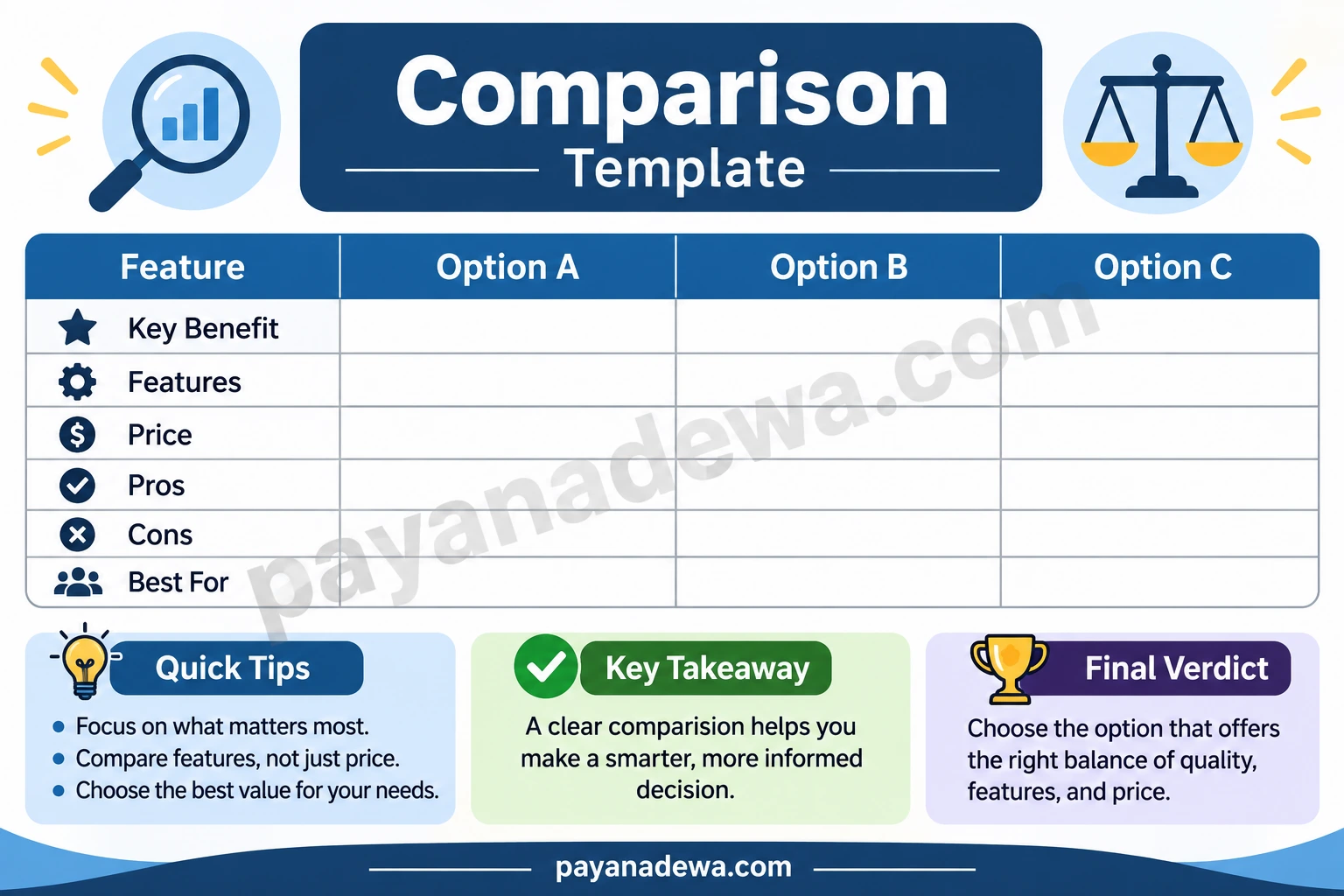
For a convenient starting point, use the comparison template below to record features, prices, advantages, disadvantages, and the best use for each option.
INSERT IMAGE KEYWORDUTAMA Template HERE.
Image title: Comparison Template
Image alt: Comparison Template worksheet with columns for three options, features, prices, pros, cons, quick tips, and final verdict, featuring the payanadewa.com watermark.
Image caption: Use this printable comparison template to organize your options, evaluate important features, and make a more informed decision.
Step 6: Evaluate the Trade-Offs
Review the results and determine which differences have the greatest impact on your objective. One option may be cheaper but less durable, while another may cost more initially but provide better long-term value.
Consider the advantages and disadvantages together. The goal is not necessarily to find a perfect option, but to identify the most suitable one for your situation.
Step 7: Make Your Decision
Choose the option that best matches your priorities and available resources. Before finalizing your decision, review the most important criteria and check whether any significant risks or hidden costs remain.
Comparison Table Example
Imagine that you want to choose a laptop for everyday work. You have three options with different prices and capabilities. The following example illustrates how a simple comparison can clarify your decision.
- Option A: An affordable laptop for browsing, email, and basic office tasks.
- Option B: A mid-range laptop offering a balance of performance, portability, and price.
- Option C: A premium laptop designed for demanding workloads and advanced features.
To compare these options effectively, examine their actual specifications, total costs, warranty coverage, and suitability for your workload. The cheapest option may be sufficient for basic tasks, while a more powerful model may be worthwhile for professional editing or intensive applications.
This example demonstrates an important principle: the best choice depends on your requirements. A higher price does not automatically guarantee better value, and a lower price does not always mean greater savings over time.
Practical Tips for More Accurate Comparisons
Use the following techniques to make your comparisons clearer, fairer, and more useful.
- Focus on relevant criteria. Evaluate features that directly affect your objective instead of collecting unnecessary information.
- Use consistent measurements. Compare prices in the same currency and performance figures using the same units.
- Check the information source. Confirm important details with reliable documentation and current specifications.
- Consider the total cost. Include maintenance, subscriptions, accessories, and other ongoing expenses where relevant.
- Separate facts from opinions. Record measurable information separately from personal preferences or subjective reviews.
- Assign priorities. Give more weight to factors that matter most to your needs.
- Review your assumptions. Make sure your initial preferences are not preventing you from considering better alternatives.
- Update your findings. Prices, features, and service conditions can change, so verify time-sensitive information before deciding.
Common Comparison Mistakes to Avoid
Even a well-organized comparison can produce poor results if the evaluation method is flawed. Avoid these common mistakes to improve the quality of your decisions.
Choosing Based on Price Alone
A low price can be attractive, but it does not reveal everything about quality, reliability, or long-term expenses. Consider the total value rather than focusing exclusively on the initial cost.
Using Inconsistent Criteria
Comparing one option by price and another by performance creates an unbalanced evaluation. Apply the same relevant criteria to every alternative so that your conclusions are fair.
Ignoring Personal Requirements
The most popular option may not be the best fit for you. Consider your budget, intended use, preferences, and practical limitations before making a final choice.
Overloading the Comparison
Too many criteria can make a simple decision unnecessarily complicated. Focus on the factors that influence the outcome most significantly, and use additional details only when they help resolve uncertainty.
Relying on Outdated Information
Old prices, discontinued features, and expired offers can distort your results. Verify important details before committing to a purchase, contract, or plan.
When Should You Use a Comparison Template?
A comparison template is especially helpful when you need to evaluate several alternatives or communicate your findings to other people. It provides a consistent structure for recording information and reviewing the results.
Consider using a printable comparison worksheet when you are:
- Shopping for products with similar features.
- Evaluating service providers or subscription plans.
- Planning a budget or comparing project costs.
- Researching competitors or business opportunities.
- Preparing an academic assignment or research report.
- Discussing options with colleagues, friends, or family members.
A simple worksheet can also help you document why you selected a particular option. This is useful when you need to explain your reasoning or revisit the decision later.
Conclusion
Comparison is a valuable decision-making technique that helps you understand alternatives, evaluate their strengths and weaknesses, and identify the option that best meets your needs. By defining clear objectives, selecting relevant criteria, gathering reliable information, and reviewing trade-offs, you can make more confident and informed choices.
Whether you are comparing products, services, business strategies, or personal opportunities, a structured approach makes the process easier to manage. Avoid focusing on a single factor, verify important details, and prioritize the criteria that matter most to your situation.
Start with a simple comparison template, record your findings, and review the results before deciding. With consistent practice, comparison can become a practical habit that saves time, supports better planning, and helps you achieve more valuable outcomes.