A comic strip is a fun and creative way to tell a story through a sequence of illustrations, characters, and dialogue. Whether you enjoy drawing, writing, teaching, or simply exploring visual storytelling, creating a comic strip can be an exciting activity for people of all ages. With just a few panels, you can communicate emotions, share ideas, entertain readers, and turn ordinary moments into memorable stories.
Today, comic strips are popular in classrooms, newspapers, books, websites, and social media. They are also excellent learning tools because they combine writing, art, imagination, and communication skills. You do not need to be a professional artist to create one. A simple comic strip template can help you organize your ideas and develop a story step by step.
In this guide, you will discover what a comic strip is, how it works, the different types of comic strips, and how to create your own. You will also find practical tips and creative ideas to help you make an engaging comic that readers will enjoy.
What Is a Comic Strip?
A comic strip is a short story presented through a series of illustrated panels arranged in a specific reading order. Each panel represents a moment or action in the story. Characters, speech bubbles, thought bubbles, captions, and visual effects help readers understand what is happening.
Unlike traditional stories that rely mainly on written descriptions, comic strips use both pictures and words. This combination makes storytelling easier to follow and often more entertaining. A comic can tell a funny joke, explain an educational topic, describe an everyday situation, or communicate an important message.
Most traditional comic strips contain between two and six panels, although longer formats are also common. The number of panels depends on the story and how much information the creator wants to communicate.
Important Elements of a Comic Strip
Every effective comic strip uses several visual and storytelling elements. Understanding these components will help you create a clear and enjoyable reading experience.
1. Panels
Panels are the individual boxes that contain illustrations. They divide a story into smaller moments, allowing readers to follow events in the correct order. Each panel should communicate one important action, reaction, or development.
2. Characters
Characters are the people, animals, or imaginary creatures involved in the story. Give each character recognizable features, expressions, and personality traits. Even simple cartoon characters can become memorable when they have distinctive appearances and behaviors.
3. Speech Bubbles
Speech bubbles show what characters are saying. They usually have a rounded shape with a small pointer directed toward the speaker. Keep dialogue short and natural so readers can understand conversations without feeling overwhelmed by text.
4. Thought Bubbles
Thought bubbles communicate a character’s private thoughts, feelings, or ideas. They are useful when you want readers to understand something that a character is not saying aloud.
5. Captions and Narration
Captions provide additional information about the story. They can introduce a location, explain when an event happens, or describe something that cannot easily be shown through dialogue.
6. Sound Effects
Sound effects make comic strips more dynamic. Words such as BOOM, POP, WHOOSH, and CRASH represent sounds and add energy to important moments.
Different Types of Comic Strips
Comic strips come in many styles and formats. Choosing the right type depends on your audience, purpose, and creative interests.
Funny Comic Strips
Funny comic strips are designed to entertain readers through jokes, surprising situations, misunderstandings, and humorous character reactions. They often finish with a punchline that makes the story memorable.
Educational Comic Strips
Educational comics explain information through pictures and short conversations. Teachers often use them to introduce science, mathematics, history, language, and other school subjects. Visual storytelling can make complicated information easier to understand.
Adventure Comic Strips
Adventure comics feature exciting journeys, challenges, discoveries, and unexpected events. They are perfect for stories involving superheroes, explorers, fantasy worlds, or imaginative characters.
Everyday Life Comic Strips
These comics focus on familiar experiences, including family activities, school life, friendships, hobbies, and daily routines. Readers often enjoy them because the situations feel realistic and relatable.
Digital Comic Strips
Digital comics are created and published using computers, tablets, or smartphones. They can include colorful illustrations, digital lettering, and layouts designed specifically for websites and social media platforms.
How to Create a Comic Strip Step by Step
Creating your own comic strip does not have to be difficult. Following a simple process can help you turn an idea into a complete visual story.
Step 1: Choose a Story Idea
Start with a simple concept. Think about something funny, interesting, educational, or surprising that you want to communicate. A good comic strip usually focuses on one main idea rather than trying to explain too many things at once.
For example, you could create a story about a student who forgets their homework, a dog that discovers a mysterious box, or two friends who plan an unexpected adventure.
Step 2: Develop Your Characters
Decide who will appear in your comic. Start with one or two main characters and give them clear personalities. Consider their appearance, emotions, goals, and how they interact with one another.
Step 3: Plan the Story Sequence
Divide your story into a beginning, middle, and ending. Each section should move the action forward and help readers understand what happens next.
- Beginning: Introduce the characters and the situation.
- Middle: Present a problem, conversation, challenge, or unexpected event.
- Ending: Resolve the situation with a conclusion, joke, lesson, or surprise.
Step 4: Draw Your Panels
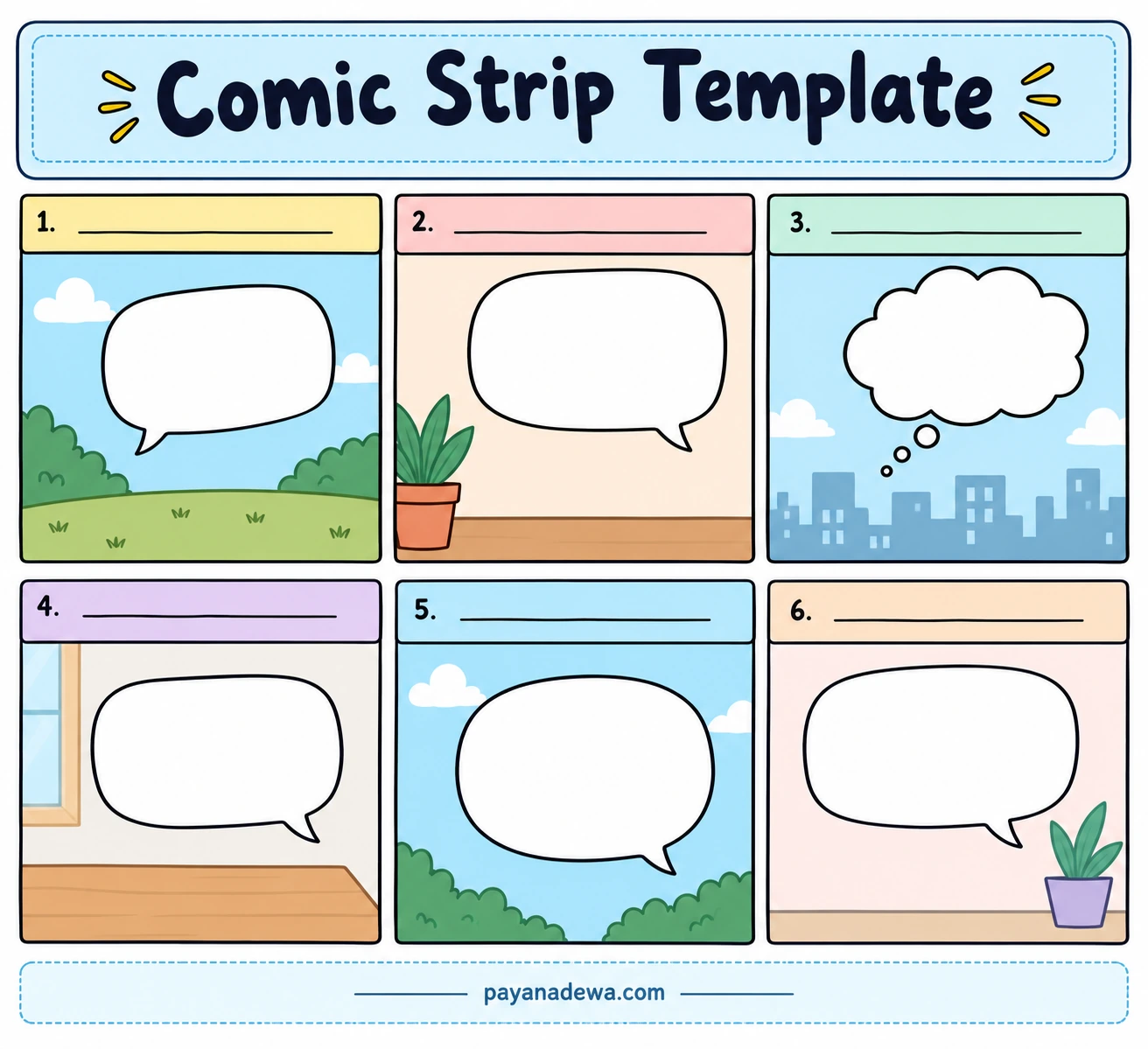
Create a series of boxes to organize the illustrations. Four-panel and six-panel layouts are excellent choices for beginners. Make sure the panels are large enough for drawings, speech bubbles, and important details.
If you are new to comic creation, using a printable comic strip template can save time. It provides ready-made panels and spaces for dialogue, allowing you to focus on the story instead of designing the layout.
Step 5: Add Dialogue and Captions
Write short conversations that match the characters and situations. Avoid putting too much text into one panel. Readers should be able to understand the dialogue quickly while enjoying the illustrations.
Step 6: Add Colors and Details
Use colors to make characters and backgrounds more interesting. Add facial expressions, movement lines, simple scenery, and visual effects where appropriate. Make sure the illustrations support the story rather than distract from it.
Step 7: Review Your Comic Strip
Read your comic from the first panel to the last. Check whether the story makes sense, the dialogue is easy to read, and the illustrations match the events. Correct spelling mistakes and improve any confusing sections before sharing your finished work.
Benefits of Using a Comic Strip Template
A comic strip template is a useful resource for beginners, students, teachers, and anyone interested in visual storytelling. Instead of starting with a blank page, you can work with a prepared layout that makes the creative process easier.
- Saves time: Pre-designed panels eliminate the need to draw every box from scratch.
- Improves organization: Each panel provides a clear space for a specific part of the story.
- Encourages creativity: Blank speech bubbles and drawing areas allow you to experiment with different ideas.
- Supports learning: Students can practice writing, sequencing, reading, and visual communication.
- Easy to print: Printable layouts can be used for classroom activities, homework, and creative projects.
- Suitable for different ages: Children, teenagers, and adults can adapt the template to their skill levels.
Creative Comic Strip Ideas for Beginners
If you are unsure what to draw, start with a familiar situation and add an imaginative twist. Simple ideas are often the easiest to develop into entertaining comics.
- A Funny School Day: Create a story about a student experiencing an unexpected classroom adventure.
- The Talking Pet: Imagine a pet that suddenly learns how to speak and surprises its owner.
- A Superhero’s First Day: Tell the story of a beginner superhero trying to discover their special abilities.
- The Missing Lunchbox: Create a mystery about a missing lunchbox and the search to find it.
- Helping a Friend: Show how two friends solve a problem by working together.
- A Trip to the Future: Imagine a character discovering a world filled with futuristic inventions.
These ideas can be adapted into short four-panel comics or expanded into longer stories with additional scenes and characters.
Practical Tips for Making Better Comic Strips
Good comic storytelling depends on clarity, creativity, and visual consistency. The following tips can help improve your work.
- Keep your story focused: Concentrate on one central idea so readers can follow the plot easily.
- Use expressive characters: Facial expressions and body language help communicate emotions without excessive dialogue.
- Make dialogue readable: Choose clear lettering and leave enough space inside speech bubbles.
- Maintain a consistent style: Keep character designs and visual details recognizable throughout the story.
- Think about panel order: Arrange the panels logically so readers know where to look next.
- Use visual storytelling: Let illustrations communicate actions and emotions instead of explaining everything with words.
- Experiment with layouts: Try different panel sizes and arrangements when the story requires more dramatic scenes.
How to Use Comic Strips in Education
Comic strips are valuable educational resources because they combine visual information with written language. Teachers can use them to make classroom activities more interactive and encourage students to participate creatively.
For language learning, students can write conversations between characters and practice vocabulary, grammar, and sentence construction. In history lessons, they can illustrate important events and explain what happened through a sequence of panels.
Science teachers can also use comics to explain natural processes, environmental topics, or scientific discoveries. Students can demonstrate their understanding by transforming information into a short illustrated story.
Group projects are another effective approach. Students can work together to develop characters, plan dialogue, draw illustrations, and present their finished comic strips to the class.
Frequently Asked Questions About Comic Strips
How many panels should a comic strip have?
A comic strip can contain any number of panels, depending on the story. Beginners often start with four or six panels because these layouts provide enough space for a simple beginning, middle, and ending.
Can beginners create a comic strip without drawing experience?
Yes. Beginners can use simple shapes, stick figures, basic expressions, and printable templates. Strong storytelling and clear communication are more important than advanced drawing skills.
What is the difference between a comic strip and a comic book?
A comic strip is generally a short illustrated story presented in a small sequence of panels. A comic book usually contains a longer narrative with multiple pages, more detailed scenes, and extended character development.
What materials do I need to make a comic strip?
You can create a traditional comic using paper, pencils, erasers, markers, and colored pencils. For digital comics, you can use a computer, tablet, drawing software, or an online design application.
Are comic strip templates useful for students?
Yes. Templates help students organize their ideas, practice sequencing, develop dialogue, and express information visually. They are especially useful for creative writing exercises and classroom storytelling projects.
Conclusion
A comic strip is a simple yet powerful way to combine art, writing, and imagination. Whether you want to create a funny story, complete a school assignment, teach an educational concept, or explore your creative interests, comic storytelling offers endless possibilities.
By understanding the basic elements, planning your story, creating engaging characters, and organizing your illustrations into panels, you can develop a comic that is both entertaining and easy to understand.
You do not need expensive equipment or professional drawing skills to get started. A simple printable comic strip template is enough to help you organize your ideas and bring your imagination to life. Start with a small story, experiment with different styles, and enjoy the creative process of making your own comic strip.