A balanced pregnancy diet helps support your health while your baby grows. If you are looking for a practical pregnancy food chart, this guide offers a flexible way to plan meals, choose nutrient-rich foods, and remember important food-safety habits. You do not need a perfect menu every day. Aim for variety across the week, eat regularly as your appetite allows, and follow advice from your prenatal healthcare professional.
Pregnancy needs can vary depending on your trimester, medical history, dietary pattern, and whether you are carrying more than one baby. Use this chart as a general planning tool—not as a personalized prescription or a substitute for prenatal care.
How to Use a Pregnancy Food Chart
A food chart is most useful when it makes everyday decisions easier. Instead of following a strict diet, build meals around a few food groups and adjust portions to your hunger, preferences, culture, and clinician’s guidance.
- Include vegetables and fruit: Choose a range of colors and wash produce well under running water.
- Choose whole grains often: Oats, brown rice, whole-wheat bread, and other whole grains provide carbohydrates and fiber.
- Add protein: Options include fully cooked eggs, beans, lentils, tofu, poultry, lean meat, and low-mercury fish.
- Include calcium-rich foods: Choose pasteurized milk, yogurt, cheese, or suitable fortified alternatives.
- Drink water regularly: Keep water nearby and drink more when you are thirsty, active, or in hot weather.
Appetite and nausea can change from day to day. If large meals feel difficult, try smaller meals and snacks more often. If you have persistent vomiting, cannot keep fluids down, or are losing weight, contact your healthcare professional promptly.
Essential Nutrients During Pregnancy
Several nutrients are especially important during pregnancy. Food can provide many of them, but diet alone may not meet every need. Ask your prenatal clinician which supplement is right for you, and do not start high-dose vitamins or herbal products without professional advice.
Folate and folic acid
Folate supports early development of the baby’s brain and spinal cord. Sources include leafy green vegetables, beans, lentils, citrus fruit, and fortified grain products. Many guidelines recommend a folic acid supplement before conception and in early pregnancy; the appropriate amount can depend on individual risk factors, so follow your clinician’s advice.
Iron
Iron helps the body make red blood cells and carry oxygen. Find it in lean meat, cooked seafood, beans, lentils, tofu, and iron-fortified cereals. Eating vitamin C-rich foods, such as oranges, tomatoes, or bell peppers, with plant sources of iron can help your body absorb it. Take iron supplements only as directed, because unnecessary iron can cause side effects.
Calcium and vitamin D
Calcium supports the development of your baby’s bones and teeth. Milk, yogurt, pasteurized cheese, calcium-set tofu, and fortified plant drinks can contribute calcium. Vitamin D helps the body absorb calcium; sources include fortified foods and some oily fish. Ask your clinician whether you need a vitamin D supplement.
Protein, choline, and omega-3 fats
Protein supports the growth of maternal and fetal tissues. Eggs that are fully cooked, beans, lentils, nuts, tofu, poultry, and fish can help meet protein needs. Choline is found in foods such as eggs, meat, fish, soybeans, and some beans. Omega-3 fats, including DHA, support fetal brain and eye development; lower-mercury fish can be a useful source.
Iodine and other nutrients
Iodine supports thyroid function and fetal development. Sources may include dairy products, seafood, eggs, and iodized salt. Needs vary by location and diet, so ask your clinician about iodine and your prenatal supplement rather than taking extra doses on your own.
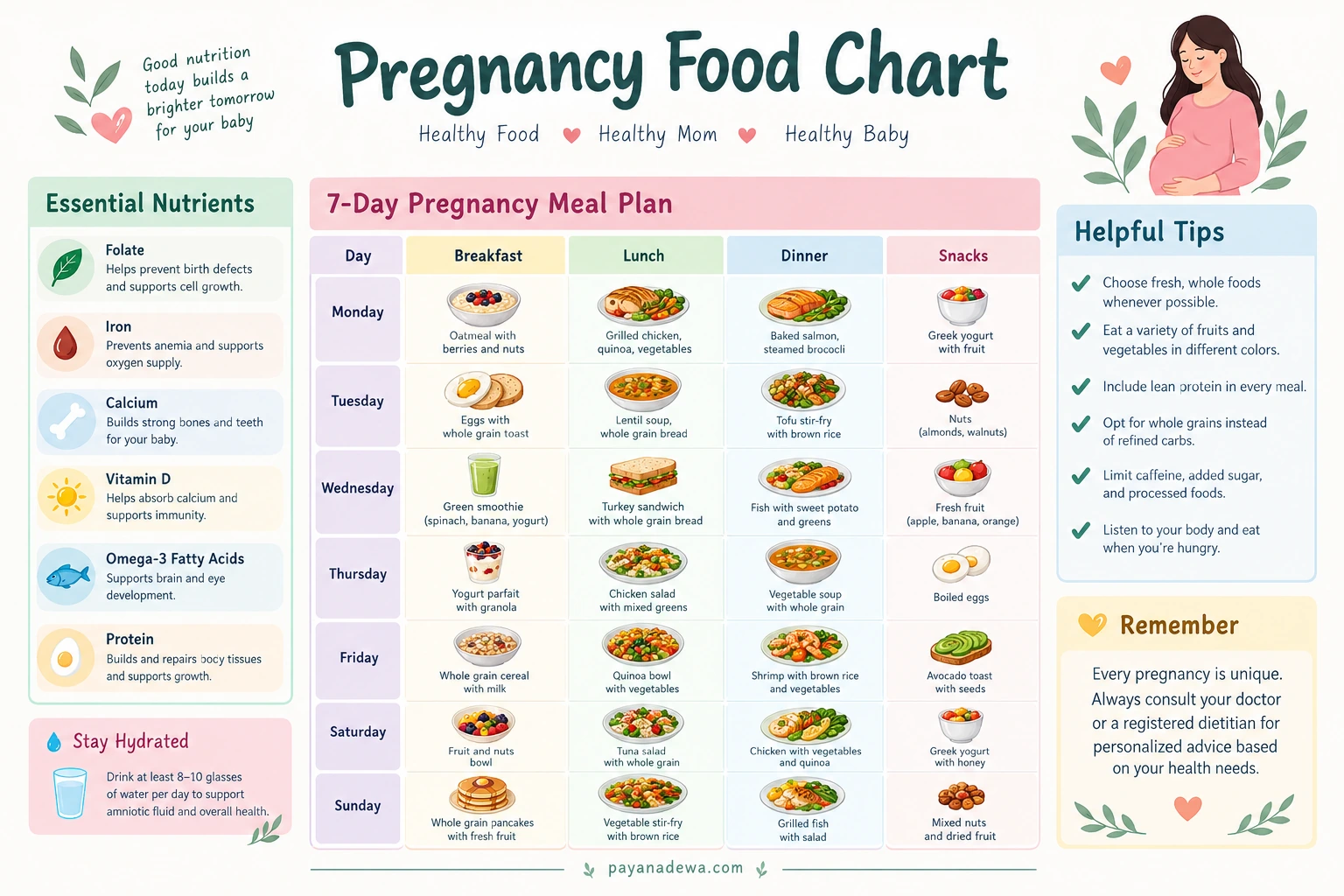
Sample 7-Day Pregnancy Food Chart
The following meal plan is an example, not a required schedule. Adjust it to your appetite, allergies, budget, culture, and dietary needs. Choose pasteurized dairy products and cook eggs, meat, and seafood thoroughly.
- Monday: Breakfast—oatmeal with berries and nuts. Lunch—grilled chicken, quinoa, and vegetables. Dinner—baked salmon with brown rice and broccoli. Snacks—pasteurized yogurt and fruit.
- Tuesday: Breakfast—fully cooked eggs with whole-grain toast. Lunch—lentil soup and whole-grain bread. Dinner—tofu and vegetable stir-fry with brown rice. Snacks—an orange and a handful of nuts.
- Wednesday: Breakfast—smoothie made with washed fruit, pasteurized yogurt, and spinach. Lunch—turkey sandwich made with safely handled, thoroughly heated deli meat or freshly cooked turkey. Dinner—fully cooked fish with sweet potato and greens. Snacks—apple slices with nut butter.
- Thursday: Breakfast—yogurt with granola and fruit. Lunch—chicken salad made with freshly cooked chicken and washed greens. Dinner—vegetable soup with beans and whole-grain bread. Snacks—fully cooked egg or pasteurized cheese with crackers.
- Friday: Breakfast—whole-grain cereal with pasteurized milk or a fortified alternative. Lunch—quinoa bowl with beans and vegetables. Dinner—fully cooked shrimp with brown rice and vegetables. Snacks—avocado toast or fruit.
- Saturday: Breakfast—fruit and nut oatmeal. Lunch—tuna salad using a pregnancy-safe amount of a lower-mercury tuna variety. Dinner—chicken with vegetables and quinoa. Snacks—pasteurized yogurt or hummus with washed vegetable sticks.
- Sunday: Breakfast—whole-grain pancakes with fresh fruit. Lunch—vegetable and tofu stir-fry with brown rice. Dinner—fully cooked low-mercury fish with salad made from thoroughly washed produce. Snacks—nuts and fruit.
Vegetarian and vegan readers can replace animal proteins with beans, lentils, tofu, tempeh, nuts, seeds, and fortified foods. A fully plant-based pregnancy may require particular attention to vitamin B12, iron, iodine, calcium, vitamin D, choline, and omega-3 fats. Discuss your eating pattern with a qualified clinician or registered dietitian.
Foods and Drinks to Limit or Avoid
Food safety matters throughout pregnancy because some infections and contaminants can pose extra risks. Recommendations can differ by country, so follow local public-health advice and your prenatal clinician’s guidance.
- Avoid alcohol: No amount or timing of alcohol has been established as safe during pregnancy.
- Avoid high-mercury fish: Choose a variety of lower-mercury fish and follow local guidance on safe species and servings.
- Avoid raw or undercooked animal foods: This includes raw seafood, undercooked meat, and eggs that have not been cooked safely.
- Choose pasteurized dairy and juice: Avoid unpasteurized milk, cheeses made from unpasteurized milk, and unpasteurized juice.
- Handle ready-to-eat foods carefully: Follow local advice on deli meats, refrigerated pâtés, smoked seafood, and refrigerated ready-to-eat foods; some need to be avoided or reheated until steaming hot.
- Wash produce: Rinse fruit and vegetables under running water. Avoid sprouts that are raw or lightly cooked.
- Limit caffeine: Many health authorities advise keeping total caffeine intake below 200 mg per day during pregnancy. Count coffee, tea, cola, energy drinks, chocolate, and some medicines.
- Check herbal products and supplements: “Natural” does not automatically mean safe during pregnancy.
Hydration and Helpful Daily Habits
Water supports normal body functions and helps replace fluids lost through breathing, sweating, and digestion. Keep a refillable bottle nearby and drink regularly. Fluid needs vary with climate, activity, health, and the foods you eat; ask your clinician for individualized guidance if you have a condition that affects fluid intake.
- Eat a variety of foods rather than relying on one “superfood.”
- Include fiber-rich foods such as oats, beans, vegetables, fruit, and whole grains to help with constipation.
- Eat smaller, more frequent meals if nausea or heartburn makes large meals uncomfortable.
- Use safe food handling: wash hands, separate raw meat from ready-to-eat foods, refrigerate perishables promptly, and cook foods thoroughly.
- Take prenatal supplements only as recommended, and keep them out of children’s reach.
Adjusting Your Food Choices by Trimester
First trimester
Nausea or food aversions may make eating challenging. Try small, frequent meals, simple foods you tolerate, and steady sips of fluid. Continue following folic acid guidance and seek help if vomiting is severe or persistent.
Second trimester
As appetite changes, focus on regular balanced meals with protein, whole grains, vegetables, fruit, and calcium-rich foods. Your energy needs may increase, but the amount varies; avoid using a fixed calorie target without personalized advice.
Third trimester
Your growing baby and changing digestion may make smaller meals more comfortable. Keep up with fluids and nutrient-rich foods, and discuss heartburn, constipation, swelling, or appetite changes with your clinician—especially if symptoms are sudden or severe.
When to Ask a Healthcare Professional
Get personalized guidance if you have gestational diabetes, anemia, high blood pressure, food allergies, a history of an eating disorder, significant dietary restrictions, or a pregnancy with special medical considerations. Contact your care team if you cannot keep fluids down, have persistent vomiting, or are concerned that you are not eating enough. Seek urgent care for severe symptoms or any warning signs your clinician has told you to watch for.
Conclusion
A practical pregnancy food chart can make healthy eating feel more manageable. Build meals around a variety of vegetables and fruit, whole grains, protein-rich foods, calcium sources, and safe lower-mercury fish when suitable. Pay attention to food safety, hydration, caffeine, and supplements, and adapt the plan to your needs rather than treating it as a rigid rulebook. For advice tailored to your pregnancy, speak with your obstetric clinician or a registered dietitian.
Medical note: This article provides general educational information and does not replace medical advice, diagnosis, or treatment. Pregnancy nutrition recommendations may vary by individual and location.