Tracking your weight during pregnancy can help you understand your body’s changes and support a healthy pregnancy. A Pregnancy Weight Gain Chart provides a simple way to monitor your progress, understand recommended weight gain ranges, and prepare questions for your prenatal appointments. However, every pregnancy is different, and your ideal weight gain depends on several factors, including your pre-pregnancy body mass index (BMI), whether you are carrying one baby or twins, and your individual health needs.
This guide explains how to use a pregnancy weight gain chart, how much weight you may gain during each trimester, and how to maintain healthy habits throughout pregnancy. You will also find practical tips for tracking your progress without becoming overly focused on the numbers.
What Is a Pregnancy Weight Gain Chart?
A pregnancy weight gain chart is a tracking tool that helps you record your weight as your pregnancy progresses. It can show how your weight changes from the first trimester through the final weeks before delivery.
A printable pregnancy weight tracker may include your current pregnancy week, measurement date, weight, total weight gain, and notes about your health or prenatal appointments. Some charts also include a progress graph and recommended weight gain ranges based on your starting BMI.
Using a chart can help you:
- Record weight measurements consistently throughout pregnancy.
- Understand general pregnancy weight gain recommendations.
- Discuss unexpected weight changes with your healthcare provider.
- Keep track of questions and observations between prenatal visits.
- Recognize that healthy pregnancy progress involves more than weight alone.
Remember that a chart is a guide, not a diagnostic tool. Your healthcare provider should interpret your weight changes alongside your baby’s growth, your medical history, and your overall pregnancy health.
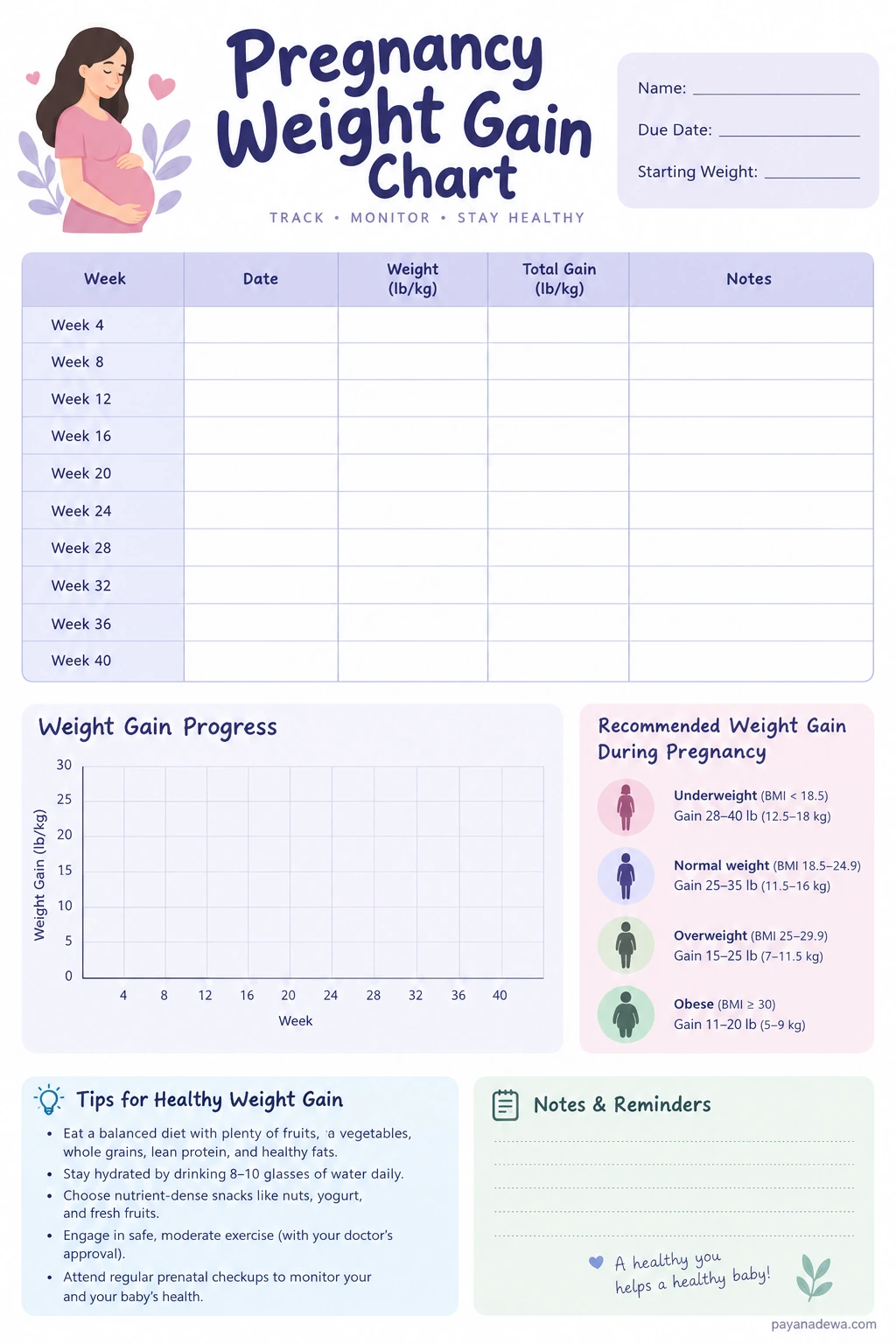
How Much Weight Should You Gain During Pregnancy?
The recommended amount of pregnancy weight gain depends largely on your BMI before pregnancy. For a pregnancy with one baby, the US Centers for Disease Control and Prevention (CDC) provides general recommendations based on pre-pregnancy weight categories.
The following ranges are widely used clinical guidelines for singleton pregnancies. They are not targets that every pregnant person must meet exactly.
- Underweight (BMI below 18.5): A total gain of approximately 28–40 pounds (12.5–18 kg).
- Normal weight (BMI 18.5–24.9): A total gain of approximately 25–35 pounds (11.5–16 kg).
- Overweight (BMI 25.0–29.9): A total gain of approximately 15–25 pounds (7–11.5 kg).
- Obesity (BMI 30.0–39.9): A total gain of approximately 11–20 pounds (5–9 kg).
These recommendations apply to pregnancies with one baby and use pre-pregnancy BMI as the starting point. BMI is calculated by dividing weight in kilograms by height in meters squared.
If you are expecting twins or more, the recommended weight gain may be different. Your healthcare provider can help determine an appropriate range based on your pregnancy, starting weight, and medical circumstances.
Pregnancy Weight Gain by Trimester
Weight gain does not usually happen at the same rate throughout pregnancy. Some people gain very little weight during the first trimester, while weight gain often becomes more consistent during the second and third trimesters.
First Trimester: Weeks 1–13
During the first trimester, nausea, vomiting, food aversions, and changes in appetite can affect your weight. Some pregnant people gain only a small amount, while others experience little change or temporarily lose weight because of nausea.
For someone who started pregnancy at a healthy weight, approximately 1–5 pounds (0.5–2.3 kg) of total gain during the first trimester is a commonly cited estimate. However, individual experiences vary.
Focus on staying hydrated, eating what you can tolerate, and choosing nutritious foods when possible. Contact your healthcare provider if vomiting prevents you from keeping fluids down, you experience signs of dehydration, or weight loss becomes concerning.
Second Trimester: Weeks 14–27
Many pregnant people experience improved nausea and a stronger appetite during the second trimester. Your baby grows more rapidly, and your body continues developing the placenta, increasing blood volume, and supporting other pregnancy-related changes.
For a singleton pregnancy that began at a healthy BMI, an average gain of about 0.5–1 pound (0.2–0.5 kg) per week is a commonly used estimate during the second and third trimesters. The appropriate rate differs according to your starting BMI and individual circumstances.
Eat regular, balanced meals and include protein, whole grains, fruits, vegetables, and healthy fats. Your prenatal appointments can help determine whether your weight trend is appropriate for you.
Third Trimester: Weeks 28–40
During the third trimester, your baby continues gaining weight while your body prepares for delivery. You may notice changes in appetite, digestion, sleep, and activity levels as your pregnancy progresses.
Weight gain may continue steadily, but the pattern is not identical for everyone. Temporary fluctuations can occur because of hydration, digestion, and the timing of a measurement.
Continue attending prenatal appointments and follow your provider’s guidance. Do not attempt to restrict food or lose weight during pregnancy unless you are following a specific plan recommended and monitored by your healthcare team.
How to Use a Pregnancy Weight Gain Chart
A printable pregnancy weight gain chart is most useful when you complete it consistently and use the information to support conversations with your healthcare provider.
- Record your starting weight. Use your pre-pregnancy weight when available, or ask your provider which starting measurement is most appropriate.
- Note your pregnancy week. Record your gestational week so each measurement has useful context.
- Enter the date and weight. Use the same unit each time, such as pounds or kilograms.
- Calculate total weight change. Subtract your starting weight from your current weight to see the overall change.
- Add relevant notes. Record symptoms, changes in appetite, medication concerns, or questions for your next appointment.
- Review your progress with your provider. Ask whether your overall pattern is appropriate instead of judging individual measurements in isolation.
For more consistent measurements, use the same scale when possible and weigh yourself under similar conditions. Your healthcare provider may recommend a different monitoring schedule depending on your needs. Daily weighing is not necessary for everyone.
Factors That Affect Pregnancy Weight Gain
Pregnancy weight gain reflects more than the weight of your growing baby. Several normal physiological changes contribute to the number on the scale.
- Baby’s growth: Your baby gains weight throughout pregnancy, particularly during later stages.
- Placenta and amniotic fluid: These support your baby’s development and contribute to total pregnancy weight.
- Blood volume: Your body produces additional blood to support pregnancy.
- Fluid retention: Changes in body fluids can cause temporary weight fluctuations.
- Breast and uterine growth: Your body changes to support pregnancy and prepare for feeding your baby.
- Maternal energy stores: Your body stores fat and other resources that help support pregnancy and breastfeeding.
Pre-pregnancy BMI, appetite, activity level, genetics, medications, and medical conditions can also influence your weight pattern. This is why two healthy pregnancies may produce different results on a pregnancy weight gain chart.
Healthy Tips for Managing Weight During Pregnancy
The goal is to support your health and your baby’s development, not to achieve a particular number at any cost. Healthy habits are generally more useful than strict dieting or trying to control every weekly fluctuation.
Choose Nutrient-Rich Foods
Build meals around vegetables, fruits, whole grains, protein-rich foods, and sources of healthy fats. Eggs, beans, lentils, thoroughly cooked fish, lean meats, pasteurized dairy products, nuts, and seeds can provide important nutrients. Follow pregnancy food-safety recommendations and ask your provider about any dietary restrictions.
Stay Hydrated
Drink water regularly throughout the day, especially in warm weather or when you are physically active. Your hydration needs can vary with activity, symptoms, and medical conditions. Ask your healthcare provider for personalized advice if you have been given fluid restrictions.
Stay Physically Active When Appropriate
For many people with uncomplicated pregnancies, activities such as walking, swimming, and pregnancy-appropriate exercise can support general health. The right activity level depends on your medical history and pregnancy. Check with your healthcare provider before beginning a new exercise routine, particularly if you have complications or have been advised to limit activity.
Eat Regular Meals and Snacks
Smaller, more frequent meals may help if nausea, heartburn, or a reduced appetite makes larger meals uncomfortable. Convenient options such as yogurt, fruit, nuts, whole-grain crackers, and other nutrient-rich snacks can help you meet your nutritional needs.
Prioritize Prenatal Care
Regular prenatal visits allow your healthcare provider to monitor your health and your baby’s growth. Discuss concerns about rapid weight changes, persistent vomiting, swelling, appetite, or difficulty gaining weight rather than trying to correct these issues on your own.
When Should You Contact Your Healthcare Provider?
Weight changes are often normal during pregnancy, but some changes deserve medical attention. Contact your healthcare provider if you experience:
- Persistent vomiting or difficulty keeping fluids down.
- Unexpected weight loss or ongoing difficulty gaining weight.
- A sudden increase in weight accompanied by significant swelling.
- New or severe headaches, vision changes, or pain in the upper abdomen.
- Any other symptoms that concern you or seem unusual for your pregnancy.
Sudden weight gain with severe headache, vision changes, or significant upper abdominal pain can be a warning sign of preeclampsia. Seek urgent medical assessment for these symptoms, particularly after 20 weeks of pregnancy. Severe symptoms warrant emergency care.
Your provider can assess whether a weight change reflects normal pregnancy development, fluid retention, or a condition requiring further evaluation. A chart alone cannot identify the cause.
Frequently Asked Questions About Pregnancy Weight Gain Charts
Is a pregnancy weight gain chart accurate for every pregnancy?
A chart provides general guidance, but it cannot predict the ideal weight gain for every person. Recommendations depend on pre-pregnancy BMI, the number of babies, medical history, and your baby’s growth. Use the chart as a tracking aid rather than a personalized medical assessment.
How often should I record my pregnancy weight?
Follow the schedule recommended by your healthcare provider. Some people record measurements during prenatal visits, while others use a home tracker when appropriate. Consistent measurements are more informative than frequent weighing that creates unnecessary stress.
What if I gain more or less weight than the chart recommends?
One measurement outside a suggested range does not automatically mean something is wrong. Discuss your overall trend with your provider, who can consider symptoms, nutrition, medical history, and fetal growth. Do not skip meals or make major dietary changes to compensate for a number on the chart.
Can I use the same pregnancy weight gain chart for twins?
You can use the same basic tracking format, but singleton weight gain recommendations should not be applied automatically to twin pregnancies. Ask your healthcare provider for an appropriate target and monitoring plan for a multiple pregnancy.
Conclusion: Track Your Pregnancy Weight With Confidence
A Pregnancy Weight Gain Chart can make it easier to record changes, understand general recommendations, and prepare for prenatal appointments. The most useful chart is one that helps you recognize your progress without creating unnecessary pressure about your weight.
Start with your pre-pregnancy BMI, learn the general recommendations for your pregnancy, and maintain healthy habits through balanced nutrition, appropriate physical activity, hydration, and regular prenatal care. Remember that pregnancy weight gain varies from person to person.
Download and print the Pregnancy Weight Gain Chart Template to organize your measurements and notes in one convenient place. Most importantly, work with your healthcare provider to establish goals that support both your health and your baby’s development.
Medical disclaimer: This article is for general educational purposes and does not replace personalized medical advice. Consult your obstetrician, midwife, or other qualified healthcare professional for recommendations specific to your pregnancy.
References for further reading: Centers for Disease Control and Prevention (CDC), “Weight Gain During Pregnancy”; American College of Obstetricians and Gynecologists (ACOG), “How Much Weight Should I Gain During Pregnancy?”