A well-designed recruitment brochure can turn a simple job announcement into a professional and engaging invitation to join your organization. Unlike a basic job posting, a recruitment brochure gives potential candidates a broader view of your company, available positions, workplace culture, employee benefits, and application process in one easy-to-read format.
Whether you are hiring for a growing business, corporate organization, nonprofit, educational institution, or startup, a recruitment brochure can help communicate your employer brand and attract candidates who are a better fit for your team. When the content is clear, visually appealing, and focused on what job seekers actually want to know, the brochure can become a valuable part of your hiring strategy.
In this guide, you will learn what a recruitment brochure is, what information it should include, how to structure one effectively, and practical tips for creating a professional hiring brochure that encourages qualified candidates to apply.
What Is a Recruitment Brochure?
A recruitment brochure is a marketing-style document created to promote job opportunities and introduce potential employees to an organization. It may be distributed digitally as a PDF, shared through social media, published on a careers page, emailed to applicants, or printed for career fairs and recruitment events.
A good recruitment brochure combines essential hiring information with employer branding. Instead of focusing only on job responsibilities, it can show candidates why they should consider working for the company.
Common elements include:
- Company introduction and employer branding
- Available job positions
- Job responsibilities and qualifications
- Employee benefits and workplace perks
- Company culture and values
- Career development opportunities
- Application instructions and contact information
- Website, social media, or careers page details
Why Use a Recruitment Brochure?
Recruitment is highly competitive, especially when organizations are trying to attract candidates with specialized skills. A professional hiring brochure provides an opportunity to communicate more than the basic details found in a conventional job advertisement.
Build a Strong Employer Brand
Your recruitment materials influence how candidates perceive your organization. Consistent colors, typography, imagery, messaging, and company values can make your business appear more established and trustworthy.
A recruitment brochure also gives you space to communicate your employee value proposition. For example, you can highlight professional development, flexible work arrangements, collaborative teams, meaningful projects, or other benefits that differentiate your workplace.
Present Multiple Job Opportunities
If your organization is hiring for several positions, a recruitment brochure can present them together in a structured format. Candidates can quickly scan the available roles and identify opportunities that match their skills and career goals.
Make Recruitment Information Easier to Share
A digital recruitment brochure can be shared through email, LinkedIn, social media, messaging platforms, recruitment websites, and career events. A single well-designed document can therefore support several recruitment channels.
For printed recruitment materials, the same design can be adapted into a flyer, handout, or career fair brochure.
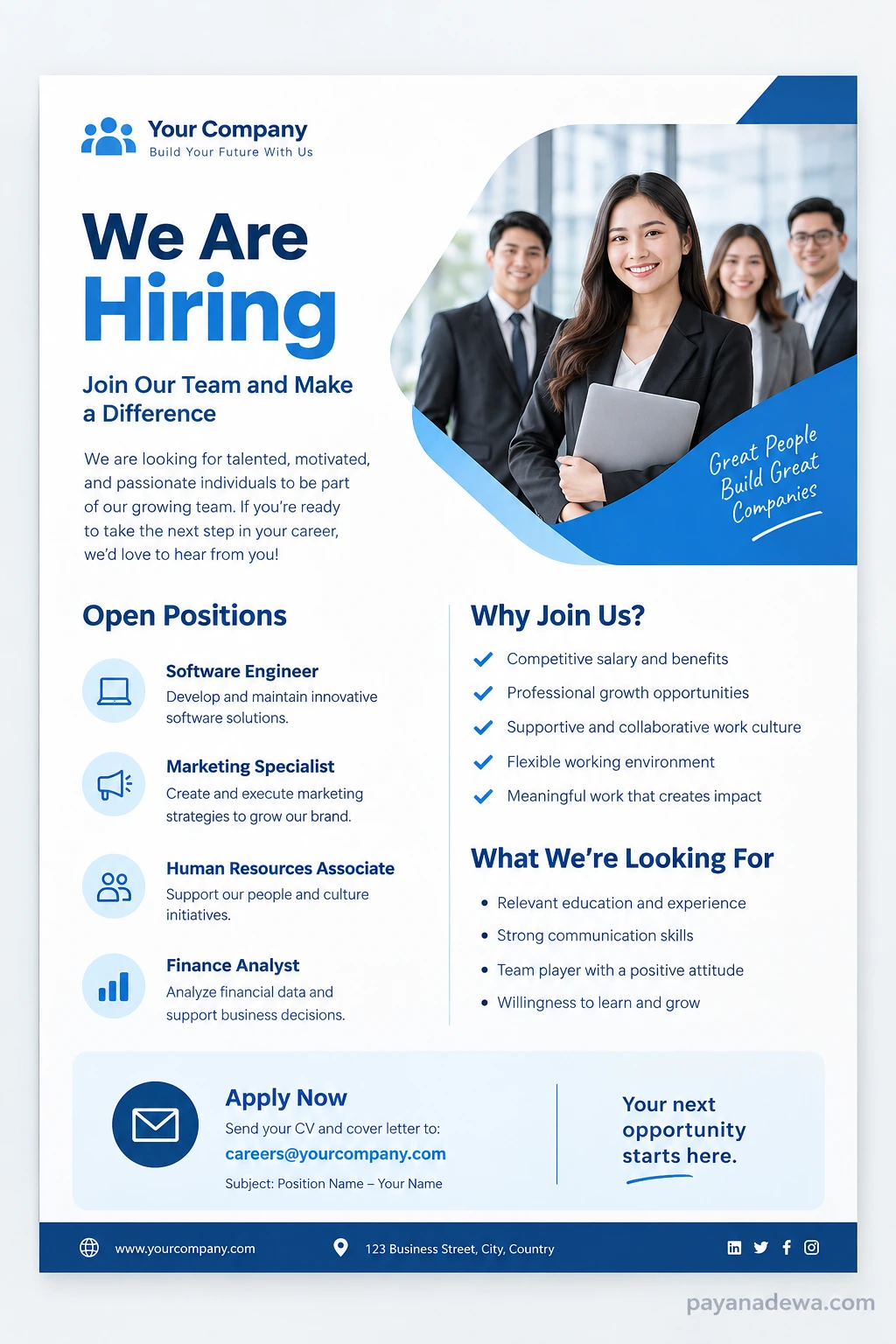
What Should a Recruitment Brochure Include?
The best recruitment brochures are informative without overwhelming readers. Every section should help a potential applicant understand the opportunity and decide whether the organization is a good match.
1. Company Introduction
Start with a concise introduction to your organization. Explain what the company does, who it serves, and what makes its workplace distinctive.
Avoid using a long corporate history unless it is directly relevant to recruitment. Instead, focus on information that helps candidates understand the organization and its mission.
2. Open Positions
Clearly list the roles currently available. Each position can include the job title, department, location, employment type, and a short description of the role.
For example, a recruitment brochure might feature positions such as:
- Software Engineer
- Marketing Specialist
- Human Resources Associate
- Finance Analyst
- Sales Representative
- Customer Support Specialist
If you are hiring for remote or hybrid positions, make the work arrangement clear. Candidates increasingly want to know whether a position is fully remote, hybrid, or office-based before applying.
3. Candidate Qualifications
Explain the skills, experience, education, certifications, or personal qualities required for each role. Separate essential requirements from preferred qualifications when possible.
Clear requirements help candidates determine whether they are suitable for the position and can reduce applications from people who do not meet critical criteria.
4. Employee Benefits
Benefits are an important part of a recruitment marketing strategy. Depending on the organization, you may highlight health benefits, paid time off, retirement plans, flexible schedules, professional training, bonuses, wellness programs, or other workplace benefits.
Only include benefits that genuinely apply to the advertised positions. Accurate information builds trust with potential applicants.
5. Company Culture
Job seekers often evaluate workplace culture alongside salary and benefits. Use your brochure to explain how employees collaborate, communicate, learn, and contribute to the organization’s goals.
Instead of relying on vague phrases such as “great company culture,” provide specific examples. You might mention mentoring programs, team projects, employee recognition, volunteer activities, learning opportunities, or flexible working practices.
6. Application Instructions
Make the next step obvious. Tell candidates exactly how to apply and what documents they should submit.
A strong application section can include an email address, careers page, QR code, application URL, submission deadline, and required documents such as a resume or portfolio.
How to Design a Professional Recruitment Brochure
Good recruitment brochure design is about more than decoration. The visual structure should make the information easy to scan while supporting the company’s identity.
Use a Clear Visual Hierarchy
Make the most important information visually prominent. The main hiring message, job titles, benefits, and application call to action should be easy to locate.
Use different heading sizes, appropriate spacing, short paragraphs, and bullet lists to guide the reader through the content.
Choose Professional Typography
Use readable fonts and maintain consistent typography throughout the document. Avoid using too many font families or decorative typefaces that make the brochure difficult to read.
A clean sans-serif font is often a practical choice for modern recruitment materials because it remains readable on both screens and printed pages.
Use Relevant Images
Images can make a hiring brochure more inviting, particularly when they represent the workplace, employees, projects, or company environment. Choose visuals that are relevant to the actual organization and avoid imagery that creates misleading expectations.
Keep the Layout Balanced
A recruitment brochure should not feel crowded. Use whitespace to separate sections and create breathing room around important information.
For a one-page brochure, prioritize the most important information and move detailed job descriptions to the company’s careers page or application portal.
Tips for Writing Recruitment Brochure Content
The wording of your brochure can influence whether a candidate continues reading or moves on to another opportunity. Write for the job seeker rather than simply repeating internal HR language.
- Be specific: Explain what the role involves instead of relying on generic descriptions.
- Focus on benefits: Show candidates what they can gain from joining the organization.
- Use active language: Write direct and engaging sentences.
- Keep paragraphs short: Short blocks of text are easier to scan.
- Highlight important details: Use headings and bullet points for key information.
- Use an obvious call to action: Tell readers exactly how to apply.
- Check accuracy: Verify job titles, requirements, contact details, and deadlines before publishing.
Recruitment Brochure Ideas for Different Hiring Situations
Corporate Recruitment
Corporate employers can emphasize career progression, professional development, company values, employee benefits, and opportunities to work on large-scale projects.
Small Business Hiring
Small businesses can use a more personal approach. Highlight close collaboration, opportunities to make an impact, flexible responsibilities, and the advantages of working in a growing team.
Campus Recruitment
For university and college recruitment, focus on internships, entry-level positions, mentorship, training, graduate programs, and career development. Use concise language and visually engaging content that appeals to students and recent graduates.
Career Fair Recruitment
A career fair brochure should be easy to scan quickly. Include your company name, key positions, benefits, qualifications, QR code or application URL, and contact information. Candidates may receive many brochures during an event, so a clear layout and memorable branding can make yours stand out.
How to Make Your Recruitment Brochure More Effective
Creating the brochure is only the first step. Its effectiveness depends on how well it connects with your recruitment process.
Match the Brochure With Your Careers Page
Keep job titles, requirements, benefits, and application instructions consistent across the brochure and your website. Candidates should not encounter conflicting information when they move from the brochure to the application page.
Add a Strong Call to Action
Use a clear phrase such as “Apply Now,” “Explore Open Positions,” or “Join Our Team.” Make the action easy to complete by providing a direct application link or QR code.
Optimize the Digital Version
If your recruitment brochure is distributed online, export it in a high-quality but reasonably sized PDF format. Make sure text remains readable on mobile devices and that links are clickable where appropriate.
Update It Regularly
Outdated job openings can damage the credibility of your recruitment campaign. Review the brochure whenever positions close, benefits change, contact details are updated, or a new hiring campaign begins.
Recruitment Brochure vs. Job Advertisement
A job advertisement typically focuses on one specific vacancy and provides information such as responsibilities, requirements, salary, and application instructions. A recruitment brochure can take a broader approach by promoting several positions while introducing the company as an employer.
These two formats work well together. A recruitment brochure can create awareness and communicate the employer brand, while individual job postings can provide the detailed information needed for each vacancy.
Common Recruitment Brochure Mistakes to Avoid
Even an attractive brochure can be ineffective if the content is unclear or incomplete. Avoid these common problems:
- Using too much text on a single page
- Including outdated vacancies
- Using vague job descriptions
- Hiding the application instructions
- Using low-quality or irrelevant images
- Overloading the design with too many colors or fonts
- Making the contact information difficult to find
- Promising benefits or workplace conditions that are not actually available
The goal is to create a document that looks professional while making the recruitment process easier for both candidates and hiring teams.
Final Thoughts on Creating a Recruitment Brochure
A recruitment brochure is a practical way to combine employer branding, job information, company culture, benefits, and application instructions in one engaging resource. When thoughtfully designed, it can help candidates understand what your organization offers and encourage qualified applicants to take the next step.
The most effective approach is to keep the message candidate-focused, use a clean visual hierarchy, provide accurate job information, and finish with a clear call to action. Whether you are preparing materials for a career fair, launching a hiring campaign, or promoting multiple vacancies online, a professional recruitment brochure can strengthen your recruitment communication and make your opportunities easier to discover and remember.