A real estate brochure is one of the most effective marketing materials for presenting properties, real estate services, and brand information in a professional and memorable way. Unlike a simple property listing, a well-designed brochure gives potential buyers or investors a complete visual overview of what a real estate business has to offer.
Whether you are a real estate agent, property developer, broker, or marketing professional, the right brochure can help build trust, showcase properties, communicate important details, and encourage potential clients to take the next step. A professional property brochure can also support open houses, property exhibitions, direct mail campaigns, client meetings, and digital marketing campaigns.
In this guide, you will learn what makes an effective real estate brochure, what information to include, how to structure the design, and practical tips for creating a brochure that attracts attention and generates leads.
What Is a Real Estate Brochure?
A real estate brochure is a printed or digital marketing document used to promote properties or real estate services. It commonly includes property photos, descriptions, features, pricing information, contact details, agent information, and a clear call to action.
Real estate brochures can be created in several formats, including bi-fold brochures, tri-fold brochures, multi-page property booklets, and digital PDF brochures. The best format depends on the amount of information you need to present and how the brochure will be distributed.
A good brochure should make important information easy to understand at a glance. Strong photography, organized sections, readable typography, and consistent branding can turn a basic property advertisement into a professional marketing tool.
Why Is a Real Estate Brochure Important?
Real estate is a highly visual industry. Buyers want to see what a property looks like, understand its key features, and quickly determine whether it matches their needs. A brochure brings these elements together in a structured format.
- Creates a professional first impression: A polished brochure can make an agency or property development appear more credible.
- Showcases properties visually: High-quality images allow potential buyers to understand the property’s appearance and atmosphere.
- Organizes important information: Property features, location details, amenities, and contact information can be presented clearly.
- Supports offline marketing: Printed brochures are useful at open houses, property events, offices, and meetings.
- Strengthens brand recognition: Consistent colors, logos, fonts, and imagery help reinforce a real estate brand.
- Generates leads: A strong call to action can encourage readers to schedule a viewing, contact an agent, or request additional information.
Essential Elements of an Effective Real Estate Brochure
A successful brochure should balance attractive design with useful information. Every section should have a clear purpose and help the reader understand the property or service.
1. Professional Property Photography
Photography is often the first element that attracts attention. Use bright, high-resolution images that accurately represent the property. Include exterior views, major living spaces, bedrooms, kitchens, bathrooms, outdoor areas, and important amenities when relevant.
Avoid using too many images without structure. Instead, select the strongest photographs and arrange them so the brochure feels visually balanced.
2. Clear Property Description
The property description should communicate the most important selling points without overwhelming the reader. Mention the property’s location, size, number of bedrooms and bathrooms, architectural style, major features, and lifestyle benefits.
Instead of simply listing specifications, explain why those features matter. For example, a spacious garden can be presented as an ideal area for entertaining guests or enjoying family time.
3. Key Property Features
A concise feature list makes important information easy to scan. Depending on the property, you can include:
- Number of bedrooms and bathrooms
- Property size and lot size
- Parking availability
- Kitchen and appliance features
- Outdoor spaces
- Security systems
- Swimming pool or recreational facilities
- Energy-efficient features
- Nearby schools, shopping centers, and transportation
4. Location Information
Location is one of the most important factors in real estate. Include a short explanation of the property’s surroundings and nearby points of interest.
Depending on the target audience, you may highlight access to business districts, schools, hospitals, shopping areas, restaurants, public transportation, parks, beaches, or major roads.
5. Contact Information and Call to Action
Every real estate marketing brochure should make it easy for potential clients to take action. Include the agent’s name, phone number, email address, website, social media information, or QR code when appropriate.
Use a direct call to action such as Schedule a Viewing, Contact Our Agent, Request Property Details, or Book a Private Tour.
Real Estate Brochure Template Design Ideas
Using a professional real estate brochure template can significantly simplify the design process. A template provides an organized structure while allowing you to customize images, colors, text, logos, and property information.
A modern property brochure usually benefits from a clean layout with generous white space, strong photography, consistent typography, and a limited color palette. Neutral colors combined with one or two brand colors can create a sophisticated appearance.
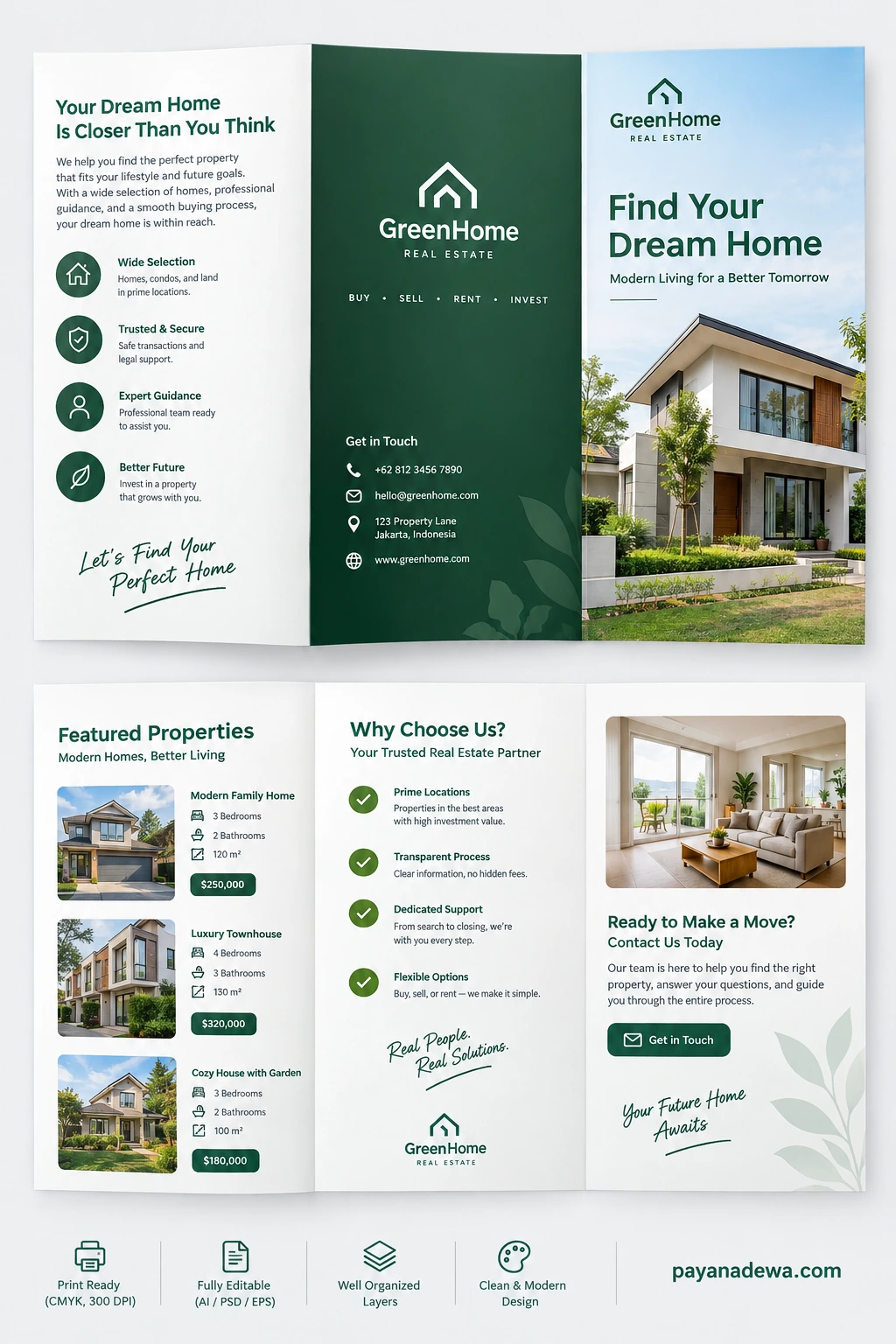
For example, the template below demonstrates how a brochure can combine a strong property image, featured listings, service benefits, contact information, and calls to action in one cohesive design.
How to Create a Real Estate Brochure
Step 1: Define Your Target Audience
Before designing the brochure, determine who will read it. A luxury property brochure may require an elegant and minimalist design, while a family housing brochure may benefit from a warmer and more approachable visual style.
Understanding your audience also helps determine which property details should receive the most attention.
Step 2: Gather Your Content
Collect all essential information before starting the layout. Prepare property photographs, descriptions, specifications, prices, location details, agent information, logos, and contact details.
Having the content ready prevents unnecessary design revisions and helps maintain a consistent layout.
Step 3: Choose the Right Layout
Select a brochure format based on the amount of information you need to communicate. A tri-fold brochure works well for concise property marketing, while a multi-page brochure is more suitable for luxury developments or multiple property listings.
Step 4: Prioritize Visual Hierarchy
Not every piece of information should have the same visual weight. Use larger headings for major selling points, supporting text for descriptions, and smaller elements for secondary details.
The reader should immediately understand what the brochure is about and where to find the most important information.
Step 5: Add a Strong Call to Action
End the brochure with a clear next step. A reader should never have to search for a phone number or website after deciding that a property interests them.
Tips for Designing a Professional Property Brochure
- Use high-quality images: Property photography should be sharp, well-lit, and visually appealing.
- Keep the layout clean: Avoid filling every available space with text or graphics.
- Use consistent branding: Match the brochure to your company logo, website, signage, and other marketing materials.
- Make text easy to read: Choose professional fonts and maintain sufficient contrast between text and background.
- Highlight the strongest selling points: Focus attention on features that differentiate the property from competing listings.
- Include accurate information: Verify prices, dimensions, contact information, and property specifications before publishing.
- Optimize for print and digital use: Prepare appropriate file formats and resolutions for both physical distribution and online sharing.
- Use QR codes when useful: A QR code can connect readers directly to a property website, virtual tour, online listing, or contact form.
Printed vs. Digital Real Estate Brochures
Both printed and digital brochures have advantages. Printed brochures work particularly well during open houses, property tours, exhibitions, and face-to-face meetings. They give prospects something tangible to take home and review later.
Digital brochures are convenient for email campaigns, websites, messaging apps, social media, and online property marketing. They can also include clickable links and interactive elements.
For many real estate businesses, using both formats provides the best results. A single brochure design can be adapted for professional printing and optimized as a digital PDF.
Common Real Estate Brochure Mistakes to Avoid
A brochure can lose its effectiveness when the design focuses too heavily on decoration instead of communication. Avoid overcrowded layouts, low-quality photographs, excessive colors, tiny text, and inconsistent branding.
Another common mistake is providing too much information. A brochure should encourage the reader to learn more rather than attempting to answer every possible question. Include the most persuasive details and provide contact information for additional questions.
Finally, always proofread the brochure before printing or publishing it online. A simple spelling mistake, incorrect phone number, or outdated price can damage credibility.
How a Real Estate Brochure Can Support Your Marketing Strategy
A brochure should not be treated as an isolated marketing asset. It can become part of a broader real estate marketing strategy.
For example, an agent can use the same brochure at an open house, send it to prospective buyers by email, publish it as a downloadable PDF, and connect it to an online property listing using a QR code.
You can also reuse brochure content for property landing pages, social media posts, email newsletters, presentation slides, and sales materials. This creates consistent messaging across multiple marketing channels while reducing content creation time.
Final Thoughts on Real Estate Brochures
A well-designed real estate brochure combines strong visuals, useful property information, professional branding, and a clear call to action. When these elements work together, a brochure can make properties easier to understand while helping real estate professionals create a stronger first impression.
Whether you are marketing a single home, a luxury apartment, a commercial property, or an entire residential development, start with a clear structure and focus on the information that matters most to your target audience.
Using a customizable real estate brochure template can make the process faster and more consistent. With professional photography, concise copy, clear property details, and an effective call to action, your brochure can become a valuable part of your overall property marketing strategy.