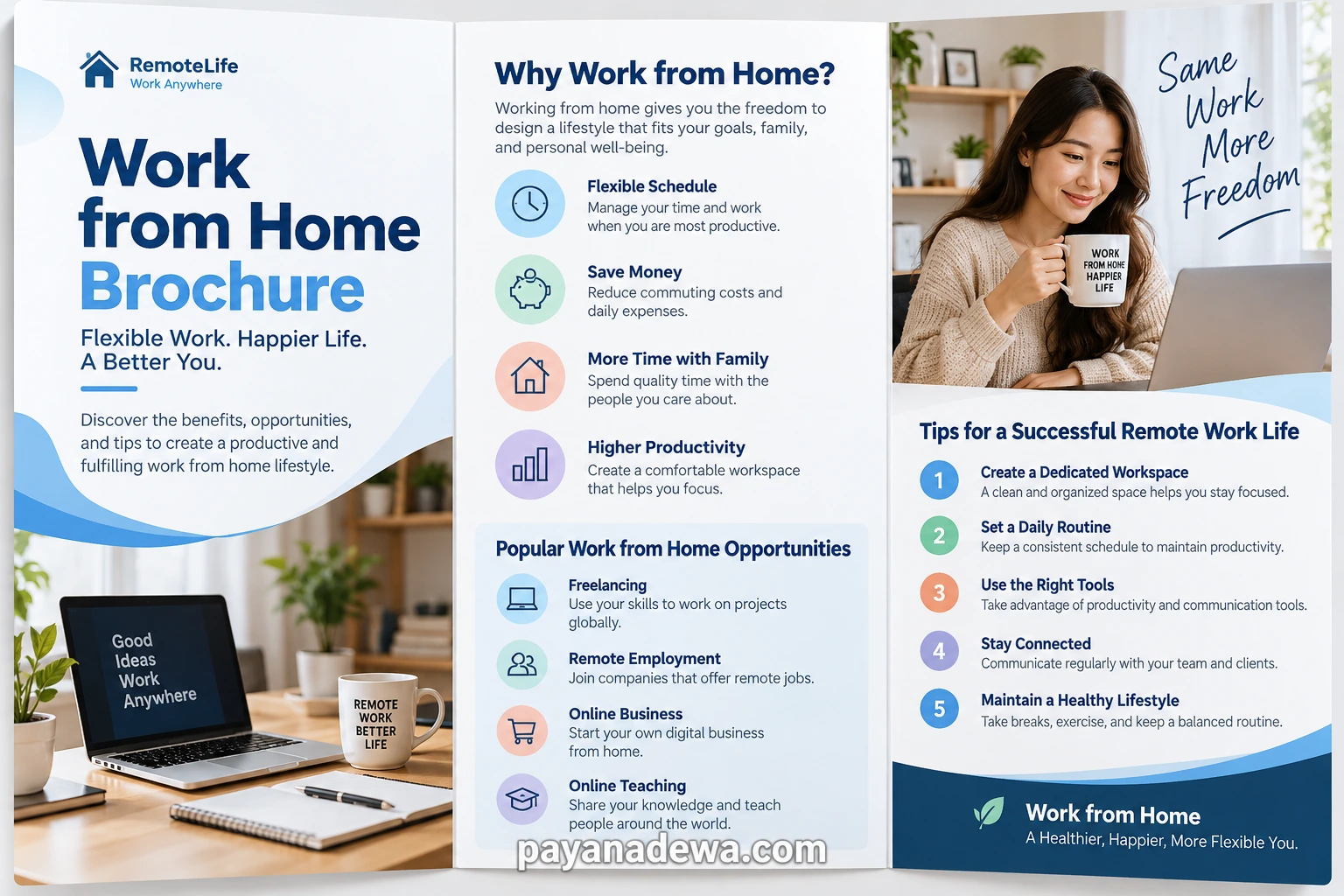
Working from home has become an increasingly popular way to build a flexible and productive professional lifestyle. Whether you are an employee, freelancer, entrepreneur, teacher, consultant, or creative professional, remote work can provide more control over how, where, and when you work. A well-designed Work from Home Brochure can help explain these advantages clearly while presenting useful information in an attractive and easy-to-understand format.
Unlike a traditional office environment, working remotely allows people to create a workspace that fits their individual needs. A quiet room, comfortable desk, reliable computer, and stable internet connection can become the foundation of a productive home office. With the right routine and tools, remote workers can accomplish their professional responsibilities without commuting to a physical workplace every day.
A brochure about working from home can also be useful for businesses, organizations, educational institutions, recruitment teams, and individuals promoting remote employment opportunities. It can introduce the benefits of flexible work, explain available opportunities, and provide practical advice for building a successful remote career.
If you are looking for inspiration for a professional remote work brochure, the following guide explains the most important information to include. It also explores work-from-home benefits, popular opportunities, productivity strategies, and ways to maintain a healthy balance between professional and personal life.
A strong brochure should not simply contain attractive visuals. It should communicate useful information quickly, use clear headings, and help readers understand why remote work can be a valuable option.
What Is a Work from Home Brochure?
A Simple Way to Explain Remote Work
A Work from Home Brochure is a visual information resource designed to explain the concept of working remotely. It can introduce readers to remote employment, freelancing, online business, virtual services, or other professional opportunities that can be performed from home.
Because brochures are designed to communicate information efficiently, they are particularly useful when an organization wants to present several related ideas in one compact resource. Instead of requiring readers to search through multiple pages, a brochure can organize the essential information into clearly defined sections.
A professional brochure may include an introduction to remote work, its major advantages, common challenges, available opportunities, recommended tools, and productivity tips. Images, icons, short paragraphs, and bullet points can make the information easier to scan.
Who Can Use a Remote Work Brochure?
Many different audiences can benefit from this type of brochure. Companies can use one to explain their remote working policies to employees. Recruitment teams can use it to promote remote job opportunities, while educational organizations can use it to teach students about digital careers.
Freelancers and entrepreneurs can also use a work-from-home brochure as promotional material. For example, a freelancer could use a brochure to explain their services, working process, availability, and communication methods.
- Businesses introducing remote work policies
- Recruiters promoting remote employment
- Freelancers promoting professional services
- Entrepreneurs promoting online businesses
- Educational organizations explaining digital careers
- Coaches and consultants providing remote-work guidance
Why Is Working From Home Becoming Popular?
Greater Flexibility
One of the biggest advantages of remote work is flexibility. Employees can often organize their working environment and daily routine around their responsibilities. Depending on the job and company policy, flexible schedules can make it easier to manage appointments, family responsibilities, and personal commitments.
Flexibility does not mean working without structure. Successful remote professionals usually establish clear working hours and routines. The difference is that they have greater control over how they organize their working day.
Reduced Commuting
Daily commuting can consume a significant amount of time. Working from home eliminates or reduces the need to travel between home and the office, allowing people to use that time for work, rest, exercise, family activities, or personal development.
Reduced commuting can also decrease transportation expenses. Depending on the situation, workers may spend less on fuel, public transportation, parking, meals outside the home, and professional clothing.
A More Personalized Workspace
Remote workers can design their workspace around their personal preferences. A comfortable chair, suitable desk height, proper lighting, and organized equipment can make a significant difference to everyday productivity.
A dedicated workspace can also help create a psychological separation between work and personal activities. Even a small corner of a room can become an effective home office when it is organized properly.
Popular Work from Home Opportunities
Freelancing
Freelancing is one of the most flexible ways to work remotely. Professionals can offer services such as graphic design, writing, translation, programming, video editing, marketing, virtual assistance, and consulting.
Freelancers often work with multiple clients and can build their careers around their strongest skills. A professional brochure can help explain these services and make a freelancer’s offering easier for potential clients to understand.
Remote Employment
Many companies now offer remote or hybrid positions. These jobs can cover customer service, software development, marketing, administration, sales, project management, finance, and other professional fields.
Remote employment can provide the stability of a traditional job while offering more flexibility regarding location. However, applicants should always check the employer’s working hours, communication requirements, equipment policies, and expectations before accepting a position.
Online Business
An online business can be operated from a home office with the help of digital tools. Examples include e-commerce stores, digital products, online services, content businesses, and consulting practices.
The internet makes it possible for entrepreneurs to reach customers beyond their local area. However, building an online business still requires planning, consistent marketing, customer service, and financial management.
Online Teaching and Consulting
People with specialized knowledge can offer online courses, tutoring, coaching, or consulting services. Video conferencing platforms, learning management systems, and digital communication tools make it possible to serve clients or students from different locations.
How to Create a Productive Home Office
Choose a Dedicated Workspace
A dedicated workspace can help reduce distractions and create a clear boundary between professional and personal activities. Ideally, choose an area with sufficient lighting, comfortable furniture, and minimal noise.
Your workspace does not need to be expensive. The most important factors are comfort, organization, reliable equipment, and an environment that supports concentration.
Use Reliable Technology
Technology is the foundation of many remote jobs. A suitable computer, stable internet connection, headset, webcam, and productivity software can make remote communication much easier.
It is also useful to maintain backup options. Important documents should be stored securely, and critical work should not depend on a single device without a backup strategy.
Keep Your Workspace Organized
Clutter can make it harder to concentrate. Keep frequently used items within reach and remove unnecessary objects from your desk. Digital organization is equally important, so use clearly named folders and maintain a sensible file structure.
Tips for Successful Work From Home
Create a Consistent Daily Routine
A consistent routine can make remote work more manageable. Start the day at a regular time, identify your priorities, schedule focused work sessions, and establish a clear finishing time whenever possible.
Without a routine, it can be easy to work too little or work far longer than necessary. A predictable schedule helps maintain productivity while protecting personal time.
Set Clear Priorities
Remote workers often manage several tasks without direct supervision. Start each day by identifying the most important responsibilities. Breaking large projects into smaller actions can also make complex work easier to manage.
- Identify the most important task of the day
- Break large projects into smaller steps
- Use a calendar or task management system
- Set realistic deadlines
- Review completed work before finishing the day
Take Regular Breaks
Working continuously for several hours can lead to fatigue and reduced concentration. Short breaks provide an opportunity to stand up, stretch, drink water, or briefly step away from the screen.
Regular movement is especially important for people who spend most of their working day at a computer. A simple routine of standing, walking, and stretching can make the working day more comfortable.
Stay Connected With Your Team
Remote work requires deliberate communication. Teams cannot rely on casual office conversations, so important information should be shared through appropriate communication channels.
Regular meetings, project updates, instant messaging, and collaborative documents can help everyone remain aligned. Good communication should be clear, concise, and respectful of other people’s time.
What Should a Work from Home Brochure Include?
Essential Brochure Sections
If you are designing a Work from Home Brochure, focus on information that readers can understand quickly. A strong layout should guide readers naturally from the introduction to the key benefits and practical recommendations.
- Clear brochure title
- Short introduction to remote work
- Key benefits of working from home
- Popular remote work opportunities
- Home office recommendations
- Productivity and communication tips
- Relevant statistics or supporting information when available
- Contact information or call to action
Use Visual Hierarchy
Visual hierarchy determines how easily readers can navigate the brochure. The main title should be prominent, while section headings should clearly separate different topics. Short paragraphs and bullet points can prevent the design from becoming too text-heavy.
Icons and photographs can also support the message. For example, a clock icon can represent flexible scheduling, while a laptop icon can represent remote employment. Visual elements should support the information rather than overwhelm it.
Common Challenges of Working From Home
Distractions at Home
Home can contain many distractions, including household chores, television, social media, family activities, and unexpected interruptions. Creating boundaries is therefore important for maintaining focus.
Letting household members know when you are working can reduce interruptions. Turning off unnecessary notifications can also help maintain concentration during important tasks.
Difficulty Separating Work and Personal Life
One common challenge is the tendency to continue working after normal hours. Because the office is inside the home, there is no physical commute signaling the end of the workday.
Creating a clear end-of-day routine can help. Closing work applications, organizing tomorrow’s tasks, and physically leaving the workspace can create a useful transition from professional responsibilities to personal time.
Communication Challenges
Remote communication can sometimes create misunderstandings because people cannot always rely on facial expressions or informal conversations. Messages should therefore be specific and complete, especially when discussing deadlines, responsibilities, or important decisions.
How a Professional Brochure Can Promote Remote Work
For Companies and Organizations
Businesses can use a remote work brochure to introduce employees to flexible working policies and expectations. The brochure can explain communication standards, work schedules, technology requirements, security practices, and productivity expectations.
A clear brochure can also support employee onboarding. New team members can quickly understand how the organization approaches remote collaboration and what resources are available to them.
For Recruitment and Marketing
Recruitment teams can use a visually appealing brochure to highlight remote job opportunities. Information about company culture, benefits, work arrangements, career development, and application procedures can be presented in a concise format.
Marketing teams can also adapt a brochure for social media, email campaigns, websites, presentations, and digital downloads. This makes the content reusable across multiple communication channels.
Final Tips for Designing a Work from Home Brochure
Keep the Message Clear
The best brochure is not necessarily the one with the most information. Readers should be able to understand the main message within a short amount of time. Use concise wording and remove information that does not directly support the purpose of the brochure.
Make It Easy to Read
Choose readable fonts, sufficient spacing, clear headings, and a logical layout. Avoid placing too much text into a single section. A balanced combination of text, icons, photographs, and whitespace can make the brochure more professional.
Include a Useful Call to Action
A brochure should tell readers what to do next. Depending on its purpose, the call to action might encourage readers to apply for a remote position, explore available services, contact an organization, download additional resources, or learn more about remote work.
Conclusion
Build a Better Remote Work Experience
A Work from Home Brochure can be much more than a simple promotional document. When designed thoughtfully, it can educate readers about remote employment, explain the benefits of flexible work, introduce professional opportunities, and provide practical advice for creating a productive home office.
The key to successful remote work is not simply having a laptop and an internet connection. It requires good organization, clear communication, realistic schedules, suitable technology, and healthy boundaries between professional and personal life.
Whether you are creating a brochure for a company, promoting remote services, recruiting employees, or educating an audience, focus on clarity and usefulness. A clean layout combined with practical information can make your brochure more engaging and memorable.
With the right approach, working from home can become a flexible and productive way to build a career while creating more control over your everyday routine. A well-designed brochure can help communicate that message clearly and encourage readers to explore the possibilities of remote work.