A Human Rights Campaign Poster can turn an important message about equality, dignity, inclusion, and justice into a visual statement that people can understand within seconds. Whether it is created for a school project, community event, nonprofit campaign, workplace initiative, awareness program, or social media promotion, an effective poster combines a clear message with thoughtful visual design.
The strongest human rights posters do more than display attractive graphics. They communicate a meaningful idea, create an emotional connection, and encourage people to think about how individuals and communities can support equal rights. A well-designed poster can make complex social topics easier to understand while giving viewers a simple message they can remember.
Creating this type of poster does not require complicated design techniques. With the right combination of typography, color, imagery, layout, and messaging, you can create a professional-looking campaign visual that communicates its purpose clearly. The key is to keep the design focused and make sure every element supports the central message.
In this guide, you will learn how to create an effective human rights campaign poster, what elements to include, how to choose a suitable visual style, and how to make your design useful for both printed and digital campaigns.
Whether you need a printable poster template or inspiration for a completely original design, the following ideas can help you develop a campaign visual that is clear, engaging, and meaningful.
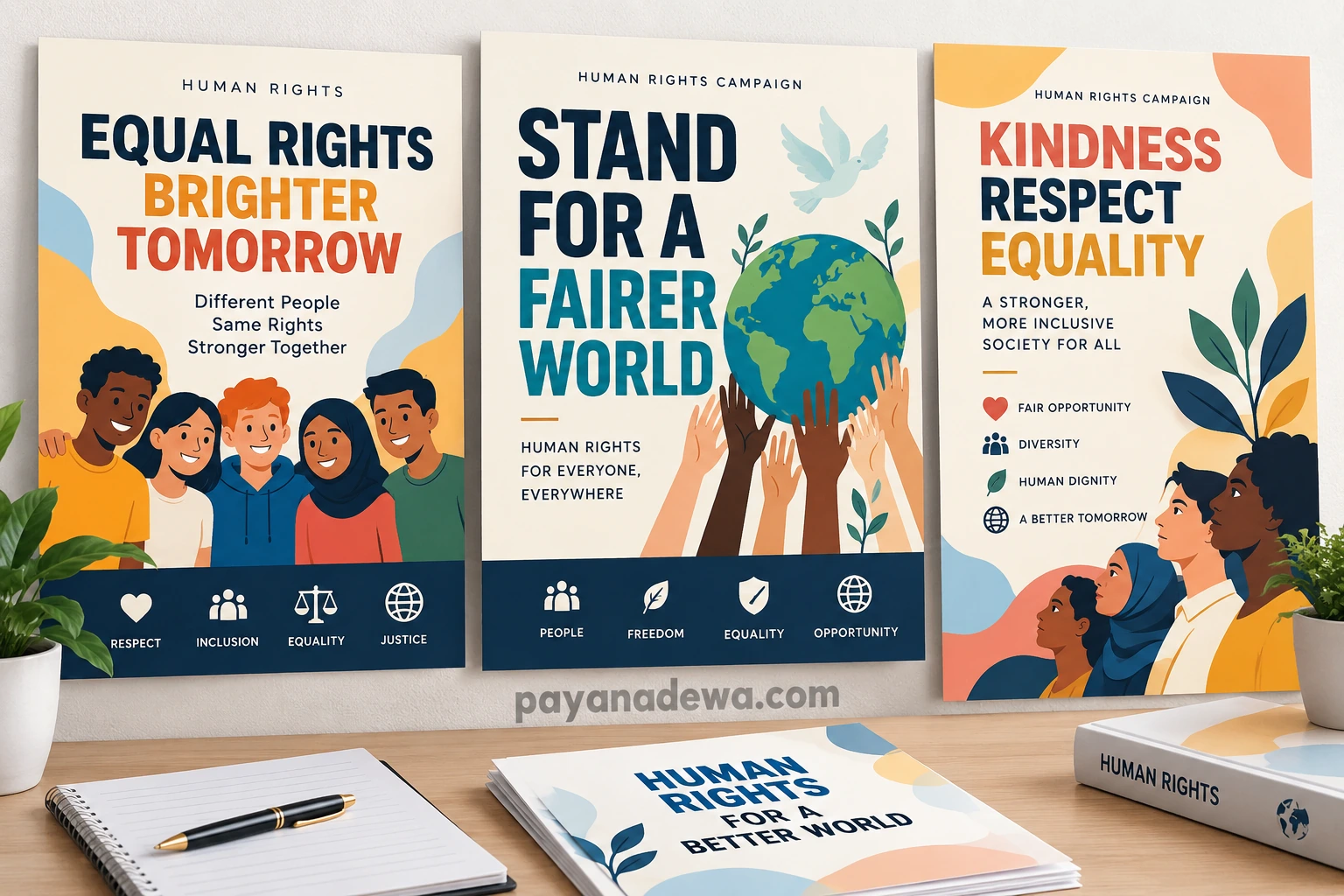
What Is a Human Rights Campaign Poster?
A human rights campaign poster is a visual communication tool designed to raise awareness about human rights and encourage positive social action. It may address themes such as equality, freedom, dignity, inclusion, discrimination, education, justice, accessibility, or respect for different communities.
The Purpose of a Human Rights Poster
The main purpose is to communicate an important idea quickly. Posters are often displayed in schools, universities, offices, community centers, public spaces, events, and online platforms. Because viewers may only spend a few seconds looking at a poster, the message needs to be easy to recognize and understand.
A strong poster can help introduce an issue, promote an awareness campaign, invite people to an event, or encourage a specific positive action. For example, a campaign might encourage people to learn about equality, respect differences, support inclusive communities, or participate in an educational event.
Important Elements of a Human Rights Campaign Poster
Good poster design begins with a clear understanding of the elements that need to work together. The headline attracts attention, the supporting text explains the idea, and the imagery reinforces the message.
1. Create a Clear Headline
The headline should communicate the main idea immediately. Short phrases such as “Equal Rights for Everyone,” “Stand for Human Dignity,” or “Together for a Fairer World” can provide a strong starting point.
Avoid making the headline unnecessarily long. Large, readable typography helps people understand the central message even when they are viewing the poster from a distance.
2. Use Meaningful Visuals
Images and illustrations should support the campaign theme rather than distract from it. Diverse groups of people, symbolic hands, globes, scales of justice, hearts, community illustrations, and inclusive abstract graphics can all communicate ideas about equality and cooperation.
The visual style should also match the intended audience. A school campaign might use friendly illustrations and bright colors, while a professional awareness campaign may benefit from a more restrained editorial design.
3. Include Supporting Information
A poster can include a short explanation beneath the main headline. This information should clarify the campaign without overwhelming the viewer. Keep supporting copy concise and use strong visual hierarchy so the headline remains the dominant element.
- Campaign purpose
- Short awareness message
- Event date or location when applicable
- Website or social media information
- Call to action
How to Design an Effective Human Rights Poster
Designing a human rights poster becomes easier when you work through the process step by step. Start with the campaign objective before choosing colors or decorative elements.
Define One Main Message
First, decide what you want viewers to remember. A poster that tries to communicate too many different ideas can become difficult to understand. Select one central message and build the rest of the design around it.
For example, if the campaign focuses on equality, the headline, imagery, and supporting copy should reinforce equality. If the campaign focuses on inclusion, the visual language should consistently communicate belonging and respect.
Choose a Strong Visual Hierarchy
Visual hierarchy determines the order in which people notice information. The campaign headline should usually receive the greatest emphasis. Supporting information can appear underneath, followed by secondary details such as contact information or an event location.
Use differences in font size, weight, spacing, and placement to create hierarchy. A simple layout often communicates more effectively than a crowded composition.
Select an Appropriate Color Palette
Color can influence how a campaign poster feels. Blue may communicate trust and stability, while warm colors can create energy and urgency. Green can suggest growth or community, while neutral backgrounds can make bold typography stand out.
Try to use a limited palette rather than adding many unrelated colors. Consistency makes the poster appear more professional and helps viewers focus on the message.
Human Rights Campaign Poster Ideas
There are many creative directions you can explore when developing a campaign poster. The best approach depends on your audience, campaign objective, and communication platform.
Equality and Inclusion Theme
An equality-focused poster can feature people from different backgrounds standing together. A short headline such as “Different People, Same Rights” can establish the concept quickly, while simple icons can reinforce inclusion, respect, justice, and opportunity.
Diversity and Community Theme
A diversity campaign can use illustrations showing people working, learning, or participating in a community together. The design can emphasize cooperation rather than focusing only on differences.
Human Dignity Theme
A campaign about human dignity can use a simple and elegant layout. A strong headline combined with symbolic imagery and minimal supporting text can create a thoughtful visual statement.
Education and Awareness Theme
For schools and educational organizations, consider using informative poster layouts. A large headline can introduce the topic, followed by several short facts or principles related to human rights. Icons can make educational information easier to scan.
Tips for Creating a Printable Human Rights Poster
If your poster will be printed, design decisions become even more important. The final file should remain readable and visually balanced at the intended physical size.
Use Readable Fonts
Choose fonts that remain clear when printed. Avoid decorative typefaces for important information because they can reduce readability. Strong sans-serif fonts are often effective for campaign headlines and informational text.
Leave Enough White Space
White space gives the design room to breathe. It also helps separate the headline, supporting text, illustrations, and other information. A poster does not need to fill every part of the page to look complete.
Prepare the Correct File Size
Choose the document dimensions before designing. Common poster sizes include A4, A3, and larger presentation formats. If the poster will be professionally printed, check the printer’s requirements for resolution, margins, and bleed before exporting the final file.
Using a Human Rights Campaign Poster Template
A template can significantly reduce the time required to create a campaign design. Instead of starting from a blank page, you can begin with an established structure and customize the headline, colors, illustrations, and campaign information.
Customize the Template for Your Audience
A template should be treated as a starting point rather than a finished solution. Replace generic messaging with information that is relevant to your campaign. Adjust the typography and visual style so the final design feels appropriate for your audience.
You can also modify the layout for different uses. A printable poster may need larger text, while a social media version may require a square or vertical composition.
Keep Branding Consistent
If the poster belongs to an organization, campaign, school, or community group, use consistent branding. Logos, website addresses, campaign colors, and typography can help viewers recognize the source of the message.
Common Mistakes to Avoid
Even a visually attractive campaign poster can become ineffective if the message is difficult to understand. Avoid adding unnecessary information simply because there is available space.
- Do not use too many fonts.
- Do not make the headline difficult to read.
- Do not overcrowd the layout with excessive text.
- Do not use images that are unrelated to the campaign message.
- Do not rely entirely on decorative elements.
- Do not forget to check spelling and campaign details.
- Do not use low-resolution graphics for large printed posters.
How to Make the Poster More Engaging
An effective campaign poster should give viewers a reason to pause. Strong contrast, memorable wording, expressive imagery, and a clear visual structure can make the design more noticeable.
Add a Simple Call to Action
A call to action tells viewers what they can do next. Depending on the campaign, this could mean attending an educational event, learning more about an issue, joining a community activity, sharing an awareness message, or visiting an official campaign resource.
Keep the call to action specific and easy to understand. A short phrase is usually more effective than a long instruction.
Human Rights Campaign Poster for Digital Use
Campaign posters are no longer limited to physical walls and bulletin boards. Digital versions can be shared through websites, social media platforms, newsletters, presentations, and online communities.
For digital publishing, make sure the headline remains readable on smaller screens. Strong contrast and simple compositions work particularly well because viewers may encounter the poster on a mobile device.
Consider creating multiple versions of the same design. A portrait version can work for stories and mobile displays, while a landscape version may be more suitable for presentations or websites.
Final Tips for a Professional Human Rights Campaign Poster
Before publishing or printing your design, review the poster from the perspective of someone who has never seen the campaign before. Ask whether the main message is understandable within a few seconds.
Check the spelling, alignment, image quality, contrast, and consistency of the visual elements. Make sure important information is not too close to the edge and that the call to action is easy to locate.
Most importantly, keep the design authentic to the purpose of the campaign. A thoughtful poster does not need excessive decoration. It needs a clear message, purposeful imagery, and a layout that helps viewers understand and remember the idea.
Conclusion
A Human Rights Campaign Poster can be a powerful communication tool for sharing messages about equality, dignity, diversity, inclusion, justice, and respect. By combining a strong headline, meaningful visuals, readable typography, balanced colors, and concise supporting information, you can create a poster that communicates effectively.
Whether you are creating a school awareness project, community campaign, nonprofit communication, workplace initiative, or digital awareness graphic, starting with a well-structured template can make the design process faster and easier. Customize the message for your audience, maintain a clear visual hierarchy, and make every design element support the campaign’s central purpose.
With thoughtful planning and a clean layout, your human rights poster can become more than a decorative graphic. It can serve as a clear invitation to learn, reflect, participate, and support a more inclusive community.