A practical vitamin chart makes it easier to understand what essential vitamins do, which foods provide them, and how to build a balanced eating pattern. Vitamins help the body release energy from food, support normal immune function, maintain healthy vision and bones, and keep skin and other tissues working as they should. Because each vitamin has a different role, variety matters more than relying on one superfood.
Use this guide as a quick reference to the main vitamins, their common food sources, and useful ways to include them in everyday meals. Daily requirements depend on age, sex, pregnancy or breastfeeding, health conditions, and other individual factors. The figures discussed below are general examples for adults, not personal medical advice.
Quick note: Food is usually the best starting point for meeting vitamin needs. Supplements can help in specific circumstances, but taking high doses without guidance may be harmful or interact with medicines.
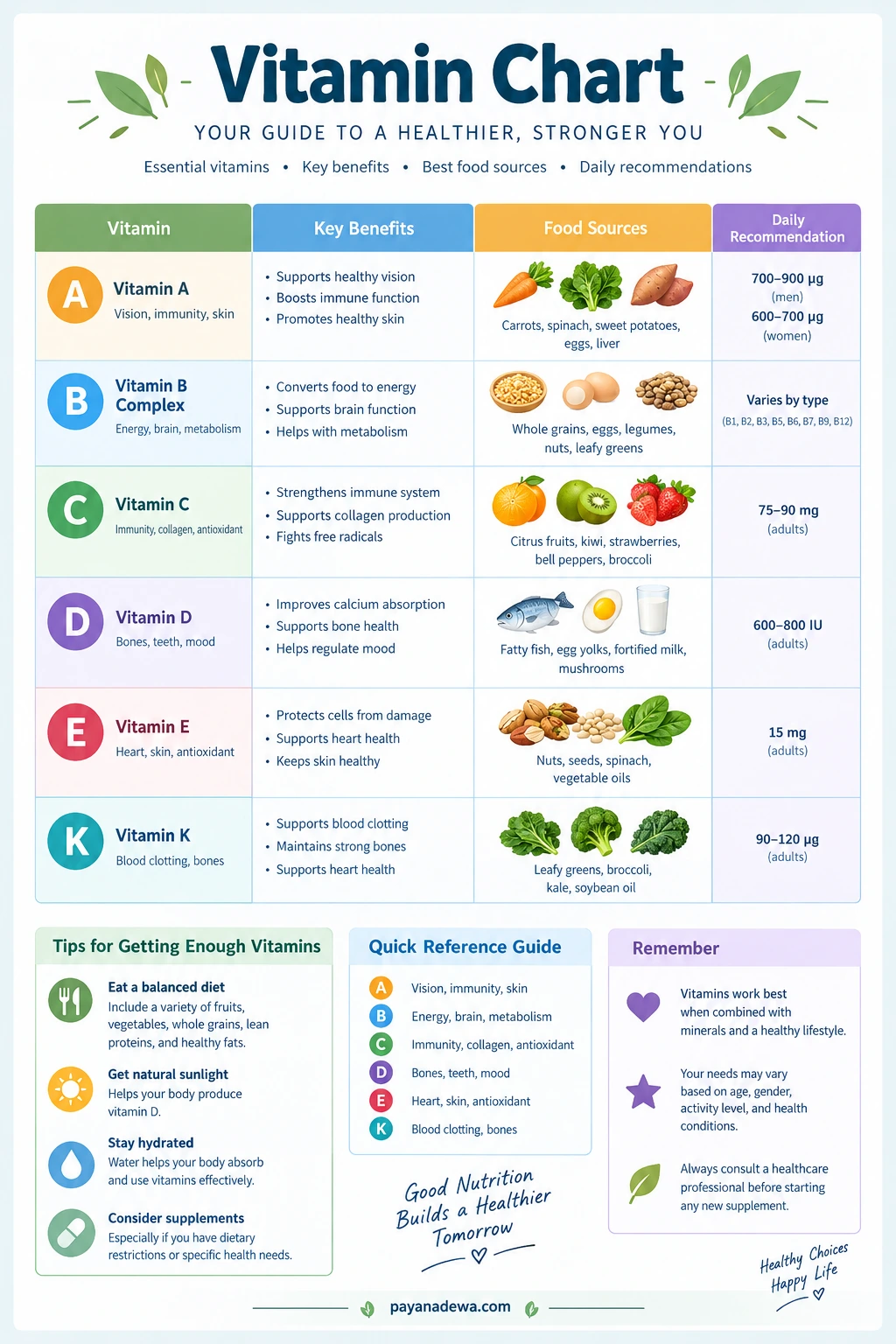
Vitamin Chart at a Glance
The table below summarizes the six main vitamin groups commonly discussed in nutrition education. B vitamins are a group of several different vitamins, each with its own function. Food sources overlap, so eating a varied diet can help you obtain several nutrients in the same meal.
- Vitamin A: Supports normal vision, immune function, and skin and tissue health. Sources include carrots, sweet potatoes, spinach, eggs, and dairy products.
- B vitamins: Help the body use energy from food and support red blood cell formation and nervous system function. Sources include whole grains, beans, lentils, eggs, meat, dairy, nuts, and leafy greens.
- Vitamin C: Supports collagen formation, wound healing, antioxidant protection, and iron absorption from plant foods. Sources include citrus fruits, kiwi, berries, bell peppers, and broccoli.
- Vitamin D: Helps the body absorb calcium and supports bones and muscles. Sources include oily fish, egg yolks, and fortified foods. Sunlight also helps the body produce vitamin D.
- Vitamin E: Acts as an antioxidant that helps protect cells. Sources include nuts, seeds, vegetable oils, and some leafy greens.
- Vitamin K: Is needed for normal blood clotting and contributes to bone health. Sources include leafy green vegetables, broccoli, and some vegetable oils.
Vitamin A: Vision, Immunity, and Healthy Tissues
Vitamin A is important for normal vision, especially in low light, and helps maintain the health of the skin and the lining of the eyes, respiratory tract, and digestive system. It also supports normal immune function.
Best Food Sources of Vitamin A
- Carrots, pumpkin, and sweet potatoes.
- Spinach, kale, and other dark green vegetables.
- Eggs and dairy products.
- Liver, which is highly concentrated in preformed vitamin A.
Orange and dark green vegetables provide carotenoids that the body can convert to vitamin A. Eating these foods with a little healthy fat can help the body absorb fat-soluble vitamins. Avoid high-dose vitamin A supplements unless a healthcare professional recommends them. Excessive preformed vitamin A can be harmful, and high intakes are particularly concerning during pregnancy.
B-Complex Vitamins: Energy Metabolism and Nervous System Support
The B-complex group includes thiamin (B1), riboflavin (B2), niacin (B3), pantothenic acid (B5), vitamin B6, biotin (B7), folate (B9), and vitamin B12. These nutrients help enzymes carry out essential processes, including converting food into usable energy. Some are also important for red blood cell production and normal nervous system function.
Where to Find B Vitamins
- Whole grains and fortified grain products.
- Beans, peas, lentils, nuts, and seeds.
- Eggs, dairy products, fish, poultry, and meat.
- Leafy greens and other vegetables, especially for folate.
Vitamin B12 occurs naturally mainly in animal-derived foods, although some plant-based products are fortified. People following a vegan diet generally need a reliable fortified food or supplement source of B12. Folate is especially important before and during early pregnancy. Anyone who may become pregnant should follow current public-health guidance on folic acid supplementation.
Vitamin C: Collagen, Wound Healing, and Iron Absorption
Vitamin C helps the body make collagen, a protein needed for skin, blood vessels, cartilage, and wound healing. It also acts as an antioxidant and improves absorption of non-heme iron found in plant foods.
Easy Ways to Get Enough Vitamin C
- Add citrus fruit, kiwi, strawberries, or melon to breakfast.
- Include bell peppers, broccoli, or tomatoes with lunch and dinner.
- Choose fresh or lightly cooked vegetables when practical, because prolonged storage and cooking can reduce vitamin C content.
For many adults, recommended daily amounts are commonly around 75–90 mg, with higher needs for people who smoke under some national guidelines. Recommendations vary by country and individual circumstances. Large supplemental doses can cause digestive discomfort and may be unsuitable for some people.
Vitamin D: Calcium Absorption and Bone Health
Vitamin D helps the body absorb calcium and supports bone and muscle function. Few foods naturally contain large amounts, so fortified foods, safe sun practices, and supplements when indicated can all be relevant. The amount of vitamin D produced from sunlight varies with skin tone, age, season, location, clothing, and time outdoors.
Food Sources of Vitamin D
- Salmon, sardines, trout, and other oily fish.
- Egg yolks.
- Fortified milk, plant-based drinks, or breakfast cereals where available.
- UV-exposed mushrooms, depending on the product.
Many adult guidelines use 600 IU (15 micrograms) per day through age 70 and 800 IU (20 micrograms) after age 70, although national recommendations differ. A clinician may advise testing or a different plan for someone at risk of deficiency. Avoid high-dose vitamin D without professional guidance because excess intake can cause harmful calcium levels.
Vitamin E: Antioxidant Protection
Vitamin E is a fat-soluble antioxidant that helps protect cells from oxidative damage and supports normal immune function. Deficiency is uncommon in healthy people who eat a varied diet, but some conditions that affect fat absorption can increase risk.
Foods Rich in Vitamin E
- Sunflower seeds and almonds.
- Sunflower, safflower, and other vegetable oils.
- Peanuts, hazelnuts, and other nuts.
- Spinach and other green vegetables.
The recommended intake for adults is commonly 15 mg per day. High-dose vitamin E supplements can increase bleeding risk, particularly when combined with certain medicines, so more is not automatically better.
Vitamin K: Normal Blood Clotting and Bone Health
Vitamin K is needed to make proteins involved in normal blood clotting and also plays a role in bone metabolism. Leafy green vegetables are especially useful sources of vitamin K1, while some fermented foods and animal products provide forms of vitamin K2.
Foods That Provide Vitamin K
- Kale, spinach, collard greens, and other leafy vegetables.
- Broccoli and Brussels sprouts.
- Some vegetable oils and fermented foods.
Adult intake guidance often uses adequate-intake values of about 90 micrograms per day for women and 120 micrograms for men in the United States. People taking warfarin or certain related anticoagulants should keep vitamin K intake consistent and speak with their healthcare professional before making major dietary changes. Do not stop or change medication based on a chart.
How to Use a Vitamin Chart to Plan Balanced Meals
A chart is most useful when it leads to simple, repeatable habits. Instead of focusing on one vitamin at a time, build meals around a mix of vegetables, fruit, whole grains, protein foods, and healthy fats.
- Eat different colors: Rotate orange vegetables, dark leafy greens, berries, citrus fruits, and other produce through the week.
- Choose varied protein sources: Beans, lentils, eggs, fish, dairy, tofu, poultry, nuts, and seeds offer different nutrient combinations.
- Include whole grains: Oats, brown rice, and whole-grain breads can provide several B vitamins, especially when fortified.
- Pair foods thoughtfully: Add vitamin C-rich vegetables or fruit to meals containing beans or lentils to help absorb plant-based iron.
- Store and cook produce sensibly: Refrigerate fresh produce when appropriate and avoid unnecessarily long cooking, which can reduce some water-soluble vitamins.
- Check labels: Fortified foods can contribute vitamin D, B12, folic acid, and other nutrients, depending on the product and country.
Do You Need Vitamin Supplements?
Not everyone needs a multivitamin. A supplement may be useful when dietary intake is limited, a deficiency is confirmed, a life stage increases nutrient needs, or a medical condition affects absorption. Examples include vitamin B12 for many people following a vegan diet and folic acid for people who may become pregnant, according to local health guidance.
Before choosing a supplement, check the amount per serving, consider other products you already take, and ask a pharmacist or clinician about possible interactions. Fat-soluble vitamins A, D, E, and K can build up in the body, and high doses of some vitamins can cause side effects. Supplements should complement—not replace—a balanced eating pattern.
When to Seek Personalized Advice
Speak with a qualified healthcare professional if you have persistent symptoms, a diagnosed condition that affects nutrient absorption, follow a highly restrictive diet, are pregnant or breastfeeding, or take medicines that interact with nutrients. Symptoms such as fatigue or hair changes can have many causes and cannot reliably identify a specific vitamin deficiency on their own. A clinician can assess your circumstances and decide whether testing is appropriate.
Conclusion: Keep This Vitamin Chart as a Practical Guide
A reliable vitamin chart helps you connect essential nutrients with everyday foods. Vitamin A supports vision and tissues, B vitamins help with metabolism and nervous system function, vitamin C supports collagen and iron absorption, vitamin D helps calcium absorption, vitamin E protects cells, and vitamin K supports normal blood clotting. The best approach is to eat a varied diet, use fortified foods where helpful, and take supplements only when appropriate for your needs.
Use this guide for general education rather than diagnosis. Individual requirements can differ, and current national nutrition guidance or personalized medical advice should take priority when making decisions about supplements or health conditions.