A professional massage therapist business card is more than a small piece of paper. It is a practical marketing tool that helps potential clients remember your services, contact your business, and book their next appointment. Whether you run a private massage studio, work as a mobile massage therapist, or offer treatments at a wellness center, a well-designed card can help you make a positive first impression.
In the competitive wellness industry, trust and professionalism matter. Your business card should communicate both while reflecting the relaxing experience clients can expect from your massage therapy services. The right combination of colors, typography, contact information, and thoughtful design can make your brand easier to recognize.
This guide explains how to create a massage therapist business card that looks professional, communicates your services clearly, and supports your marketing efforts. You will also discover design ideas, essential information to include, printing recommendations, and practical ways to use your cards to attract new clients.
What Is a Massage Therapist Business Card?
A massage therapist business card is a compact marketing material that introduces your massage therapy business and provides essential contact information. It allows potential clients to keep your details conveniently and reach you when they need an appointment.
Unlike a general business card, a massage therapy card should reflect the atmosphere of your services. A calming color palette, clean typography, and subtle wellness-inspired graphics can communicate relaxation, care, and professionalism before a client even visits your studio.
These cards are useful for independent massage therapists, spa professionals, wellness practitioners, sports massage specialists, and mobile massage businesses. They can also help established massage clinics maintain consistent branding across their printed and digital marketing materials.
Why Business Cards Still Matter
Digital marketing is important, but printed business cards offer a simple way to create personal connections. You can hand one to a satisfied client, display a stack at your reception desk, or share your details with professionals who may refer customers to your business.
A thoughtfully designed card also makes your business easier to remember. When someone needs another appointment, having your phone number, website, or booking information readily available can make contacting you more convenient.
Essential Information to Include on Your Massage Therapy Business Card
A good business card provides enough information to help clients understand your services without making the design feel crowded. Prioritize the details that make contacting and booking with you simple.
Your Name and Professional Title
Start with your name or business name, followed by a clear professional title such as Massage Therapist, Licensed Massage Therapist, or Massage Therapy Practitioner, when applicable. Use only credentials and professional designations that you are legally entitled to claim in your location.
If you operate under a recognizable business name, make it prominent. Clients should immediately understand who you are and what type of service you provide.
Contact Information
Include the contact details clients are most likely to use. Depending on your business model, these may include:
- Phone number: Give clients a direct way to ask questions or schedule an appointment.
- Email address: Provide a professional address for inquiries and business communication.
- Website: Direct visitors to your service information, prices, and booking options.
- Business address: Include your studio location if clients visit you in person.
- Social media: Add a relevant professional profile if you regularly share useful content there.
Choose the most useful contact methods rather than including every available channel. If you offer mobile massage services, you may prefer a service area or booking link instead of a public home address.
Your Services and Booking Options
Help prospective clients understand what you offer. You might mention relaxation massage, sports massage, therapeutic massage, or other services within your training and professional scope.
A short service description can make your card more informative. You can also include a QR code that directs clients to an online booking page. Test the code before printing and ensure the destination works well on mobile devices.
Popular Massage Therapist Business Card Design Ideas
The best design depends on your audience, brand personality, and the experience you want clients to associate with your business. Keep the layout consistent with the atmosphere of your massage practice.
Minimalist and Elegant Design
A minimalist massage therapist business card uses clean typography, generous white space, and a limited color palette. Cream, white, soft gray, and muted green can create a calm, refined appearance without overwhelming the reader.
This approach works particularly well for independent practitioners, boutique massage studios, and wellness businesses that want to communicate simplicity and attention to detail.
Botanical and Natural Design
Botanical designs use leaf illustrations, organic shapes, and earthy colors to create a connection with nature. Shades of sage, forest green, beige, and warm ivory can give your card a welcoming and restorative appearance.
Use botanical elements sparingly so the contact information remains easy to read. A small leaf illustration or a subtle border is often more effective than filling every corner with decorative graphics.
Luxury Spa Business Card
If you serve clients in a premium spa or private wellness setting, consider a sophisticated design with deep green, charcoal, cream, or restrained metallic accents. Elegant typography and quality paper can help reinforce your brand identity.
Luxury does not require excessive decoration. A balanced composition, carefully chosen fonts, and professional printing often create a stronger impression than too many visual effects.
Modern and Professional Design
A modern massage business card combines readable fonts, clear information hierarchy, and simple graphic elements. It is suitable for therapists who want a versatile design that works for networking, referrals, clinics, and mobile services.
Choose one primary font and one complementary font. Keep headings distinct from supporting information, and avoid decorative typefaces for small contact details.
How to Choose the Right Colors, Fonts, and Layout
Visual consistency helps potential clients recognize your business across your website, social media profiles, appointment reminders, and printed materials. Your card should feel like a natural extension of your overall brand.
Choose a Calming Color Palette
Green often suggests nature and balance, while blue can communicate calmness and reliability. Warm beige and cream create a softer appearance, whereas black and gold can support a more luxurious identity.
Limit your design to two or three main colors. Check that the text contrasts sufficiently with the background, especially when using light-colored lettering on darker surfaces.
Select Readable Typography
Use a clear font for your name, title, phone number, and booking details. Serif fonts can add elegance, while sans-serif fonts often create a clean, contemporary look.
Avoid making important contact information too small. Print a sample at the intended size to check legibility before ordering a large batch.
Keep the Layout Organized
Arrange information according to importance. Your name or business name should stand out first, followed by your professional title and primary contact method.
Leave sufficient empty space around text and graphics. A less crowded layout helps people scan the card quickly and makes the design look more polished.
How to Create a Massage Therapist Business Card Template
You do not need to hire a designer to begin creating a professional business card. A customizable template can provide a useful starting point, especially if you are launching a new massage therapy business or updating your branding.
Start With a Suitable Template
Choose a template designed for massage therapists, wellness professionals, or spa businesses. Look for a balanced layout, editable text, appropriate spacing, and enough room for your essential contact details.
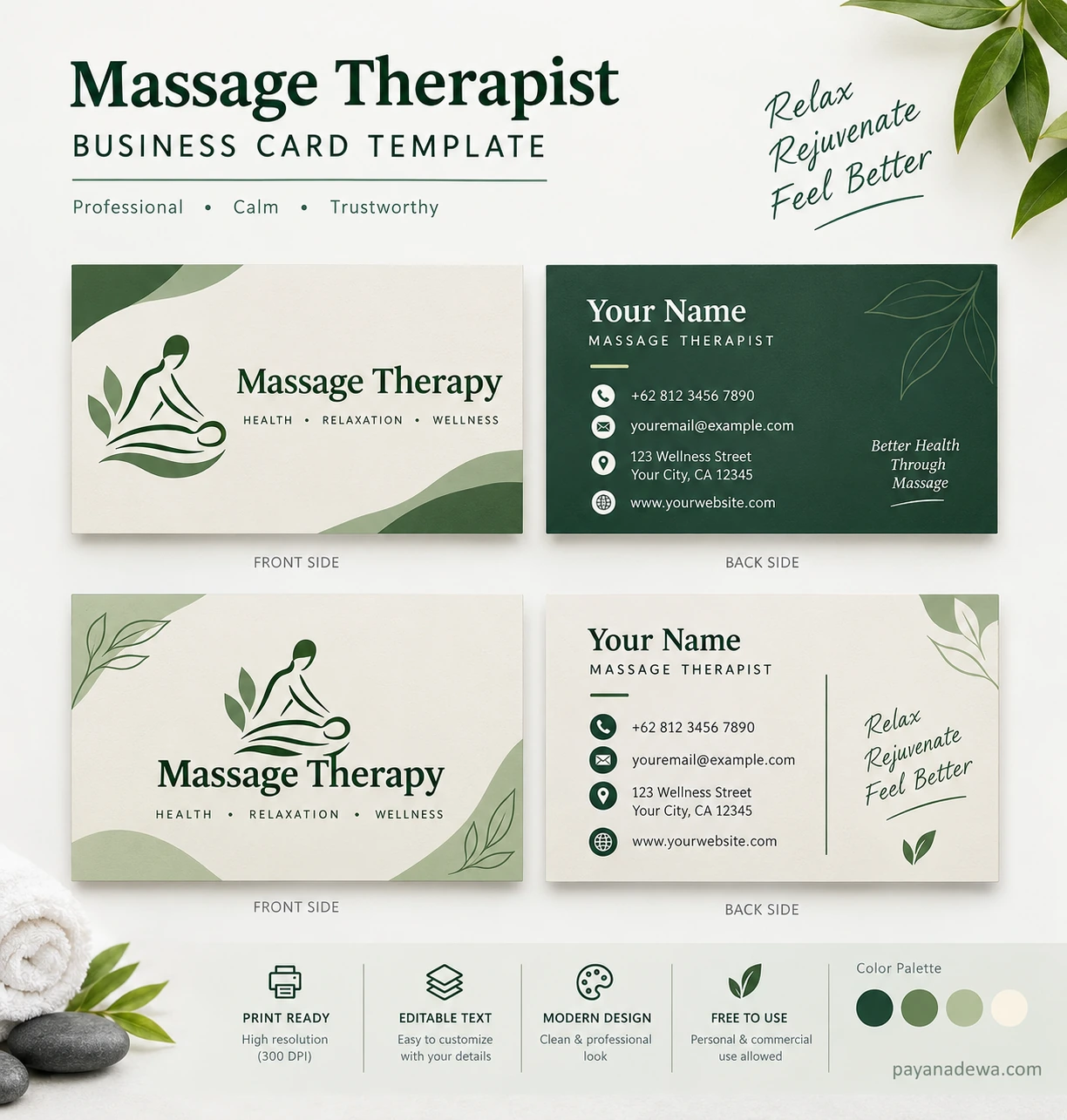
A template with front and back designs can be especially useful. The front can introduce your brand, while the back can display contact information, a booking QR code, or a short list of services.
Image placement: Insert the original template image after this introductory paragraph about choosing a template.
Customize Your Business Details
Replace all placeholder text with your actual business information. Check your name, professional title, telephone number, email address, website, and service descriptions carefully.
Use a professional photograph or logo only if it supports your branding and fits the available space. Avoid using generic contact details in the final printed version, and make sure every QR code points to the correct destination.
Prepare the File for Printing
Before exporting your design, confirm the printer’s required dimensions, bleed, safe margins, and color settings. Many printers accept high-resolution PDF files, although their specific requirements may vary.
Use high-quality graphics and inspect the final file at full size. Keep text away from trimming edges, and request a proof when possible. Reviewing a physical sample can reveal problems with color, contrast, or readability that are difficult to notice on a screen.
Best Printing Tips for Professional Results
Printing quality affects how your business card feels and how well it represents your brand. You do not necessarily need the most expensive materials, but you should choose a finish that suits your design and budget.
- Choose durable cardstock: A sturdy card is less likely to bend or become damaged during everyday use.
- Consider a matte finish: Matte surfaces can complement minimalist and botanical designs while reducing distracting glare.
- Try a premium finish: Textured paper or selective foil details may suit luxury spa branding when used carefully.
- Check both sides: Review the front and back for alignment, spelling errors, and consistent margins.
- Order a small test batch: Check the printed results before purchasing a large quantity.
Standard business card dimensions vary by country and printer. Confirm the exact size before preparing your artwork rather than assuming every printing service uses the same specifications.
How to Use Business Cards to Attract More Massage Clients
A well-designed card is most effective when you distribute it strategically. Make it easy for potential clients to discover your services without pressuring them to book immediately.
Offer Cards After Appointments
Give existing clients a card they can keep for future appointments or share with friends. You can also include one with appointment reminders or printed aftercare information when appropriate.
Build Local Business Relationships
Introduce your services to complementary businesses, such as wellness studios, fitness centers, yoga instructors, and beauty professionals. With permission, you can leave a small number of cards at relevant locations where your target audience is likely to visit.
Connect Printed Cards With Digital Marketing
Use a QR code to connect your printed card to an online booking page, service menu, or professional website. Keep the destination current and make sure the page clearly explains how to schedule an appointment.
You can also create a consistent visual identity across your business card, website, email signature, and social media profiles. Consistency makes your business easier to recognize and can strengthen client confidence.
Common Business Card Mistakes to Avoid
Even a beautiful design can be ineffective if it makes essential information difficult to find. Avoid these common mistakes when preparing your massage therapy business card.
- Too much information: Focus on the details clients need most instead of listing every service you offer.
- Hard-to-read fonts: Avoid overly decorative lettering and tiny contact details.
- Poor color contrast: Make sure the text remains readable against the background.
- Outdated contact information: Verify every detail before sending the design to print.
- Unclear service descriptions: Use straightforward language that accurately describes your professional services.
- Unverified QR codes: Test every code and link on a mobile device before printing.
- Inconsistent branding: Keep colors, typography, and business names consistent across marketing materials.
Taking a few extra minutes to review your design can prevent unnecessary printing costs and help your business present a more professional image.
Conclusion
A well-designed massage therapist business card can help you introduce your services, build professional relationships, and make it easier for clients to contact you. The strongest designs combine clear information, readable typography, calming colors, and a layout that reflects the character of your massage therapy business.
Start with a suitable template, personalize it with accurate business details, and choose printing materials that fit your budget. Then distribute your cards thoughtfully through client referrals, local partnerships, and relevant wellness settings.
Remember that your business card is part of a larger marketing strategy. When it works together with your website, online booking system, and consistent branding, it can become a useful tool for building recognition and encouraging repeat business.
Which massage therapist business card style do you prefer: minimalist, botanical, luxury spa, or modern professional? Consider your target clients and brand personality before choosing a design that represents your business.