A well-designed fitness business card helps personal trainers, gym owners, fitness coaches, and wellness professionals make a strong first impression. It gives potential clients a convenient way to remember your services, contact you, and learn more about your fitness business. Whether you work independently or manage a fitness studio, the right business card can strengthen your brand and support your marketing efforts.
Today, fitness professionals need more than an attractive design. They also need clear contact information, readable typography, and a consistent visual identity. A professional fitness business card combines these elements to communicate credibility and encourage new clients to take action.
In this guide, you will discover popular fitness business card styles, essential design elements, practical customization tips, and printing recommendations. You will also learn how to create a business card that reflects your services and helps your fitness brand stand out.
What Is a Fitness Business Card?
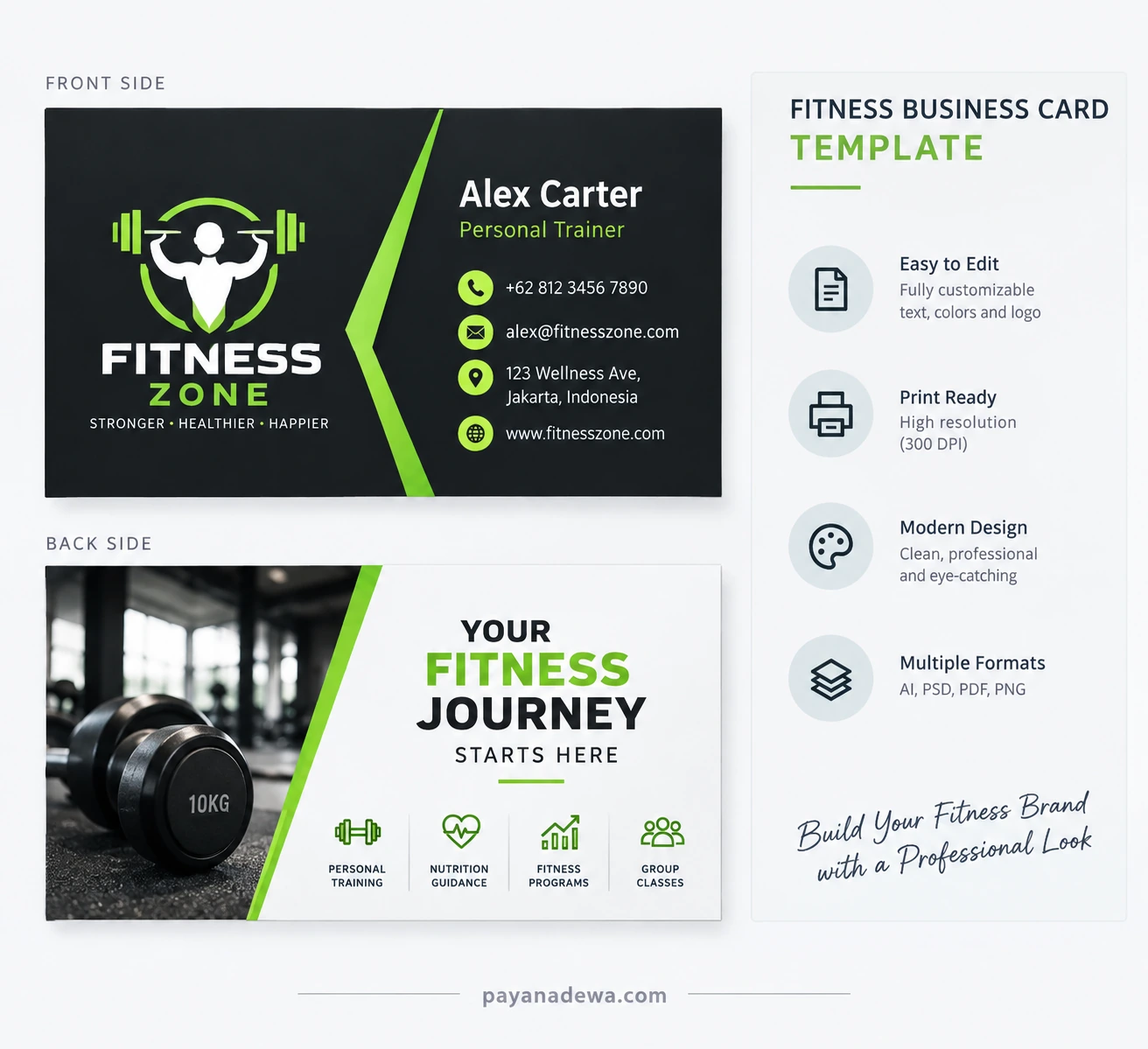
A fitness business card is a small marketing tool that introduces your fitness services and shares your professional contact details. It typically includes your name, job title, phone number, email address, and website or social media profile. Some designs also feature a logo, QR code, service list, or short motivational slogan.
Fitness professionals use these cards to connect with potential clients at gyms, sporting events, wellness workshops, fitness classes, and networking meetings. They are also useful when building partnerships with nutritionists, physiotherapists, sports clubs, and other wellness businesses.
Unlike a generic business card, a fitness-themed design communicates your industry through its colors, imagery, and typography. For example, a personal trainer might choose a bold, energetic layout. Meanwhile, a yoga instructor may prefer a minimalist design with calming colors.
Why a Professional Fitness Business Card Matters
Even in a digital world, printed business cards remain useful for building personal connections. They provide a simple way to share your details without asking someone to search for your profile online.
Build Trust and Credibility
A clean, professional card shows that you take your business seriously. Consistent branding, clear typography, and accurate contact information help potential clients feel more confident about contacting you.
Promote Your Fitness Services
Your card can highlight personal training, strength coaching, weight management support, group classes, or online fitness programs. A concise service list helps people understand what you offer at a glance.
Make Networking Easier
Fitness professionals often meet potential clients in different settings. A business card makes it easy to exchange details after a workout, community event, fitness seminar, or professional meeting.
Support Your Digital Marketing
You can add a QR code that directs people to your booking page, portfolio, website, or social media account. This approach connects your printed marketing materials with your online presence and makes it easier for interested prospects to take the next step.
Popular Fitness Business Card Design Ideas
The best design depends on your audience, services, and brand personality. Before choosing a template, consider the impression you want potential clients to remember.
1. Modern Personal Trainer Business Card
A personal trainer business card often works best with bold typography, strong contrast, and a simple fitness icon. Black, white, and lime green create an energetic appearance, while navy blue and white offer a more understated professional look.
Include your name, certification or relevant qualification, training specialty, and preferred contact method. Keep the layout uncluttered so clients can find important details quickly.
2. Gym and Fitness Studio Business Card
Gym owners can use a card that emphasizes their facility’s brand. Include the gym logo, location, website, phone number, and a short description of available services.
If your facility offers memberships, group classes, or personal coaching, highlight the most important benefits rather than listing every available option. A QR code can lead prospective members to a tour booking page or membership information.
3. Minimalist Fitness Business Card
A minimalist design uses limited colors, generous spacing, and only the most important information. This style is particularly effective for independent coaches, wellness consultants, and premium fitness brands.
Choose one primary font and one accent color. Avoid excessive decorative elements because they can make the card difficult to read.
4. Sports and Strength Training Business Card
Strength coaches and sports performance specialists may prefer dynamic graphics, bold headings, and athletic imagery. Use these elements carefully to create energy without overwhelming the contact details.
Highlight relevant specialties, such as strength development, mobility training, athletic conditioning, or performance coaching. Only include services and credentials that accurately represent your qualifications.
5. Wellness and Holistic Fitness Business Card
Yoga instructors, Pilates teachers, and holistic wellness professionals may benefit from softer colors and a more spacious layout. Neutral tones, muted greens, and simple line illustrations can communicate balance and well-being.
Include your class schedule website or booking link when relevant. Keep the design consistent with your broader wellness brand.
Essential Elements of a Fitness Business Card
A strong fitness business card balances attractive design with practical information. Before sending your design to print, make sure it includes the following essential elements.
- Full name: Display the name clients should use when contacting you.
- Professional title: Identify yourself as a personal trainer, fitness coach, gym owner, or another relevant professional.
- Business logo: Use a clear logo that matches your website and other marketing materials.
- Phone number: Provide a number you regularly check for business inquiries.
- Email address: Use a professional address that is easy to read and remember.
- Website or social profile: Direct prospects to useful information about your services.
- Service highlights: Mention two or three relevant specialties if space allows.
- Call to action: Encourage readers to book a consultation, explore your programs, or scan a QR code.
You do not need to include every possible detail. Prioritize the information that helps your target audience understand your services and contact you.
How to Customize a Fitness Business Card Template
Using a fitness business card template can save time and simplify the design process. A ready-made layout gives you a starting point, allowing you to focus on branding and content instead of designing everything from scratch.
Step 1: Choose a Template That Fits Your Brand
Start with a layout that reflects your services. A high-energy design may suit a strength coach, while a simple, elegant template may be better for a Pilates instructor. Check that the template provides enough space for your logo and contact details.
Step 2: Add Your Brand Colors and Logo
Use the same primary colors and logo found on your website, uniforms, or social media profiles. Consistency makes your business easier to recognize. Limit the palette to two or three complementary colors for a polished appearance.
Step 3: Update Your Contact Information
Replace all sample details with your actual business information. Check every phone number, email address, website URL, and social media handle. If you include a QR code, scan it with a phone before approving the design.
Step 4: Write a Clear Service Description
Choose concise wording that communicates your main specialty. For example, you might use “Personal Training and Strength Coaching” or “Group Fitness and Mobility Training.” Specific descriptions help prospective clients determine whether your services meet their needs.
Step 5: Review the Design Before Printing
Inspect the card at its intended print size. Make sure the text is legible, the logo is sharp, and the important information is not too close to the edges. Ask someone else to proofread the design before ordering a large batch.
Fitness Business Card Printing Tips
Printing quality affects how your business card looks and feels. Even a strong design can appear unprofessional if the text is blurry or the paper is too thin.
Choose the Right Card Size
A common standard size in the United States is 3.5 by 2 inches. In many other markets, including Indonesia, a size close to 90 by 55 millimeters is also commonly used. Confirm the printer’s specifications before preparing your final file.
Select Suitable Paper and Finishes
Thicker cardstock generally feels more substantial than lightweight paper. A matte finish provides a clean, understated appearance, while a gloss finish can make photographs and vivid colors look more vibrant. Choose a finish that suits your brand and budget.
Prepare High-Resolution Artwork
Ask your printer about the required file format, color profile, bleed, and safe margins. Artwork intended for print is commonly prepared at 300 DPI when raster resolution applies. Use vector logos when possible to preserve sharp edges at different sizes.
Check Color and Contrast
Dark backgrounds can create a striking fitness design, but small text may become difficult to read. Use strong contrast between the background and the lettering. If your design includes bright accent colors, ensure they remain legible in the final printed version.
Common Fitness Business Card Design Mistakes to Avoid
Small design mistakes can reduce the effectiveness of your card. Fortunately, most are easy to prevent with a careful review.
- Too much information: Focus on essential contact details and your most relevant services.
- Unreadable fonts: Avoid overly decorative lettering for phone numbers, email addresses, and other practical details.
- Inconsistent branding: Match your logo, colors, and typography to your other marketing materials.
- Low-quality images: Use sharp logos and properly prepared photographs to avoid blurry printing.
- Missing contact details: Make it easy for potential clients to reach you through at least one reliable channel.
- Unverified QR codes: Test every link before printing your cards.
- Unclear services: Explain what you do instead of relying on fitness imagery alone.
Remember that a business card is a practical communication tool, not just a decorative design. Readability and accuracy should always come before unnecessary visual effects.
Where to Use Your Fitness Business Cards
Once your cards are ready, use them strategically to reach people who may benefit from your services. Good distribution helps you get more value from your printing investment.
- Gyms and fitness studios: Share cards with interested prospects and professional contacts, with permission where required.
- Fitness events: Bring cards to competitions, wellness fairs, workshops, and community fitness activities.
- Corporate wellness programs: Introduce your coaching services to organizations interested in employee fitness initiatives.
- Local business partnerships: Build relationships with sports clubs, wellness businesses, and complementary service providers.
- Client referrals: Give satisfied clients a few cards to share with friends who may be interested in your services.
- Consultations and classes: Make your contact details available to people who want to learn more after meeting you.
Always respect venue rules and avoid leaving promotional materials in places where distribution is prohibited.
How to Make Your Fitness Business Card More Effective
To improve your results, give people a clear reason to contact you. A simple call to action can be more useful than adding extra decorative elements.
For example, your card might invite prospects to book an introductory consultation, view a training portfolio, or explore a beginner fitness program. Make sure the linked destination provides useful information and works well on mobile devices.
You can also track which marketing activities generate inquiries. Use a dedicated landing page or a campaign-specific QR code when appropriate. Over time, this information can help you understand where your new clients discover your business.
Finally, keep your details current. Update your cards whenever your phone number, website, location, or service offering changes. An accurate business card makes it easier for interested prospects to take the next step.
Conclusion
A professional fitness business card can help personal trainers, gym owners, and fitness coaches build credibility, promote their services, and create valuable connections. The most effective design combines clear contact information, consistent branding, readable typography, and a focused message.
Start with a suitable fitness business card template, customize it with your brand identity, and check every detail before printing. Choose quality materials and share your cards in places where your target audience is likely to find them.
With thoughtful design and strategic distribution, your fitness business card can become a useful part of your marketing toolkit and help more people discover your services.