In the competitive fashion industry, presentation matters. Your business card should reflect your brand identity while making essential contact information easy to find. The right combination of typography, color, layout, and professional details can turn a simple card into a memorable marketing asset.
This guide explores fashion business card design ideas, essential elements, popular styles, printing tips, and practical ways to create a professional card that represents your business.
What Is a Fashion Business Card?
A fashion business card is a printed or digital card that shares contact information and brand details for a fashion-related business. It may represent a clothing boutique, fashion label, modeling agency, personal stylist, apparel manufacturer, or creative professional.
Unlike a generic business card, a fashion-focused design often emphasizes visual identity. Elegant fonts, carefully selected colors, refined spacing, and distinctive graphics help communicate the personality of the brand.
A successful card balances appearance with functionality. It should look attractive while helping people quickly identify your business and understand how to contact you.
Why a Professional Fashion Business Card Matters
Fashion is a visual industry. Customers often form opinions about a brand before they experience its products or services. A thoughtfully designed business card can support that first impression and reinforce your professional image.
Build a Consistent Brand Identity
Your business card should match the overall look of your brand. Use colors, typography, and design elements that also appear on your website, packaging, social media profiles, and promotional materials. Consistency makes your business easier to recognize.
Make Networking Easier
Fashion events, trade shows, pop-up shops, photoshoots, and industry meetings create opportunities to meet potential clients and collaborators. A business card gives people a convenient way to save your contact details after a conversation.
Show Professionalism and Attention to Detail
Clear information and quality printing communicate care. Even a minimalist card can feel premium when its typography, paper stock, spacing, and finishing are carefully considered.
Encourage Future Connections
A card can direct people to your portfolio, online store, appointment page, or social media profile. Adding a relevant website address or QR code makes it easier for interested contacts to take the next step.
Essential Elements of a Fashion Business Card
Before choosing a design, decide which information your audience needs most. A card should communicate the essentials without becoming crowded.
- Brand name or logo: Make your fashion business easy to recognize.
- Your name: Include the name of the owner or professional representative.
- Job title: Identify your role, such as fashion designer, boutique owner, stylist, or creative director.
- Phone number: Provide a reliable contact number if direct calls or messages are appropriate.
- Email address: Choose a professional address that you check regularly.
- Website or portfolio: Help people explore your collections, services, and previous work.
- Social media handle: Include a relevant profile when social media is an important sales or marketing channel.
- QR code: Link to a useful destination, such as a digital portfolio, product catalog, or booking page.
You do not need to include every possible detail. Prioritize the information that supports your business goals and leave enough white space to keep the design readable.
Fashion Business Card Design Ideas
The best fashion business card design depends on your audience, products, and brand personality. Explore these popular styles to find a direction that suits your business.
1. Minimalist and Elegant
A minimalist card uses simple typography, restrained colors, and generous white space. Black, white, cream, and soft beige are common choices for a clean, timeless appearance.
This style works particularly well for luxury boutiques, personal stylists, fashion consultants, and contemporary clothing labels. Keep decorative elements subtle and let your brand name take center stage.
2. Luxury and Premium
A luxury fashion business card often combines sophisticated typography with carefully chosen materials. Deep black, ivory, muted gold, and rich neutral tones can create an upscale impression.
Consider thick paper, a refined matte finish, foil accents, or tasteful embossing. Use premium finishes selectively so they enhance the design instead of making essential details difficult to read.
3. Modern and Creative
Creative fashion brands can experiment with bold lettering, geometric shapes, asymmetrical layouts, and unexpected color combinations. These elements can help a streetwear label, emerging designer, or independent fashion studio stand out.
Even an expressive design needs a clear visual hierarchy. Make the brand name prominent and keep contact information easy to scan.
4. Boutique and Feminine
Soft blush, dusty rose, cream, and warm brown can create an inviting appearance for a boutique or accessories brand. Floral details, fine line illustrations, and elegant script fonts can add personality when used sparingly.
Choose decorative fonts for short headings rather than long contact details. Pairing a distinctive script with a clean sans-serif font often improves readability.
5. Sustainable Fashion
Brands that focus on responsible production may prefer earthy colors, natural textures, simple graphics, and recycled or responsibly sourced paper. The design can support the brand story without relying on excessive decoration.
Only make environmental claims that you can verify. If sustainability is central to your identity, select materials and printing methods that align with your actual business practices.
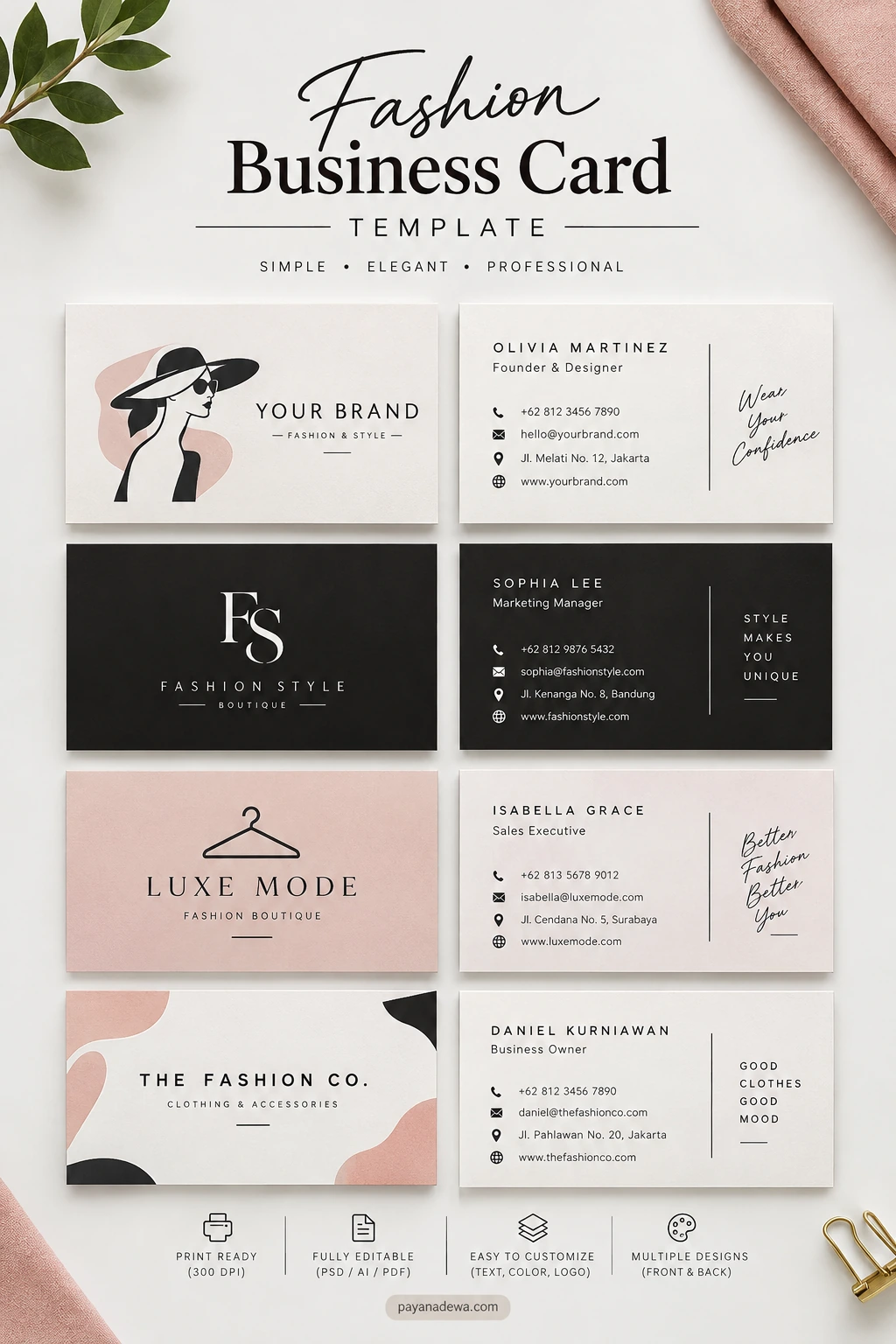
How to Choose the Right Fashion Business Card Template
A ready-made fashion business card template can save time and provide a useful starting point. It is especially helpful for new entrepreneurs who want a professional appearance without building a layout from scratch.
Before selecting a template, consider these practical factors:
- Brand compatibility: Choose a layout that matches your products, audience, and overall visual identity.
- Customization: Look for editable text, colors, logos, and design elements.
- Readability: Make sure contact details remain clear at the final printed size.
- Print quality: Use a high-resolution file and follow your printer’s specifications.
- Front and back layout: Use both sides when additional information would otherwise overcrowd the design.
- File compatibility: Confirm that the template works with your preferred design software or printing service.
A template should be a foundation, not a substitute for brand identity. Replace sample logos, placeholder names, and example contact details before publishing or printing your design.
Tips for Creating a Fashion Business Card That Stands Out
Keep the Design Focused
Choose one main visual feature, such as your logo, brand name, or a distinctive illustration. Too many competing elements can make the card look cluttered and weaken your message.
Use Two Fonts at Most
A strong font pairing can make your card look polished. Use one font for the brand name or headings and another for supporting information. Check that both fonts remain legible when printed at a small size.
Choose Colors With Purpose
Colors should reflect your brand rather than simply follow current trends. Neutral shades can communicate understated sophistication, while brighter colors may suit playful or experimental fashion labels. Check text contrast before approving the final design.
Pay Attention to Paper and Finishing
Paper quality influences how a printed card feels in someone’s hand. Matte stock offers a restrained finish, while gloss can create a more vibrant appearance. Textured paper and special finishes may add distinction, depending on your budget and printer’s capabilities.
Check the Print Specifications
Ask your printer for the required dimensions, bleed, safe area, color mode, and export format. In many professional print workflows, artwork is prepared at 300 DPI at the intended print size, with CMYK color and bleed where required. Always follow the printer’s exact specifications.
Review a proof before ordering a large quantity. Check spelling, phone numbers, email addresses, logo placement, and QR code functionality. A short review can prevent costly reprints.
Common Fashion Business Card Mistakes to Avoid
A visually attractive card may still be ineffective if practical details are overlooked. Avoid these common mistakes:
- Using too much information: Focus on essential contact details and a clear next step.
- Choosing decorative fonts for everything: Keep small text simple and readable.
- Using low-resolution graphics: Supply print-ready artwork to reduce pixelation and blurry edges.
- Ignoring brand consistency: Match your card to your website, packaging, and other marketing materials.
- Printing without proofreading: Verify all information before approving production.
- Adding a QR code without testing it: Scan the code on different devices and confirm that the destination works.
- Forgetting to update details: Replace outdated contact information when your business changes.
How to Use Your Fashion Business Card Effectively
Once your cards are ready, use them strategically. Give them to potential clients, suppliers, event organizers, photographers, stylists, and other professionals when the connection is relevant.
Place a small stack at your boutique’s checkout counter or include a card with selected customer orders. You can also use business cards at fashion exhibitions, networking events, pop-up markets, and professional appointments.
Make your digital presence easy to discover. A card that links to an updated portfolio or online shop can continue working for your business long after the initial conversation. Ensure that the destination is mobile-friendly and presents the same branding as the card.
Frequently Asked Questions About Fashion Business Cards
What should a fashion business card include?
Include your brand name or logo, your name, professional title, and relevant contact information. A website, portfolio link, social media handle, or QR code can also be useful when it supports your business goals.
What colors are best for fashion business cards?
Black, white, cream, beige, and muted metallic accents suit many premium brands. Blush and pastel shades can work well for boutiques, while bold colors may suit streetwear and contemporary labels. The best choice is the palette that fits your brand identity.
Can I use a fashion business card template for free?
Some templates are available at no cost, while others require payment or a subscription. Check the license before using a template commercially, and confirm whether fonts, graphics, and other included assets are covered.
Should I print both sides of my business card?
Double-sided printing is useful when you want a clean front design and additional contact details or a QR code on the back. A single-sided card can also work well if the layout communicates everything clearly.
Are digital fashion business cards worth considering?
Digital business cards can complement printed cards by making links and contact details easy to share. For many fashion businesses, combining both formats provides flexibility for in-person networking and online communication.
Conclusion
A well-designed fashion business card helps your brand communicate professionalism, personality, and attention to detail. From minimalist luxury layouts to creative boutique designs, the right style should reflect your audience while keeping contact information clear and accessible.
Start with a consistent brand identity, choose a suitable template, and customize the design with accurate details and purposeful colors. Before printing, check the file specifications and proofread every element. With thoughtful design and strategic use, your fashion business card can become a valuable part of your marketing toolkit.